
What should you expect during the pellet therapy first 30 days? The first month involves two processes that may move at different speeds: the insertion site heals while your body adjusts to changing hormone levels. It’s understandable to wonder whether movement could dislodge the pellet, which side effects to watch for, and when you might notice a difference.
This guide lays out a practical timeline for the first month. You’ll learn how to monitor the insertion site, track changes in symptoms, and decide what to discuss with your Las Vegas specialist. Hormone responses vary, so changes may be gradual. Not feeling better right away doesn’t automatically mean therapy isn’t working.
We’ll cover recovery milestones and signs that warrant a call to your care team. We’ll also explain how follow-up lab work fits into the process. JuveMD prioritizes follow-up labs at 4–6 weeks to help guide personalized care.
Key Takeaways
- During the pellet therapy first 30 days, protect the insertion site by following your specialist’s instructions and asking about changes that concern you.
- Hormone-related changes can take time and may fluctuate. Track how you feel instead of expecting a specific symptom to improve by a set day.
- A simple symptom journal can help you spot patterns and prepare focused questions for your follow-up.
- JuveMD prioritizes follow-up labs at 4–6 weeks to help your specialist assess your response and guide personalized care.
- Las Vegas heat can make regular hydration especially important. Ask your care team how to support your recovery and site healing.
Days 1–3: The Critical Healing & Wound Care Checklist
The first three days of the pellet therapy first 30 days are about protecting the small insertion site as nearby tissue begins to heal. A hormone pellet is placed beneath the skin, making it a subcutaneous implant. Although the opening is small, pressure, friction, moisture, or strenuous movement may irritate the area. Follow your JuveMD specialist’s specific aftercare instructions, since the insertion site and your care plan affect what’s appropriate.
Immediate Post-Insertion Site Care
Keep the pressure bandage in place for the first 24 hours, or for the duration your specialist directs. After that, use a simple bandage or steri-strips only as instructed. Keep the site clean and dry. Don’t pull at adhesive strips or touch the opening with unwashed hands.
For the first 72 hours, follow a strict no-soak policy: avoid bathtubs, hot tubs, and swimming pools. Prolonged immersion can expose the healing site to water and bacteria. If you’re unsure about showering or changing a dressing, check your aftercare instructions rather than improvising. To ease initial swelling, use an ice pack for 15 minutes, then leave it off for 15 minutes before applying it again. Wrap the pack in cloth instead of placing it directly on your skin.
Activity Restrictions for Pellet Stability
Keep friction and pressure around the site to a minimum. For 72 hours, avoid squats, lunges, heavy lifting, and vigorous cardio that causes excessive sweating or repeated movement near the insertion area. This “72-hour rule” gives the tissue time to start sealing around the entry path. Pressure or vigorous movement during early healing may aggravate the area and could increase the risk of the pellet shifting or working toward the surface. Choose gentle activity that doesn’t pull, press on, or rub the site, and resume more strenuous exercise according to your specialist’s guidance.
What’s Expected, and When to Call
Mild, localized tenderness, bruising, or swelling can occur as part of the immediate inflammatory response. These reactions should stay near the site and generally improve rather than steadily worsen. Monitor the area without repeatedly pressing or probing it.
- Contact your specialist promptly if redness or swelling is spreading, pain is worsening, the site feels increasingly warm, or you notice drainage, persistent bleeding, fever, or the pellet becoming visible or protruding.
- Don’t try to push a pellet back in or treat a concerning change on your own. Ask your care team for direction.
Aftercare instructions should help you know what to do, not leave you to interpret symptoms alone. If you’re worried about the site, contact your specialist and describe what you’re seeing.
Days 4–10: Monitoring Early Physiological Shifts
As the insertion site continues to settle, you may start noticing changes in sleep, mood, or energy. Hormone pellets release hormones gradually, and your body’s response doesn’t follow a precise day-by-day schedule. During the pellet therapy first 30 days, this stretch can feel like a waiting period: some people notice subtle shifts, while others don’t yet feel different.
What Is Normal During the First Week?
A small bruise may linger, and a minor firm lump beneath or near the skin can be part of local healing. The bruise should gradually fade. Avoid pressing or repeatedly checking the area. Mild headaches, bloating, skin changes, or breast tenderness may also occur, but these symptoms aren’t proof that the pellet is working or that a problem is present.
Hormone receptor sensitivity describes how strongly the body’s cells respond to hormone signals. Changing signals may contribute to temporary side effects as your system adjusts.
Some people describe an early “hormone honeymoon,” with a brief lift in how they feel followed by fluctuation. This is an individual experience, not a guaranteed phase or a reliable measure of your eventual response. Note when a symptom starts, whether it’s improving or worsening, and how it affects daily life. Contact your specialist about symptoms that are severe, persistent, worsening, or concerning to you.
Signs of Early Symptom Relief
If changes emerge, they may be subtle. You might notice more restful sleep, less brain fog, a steadier mood, or a little more energy in the morning. Look for patterns across several days rather than judging progress by one unusually good or difficult day. A short daily note can help you distinguish a consistent trend from normal variation.
Don’t panic if you don’t feel “life-changed” by Day 10. Hormone response and symptom relief vary, and a lack of immediate improvement doesn’t establish that treatment has failed. Pellets release hormone over time, and your body’s response may take longer to become clear. Avoid changing your routine or taking extra medication based on assumptions. Bring your questions and symptom notes to your specialist.
Keep tracking the basics: sleep quality, energy, mood, and any physical changes. A record gives your clinician more useful information than a general impression at follow-up. JuveMD’s personalized approach can help put those observations in context. Learn more about bioidentical pellet hormone therapy and discuss concerns with your care team.
Days 11–21: Identifying Your Clinical Turning Point
During the second and third weeks, look for patterns rather than a single dramatic change. The pellet releases hormone over time, while absorption and your body’s response vary from person to person. There isn’t a precise “peak absorption day” that applies to everyone, and changes during this period don’t confirm a particular hormone level. For a closer look at the delivery method, read how pellet hormone therapy works.
Changes to Watch During This Window
Some people notice gradual shifts in sleep, energy, or how they feel after light activity. For example, you might feel less depleted after a familiar walk. Don’t push exercise to test whether therapy is working. Build activity steadily and follow your specialist’s instructions about site care and exercise.
If you’re a woman experiencing night sweats or other vasomotor symptoms, note whether they become less frequent or disruptive. They may improve gradually, remain unchanged, or fluctuate. Persistent symptoms are useful information for your clinician, not a reason to adjust treatment on your own.
Mental, Emotional, and Sexual Wellness
Notice whether daily stress feels more manageable, irritability shifts, or focus and motivation become steadier. These experiences can be meaningful, but they’re influenced by more than hormone levels, including sleep, stress, and routine. A better day is encouraging; a consistent pattern over time is more informative.
Track libido and sexual wellness without judging yourself against an expected timeline. You might record interest in sex, comfort, arousal, or changes that concern you. These markers vary, and improvement isn’t guaranteed by a particular day. Share changes or ongoing concerns with your specialist so they can be considered alongside your symptoms and follow-up assessment.
It can be hard to separate expectation from a treatment-related change. That doesn’t make your experience “just placebo.” Subjective improvements matter, while repeated observations and follow-up labs provide additional clinical context. JuveMD prioritizes follow-up labs at 4–6 weeks to help evaluate your response.
Keep Your Routine Consistent
During the pellet therapy first 30 days, aim for steady habits rather than trying multiple new supplements, workouts, or sleep changes at once. Consistency makes it easier to notice what’s changing and gives your clinician a clearer picture. Keep a brief daily record of sleep, mood, energy, recovery after exercise, night sweats if relevant, and sexual wellness. Bring that record to your follow-up, especially if symptoms are worsening or disrupting daily life.
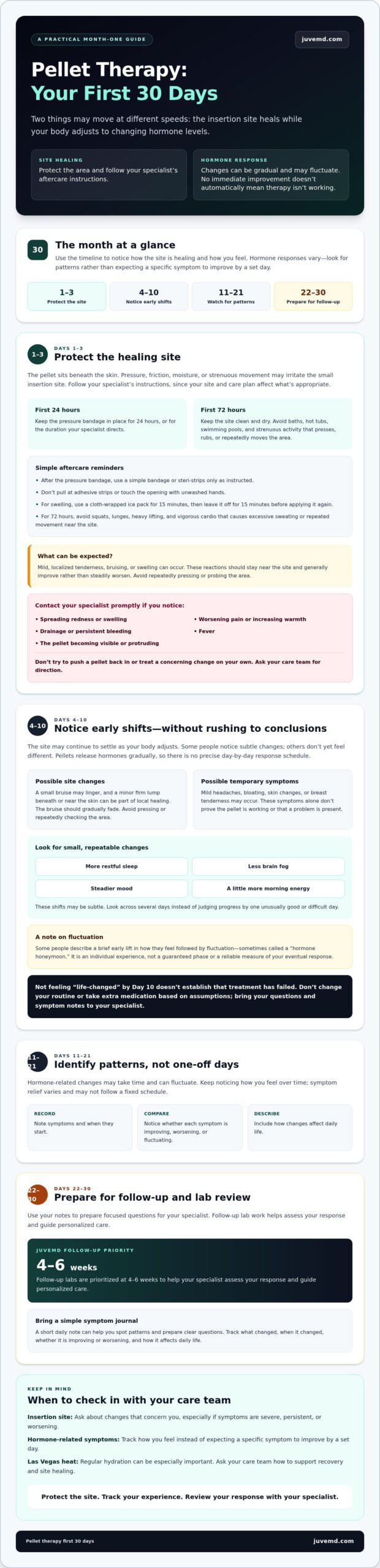
Days 22–30: Preparing for Your Follow-Up & Lab Review
As the first month closes, prepare for a conversation that considers your symptoms alongside clinical data. JuveMD prioritizes follow-up labs at 4–6 weeks. Your clinician will confirm the timing and whether testing is appropriate at this point in your individual plan. A blood test around Day 30 isn’t a universal industry standard, and results need to be interpreted in context, not as a standalone verdict on treatment.
The Symptom Tracking Checklist
Bring a brief, consistent record rather than relying on memory. Rate your energy, sleep, and mood from 1 to 10, and note what a high or low score means for you. Include persistent side effects, such as acne or hair changes, when they began, and whether they’re improving, stable, or worsening.
- Record symptom changes and how they affect daily activities.
- Note relevant changes to your routine or medication, if applicable.
- Ask what symptoms to watch for as the effect of treatment changes over time.
It’s reasonable to ask when results may diminish, but the timing varies. Review how long hormone pellet results may last and bring questions about your own expected timeline to your specialist.
What Your First Follow-Up Labs Reveal
Lab results provide a snapshot of hormone levels at the time of collection. Your clinician considers those results alongside your symptoms, treatment details, and the timing of the draw. Don’t assume the test captures a definitive “peak” or proves on its own that a dose is safe or effective. Follow the clinic’s instructions about when to have blood drawn and whether any preparation is needed.
Dr. Andrea Dempsey and the JuveMD team can use follow-up information to guide personalized care and discuss whether adjustments may be appropriate. The first treatment cycle isn’t necessarily a “loading dose” in the clinical sense. It’s an opportunity to observe your response and inform future decisions. Don’t change or repeat treatment based on symptoms or lab values without your specialist’s guidance.
The pellet therapy first 30 days are one part of an ongoing assessment, not a pass-or-fail test. If you’re preparing for follow-up, connect with JuveMD about personalized pellet therapy care and confirm the appropriate lab timing with your care team.
Optimizing Your Results: The JuveMD Approach in Las Vegas
Las Vegas heat can shape your routines during the pellet therapy first 30 days, especially if you spend time outdoors or exercise in warm weather. It doesn’t mean the climate changes how your pellet works. Focus on practical recovery habits, follow your specialist’s instructions, and bring questions about symptoms or the insertion site to your care team.
Desert Climate Considerations
During hot weather, drink fluids regularly and adjust outdoor activity to your comfort and care instructions. Hydration supports general wellbeing, but it shouldn’t be presented as a way to speed hormone absorption or guarantee site healing. Electrolyte drinks aren’t necessary for everyone. Ask a clinician before using them routinely, particularly if you have a health condition or take medication that affects fluid or salt balance.
Protect the healing area from rubbing and direct sun. Choose clothing that shields the site without pressing on it, and follow your clinician’s instructions about when it’s appropriate to apply sunscreen near the area. If heat, sweating, or activity seems to irritate the site, scale back and ask your care team for guidance.
Personalized Guidance and Next Steps
Dr. Andrea Dempsey leads JuveMD’s personalized approach to bioidentical pellet hormone therapy. Your recovery, symptoms, and follow-up findings can help shape guidance for your individual needs. If you’re uncertain whether a site check is appropriate, contact the clinic to ask how to proceed. Don’t assume a specific appointment option is available.
JuveMD also offers injectables, skin treatments, weight loss, and hair restoration. These are separate offerings, not automatic parts of pellet therapy. If you’re considering another wellness goal, discuss whether and when it makes sense to address it alongside your hormone care rather than starting several changes at once.
For a broader perspective beyond the first month, read JuveMD’s complete 2026 clinical guide to bioidentical hormone replacement therapy in Las Vegas. Use it to prepare questions about longer-term monitoring and care. Your specialist can help interpret your experience and follow-up results, so next steps reflect your individual response rather than a one-size-fits-all timeline.
Move Forward With a Clear, Personalized Plan
The pellet therapy first 30 days involve both site healing and gradual adjustment. Protect the insertion site during early recovery, and remember that symptom changes don’t follow a guaranteed timetable. Tracking sleep, energy, mood, and lingering concerns can help you describe your experience more clearly at follow-up.
Lab review is another part of the process. JuveMD prioritizes follow-up labs at 4–6 weeks, giving your specialist information to consider alongside your symptoms. Together, these observations can help guide decisions about ongoing care.
Led by Dr. Andrea Dempsey, JuveMD takes a personalized approach to bioidentical hormone replacement therapy for men and women. If you’re considering hormone optimization or want guidance on your next steps, schedule your hormone optimization consultation with JuveMD in Las Vegas today.
With attentive follow-up and a plan tailored to your needs, you can approach the next stage with greater clarity and confidence.
Frequently Asked Questions
Is it normal to feel a hard lump at the pellet insertion site after 10 days?
A small, firm area can remain as the tissue heals, but your specialist is best placed to assess a lump that persists. Avoid pressing, massaging, or trying to move it. Contact your care team if it’s growing, increasingly painful or warm, or accompanied by spreading redness, drainage, fever, or a pellet you can see or feel protruding. If you’re unsure, describe what you notice and ask whether the site should be checked.
When can I resume heavy weightlifting or high-intensity interval training?
Resume strenuous exercise only after following your specialist’s aftercare instructions and when the insertion site is healing comfortably. Avoid activities that press on, stretch, or repeatedly rub the area during the early healing period. Even after initial restrictions end, return gradually rather than immediately lifting heavily or doing intense intervals. Stop if movement irritates the site, and ask your JuveMD clinician for guidance specific to your insertion location and recovery.
What should I do if I don’t feel any different after the first two weeks?
Not noticing a change after two weeks doesn’t necessarily mean pellet therapy isn’t working. Hormone release and symptom response vary, and improvement may be gradual rather than dramatic. Keep a brief record of sleep, energy, mood, and other concerns, and share it at follow-up. JuveMD prioritizes follow-up labs at 4–6 weeks to help assess your response alongside symptoms. Don’t adjust treatment on your own. Discuss your questions with your Las Vegas specialist.
Can I drink alcohol during the first 30 days of pellet therapy?
There isn’t enough information here to give everyone the same alcohol guidance. Ask your prescribing clinician whether alcohol is appropriate with your individual treatment plan, medications, or health history. If you choose to drink, avoid letting it interfere with wound care, hydration, sleep, or your ability to notice changes in symptoms. Keeping a consistent routine during the first month can also make it easier to track how you’re feeling.
Will I experience a “crash” before my next pellet insertion?
A “crash” isn’t inevitable, and no exact timeline applies to everyone. Hormone levels and symptoms can change over time, so some people may notice a gradual return of symptoms while others experience a different pattern. Track changes in energy, sleep, mood, and other concerns, then discuss them with your specialist. Your next insertion timing should be based on clinical assessment, not a predicted wear-off date or symptoms alone.
How do I know if my pellet insertion site is infected or just healing?
Mild, localized tenderness or bruising may occur during healing, but worsening or spreading symptoms need medical attention. Contact your specialist if redness or swelling expands, pain increases, the area becomes increasingly warm, or you notice drainage, persistent bleeding, or fever. Don’t try to treat a suspected infection or manipulate the pellet yourself. If you’re uncertain, contact your JuveMD care team and explain what has changed at the site.
Can I use a heating pad on the insertion site if it feels sore?
Don’t apply a heating pad to the insertion site unless your clinician specifically recommends it. Heat may irritate sensitive healing skin, and a pad can make it harder to notice changes in redness or swelling. Follow your aftercare instructions for soreness, and contact your specialist if discomfort is worsening or not settling. Avoid putting pressure directly on the site, and don’t use heat to try to change the pellet’s position.
Do I need to change my diet during the first month of hormone optimization?
You don’t necessarily need a special diet unless your clinician recommends one for your individual health needs. Aim for consistent meals and regular fluid intake, especially during Las Vegas heat, and avoid making several major lifestyle changes at once if you’re trying to track symptoms. Tell your specialist about supplements or substantial diet changes, since they may be relevant to your care. No specific food guarantees better pellet results.