
What if your body could automatically regulate its own hormone levels without you ever having to remember a pill or apply a messy cream? Most patients seeking relief from menopause or andropause symptoms are exhausted by the daily “rollercoaster” of traditional treatments. You might feel a surge of energy in the morning only to crash by dinner, or perhaps you’re constantly worried about accidentally transferring topical gels to your pets or partner. Understanding how does pellet hormone therapy work is the first step toward reclaiming a sense of steady, predictable vitality.
At JuveMD, we view hormone optimization as a partnership between clinical science and your body’s unique biology. Unlike synthetic options that require digestive processing, bioidentical pellets are tiny, grain-of-rice-sized implants that sit just beneath the skin. They release hormones based on your blood flow, mimicking the way your endocrine system functioned at its peak. This article provides a clinical deep dive into the biological mechanism behind these pellets. You’ll discover why this delivery method is often superior to traditional HRT and how it offers a true medical solution for those seeking long-term balance without the daily effort.
Key Takeaways
- Explore the biological mechanism of cardiac output delivery and how it allows your body to regulate hormone release based on real-time physical demand.
- Gain clarity on how does pellet hormone therapy work to provide a steady physiological state that traditional pills and patches often fail to maintain.
- Compare the clinical advantages of bioidentical pellets against common HRT methods to see why many patients prefer a solution with zero daily maintenance.
- Learn about the personalized diagnostic process and dosing algorithms used to tailor your optimization plan to your unique metabolic profile.
- Identify the specific environmental and lifestyle factors in Las Vegas that can impact how long your pellet therapy remains effective.
What is Pellet Hormone Therapy? The Bioidentical Foundation
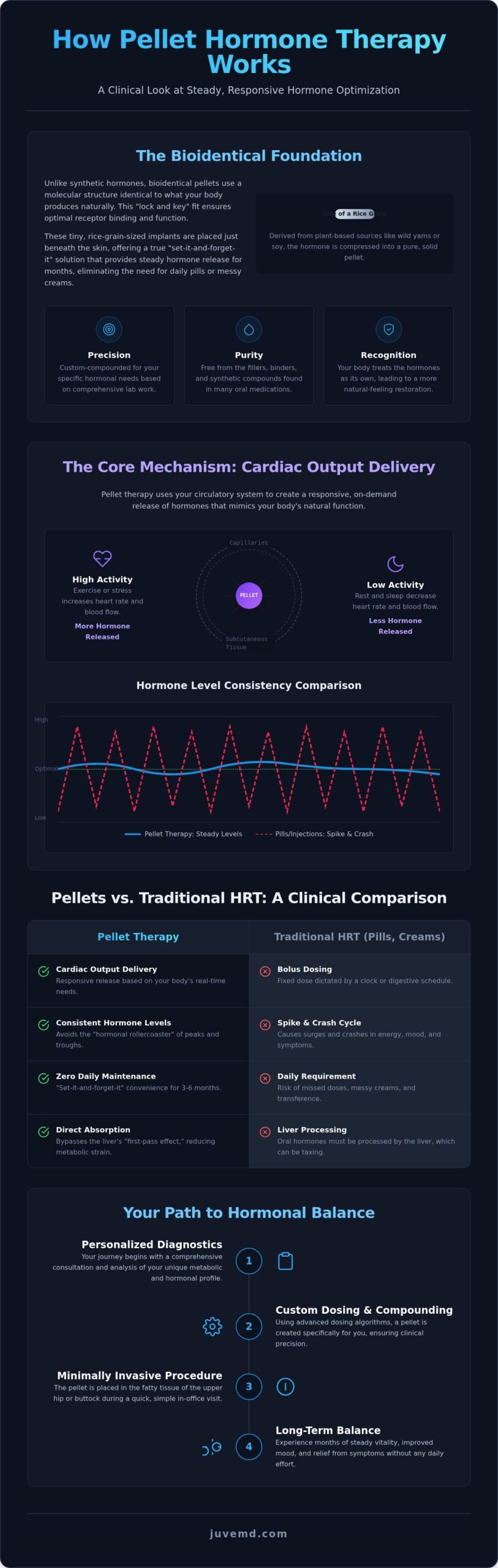
Understanding how does pellet hormone therapy work begins with its foundation: the bioidentical hormone pellet. These are custom-compounded cylinders designed to restore physiological balance with clinical precision. Unlike the synthetic hormones often used in conventional Hormone Replacement Therapy (HRT), bioidentical hormones possess the exact molecular structure as those produced naturally by the human body. This distinction is critical for both safety and efficacy, as it ensures your system processes the supplement without the confusion caused by foreign chemical structures.
For the busy Las Vegas professional or active adult, this method offers a “set-it-and-forget-it” advantage. Traditional treatments like daily pills or messy topical creams often lead to inconsistent results due to missed doses or poor absorption. Pellets eliminate these variables. Once a specialist like Dr. Andrea Dempsey places the pellet, it provides a steady release of hormones for months. You don’t have to worry about daily maintenance or the risk of transferring creams to family members and pets.
The Anatomy of a Hormone Pellet
A hormone pellet is a masterpiece of pharmaceutical compounding. It isn’t a liquid or a gel; it’s a solid, compressed cylinder of pure hormone powder. These pellets are remarkably small. Most are no larger than a grain of rice or a small Tic-Tac, making the insertion process minimally invasive. Despite their size, they’re highly concentrated. They’re typically derived from plant-based precursors, such as wild yams or soy, which are then synthesized in a laboratory to become chemically identical to human estradiol or testosterone.
Why Bioidentical Matters for Long-Term Health
The JuveMD philosophy centers on the “lock and key” principle of endocrinology. Your body’s hormone receptors are highly specific. Bioidentical hormones fit these receptors perfectly, which minimizes the “noise” and side effects often associated with synthetic alternatives found in standard birth control or older HRT protocols. By using hormones your body recognizes as its own, we promote long-term vitality and health optimization. This bioidentical match is a core reason why so many people ask how does pellet hormone therapy work to provide such a natural-feeling restoration of energy and mood. It’s about working with your biology, not against it.
- Precision: Custom-compounded for your specific hormonal needs.
- Purity: Free from the fillers and synthetic bonds found in many oral medications.
- Recognition: Your body treats these hormones as if they were self-produced.
The Biological Mechanism: How Pellets Release Hormones
The secret to successful hormone optimization isn’t just the medicine itself; it’s the delivery. When patients ask how does pellet hormone therapy work, the answer lies in cardiac output. This biological mechanism ensures that hormone release isn’t dictated by a clock or a digestive schedule, but by your body’s real-time physical demands. It’s a responsive system that mirrors your natural endocrine function with remarkable accuracy.
During the procedure, the pellet is placed in the subcutaneous fatty tissue, usually in the hip or buttock area. This specific layer of tissue is highly vascularized, meaning it’s rich in capillaries. These tiny blood vessels surround the pellet, creating a direct interface between the hormone source and your circulatory system. As your heart rate increases during exercise or periods of stress, blood flow through these capillaries accelerates. This naturally draws more of the hormone into your bloodstream. When you’re resting, the release slows down accordingly.
This physiological approach is vastly different from “bolus” dosing found in pills or injections. Those methods create a massive spike in hormone levels shortly after administration, followed by a sharp crash as the body metabolizes the dose. This cycle often leaves patients feeling like they’re on a hormonal rollercoaster. According to an NIH review of bioidentical hormone therapy, consistent delivery is a primary factor in patient satisfaction and symptom relief.
Blood Flow vs. Digestion: A Superior Delivery Path
When you take a pill, the hormones must pass through your digestive tract and the liver before entering the general circulation. This is known as the “first-pass effect,” which can be taxing on liver health and often results in the conversion of hormones into less desirable metabolites. Pellets bypass the liver entirely. This direct-to-bloodstream path allows the body to naturally regulate the absorption rate based on your activity levels. Cardiac output delivery is the mechanism that ensures hormones are available when the body needs them most. If you’re tired of the ups and downs of other methods, consulting with a specialist about bioidentical pellet therapy might be the right next step for your health optimization.
Maintaining the “Steady State” of Hormonal Balance
The primary goal of pellet therapy is to achieve a “steady state,” where hormone levels remain within a therapeutic window for three to six months. By avoiding the peaks and valleys of traditional HRT, your body can maintain a consistent internal environment. This stability has a profound impact on your daily life. Patients often report significant improvements in mood, sleep quality, and metabolic health because their systems aren’t constantly trying to adjust to fluctuating levels. It’s this clinical consistency that defines how does pellet hormone therapy work to restore your sense of well-being so effectively.
Pellets vs. Traditional HRT: A Clinical Comparison
When evaluating hormone replacement therapy, it’s important to look at how the delivery method impacts your daily life. Traditional HRT often relies on oral tablets, transdermal patches, or topical creams. While these can be effective for some, they carry a high risk of user error. Forgetting a pill or skipping a day of cream application disrupts the hormonal balance we strive to achieve. This inconsistency is a primary reason why patients ask how does pellet hormone therapy work differently. Pellets remove the human element from the equation, providing a steady stream of hormones without the need for a daily routine.
The Pitfalls of Oral and Topical Hormones
Oral hormones face a significant challenge before they even reach your bloodstream. Stomach acid and liver metabolism can degrade the active ingredients, often requiring higher doses to achieve the desired effect. Topical creams present a different set of obstacles. The “transfer risk” is a major concern for parents and pet owners; accidental contact can expose children or animals to potent hormones. Additionally, many patients find gels and patches to be a “sticky mess” that causes skin irritation or rashes. According to the Cleveland Clinic guide to bioidentical hormones, finding the right delivery method is essential for long-term compliance and safety. There’s also a significant psychological benefit to pellets: you aren’t reminded of your “treatment” every single morning, allowing you to focus on your wellness instead of your symptoms.
Why Pellets Are the Preferred Choice for Active Lifestyles
For those living in the Las Vegas valley, the environment plays a huge role in treatment success. Extreme heat and perspiration often cause transdermal patches to lose their adhesion or fail to absorb correctly. If you’re an active adult who enjoys swimming, high-intensity workouts, or simply spending time outdoors, you don’t want to worry about a patch falling off or a cream washing away. Pellets are housed safely beneath the skin, unaffected by external factors. This stability is why clinical experts prefer pellets for patients seeking optimization rather than just baseline replacement. When you understand how does pellet hormone therapy work to bypass these environmental hurdles, it’s clear why it’s considered the gold standard for consistent, high-performance health. It’s a solution that adapts to your life, rather than requiring you to adapt to your medication. For a deeper look at how personalized hormone protocols are designed for desert-climate residents, our complete clinical guide to bioidentical hormone replacement therapy in Las Vegas covers the full spectrum of treatment considerations.
The JuveMD Clinical Journey: What to Expect
At JuveMD, we believe the path to wellness should be as seamless as the therapy itself. While understanding how does pellet hormone therapy work biologically is vital, knowing what to expect during your visit provides the peace of mind necessary for a successful transformation. Our boutique Las Vegas clinic, led by Dr. Andrea Dempsey, prioritizes a personalized approach that moves beyond the standard medical model. We focus on optimization rather than simply reaching the bottom of a “normal” range, ensuring your treatment is as unique as your biology.
Step 1: The Precision Lab Analysis
We begin every journey with comprehensive diagnostic testing. Standard laboratory ranges are often too broad to address the nuances of individual well-being; what’s “normal” for one person may leave another feeling symptomatic. We track specific markers including estradiol, testosterone, and thyroid function to create a complete hormonal profile. This data feeds into a sophisticated dosing algorithm that Dr. Dempsey uses to calculate a custom formulation. Every dose is tailored to your specific metabolic needs, body composition, and health goals.
Step 2: The Painless Insertion Procedure
The insertion itself is a quick, 15-minute procedure designed for maximum comfort in our clinical setting. We use a local anesthetic to thoroughly numb the area, typically the upper hip or buttock. A tiny incision is made, no larger than a grain of rice, to allow for the placement of the pellets into the subcutaneous tissue. You won’t need stitches. A simple Steri-Strip and a small bandage are all that’s required to close the site. Most patients return to their daily routines immediately, though we recommend avoiding strenuous lower-body exercise for the first few days to ensure proper healing. If you’d like a detailed walkthrough of exactly what happens from numbing to bandaging, our step-by-step clinical guide to the hormone pellet insertion procedure covers every stage of the appointment in full.
Step 3: Monitoring and Optimization
Your journey doesn’t end when you leave the clinic. We schedule follow-up blood work at the 4-to-6-week mark to verify your levels and ensure they’re trending toward your optimization goals. This phase is crucial for understanding how does pellet hormone therapy work for your specific body chemistry. It allows us to fine-tune future treatments based on both lab data and your personal symptom relief. For a detailed guide on the adjustment period, we provide a “Pellet Therapy First 30 Days” checklist to help you track your progress. Ready to begin your optimization? Schedule your consultation with Dr. Dempsey at JuveMD today.
Maximizing Results: Longevity and the Las Vegas Lifestyle
Living in the Las Vegas valley presents unique environmental challenges that can influence your hormonal health. From the intense desert heat to the high-pressure lifestyle of local professionals, your body is constantly adapting to external stressors. Understanding how does pellet hormone therapy work within the context of your daily routine is essential for maintaining long-term success. While the pellets provide a steady state of hormones, your individual physiology and lifestyle choices dictate how efficiently your body utilizes that support. Proper hydration and targeted nutrition are particularly vital in our arid climate to ensure optimal blood volume and circulation around the pellet site. Many residents who have explored bioidentical hormone replacement therapy in Las Vegas find that understanding these local factors is key to achieving lasting results.
Why Some Patients “Burn Through” Pellets Faster
Because pellet release is tied to cardiac output, your activity level is the primary driver of how quickly a pellet is absorbed. High-intensity athletes or professionals in high-stress environments often find they “burn through” their pellets faster than sedentary individuals. When your heart rate is frequently elevated, the increased blood flow to the capillary beds surrounding the pellet draws out the hormones at a more rapid pace. This is not a failure of the treatment, but rather a sign that the therapy is responding correctly to your body’s demands.
You may notice the effects beginning to wane as you approach the end of your treatment cycle. Common signs that it’s time for a “boost” include:
- A return of original symptoms like brain fog or fatigue.
- Increased irritability or changes in sleep quality.
- A noticeable dip in physical energy during workouts.
Dr. Andrea Dempsey works closely with patients to identify these patterns, often scheduling the next insertion just before levels drop below the therapeutic window to prevent a return of symptoms.
The Holistic Path: Beyond Just Hormones
Hormone optimization is often the “missing link” in a broader wellness journey. While the biological explanation of how does pellet hormone therapy work focuses on endocrine balance, the results often manifest in other areas of health. Balanced hormones provide the physiological foundation for better skin elasticity and more effective hair restoration. At JuveMD, we often see a powerful synergy between BHRT and our medical weight loss protocols, as stabilized testosterone and estrogen levels make it significantly easier to maintain lean muscle mass and manage metabolic function.
Dr. Dempsey serves as a trusted expert guide, overseeing a comprehensive plan that addresses the person as a whole. Whether you are looking to reclaim your vitality or enhance your aesthetic results, a personalized approach ensures that every treatment aligns with your long-term wellness goals. Schedule your consultation with Dr. Dempsey at JuveMD today.
Reclaim Your Vitality with Clinical Precision
Achieving hormonal balance is more than just symptom management; it’s about restoring the physiological foundation of your health. By understanding how does pellet hormone therapy work, you can move away from the daily “rollercoaster” of pills and messy creams. These bioidentical pellets provide a steady, blood-flow-dependent release that mimics your body’s natural rhythms. This delivery method ensures you maintain optimal levels without the constant worry of missed doses or environmental interference.
Under the expert leadership of Dr. Andrea Dempsey, JuveMD offers a Las Vegas boutique medical experience centered on personalized BHRT protocols. We focus on true optimization, finding the specific levels that allow you to thrive rather than just survive. If you’re ready to experience the benefits of a “set-it-and-forget-it” medical solution, Book Your Hormone Optimization Consultation at JuveMD today. You deserve to feel like the best version of yourself, and we’re here to guide you every step of the way.
Frequently Asked Questions
Is hormone pellet insertion painful?
The insertion process is remarkably comfortable because we prioritize patient ease at JuveMD. Before the procedure begins, Dr. Dempsey applies a local anesthetic to the insertion site, which is typically the upper gluteal area. You might feel a brief pinch or a sensation of pressure during the numbing process, but the actual placement of the pellet is generally painless. Most patients describe the experience as quick and straightforward, lasting only about fifteen minutes. For a complete breakdown of what to expect from start to finish, our hormone pellet insertion procedure guide walks through each clinical step in detail.
How long does it take for hormone pellets to start working?
While every patient’s metabolism is unique, most individuals begin to notice improvements within two to four weeks following their procedure. Some patients report an increase in energy or better sleep quality in as little as seven to ten days. However, the full clinical benefits of the therapy, such as significant relief from hot flashes or a stabilized mood, typically manifest after the first month as your body adjusts to the steady physiological state.
Can hormone pellets be removed if I don’t like the results?
Unlike a traditional implant, hormone pellets are designed to be completely absorbed by your body over time. They cannot be easily removed once they’re placed in the subcutaneous tissue. This is why our comprehensive initial consultation and precise dosing algorithms are so important. We ensure your custom formulation is accurate before the procedure. If adjustments are needed, we fine-tune your next dose based on your clinical feedback and follow-up lab results.
Are hormone pellets FDA approved?
It’s important to distinguish between the hormones themselves and the delivery method. While the bioidentical estradiol and testosterone used in pellets are often FDA-approved, the specific pellet delivery system and the process of custom compounding are not regulated by the FDA. This allows us to personalize the dosage to your exact needs. We use reputable compounding pharmacies to ensure the highest quality and purity for every patient we treat in our Las Vegas clinic.
Will I have a scar from the pellet insertion?
The incision required for pellet placement is extremely small, usually about the size of a grain of rice. Because the opening is so minor, it doesn’t require stitches and is simply closed with a Steri-Strip. While a tiny mark may be visible initially, it typically fades significantly over time and becomes nearly imperceptible. Following our post-procedure care instructions, such as keeping the area dry for the first few days, helps ensure optimal healing.
How often do I need to get new hormone pellets?
Most patients require a new insertion every three to six months. The exact frequency depends on how does pellet hormone therapy work within your specific body, influenced by factors like your activity level, stress, and metabolic rate. Women typically find their pellets last between three and four months, while men often experience a longer duration of four to six months. We monitor your symptoms and lab work to determine the perfect schedule for your optimization.
Can men benefit from pellet hormone therapy too?
Absolutely, pellet therapy is a highly effective solution for men experiencing andropause or low testosterone. Men often prefer this method because it eliminates the need for weekly injections or daily gels that can accidentally transfer to others. By maintaining a steady state of testosterone, men frequently report improvements in muscle mass, libido, and cognitive clarity. Understanding how does pellet hormone therapy work for men is a key focus of our specialized optimization protocols at JuveMD.
Does insurance cover bioidentical pellet therapy?
Most insurance providers don’t cover the cost of bioidentical hormone pellets, as they’re often categorized as elective or wellness-oriented treatments. While some plans might reimburse a portion of the initial lab work or the consultation fee, the pellets and the insertion procedure are typically out-of-pocket expenses. We recommend contacting your insurance carrier directly to verify your specific coverage. Our team can provide the necessary documentation if you choose to submit a claim for reimbursement.