
The expensive serum you apply to your scalp every night might be a waste of time if the real issue is happening inches below the surface. Many people spend years cycling through shampoos and oils, yet they still face the daily anxiety of visible thinning and a widening part. It’s common to feel frustrated when topical treatments fail to deliver results. If you’ve been looking for a definitive hormonal hair loss treatment Las Vegas experts utilize to target the root cause, it’s likely because you’ve realized that surface-level fixes don’t address the internal signals driving your growth cycle.
We believe that hair restoration requires a sophisticated understanding of your body’s internal chemistry. In this article, you’ll discover how addressing the hormonal triggers of thinning can revitalize your growth cycle and restore hair density. We will explain how clinical optimization through bioidentical pellet therapy, a specialty of Dr. Andrea Dempsey, stabilizes endocrine-sensitive follicles to stop active shedding. By moving beyond conflicting advice and focusing on your specific biological needs, you can gain the clarity and relief you deserve. Let’s explore how a clinical approach can transform your hair from the inside out.
Key Takeaways
- Understand how internal shifts in the endocrine system can disrupt the anagen growth phase and trigger premature shedding.
- Learn why bioidentical pellet hormone therapy provides a consistent, systemic solution for restoring hair density from the inside out.
- Identify the clinical differences between masking thinning with topical products and correcting the underlying hormonal triggers.
- Discover the diagnostic process and specialized hormone panels required to develop a truly personalized hair restoration plan.
- See how the hormonal hair loss treatment Las Vegas specialists provide addresses the biological root causes of thinning for long-term results.
The Endocrine Connection: Understanding Hormonal Hair Loss
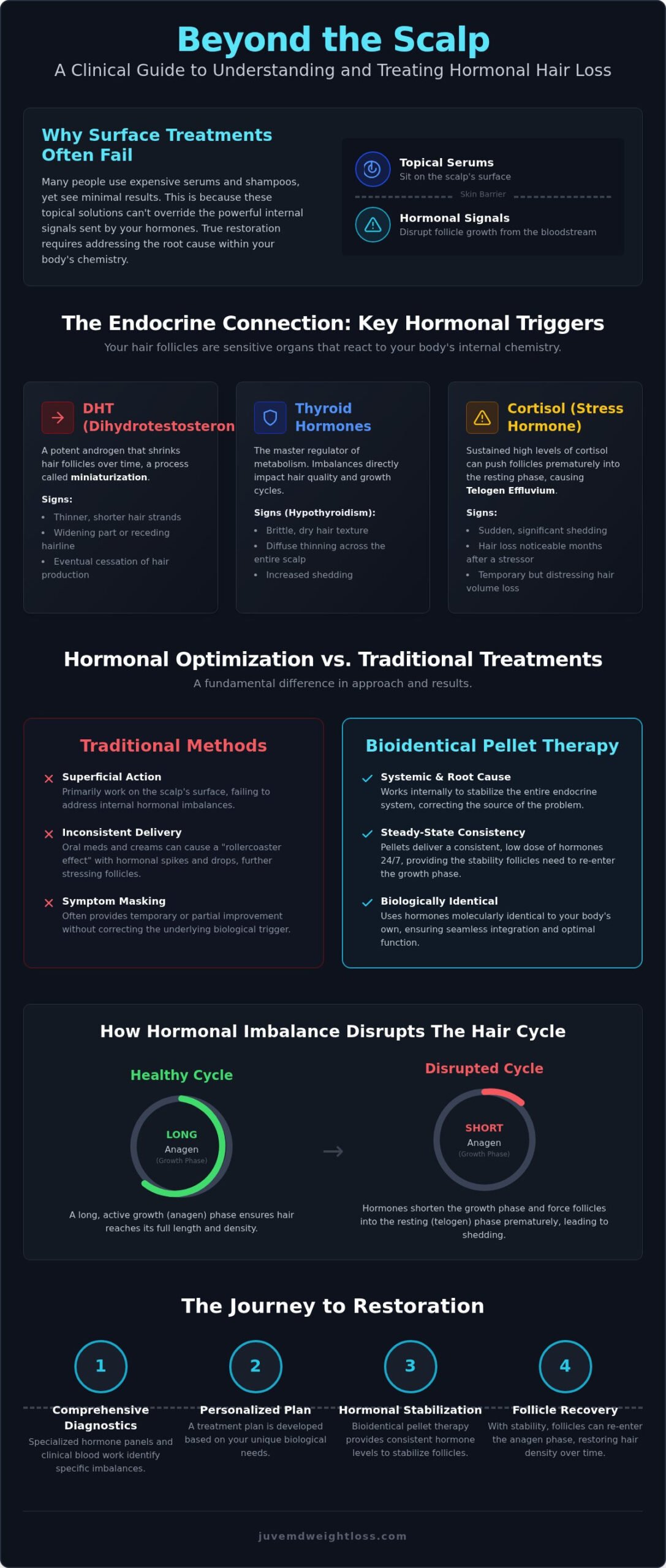
Your hair follicles are far more than simple strands of protein; they are complex, endocrine-sensitive organs that respond to the chemical environment of your bloodstream. When hormone levels shift, your follicles receive new instructions that can abruptly alter their behavior. To understand why thinning happens, it’s essential to view hair growth as a regulated cycle. In a healthy state, your hair moves through an active growth phase called anagen and a resting phase known as telogen. Hormonal imbalances disrupt this rhythm, often shortening the growth period or forcing too many hairs into the resting phase simultaneously.
Most people first attempt to solve thinning with over-the-counter shampoos or serums. However, surface-level treatments often fail because they don’t reach the internal trigger causing the dysfunction. If the signal to stop growing is coming from your hormones, a topical oil cannot override that biological command. This is why many individuals seeking a hormonal hair loss treatment Las Vegas or elsewhere find themselves stuck in a cycle of temporary fixes. True restoration requires clinical blood work to identify specific deficiencies and imbalances. Without a precise look at your internal chemistry, any treatment plan is merely guesswork.
DHT and Androgen Dominance
One of the most common drivers of thinning is a hormone called Dihydrotestosterone, or DHT. This potent androgen is a primary factor in Pattern hair loss for both men and women. When DHT levels are too high, or when follicles become overly sensitive to it, a process called miniaturization occurs. This causes the hair follicle to shrink over time, producing thinner and shorter strands until the follicle eventually stops producing hair altogether. Signs of androgen-related thinning often include a widening part or a receding hairline, indicating that your endocrine system needs stabilization to protect follicle health.
The Impact of Thyroid and Cortisol
Your thyroid gland acts as the master regulator of your metabolism, and its health is directly reflected in your hair’s quality. When thyroid function slows down, a condition known as hypothyroidism, it often leads to brittle, thinning hair that sheds across the entire scalp rather than in a specific pattern. Because your body prioritizes vital organs over hair growth during times of metabolic or hormonal stress, your scalp is often the first place to show signs of trouble.
Cortisol, often called the stress hormone, also plays a significant role in sudden hair changes. High levels of sustained cortisol can trigger a condition that disrupts the natural growth cycle. Telogen effluvium is a temporary but significant shedding event triggered by systemic stress. When your body is under duress, it prematurely pushes follicles into the resting phase, leading to noticeable hair loss months after the initial stressor. Addressing these internal signals through clinical optimization is the only way to return your hair to its natural, healthy density.
Bioidentical Pellet Hormone Therapy for Hair Health
Restoring hair density requires more than just a temporary boost; it demands a fundamental shift in your internal biochemistry. Bioidentical Pellet Hormone Therapy offers a systemic solution by using hormones derived from plant sources that are molecularly identical to those your body produces naturally. Unlike synthetic alternatives, these bioidentical versions fit perfectly into your body’s hormone receptors. This allows for a seamless integration that minimizes side effects while maximizing the restorative potential for your hair follicles.
One of the primary challenges in treating endocrine-related thinning is the “rollercoaster effect” common with oral medications or topical creams. These methods often cause sharp spikes and rapid drops in hormone levels, which can further stress sensitive hair follicles. When individuals search for a hormonal hair loss treatment Las Vegas providers or national experts offer, they’re often looking for a way to stop these fluctuations. Pellets provide a steady-state delivery, ensuring your system remains balanced around the clock. By maintaining a consistent hormonal environment, your body can stop prioritizing vital organ survival and begin diverting nutrients back to your scalp.
Consistency is Key for Follicle Recovery
Hair follicles require an incredible amount of stability to re-enter the anagen, or growth, phase. If hormone levels are constantly shifting, the follicle remains in a state of “alarm,” often staying in the resting phase to conserve energy. Pellets are inserted under the skin and release a constant, low-dose of hormones 24/7 based on your body’s needs. This is a significant advantage over synthetic injections, which often lead to high peaks followed by sluggish valleys. This unwavering consistency provides the reliable environment necessary for dormant follicles to wake up and begin producing healthy, vibrant strands again.
Estrogen and Progesterone Support for Women
For women, the transition into menopause often brings a sharp decline in estrogen and progesterone, both of which are vital for maintaining hair volume. Estrogen helps keep hair in the growth phase for longer periods, while progesterone acts as a natural shield against the follicle-shrinking effects of androgens. Research on Treating female pattern hair loss suggests that addressing these systemic deficiencies is often more effective than local stimulants alone.
By optimizing these levels through clinical intervention, women can see a significant improvement in hair texture and scalp coverage. For a deeper dive into how this technology works, explore our ultimate guide to bioidentical pellet hormone therapy. If you’re ready to address the root cause of your thinning, a personalized hormonal hair loss treatment Las Vegas consultation can help determine the exact balance your body requires for optimal growth.
Hormonal Optimization vs. Traditional Hair Loss Treatments
Traditional hair loss interventions often focus on the follicle in isolation, ignoring the systemic environment that dictates its health. Many people spend years relying on topical solutions that merely mask the symptoms of thinning without addressing why the hair is falling out in the first place. While these options can offer temporary relief, they represent a “masking” effect rather than a corrective one. In contrast, clinical hormonal optimization seeks to fix the internal chemistry, providing a foundation for long-term growth rather than a surface-level patch.
Surgical options like hair transplants are often viewed as a permanent fix, yet they have a significant blind spot. A transplant moves healthy follicles to thinning areas, but if the patient’s hormones remain unbalanced, the surrounding non-transplanted hair will continue to thin. This often leads to an unnatural appearance and the need for repeat surgeries. Stabilizing your internal environment first ensures that any investment in your appearance is protected by a healthy biological foundation. Treating the root cause is ultimately more cost-effective than a lifetime of topical applications that only provide partial results.
Topical Solutions and Their Limitations
Over-the-counter products like Minoxidil or prescription drugs like Finasteride are common starting points, but they come with significant hurdles. Minoxidil, for example, requires twice-daily application for life; if you stop, any progress is typically lost within months. This creates a massive burden of patient compliance that many find difficult to maintain. Research into Hormonal therapy for female hair loss shows that while these drugs can help, they don’t solve the underlying endocrine imbalances that often drive the condition. Furthermore, synthetic hair loss drugs can sometimes carry risks of systemic side effects that impact your overall quality of life. For patients seeking a regenerative alternative that works with the body’s own biology, PRP therapy Las Vegas specialists offer represents a compelling complement to hormonal optimization.
The Role of Clinical Supervision
It’s tempting to reach for “hair vitamins” or DIY supplements found online. While nutrients like biotin and zinc are important, they’re rarely enough to reverse significant hormonal thinning on their own. A medically supervised plan is essential because it uses precise data from blood work to guide every decision. When individuals look for a professional hormonal hair loss treatment Las Vegas or national experts provide, they are usually seeking this level of clinical precision. Expert oversight ensures that hormone replacement is handled safely and with the correct dosage for your specific needs. By moving beyond the supplement aisle and toward hormonal imbalance treatment Las Vegas specialists recommend, you can stop active shedding and create a sustainable environment for regrowth.
The Journey to Restoration: What to Expect During Treatment
Your path to recovery begins with a fundamental shift in perspective. Instead of searching for a universal cure, we focus on identifying the specific biological roadblocks preventing your hair from flourishing. This journey is methodical and transparent, ensuring you understand the science behind every clinical decision. By moving away from guesswork and toward a data-driven roadmap, you can regain a sense of control over your appearance and health. The process is designed to be supportive, providing clarity for those who have felt lost in a sea of conflicting advice.
The diagnostic phase is the cornerstone of this entire process. It’s not just about looking at your scalp; it’s about evaluating your entire endocrine system to see how it’s communicating with your follicles. Many patients who have struggled with thinning for years find that their previous providers never looked at the internal signals driving the loss. Finding a definitive hormonal hair loss treatment Las Vegas or any premier clinical center provides starts with a deep dive into your unique medical history, lifestyle factors, and specific symptoms.
Comprehensive Hormone Level Testing
Precision is paramount when dealing with delicate hormone receptors. We utilize specialized hormone panels to measure critical markers like Free Testosterone, Estradiol, and Thyroid-Stimulating Hormone (TSH). These data points allow JuveMD to craft a personalized treatment plan that targets your specific deficiencies rather than using a one-size-fits-all approach. For women, understanding these shifts is especially critical during life transitions, as detailed in our menopause hormone therapy article. These labs provide the objective evidence needed to optimize your levels for maximum hair health.
Timeline for Visible Results
Patience is a necessary component of follicle recovery. Because hair grows in distinct cycles, you won’t see a total transformation overnight. A 3 to 6 month window is typically required to observe significant changes in hair density and scalp coverage. During the initial stage of recovery, you will likely notice a significant decrease in active shedding. This is a vital sign that your follicles are beginning to stabilize and exit the “alarm” phase.
As you progress, the emergence of new growth becomes visible as follicles re-enter the active anagen phase. These new strands often appear finer at first but gain strength and pigment as your hormonal environment remains consistent. Ongoing monitoring is essential during this time to ensure your levels remain in the optimal range for sustained growth. If you’re ready to begin your journey toward thicker hair, a clinical hair restoration consultation is the most effective way to identify your specific hormonal triggers and start a targeted plan.
A Holistic Approach: Integrating Aesthetics and Hormonal Health
Hair restoration represents a pivotal component of a modern anti-aging strategy. It’s rarely a standalone issue; instead, it’s a visible indicator of your body’s internal health and hormonal equilibrium. When you optimize your endocrine system, you aren’t just targeting the follicles on your head. You’re often improving your skin’s radiance and your body’s ability to maintain lean muscle mass. JuveMD functions as a premier center for medical wellness, designed to eliminate the frustration of visiting multiple specialists for related health issues. By choosing an integrated clinic, you ensure that your hair, skin, and metabolic health are all managed with a single, cohesive vision.
The Synergy of Weight Loss and Hair Health
Your metabolic health is a foundational element of follicle vitality. Poor insulin sensitivity can create a cascade of hormonal shifts that negatively impact the hair growth cycle. This is why our medical weight loss programs are so effective; they address the metabolic stress that often underlies thinning. A healthy metabolism ensures your blood is an efficient carrier of the vitamins and minerals your scalp requires. When your body is metabolically flexible, it can prioritize the anagen phase rather than just basic physiological maintenance. This holistic correction is often the missing piece for those who haven’t seen results from topical treatments alone.
Optimal nutrient delivery is impossible if the body is in a state of metabolic distress. When insulin and glucose levels are stabilized, systemic inflammation decreases, allowing the scalp’s microcirculation to function at its peak. This creates a fertile environment for hair follicles to thrive. By integrating weight management with hair restoration, you address the “Wellness from Within” philosophy that is central to long-term aesthetic success. It’s a comprehensive way to ensure your body has the resources it needs to support new growth.
Expert Care with Dr. Andrea Dempsey
Dr. Andrea Dempsey brings a high standard of specialized care to the intersection of hormones and aesthetics. Her commitment to education means that every consultation is a supportive and transparent experience, focusing on demystifying complex biological connections. This personalized attention allows for the correction of misunderstandings regarding DHT, thyroid function, and estrogen balance. Her expert-led perspective positions the clinic as a leader in clinical optimization, providing a sense of security for those seeking specialized care.
Whether you’re seeking a hormonal hair loss treatment Las Vegas or a comprehensive wellness plan, her expertise ensures your treatment is grounded in professional knowledge. A personalized consultation is the most effective way to move past generic advice and identify the specific hormonal triggers for your thinning. This expert oversight ensures that your journey toward regrowth is safe, effective, and rooted in the latest medical research. Taking this first step toward clinical clarity is about more than just hair; it’s about reclaiming your overall sense of vitality and confidence.
Reclaiming Your Confidence Through Clinical Clarity
Thinning hair doesn’t have to be a permanent part of your story. By shifting the focus from topical cover-ups to internal optimization, you address the physiological signals that dictate your growth cycle. We’ve explored how steady-state hormone delivery through bioidentical pellets creates the stability your follicles need to re-enter the anagen phase. This comprehensive medical wellness approach ensures that your hair restoration is supported by a healthy metabolic foundation rather than temporary surface fixes.
When you choose a specialized hormonal hair loss treatment Las Vegas experts recommend, you’re investing in a science-based path to thicker, more resilient hair. Led by Dr. Andrea Dempsey, our clinic provides the personalized attention required to demystify your specific hormonal triggers and metabolic needs. It’s time to move past the frustration of ineffective treatments and embrace a solution that works from the inside out. Schedule Your Clinical Hormone Consultation at JuveMD today to begin your journey toward lasting restoration. You deserve to feel vibrant, empowered, and confident in your own skin again.
Frequently Asked Questions
Is hormonal hair loss reversible with treatment?
Yes, many cases of hormonal hair loss are reversible if the follicles remain viable and haven’t completely miniaturized. By balancing hormones like DHT, estrogen, and thyroid levels, you can effectively stop active shedding and encourage new regrowth. Clinical intervention focuses on returning follicles to the active anagen phase. Your success depends on how early you begin treatment and how consistently you maintain your hormonal balance through professional optimization.
How do I know if my hair loss is hormonal or hereditary?
It is common for these two factors to overlap because hereditary hair loss is frequently triggered by a genetic sensitivity to hormones like DHT. Hereditary loss usually follows a predictable pattern, such as a receding hairline, while hormonal loss can be more diffuse or sudden. Diagnostic blood work is the only way to confirm if an internal imbalance is the primary driver. Identifying the specific trigger helps in selecting the right clinical path for restoration.
Are bioidentical hormone pellets safe for hair restoration?
Bioidentical pellets are considered a safe and effective option for many patients because they use hormones that are molecularly identical to your own. This delivery method provides a steady release, avoiding the spikes and crashes associated with synthetic alternatives. When searching for a hormonal hair loss treatment Las Vegas patients can trust, clinical oversight by a provider like Dr. Andrea Dempsey ensures that your dosage is precise and monitored. This consistent delivery is essential for follicle health.
Can menopause cause permanent hair loss?
Menopause causes a significant drop in estrogen and progesterone, which can lead to permanent thinning if left unaddressed. These hormones protect the hair follicles from the effects of androgens. While the follicles may not die immediately, prolonged deficiency can lead to irreversible miniaturization. Early clinical optimization can often preserve hair density and prevent long-term damage to the scalp. Addressing these shifts early is the key to maintaining your hair’s volume and vitality.
How long does it take for hormone therapy to affect hair growth?
Patients typically see a reduction in shedding within the first three months of treatment. Visible regrowth and increased density usually take six months or longer because hair grows in slow cycles. Consistency is vital during this period. You are essentially retraining your follicles to stay in the growth phase longer, which requires a stable internal environment over several months. Tracking your progress with a clinical provider helps ensure your levels stay optimized for growth.
Do I need a prescription for hormonal hair loss treatment?
Yes, effective hormonal treatments require a medical prescription and professional supervision. This ensures that the therapy is tailored to your specific blood work results and health history. Over-the-counter options lack the potency and precision needed to correct systemic imbalances. A medically supervised plan, such as a hormonal hair loss treatment Las Vegas consultation, provides the diagnostic accuracy necessary for real results. It also ensures your safety by monitoring how your body responds to the therapy.
Will insurance cover my hormonal hair loss consultation?
Insurance coverage for hormonal consultations varies significantly depending on your specific plan and the underlying medical diagnosis. Many providers don’t cover treatments deemed purely aesthetic, but they may cover the initial diagnostic blood work if it relates to a systemic condition like thyroid dysfunction. You should check with your insurance provider to understand your out-of-pocket responsibilities before beginning a clinical program. Our team can provide the necessary documentation to assist with your claim process.
Can testosterone therapy cause hair loss in women?
Testosterone can contribute to hair thinning in women if it converts into Dihydrotestosterone (DHT) at high levels. This is why proper dosing and clinical monitoring are essential. When testosterone is balanced with estrogen and progesterone, it can actually support overall vitality without damaging the hair. A specialized provider ensures your hormone ratios remain in a range that supports growth rather than triggering shedding. Regular lab work is used to maintain this delicate balance for long-term health.