
Perimenopause isn’t a simple hormone deficiency; it’s a physiological roller coaster that often starts years before your final period. If you’ve been told your labs are “normal” while you struggle with sudden anxiety, stubborn weight gain, and a mental fog that won’t lift, you’re experiencing the volatility of perimenopause hormone therapy needs firsthand. For many women in 2026, the traditional approach of “waiting it out” is no longer acceptable. You deserve a solution that addresses the root cause of these fluctuations rather than just masking the symptoms.
It’s frustrating to feel like a stranger in your own body, especially when your career and family life require you to be at your best. We understand that the unpredictable spikes and crashes of estrogen and progesterone can make daily life feel like a constant uphill battle. This clinical guide explores how bioidentical pellet therapy stabilizes these perimenopausal fluctuations to restore your energy, mood, and metabolic health. You’ll discover why steady-state delivery often succeeds where pills and patches fail. We’ll also examine the 2026 FDA regulatory shifts and how a personalized medical plan from a specialist can help you reclaim cognitive clarity and physical vitality.
Key Takeaways
- Understand why perimenopause is a hormone roller coaster and how fluctuating levels cause symptoms even while you still have a regular cycle.
- Learn why bioidentical pellets avoid the first-pass liver stress and blood clot risks often associated with traditional oral hormone pills.
- Discover how perimenopause hormone therapy using bioidentical pellets provides steady-state delivery for 3 to 5 months to eliminate daily energy crashes.
- Explore the window of opportunity for initiating therapy to maximize long-term neuro-protective benefits and metabolic health.
- Find out how a specialized consultation with Dr. Andrea Dempsey uses comprehensive lab work to create a restoration plan tailored to your unique biology.
Understanding Perimenopause: Why Your Hormones Feel Like a Roller Coaster
Perimenopause is the seven to ten year transition leading up to a woman’s final menstrual period. It’s a phase often misunderstood because it doesn’t look like a steady, predictable decline. Instead, it’s a period of intense hormonal erraticism. While menopause is characterized by a definitive hormone deficiency, perimenopause is defined by chaos. Understanding this distinction is vital for anyone considering perimenopause hormone therapy to manage their health effectively.
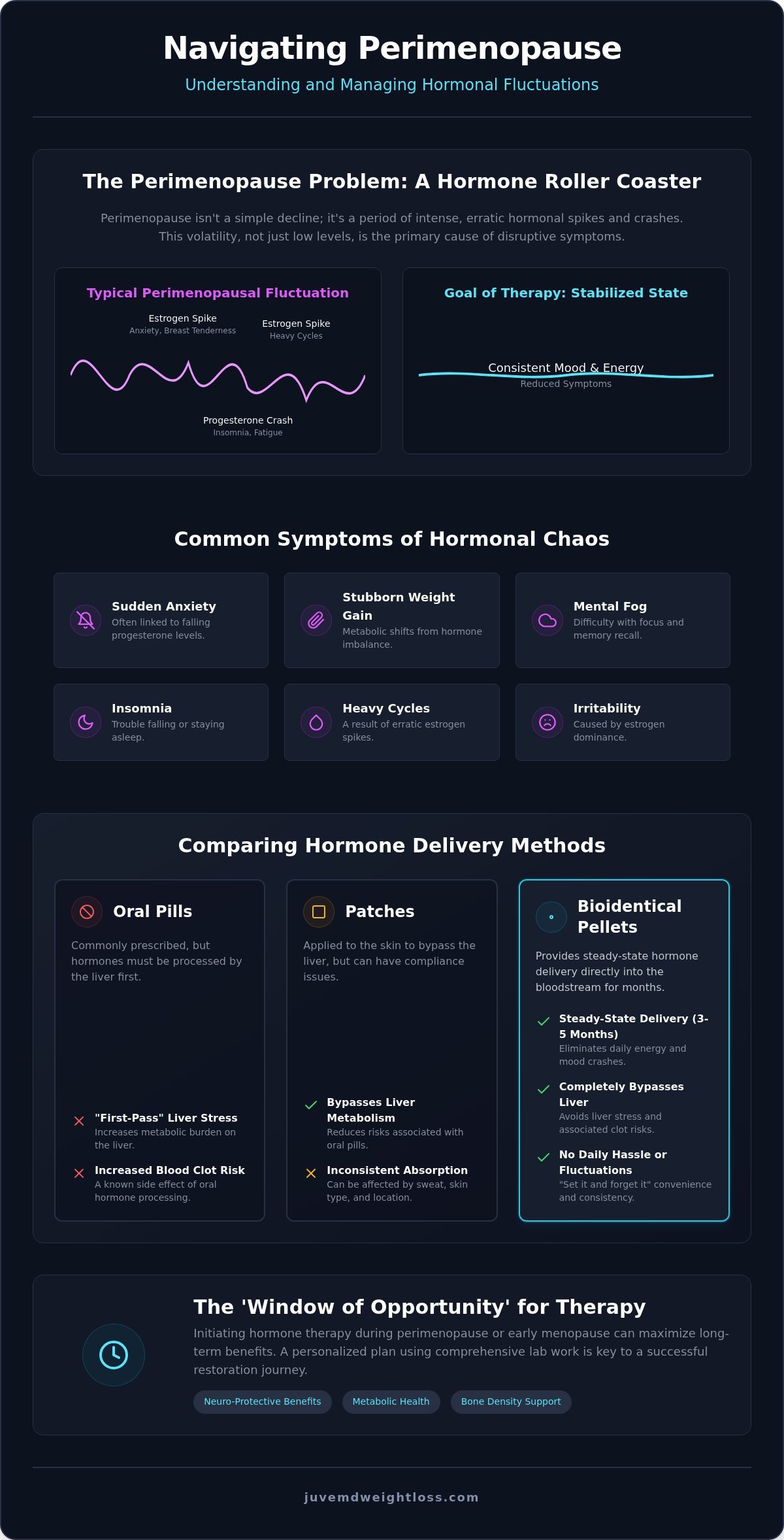
This biological chaos is driven by the brain’s attempt to stimulate the ovaries. As ovarian reserve diminishes, the pituitary gland increases production of Follicle Stimulating Hormone (FSH) and Luteinizing Hormone (LH). These elevated signals often cause the ovaries to overreact, resulting in massive, erratic estrogen spikes followed by sharp crashes. This is why you might feel energetic one day and completely overwhelmed the next. It is not a lack of hormones causing the trouble; it is the instability of the levels themselves.
Many women feel dismissed when their primary care physician reports that their blood work is normal. The reality is that a single blood draw is merely a snapshot in time. Because levels fluctuate so wildly during this transition, a lab test taken on Tuesday might show perfect levels, even if you were in a symptomatic crisis on Monday. Hormone replacement therapy (HRT) protocols must account for these fluctuations rather than relying solely on static lab values that fail to capture the full clinical picture.
The Symptoms of Hormonal Erraticism
When estrogen spikes too high, it frequently leads to physical discomforts such as intense breast tenderness and unexpectedly heavy cycles. These aren’t signs of too little estrogen, but rather the result of the “roller coaster” effect. These spikes can be just as disruptive as the subsequent crashes, which often leave you feeling depleted and exhausted. The goal of treatment is to smooth out these peaks and valleys.
Progesterone often begins to drop long before estrogen does. This depletion is a primary driver of perimenopausal insomnia and a sudden, unexplained sense of anxiety that can affect your career and home life. You can learn more about identifying these specific shifts in our guide to hormone imbalance symptoms in women.
The Role of Progesterone in the Early Transition
Progesterone levels typically start their descent in a woman’s late 30s. Even if estrogen levels remain technically within a normal range, this drop creates a state of “estrogen dominance.” Without enough progesterone to balance its effects, estrogen’s influence becomes disproportionate, leading to irritability, water retention, and weight gain. It’s a delicate internal scale that has tipped in the wrong direction.
A key factor in this transition is luteal phase insufficiency, which occurs when the body doesn’t produce enough progesterone after ovulation to maintain the uterine lining or support a calm mood. This specific deficiency is often the root cause of the emotional volatility experienced during the second half of the menstrual cycle. Using perimenopause hormone therapy to restore this balance can provide the stability needed to navigate these years with confidence and clarity.
Comparing Hormone Delivery Methods: Pills, Patches, and Pellets
Choosing the right delivery system is as important as the hormones themselves. In 2026, women have access to various FDA-approved hormone therapies and custom-compounded options. Systemic therapy, which travels through the bloodstream to reach the whole body, is the gold standard for treating the complex symptoms of perimenopause. Local therapies, such as vaginal creams, only address specific regional issues and aren’t sufficient for stabilizing mood or energy.
Oral pills are common but come with the “first-pass” problem. When you swallow a pill, the liver must process the hormones before they enter the circulation. This metabolic step can increase the risk of blood clots and put unnecessary stress on the liver. For many women, this makes oral options less than ideal, especially when better alternatives exist that bypass the digestive system entirely.
Transdermal patches offer a skin-based alternative that bypasses the liver. While they provide a more direct route, they aren’t without flaws. Many women find that the adhesive irritates their skin or that the patch doesn’t stay in place during exercise or swimming. More importantly, absorption can be inconsistent. This leads to the same “peaks and valleys” that perimenopause hormone therapy should ideally eliminate.
Bioidentical pellets represent a sophisticated shift in delivery. These small implants, roughly the size of a grain of rice, are placed just under the skin. They use a unique mechanism where hormone release is driven by cardiac output. As your heart rate increases during activity, your body naturally receives more hormones, mimicking the rhythmic secretion of healthy ovaries. Choosing a delivery method is the first step toward feeling like yourself again, and many women find that working with a specialized provider makes all the difference.
Why Delivery Method Matters for Perimenopause
Perimenopause causes a unique type of neurological instability. The brain is highly sensitive to the sudden drops in estrogen and progesterone discussed in the previous section. Pellets provide a steady-state release that stabilizes the perimenopausal brain, preventing the mood crashes and cognitive fog that daily dosing can struggle to manage. For busy professionals and active women, the convenience of a “set it and forget it” system that lasts three to five months is a significant lifestyle benefit that removes the stress of daily pill-taking.
Bioidentical vs. Synthetic: What’s the Difference?
The term “bioidentical” refers to hormones that are molecularly identical to those your body produces naturally. Synthetic hormones, while effective for some, have a slightly different structure that can lead to different side effects. You can explore more in the ultimate guide to bioidentical pellet hormone therapy. Bioidentical options are now the preferred clinical standard for personalized restoration because they allow for precise, individualized dosing. This ensures your treatment matches your body’s specific requirements rather than a one-size-fits-all pharmaceutical model.
The Clinical Advantages of Bioidentical Pellet Therapy for Women
Bioidentical pellet therapy offers a “set it and forget it” solution that addresses the logistical and physiological shortcomings of traditional delivery methods. These small, custom-compounded implants are placed subcutaneously, typically every three to five months. This frequency eliminates the burden of daily pill-taking or weekly patch changes, providing a level of convenience that matches the demands of a high-performance lifestyle. Because the pellets reside in the fatty tissue, they provide a constant, low-dose release of hormones into the bloodstream, bypassing the digestive tract entirely.
The primary clinical advantage lies in how pellets mimic the body’s natural secretion rhythm. Unlike other forms of perimenopause hormone therapy, pellet release is driven by cardiac output. This means that as your heart rate increases during physical activity or stress, your body receives a slightly higher concentration of hormones, exactly as it would if your ovaries were functioning at their peak. Recent clinical insights on hormone therapy suggest that this physiological responsiveness is a key factor in patient satisfaction and symptom resolution.
Safety is also a significant consideration for women in their 40s and 50s. By delivering hormones directly into the systemic circulation, pellets avoid the first-pass metabolism in the liver. This reduces the production of clotting factors often associated with oral estrogens, lowering the overall risk profile. Additionally, the inclusion of testosterone pellets is a vital component of this therapy. While often viewed as a male hormone, testosterone is essential for women to maintain libido, preserve lean muscle mass, and ensure mental clarity during the perimenopausal transition.
Stabilizing the Metabolic Rate
Many women notice a sudden shift in their body composition during perimenopause, specifically an increase in visceral fat around the midsection. This is frequently linked to rising insulin resistance as estrogen and testosterone levels fluctuate. Optimized hormones support medical weight loss by improving glucose metabolism and metabolic efficiency. Weight gain in your 40s is often a hormonal, not caloric, issue. When your endocrine system is balanced, your body can once again respond effectively to diet and exercise.
Cognitive Clarity and Mood Stabilization
The “brain fog” associated with perimenopause is more than just a minor inconvenience; it’s a result of estrogen’s influence on critical neurotransmitters like serotonin and dopamine. Steady-state estrogen delivery through pellets helps maintain these neurotransmitter levels, effectively eliminating the cognitive haze and irritability that many women experience. Pellets are particularly effective for this because they prevent the rapid drops in hormone levels that trigger “mood crashes.” If you are struggling with this mental haze, our menopause brain fog treatment clinical case study explores how bioidentical pellet therapy restores cognitive clarity at the hormonal root cause. Ending the monthly cycle of emotional volatility provides profound relief, allowing you to feel focused and present in both your career and your family life.
Timing and Safety: The ‘Window of Opportunity’ for BHRT
The medical consensus in 2026 has reached a watershed moment regarding perimenopause hormone therapy. Clinical experts now emphasize a “window of opportunity” that begins well before your final menstrual cycle. This proactive approach focuses on long-term healthspan rather than just reactive symptom management. By initiating therapy during the perimenopausal transition, women can secure significant neuro-protective benefits. Estrogen is essential for brain health; starting early helps maintain cognitive function and may reduce the long-term risks of cognitive decline.
Cardiovascular health is another critical pillar of early intervention. Estrogen support helps keep arteries flexible and healthy, providing a protective effect during a decade when heart health risks often begin to climb. Furthermore, bone health depends on early action. The most rapid phase of bone loss actually occurs in the two years immediately preceding the final period. Starting treatment during perimenopause preserves bone density before significant, irreversible damage occurs. It’s about building a foundation for the decades ahead.
Addressing the Safety Myths
In early 2026, the FDA removed long-standing “black box” warnings for many systemic hormone products, reflecting a more nuanced understanding of modern safety data. This shift acknowledges that the risks associated with older, synthetic hormones don’t necessarily apply to bioidentical options. However, hormone therapy isn’t a universal solution. Women with a history of certain estrogen-dependent cancers or active blood clots should typically avoid systemic treatment. Professional clinical supervision is mandatory for a safe journey. Regular lab monitoring ensures that your levels remain within a therapeutic range, providing relief while prioritizing your long-term safety.
When Should You Start? The Checklist
You don’t need to wait for your periods to stop completely to begin your restoration journey. In fact, waiting often means enduring years of unnecessary symptoms. If you’re experiencing night sweats menopause treatment needs alongside erratic cycle changes, or a level of unexplained fatigue that rest won’t fix, your body is signaling a shift. These are clinical indicators that your hormonal “roller coaster” has left the station. You can find more details in our menopause hormone therapy guide. If you’re ready to move from guessing to a data-driven plan, consult with our specialists at JuveMD to evaluate your unique hormonal profile and start your personalized restoration.
Personalized Restoration: Starting Your Journey with JuveMD
Transitioning from a state of hormonal chaos to restoration requires more than a standard prescription. It demands a partnership with a provider who understands that perimenopause hormone therapy is not a one-size-fits-all solution. Under the clinical leadership of Dr. Andrea Dempsey, JuveMD specializes in creating personalized paths for women who have felt dismissed by traditional primary care. We move beyond the surface level to address the root causes of your fatigue, weight gain, and mood shifts.
Your journey begins with a comprehensive medical consultation designed to capture your unique biological story. During your first visit, we perform detailed lab work that goes far beyond basic panels. We combine these clinical data points with intensive symptom mapping. This allows us to understand how your hormone levels are impacting your daily life, from your cognitive performance at work to your sleep quality at home. We don’t just look at numbers; we look at the woman behind them.
This data allows us to create a customized pellet “recipe” tailored specifically to your body’s needs. Because we integrate hormone health with metabolic function, your plan often includes strategies for weight management and overall wellness. By stabilizing your endocrine system, we provide the foundational support your body needs to respond effectively to healthy lifestyle choices, helping you overcome the stubborn weight gain that often characterizes the perimenopausal years.
The JuveMD Clinical Approach
Precision is the hallmark of our practice. Unlike generic pharmacy prescriptions that offer limited dosing options, bioidentical pellets allow for exact adjustments based on your laboratory results and clinical feedback. We follow a methodical rhythm, typically scheduling follow-up appointments every three to five months to monitor your progress and ensure your hormone levels remain steady. At JuveMD, our clinical focus isn’t just to return your lab results to a “normal” range; our goal is to ensure you reach an “optimal” state where you actually feel like yourself again.
Taking the First Step Toward Balance
Many women spend years “powering through” symptoms, assuming that anxiety, brain fog, and exhaustion are simply unavoidable parts of aging. There is a science-backed clinical solution that can change that narrative. To prepare for your consultation, we recommend tracking your cycles and noting the specific times of month when your symptoms feel most acute. This information provides invaluable context for your restoration plan.
You don’t have to navigate this transition alone. By choosing a specialized provider, you’re investing in a future defined by clarity and physical vitality. Reclaim your energy and metabolic health with a personalized medical plan designed by experts who prioritize your long-term wellness. Reaching out for a consultation is the first step toward ending the hormonal roller coaster and beginning your era of restoration.
Reclaiming Your Vitality and Hormonal Balance
Perimenopause doesn’t have to be a decade of “powering through” unpredictable symptoms. By choosing a targeted approach with perimenopause hormone therapy, you can move past the erratic spikes and crashes that define this transition. Bioidentical pellets offer a clinical advantage through steady-state delivery, ensuring your brain and body receive consistent support for metabolic health and cognitive clarity. This proactive strategy focuses on your long-term wellness, securing the neuro-protective and cardiovascular benefits that come from early intervention.
You deserve a restoration plan that prioritizes your unique biology and helps you feel like yourself again. Under the clinical leadership of Dr. Andrea Dempsey, our team provides specialized Bioidentical Pellet Hormone Therapy focused on comprehensive hormonal and metabolic optimization. It’s time to stop guessing and start a science-backed journey toward balance. Schedule your personalized perimenopause consultation with JuveMD today and take the first step toward lasting vitality and renewed energy. Your future health is worth the investment.
Frequently Asked Questions
Is perimenopause hormone therapy safe if I still have my period?
Yes, it’s safe and often clinically necessary. You don’t need to be in menopause to benefit. Perimenopause hormone therapy focuses on stabilizing the erratic fluctuations that occur while you’re still cycling. This proactive approach helps manage mood and energy before you reach the final period. Clinical experts recommend starting when symptoms disrupt your quality of life, regardless of your current cycle status.
How do I know if I’m in perimenopause or just stressed?
While stress shares some symptoms, perimenopause is defined by physical and emotional shifts that follow a hormonal pattern. Look for night sweats and sleep disruption requiring targeted menopause treatment, changes in cycle length, and anxiety that feels new or untethered to external events. A specialized consultation with Dr. Andrea Dempsey uses comprehensive lab work and symptom mapping to distinguish between lifestyle stress and the physiological chaos of the perimenopausal roller coaster.
What are the specific benefits of pellets over hormone patches?
Pellets provide a steady-state delivery that patches often fail to maintain. While patches can peel off or cause skin irritation, pellets are placed subcutaneously for consistent release. They also use a cardiac-output-driven mechanism. This means your body receives more hormones during activity, mimicking natural ovarian function. This “set it and forget it” convenience is ideal for busy professionals who want to avoid daily or weekly maintenance.
Can hormone therapy help with perimenopausal weight gain?
Yes, by addressing the underlying insulin resistance and metabolic slowing caused by declining estrogen and testosterone. Weight gain in your 40s is frequently a hormonal issue rather than a caloric one. Optimized perimenopause hormone therapy supports metabolic efficiency, making it easier for your body to respond to exercise and diet. Our comprehensive approach at JuveMD combines hormone restoration with metabolic optimization so you don’t feel stuck.
How long does it take to feel the effects of hormone pellet therapy?
Most women report a noticeable improvement in sleep quality and energy levels within seven to ten days of insertion. However, full optimization of mood and metabolic function typically takes four to six weeks. Your body needs this time to reach a steady state and for your tissues to respond to the restored levels. We’ll monitor your progress closely to ensure you’re meeting your specific restoration goals.
Are there side effects to starting BHRT during perimenopause?
Some women experience temporary breast tenderness or mild spotting as the body adjusts to the new hormonal balance. These symptoms are usually transient and resolve as your levels stabilize. Because bioidentical pellets are molecularly identical to your natural hormones, the risk of adverse reactions is significantly lower than with synthetic alternatives. Regular lab monitoring and clinical supervision ensure that your dosage’s adjusted for maximum comfort and safety.
Do I need to take progesterone if I start estrogen pellet therapy?
Yes, if you still have a uterus, progesterone is essential to protect the uterine lining from the effects of estrogen. Progesterone also provides significant benefits for sleep and anxiety, which are common perimenopausal concerns. We typically prescribe bioidentical micronized progesterone to be taken alongside your pellet therapy. This combination ensures a balanced endocrine environment and supports overall neurological and physical health.
How often do hormone pellets need to be re-inserted?
Hormone pellets typically need to be re-inserted every three to five months. The exact frequency depends on your activity level, metabolic rate, and how quickly your body utilizes the hormones. During your follow-up visits, we’ll assess your symptoms and lab values to determine the ideal timing for your next procedure. This schedule ensures that your hormone levels remain optimal without the peaks and valleys of other delivery methods.