
What if the cooling pads and open windows you’ve relied on for months are actually preventing you from finding a real solution? Many women find themselves waking up at 3:00 AM, drenched and exhausted, only to be told that these symptoms are a normal part of aging. It’s frustrating to feel like your body’s internal thermostat is permanently broken, leaving you to battle brain fog and chronic fatigue every single morning. You’ve likely searched for an effective night sweats menopause treatment that goes beyond surface-level fixes, yet the anxiety surrounding outdated safety warnings often stands in the way of your progress.
This clinical guide provides the clarity you need in 2026 to move past temporary masks and addressing the root cause of your discomfort. We’ll explore the step-by-step path from immediate lifestyle adjustments to advanced hormonal optimization through bioidentical pellet therapy. You’ll discover how recent FDA label updates and precision medical protocols are reshaping the way we restore hormonal balance. This article outlines a clear medical plan to help you reclaim uninterrupted sleep, lower your core body temperature, and finally silence the disruption of vasomotor symptoms.
Key Takeaways
- Understand why the hypothalamus functions as a “broken thermostat” during menopause and how this biological shift triggers disruptive nocturnal vasomotor symptoms.
- Identify immediate lifestyle and environmental adjustments that can help stabilize your internal body temperature for more restful evenings.
- Evaluate the clinical landscape of night sweats menopause treatment, comparing traditional systemic options with the latest non-hormonal medical advancements.
- Discover why bioidentical pellet hormone therapy is a premier solution for maintaining steady, optimized hormone levels without the “roller coaster” effect of oral or topical methods.
- Learn the precise steps to begin your restoration journey, starting with comprehensive blood panels and a personalized medical consultation.
Why Menopause Causes Night Sweats: The Hypothalamic Thermostat
Night sweats are technically classified as vasomotor symptoms (VMS) that occur specifically during sleep. Often referred to as nocturnal hyperhidrosis, these episodes are far more than just a reaction to a warm room. They represent a significant disruption in your body’s neurological signaling. When you’re searching for an effective night sweats menopause treatment, it’s essential to understand that the root cause isn’t your skin or your environment; it’s your brain’s internal control center.
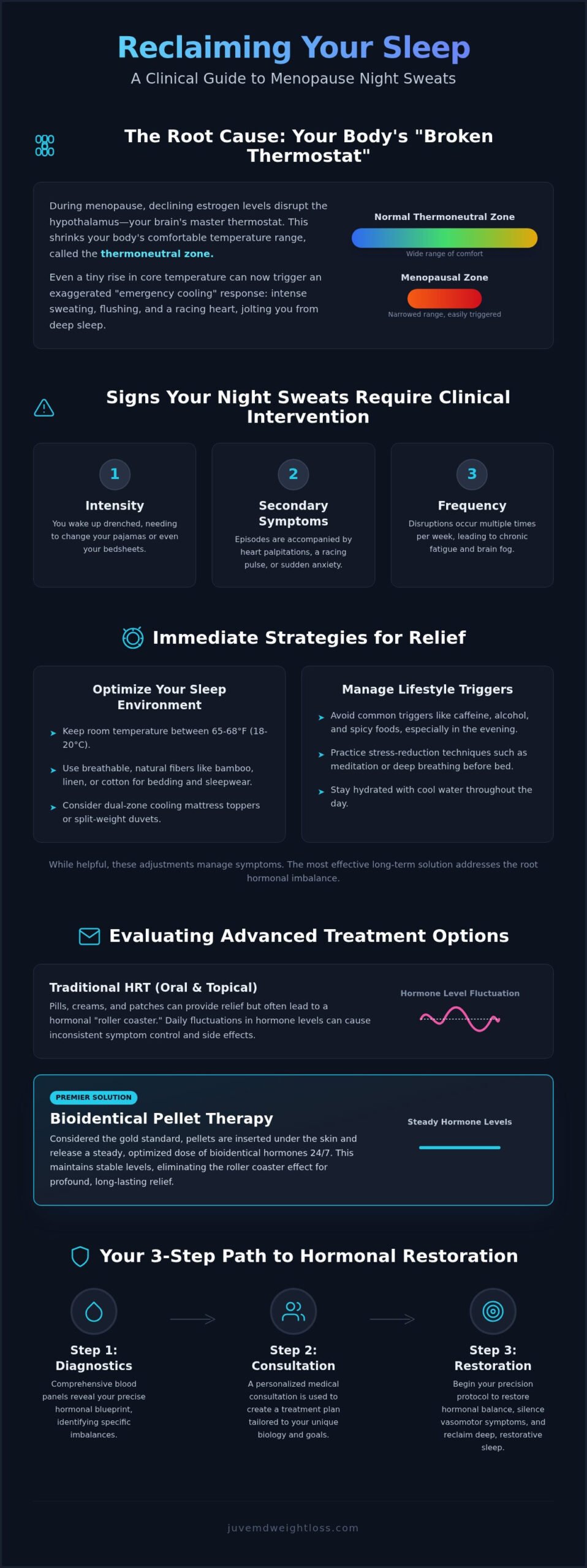
The hypothalamus acts as your body’s master thermostat. It maintains a narrow range of internal temperature where you feel comfortable, known as the thermoneutral zone. During the transition into menopause, declining estrogen levels directly interfere with this delicate balance. As estrogen drops, your thermoneutral zone narrows significantly. Even a tiny change in core temperature can trigger an exaggerated response, causing your brain to believe you’re overheating when you’re actually at a normal temperature. This is why a room that felt perfectly comfortable last year now feels like a furnace at 2:00 AM.
The Estrogen-Hypothalamus Connection
Estrogen withdrawal is the primary catalyst for these neurological disruptions. When hormone levels fluctuate, the brain experiences a sudden surge in norepinephrine and serotonin. These neurotransmitters play a critical role in temperature regulation. Their imbalance sends a false “emergency cooling” signal to the rest of your body. This results in rapid vasodilation and heavy sweating as your system desperately tries to shed heat it doesn’t actually have. These episodes are often more disruptive than daytime hot flashes because they abruptly jolt you out of deep REM sleep, preventing the restorative rest your brain requires to function.
Signs Your Night Sweats Require Clinical Intervention
Distinguishing between standard perspiration and clinical symptoms is vital for your long-term health. Normal sweating might occur if your blanket is too heavy, but clinical night sweats often leave your pajamas and sheets completely soaked. You should look for these specific indicators that it’s time for a professional night sweats menopause treatment:
- Intensity: You’re waking up drenched and needing to change your bedding or clothing.
- Secondary Symptoms: You experience heart palpitations, a racing pulse, or a sudden wave of anxiety immediately before or during the episode.
- Frequency: Disruptions occur multiple times per week, leading to chronic sleep fragmentation.
The cumulative effect of this broken sleep cycle goes beyond simple tiredness. It places a significant strain on your metabolic health and increases your risk for menopause brain fog and cognitive decline and mood disorders. If your “internal thermostat” is no longer functioning, lifestyle changes alone are rarely enough to provide the clinical restoration your body needs.
How to Manage Night Sweats: Immediate Lifestyle Adjustments
While addressing the underlying hormonal cause is the most effective long-term strategy, implementing immediate environmental changes can offer significant relief. Managing your surroundings doesn’t just improve comfort; it reduces the frequency of the “emergency cooling” responses triggered by your hypothalamus. Integrating these adjustments into your nightly routine is a foundational part of any comprehensive night sweats menopause treatment plan.
Optimizing Your Sleep Environment
Your bedroom should function as a sanctuary for thermoregulation. Clinical recommendations suggest keeping your room temperature between 65 and 68°F. This specific range helps your body transition into deep sleep without triggering a heat-shedding response. If you share a bed with a partner who has different temperature needs, consider dual-zone cooling solutions, such as split-weight duvets or specialized mattress toppers that allow for independent temperature control on each side.
The materials you choose for bedding and sleepwear are equally critical. You should prioritize natural, breathable fibers over synthetic fabrics. While many products are marketed as “cooling” synthetics, they often trap heat against the skin. Natural options like bamboo, linen, and high-thread-count cotton are superior because they facilitate airflow and allow moisture to evaporate quickly. Research from the Office on Women’s Health confirms that managing menopause-related night sweats effectively often begins with these practical, moisture-wicking environmental shifts.
Identifying Dietary and Lifestyle Triggers
What you consume during the day has a direct impact on your internal temperature at night. Alcohol is one of the most common culprits; it causes vasodilation, which can lead to sudden spikes in body heat hours after your last drink. Similarly, caffeine and spicy foods consumed late in the afternoon can overstimulate the nervous system and exacerbate vasomotor symptoms. Keeping a simple log of your evening meals can help you identify specific patterns that precede a difficult night.
Stable blood sugar levels are also vital for preventing nocturnal “heat waves.” When your blood sugar drops significantly during the night, your body releases cortisol and adrenaline to compensate. these stress hormones can inadvertently trigger a night sweat episode. Aim for a balanced evening meal that includes complex carbohydrates and healthy fats to maintain steady glucose levels until morning. Because metabolic health is so closely tied to hormonal balance, some women find that a structured weight loss program helps reduce the overall burden on their system, making night sweats easier to manage.
Finally, don’t overlook the impact of cortisol on your sleep cycle. Chronic stress keeps your body in a state of high alert, narrowing your thermoneutral zone even further. Incorporating ten minutes of deep breathing or progressive muscle relaxation before bed can lower your heart rate and prepare your brain for uninterrupted rest. Combined with moisture-wicking sleepwear, these behavioral changes create a more resilient foundation for your recovery.
Evaluating Night Sweats Menopause Treatment: Clinical Options
When lifestyle adjustments prove insufficient, a clinical night sweats menopause treatment becomes necessary to restore systemic balance. Many standard medical practices still rely on generic, “one-size-fits-all” dosing protocols. This approach often fails because it ignores the unique metabolic rate and hormonal baseline of the individual. Effective restoration requires a more nuanced evaluation of how your body processes supplemental hormones to ensure you don’t experience the peaks and valleys that trigger nocturnal wakefulness.
Hormonal vs. Non-Hormonal Pathways
Estrogen therapy remains the most direct way to stabilize the hypothalamic thermostat. By replenishing the body’s natural levels, it silences the false emergency signals that cause nocturnal sweating. However, non-hormonal pathways are valuable for patients with specific contraindications, such as a history of estrogen-sensitive cancers. Options like gabapentin or certain low-dose SSRIs can modulate the nervous system’s response to temperature shifts. Some specialists even utilize nerve block procedures to “reset” the sympathetic nervous system. While these methods provide relief for some, they typically manage the symptoms rather than correcting the underlying hormonal deficiency.
Delivery methods also significantly impact treatment efficacy. Oral treatments must pass through the liver, which can lead to fluctuations in hormone levels throughout the day. Transdermal patches or gels offer more stability than pills, but they can still result in “mid-night dips” as the dose wears off. For many women seeking clinical restoration, the primary goal is to achieve a steady state that prevents the brain from ever entering a cooling crisis during the night.
The Bioidentical Difference
The choice between synthetic and bioidentical hormones is a pivotal decision in your treatment journey. Synthetic hormones are often chemical analogs that mimic some functions but aren’t identical to what your body naturally produces. In contrast, bioidentical hormones are molecularly identical to human hormones. This precise match allows your cellular receptors to accept the treatment more naturally. This precision typically results in fewer side effects and a more predictable clinical response. To understand these distinctions in detail, you can explore our guide on Bioidentical vs Synthetic Hormones: Which Is Right?.
Ultimately, the most effective clinical night sweats menopause treatment is one that is tailored to your specific biological needs. Moving beyond “normal” lab ranges and focusing on optimal hormonal restoration is the key to stopping the cycle of sleep deprivation. By choosing a path that prioritizes molecular accuracy and consistent delivery, you can finally provide your body with the stability it needs to remain cool and rested throughout the night.
Why Bioidentical Pellet Therapy is the Gold Standard for Sleep
Many women discover that standard hormone replacements don’t fully resolve their symptoms. This is frequently due to the “roller coaster” effect of oral or topical medications. When you take a pill or apply a patch, your hormone levels spike and then gradually decline as the body processes the dose. If that decline occurs while you’re asleep, your brain may interpret the sudden drop as a signal to initiate an emergency cooling response. Bioidentical pellet therapy serves as a superior night sweats menopause treatment because it eliminates these dangerous fluctuations entirely.
Steady-State Delivery for Uninterrupted Sleep
Pellets are small, custom-compounded cylinders placed just beneath the skin during a brief clinical procedure. Unlike other methods, they provide a constant, low-dose release of hormones 24 hours a day. This delivery system mimics the body’s natural secretion patterns, ensuring that your brain stays within the thermoneutral zone all night long. By maintaining a steady state in the bloodstream, pellets prevent the hormonal “crashes” that lead to middle-of-the-night wakefulness. Most patients enjoy three to five months of consistent relief from a single insertion, making it a highly convenient option for those seeking long-term restoration.
Personalized Optimization vs. ‘Normal’ Ranges
A common frustration in women’s healthcare is being told that lab results are “normal” despite suffering from chronic sleep deprivation. At JuveMD, we recognize that what’s considered a standard range for the general population may not be optimal for your specific biology. We focus on treating the patient rather than just the lab paper. Our approach involves a deep analysis of your blood chemistry to determine the precise dosage required to silence your symptoms. This level of customization is essential for an effective night sweats menopause treatment because it addresses your unique metabolic needs.
Restoring your sleep is about more than just lowering your body temperature; it’s about returning your system to its peak functional state. When your hormones are optimized rather than just “replaced,” you’ll likely notice improvements in your energy, mood, and cognitive clarity. To learn more about how these imbalances affect your daily life, read our guide on Hormone Imbalance Symptoms in Women: A Clinical Guide to Restoration. If you’re ready to move beyond temporary fixes and achieve lasting relief, you can schedule a medical consultation for bioidentical pellet hormone therapy today.
How to Start Your Night Sweats Treatment Journey
Transitioning from chronic sleep deprivation to clinical restoration requires a structured, diagnostic framework. A comprehensive night sweats menopause treatment is never a “one-size-fits-all” prescription; it’s a personalized medical journey designed to bring your body back into its optimal thermoneutral zone. This process moves beyond simply suppressing symptoms and focuses on identifying the exact hormonal deficiencies that are disrupting your rest. By following a methodical clinical path, you can move from frustration to a clear plan for long-term relief.
Your journey toward uninterrupted sleep typically follows these four essential steps:
- Step 1: Comprehensive Blood Panel: We begin with detailed laboratory testing to establish your baseline hormone levels and identify any secondary factors affecting your temperature regulation.
- Step 2: Specialized Medical Consultation: You’ll meet with a hormone specialist, such as Dr. Andrea Dempsey, to review your history and discuss the specific patterns of your sleep disruptions.
- Step 3: Personalized Treatment Design: Based on your blood chemistry, we develop a custom bioidentical pellet hormone therapy plan tailored to your body’s unique requirements.
- Step 4: Monitoring and Titration: After your initial treatment, we closely monitor your progress and adjust your levels to ensure you achieve the highest standard of symptom resolution.
The Importance of Comprehensive Testing
Effective treatment requires looking at the whole picture rather than just isolated estrogen levels. A truly clinical night sweats menopause treatment evaluates the interplay between various systems. We test for Follicle-Stimulating Hormone (FSH) to confirm your menopausal status, but we also examine thyroid function and cortisol levels. These markers are critical because thyroid imbalances or high stress hormones can mimic or exacerbate vasomotor symptoms. For women still in the earlier stages of the transition, timing these tests is vital to capture accurate data. You can learn more about this diagnostic phase in our Perimenopause Hormone Therapy Guide.
What to Expect During Your Consultation
Your consultation is a supportive, transparent dialogue focused on your long-term wellness goals. We’ll examine your medical history and the frequency of your night sweats, but we also look at the secondary impacts on your life, such as anxiety and brain fog. Our objective is to move beyond the goal of “no more sweats” and toward a state of optimal energy and cognitive clarity. This expert-led perspective ensures you feel informed and empowered at every step. If you’re ready to reclaim your sleep and restore your body’s natural balance, schedule your personalized hormone consultation with JuveMD today.
Achieving Lasting Relief and Restorative Sleep
Living with chronic sleep disruption isn’t just a physical burden; it affects every aspect of your cognitive and emotional health. Your internal thermostat requires precise hormonal balance to function correctly. While lifestyle changes provide a necessary foundation, achieving a true steady state through bioidentical pellet hormone therapy remains a premier path to clinical restoration. This advanced delivery method eliminates the fluctuations that trigger nocturnal wakefulness, allowing your body to remain in its optimal thermoneutral zone throughout the night.
Finding a personalized night sweats menopause treatment is the key to moving beyond “normal” lab ranges and into a state of true wellness. Under the expert care of Dr. Andrea Dempsey, you can access a comprehensive clinical approach that prioritizes your unique blood chemistry and long-term health goals. You don’t have to accept exhaustion as a permanent part of your journey. Take the first step toward better sleep and schedule your Hormone Optimization Consultation with JuveMD today. We’re here to support you in reclaiming the energy and clarity you deserve.
Frequently Asked Questions
Are night sweats a sign of early menopause?
Night sweats are frequently one of the earliest clinical indicators of perimenopause. They often occur as estrogen levels begin their initial fluctuations, even if your menstrual cycle appears regular. These early episodes reflect the narrowing of your brain’s thermoneutral zone. Identifying these shifts early allows you to explore night sweats menopause treatment options before chronic sleep deprivation impacts your metabolic health, cognitive function, or daily productivity.
How long do night sweats usually last during the menopause transition?
The duration of vasomotor symptoms varies significantly between individuals, but verified clinical data suggests they can persist for seven to ten years on average. For some women, these episodes continue well into postmenopause. Because this timeline is highly unpredictable, waiting for symptoms to pass naturally often leads to years of unnecessary exhaustion. Clinical intervention focuses on restoring balance now rather than enduring a decade of disrupted sleep and systemic stress.
Can I treat night sweats without using hormones?
You can treat these symptoms without hormones using recently approved neurokinin receptor antagonists, such as Veozah (fezolinetant) or Lynkuet (elinzanetant). These medications specifically target the neural pathways in the brain responsible for temperature spikes. Additionally, certain lifestyle adjustments and low-dose antidepressants can provide relief for some patients. While these alternatives manage the symptoms effectively, they do not address the underlying hormonal deficiency that causes the initial hypothalamic thermostat disruption.
Is Bioidentical Pellet Hormone Therapy safe for long-term use?
Bioidentical pellet hormone therapy is considered a safe and effective long-term solution for many women when managed by a qualified medical specialist. Because these hormones are molecularly identical to those your body naturally produces, they are processed more efficiently than synthetic alternatives. Regular monitoring and detailed blood panels ensure that your levels remain within an optimal range. This personalized approach minimizes potential risks while providing the steady-state delivery required for continuous symptom resolution.
Why do my night sweats happen even if I keep my room cold?
Night sweats happen because your internal thermostat, the hypothalamus, is malfunctioning due to declining estrogen levels. Even in a freezing room, your brain receives a false signal that your core temperature is dangerously high. This triggers an emergency cooling response, including rapid vasodilation and heavy perspiration. External cooling only masks the environment; it doesn’t fix the neurological glitch that causes your body to shed heat it hasn’t actually gained during the night.
What is the difference between a hot flash and a night sweat?
The primary difference between these symptoms lies in the timing and the intensity of the body’s cooling response. A hot flash is a sudden wave of heat experienced during waking hours, often accompanied by visible flushing. A night sweat is a nocturnal vasomotor episode that is typically more intense, often resulting in drenched clothing and bedding. Both are caused by the same hypothalamic instability, but night sweats are more likely to cause significant sleep fragmentation.
Can weight loss help reduce the frequency of night sweats?
Clinical evidence indicates that maintaining a healthy weight can significantly reduce the severity and frequency of vasomotor symptoms. Adipose tissue can influence hormone metabolism and act as an insulator, making it harder for the body to dissipate heat effectively. Integrating a structured weight loss program with a clinical night sweats menopause treatment often produces better outcomes than addressing either factor in isolation, leading to more consistent internal temperature regulation and improved metabolic health.
When should I see a specialist for my night sweats?
You should consult a specialist if your symptoms disrupt your sleep more than a few times a week or if you experience secondary issues like heart palpitations. If over-the-counter cooling products and lifestyle changes haven’t restored your rest, it’s time for a professional evaluation. Specialized care, like that provided by Dr. Andrea Dempsey, ensures you receive a diagnostic plan that looks beyond “normal” lab ranges to achieve true hormonal optimization and clinical restoration. Women who also struggle with mental clarity alongside sleep disruption may benefit from exploring menopause brain fog treatment options as part of a comprehensive hormonal restoration plan.