
What if stopping BHRT pellets doesn’t mean your hormone levels change overnight? If you’re asking what happens if you stop BHRT pellets, the key point is that a pellet already in place can continue releasing hormones as it gradually wears down. Stopping usually means not having another pellet inserted, rather than removing the one already in place.
It’s understandable to wonder how long the effects may last and whether hot flashes, night sweats, sleep changes, or other symptoms will return. The timing and intensity vary with your treatment, hormone levels, and individual response, so there isn’t one timeline that fits everyone.
This guide explains what may happen as hormone levels change, which symptoms you might notice, and why stopping pellet therapy is a transition to plan with your clinician, not an instant hormone switch. It also explains the difference between allowing an existing pellet to wear down and choosing not to continue treatment. A thoughtful conversation can help you make an informed plan based on your health and preferences, without assuming that stopping or continuing is automatically the right choice.
Key Takeaways
- What happens if you stop BHRT pellets depends on the hormone, dose, your metabolism, and other clinical factors. Symptoms may not follow a set timeline.
- Consider whether you’re declining a future insertion, delaying one, or exploring another approach. Each option calls for a conversation about your goals and health history.
- Before speaking with your prescriber, gather your insertion dates, hormone details if known, current medications, and symptom notes.
- Agree on how to monitor changes and when to follow up so your next steps can reflect your individual experience.
- A clinician can clarify your options without assuming you need to continue pellet therapy.
What happens if you stop BHRT pellets?
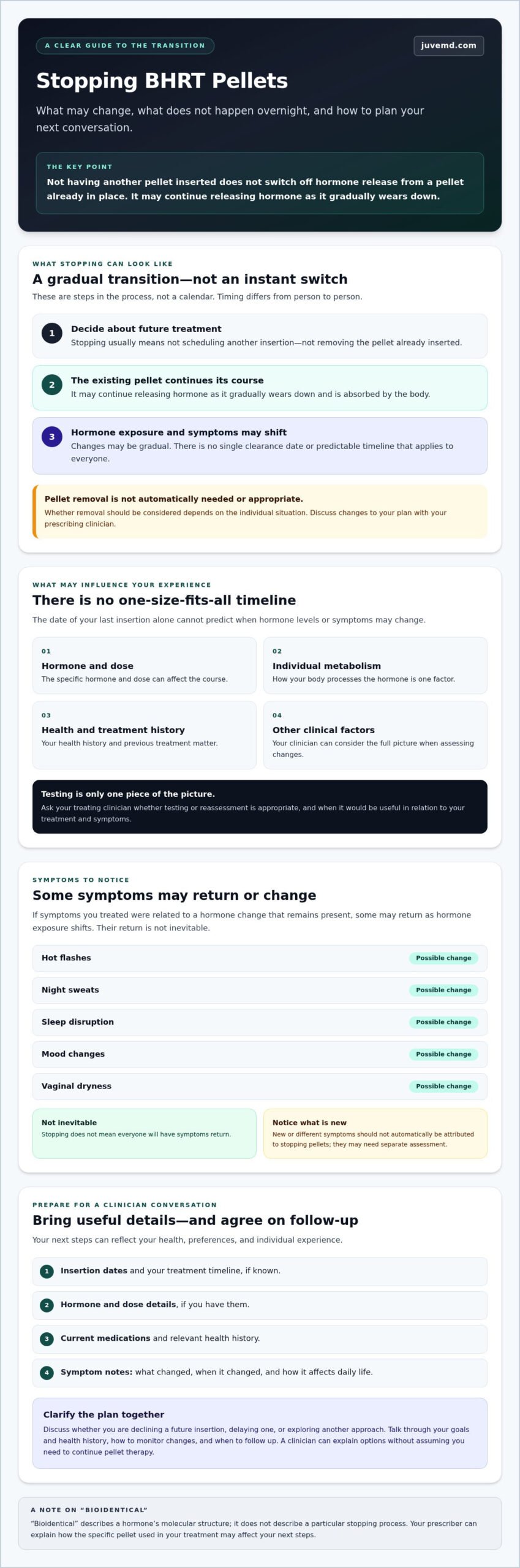
If you decline another insertion, the effects of BHRT may not stop immediately. A pellet that’s already been inserted can continue releasing hormone as it gradually wears down and is absorbed by the body. Stopping usually means deciding not to have a subsequent pellet placed, not removing the existing one.
Discontinuing treatment means no further planned pellet insertions. It doesn’t mean hormone exposure from an existing pellet ends at once. Hormone levels and symptoms may change over time rather than on a single day. How long the effects continue, and what you notice, varies with the hormone and dose, your metabolism, and your health and treatment history.
“Bioidentical” describes a hormone’s molecular structure, not a particular stopping process. For background on the term and related discussion, see Bioidentical hormone replacement therapy. Your prescriber can explain how the specific pellet used in your treatment may affect your next steps.
Does stopping mean hormones leave the body immediately?
No. An inserted pellet may continue releasing hormone as it gradually wears down. Declining a future insertion is a decision about ongoing treatment; it doesn’t switch off release from a pellet already in place. There isn’t one clearance date or predictable pattern that applies to every patient. Your clinician can interpret changes in light of the hormone, dose, symptoms, and other clinical factors.
What does stopping BHRT pellets actually involve?
In most cases, stopping future pellet treatment means not scheduling another insertion when the next one is due. That’s different from trying to remove a pellet that’s already been inserted. Removal isn’t automatically needed or appropriate, and whether it should be considered depends on the individual situation. Contact your prescribing clinician before changing your plan to discuss your reasons, current symptoms, and any useful follow-up.
How hormone levels and symptoms may change after stopping pellets
After you decide not to have another pellet inserted, an existing pellet may still release hormone as it gradually wears down. As that release changes, your overall hormone exposure may shift over time. The hormone and dose, individual metabolism, treatment history, and other clinical factors all affect the course, so there isn’t a universal timeline. Your clinician can help assess what’s happening and whether follow-up or testing is appropriate.
The date of your last insertion can’t, by itself, predict when hormone levels or symptoms will change. A lab result is also only one piece of the picture. If testing is being considered, ask your treating clinician when it would be useful in relation to your treatment and symptoms. The Cleveland Clinic’s overview of bioidentical hormone therapy provides broader context, while your own clinician can discuss how your specific regimen affects monitoring.
How long can changes take after the last pellet?
Changes may be gradual, and timing differs from person to person. The hormone used, dose, how your body processes it, and your health history can all influence the course. So, what happens if you stop BHRT pellets can’t be mapped to an exact date based only on when the pellet was inserted. Ask your clinician how to interpret your timeline and when reassessment or lab work may help, rather than relying on a general estimate.
Which symptoms might return or change?
If the symptoms you treated were related to a hormone change that remains present, some may return as hormone exposure shifts. Possible examples include hot flashes, night sweats, sleep disruption, mood changes, or vaginal dryness. Their return isn’t inevitable, and stopping doesn’t mean everyone will experience withdrawal, permanent harm, or worsening symptoms.
Pay attention to what changes, when it changes, and how it affects daily life. Note whether a symptom resembles what you experienced before treatment or feels new or different. New symptoms shouldn’t automatically be attributed to stopping pellets; they may need separate assessment. Share your observations with your treating clinician, who can consider them alongside your history and decide whether evaluation or testing is appropriate. If you’re seeking a clinician to discuss pellet therapy and monitoring in Las Vegas, learn more about hormonal health care at JuveMD.
Stopping BHRT pellets: what varies by hormone, history, and health needs
There isn’t one stopping plan that fits everyone. Options to discuss may include declining future insertions, postponing a planned insertion while you discuss your concerns, or asking whether another treatment approach is worth considering. The right questions depend on the hormone used, why it was prescribed, your treatment goals, medical history, current symptoms, and a clinician’s assessment.
The question “what happens if you stop BHRT pellets” can’t be answered by matching a symptom to an online checklist. Similar symptoms can have different causes, and decisions about hormone treatment require individualized medical advice. Use the comparisons below to prepare for a conversation, not to choose a treatment plan on your own.
| Option to discuss | Potential considerations | Ask your clinician |
|---|---|---|
| Decline future insertions | An existing pellet may still release hormone. Your clinician can help assess symptom changes and whether monitoring is appropriate. | What follow-up should I plan, and what changes should I report? |
| Delay a planned insertion | The reason for delaying, current symptoms, and timing since the last insertion may inform the discussion. A delay isn’t automatically appropriate for everyone. | What should we assess before deciding whether to postpone? |
| Discuss another treatment approach | Alternatives may differ in delivery, dosing, effects, and risks. Discussing them doesn’t mean a switch is recommended. | Which options, if any, fit my goals and medical history? |
Does the guidance differ for estrogen and testosterone pellets?
Yes. The hormone used and the reason it was prescribed shape what a clinician needs to review. Estrogen and testosterone treatment aren’t interchangeable, and neither are the conditions, goals, or personal health factors behind a prescription. Bring the hormone name and dose if you know them, along with your treatment history. Your prescriber can assess your circumstances rather than applying general advice across different patients or diagnoses.
Is stopping the same as switching to another form of hormone therapy?
No. Stopping future pellet insertions and considering a different form of therapy are separate decisions. A clinician may discuss alternatives, but that isn’t a recommendation to switch. Another delivery method shouldn’t be assumed to have identical effects, risks, or dosing. Share what you hope to change or maintain, then ask which options are suitable, including whether pausing treatment without a replacement is reasonable for you.
How to plan a safe conversation about stopping BHRT pellets
A clear plan starts with your prescribing clinician, not an attempt to manage the pellet yourself. If you’re weighing what happens if you stop BHRT pellets, explain that you’re considering a change and ask how to make that decision in light of your treatment history. The discussion doesn’t obligate you to continue; it can help you understand your options and plan appropriate follow-up.
What should I ask my prescribing clinician?
Bring your questions in writing so the conversation covers your goals and practical next steps. Ask what to expect based on your specific pellet, insertion date, and history, and whether monitoring or follow-up is appropriate. Ask how the timing of any assessment will be determined, which changes to watch for, and which symptoms warrant prompt contact or urgent evaluation. If a symptom feels severe or concerning, don’t delay seeking appropriate medical advice while waiting for a routine follow-up.
What information should I bring to a follow-up?
Useful details help your clinician assess your situation without assuming every change has the same cause. Gather what you can, even if some information is incomplete:
- Treatment details: insertion dates, hormone type and dose if known, and any available treatment records.
- Current medications: a current list of prescriptions, over-the-counter medicines, and supplements.
- Symptom notes: what you’ve noticed, when it began, how often it occurs, and any changes in your daily routine or health.
- Your goals: what’s prompting you to consider stopping, delaying an insertion, or discussing another approach.
Keep the notes factual. For example, record when sleep or hot flashes changed rather than deciding on your own that a hormone shift caused them. Your clinician can interpret the pattern alongside your medical history and determine whether further assessment is appropriate. For broader context before your appointment, you can also refer to Bioidentical Hormone Replacement Therapy Las Vegas: The Complete 2026 Clinical Guide.
JuveMD is a Las Vegas clinic led by Dr. Andrea Dempsey that offers bioidentical pellet hormone therapy, personalized evaluations, and monitoring. If you’d like to discuss your circumstances and possible next steps, contact JuveMD about BHRT care.
Discuss your BHRT pellet next steps with a Las Vegas clinician
Choosing not to schedule another insertion doesn’t instantly end hormone exposure from a pellet already in place. Whether symptoms change, and when, depends on the hormone, dose, personal health factors, and treatment history. A clinician can help you interpret your experience and consider options without assuming you should continue pellet therapy.
When is a clinician conversation especially important?
Contact your prescribing clinician before changing a treatment plan or deciding that a new or returning symptom is necessarily caused by stopping. Explain what you’re noticing and ask what follow-up may be appropriate. Don’t try to remove a pellet or adjust other medication on your own. If symptoms are severe, sudden, or concerning, seek prompt medical assessment. For an emergency, contact local emergency services.
How can JuveMD support an individualized discussion?
JuveMD is a Las Vegas clinic focused on hormonal health and wellness. Led by Dr. Andrea Dempsey, the practice offers bioidentical pellet hormone therapy, personalized evaluations, and monitoring. An individualized discussion can help you review your treatment details, clarify questions about hormone exposure and symptoms, and understand what follow-up or options may be appropriate for your circumstances. It isn’t a commitment to continue pellets or a promise of a particular outcome.
Before reaching out, it may help to have your insertion dates, hormone information if known, current medications, and symptom notes available. You can also ask how to proceed if you’re considering declining or delaying a future insertion, and what follow-up to discuss. Your clinician can assess your situation rather than relying on a general timeline or online symptom matching.
If you’re in Las Vegas and would like to talk through your BHRT pellet questions, contact JuveMD to discuss an individualized evaluation and possible next steps. The goal is a clear, informed conversation that respects your health needs and treatment preferences.
Make your next hormone therapy decision with clarity
If you’re wondering what happens if you stop BHRT pellets, remember that declining a future insertion doesn’t instantly end hormone exposure from a pellet already in place. The timing and any symptom changes vary, so there’s no single timeline or treatment choice that applies to everyone.
Your most useful next step is a conversation with your prescribing clinician. Bring your treatment details and symptom notes, then discuss your goals, what to monitor, and whether follow-up or other options may be appropriate. You don’t have to assume that stopping means switching, or that continuing is automatically right for you.
JuveMD specializes in hormonal health and wellness in Las Vegas. Led by Dr. Andrea Dempsey, the practice offers bioidentical pellet therapy and ongoing monitoring. To discuss your questions and an individualized evaluation, discuss your hormone therapy questions with JuveMD. A thoughtful, informed plan can help you move forward with greater confidence.
Frequently Asked Questions
What happens when you stop getting BHRT pellets?
When you stop getting BHRT pellets, an existing pellet may continue releasing hormone even if you decide against another insertion. Hormone exposure can change over time, but symptoms may or may not return. The course depends on the hormone, pellet, treatment history, and individual factors. Contact the clinician who prescribed your treatment to discuss what changes to watch for and whether follow-up or monitoring is appropriate.
Can you remove a hormone pellet after it has been inserted?
A pellet may sometimes be considered for removal, but stopping future insertions isn’t the same as removing one already placed. Removal isn’t automatically necessary or appropriate; the decision depends on the pellet and your clinical situation. Don’t try to remove it yourself. If you have concerns or symptoms, contact the clinician who provided the treatment to discuss your circumstances and possible next steps.
How long do BHRT pellets keep working after the last insertion?
There isn’t one timeline that applies to everyone after a last insertion. Hormone type, dose, pellet characteristics, insertion date, and individual factors can influence how hormone exposure changes. Your clinician can review your treatment record and advise whether monitoring may be useful and when to consider it. Avoid relying on a general online estimate as a personal prediction or substitute for individualized medical advice.
Will my symptoms come back if I stop BHRT pellets?
Symptoms that improved during treatment may return for some people, particularly if the original cause remains, but this isn’t guaranteed. New symptoms can also have causes unrelated to hormone treatment. Note what changes and when, including whether symptoms resemble those you had before treatment. Share that pattern with a clinician rather than assuming every change is caused by stopping or deciding on a treatment change yourself.
Can I switch from BHRT pellets to another hormone treatment?
A clinician may discuss other treatment approaches, but a different option isn’t automatically suitable or equivalent to pellets. The decision depends on the hormone involved, your health history, treatment goals, and clinical assessment. Don’t start, stop, or change hormone treatment on your own. Ask your clinician what alternatives, if any, may fit your circumstances and what follow-up or monitoring would be appropriate if you consider a change.
Should I talk to my doctor before stopping BHRT pellets?
Yes. Contact your prescribing clinician before changing your treatment plan, even if you’re only declining a future insertion. Share the insertion date, hormone details if known, current medications, and any symptoms or concerns. Your clinician can explain what changes to monitor, whether follow-up is appropriate, and when symptoms need assessment. In Las Vegas, JuveMD specializes in hormonal health and offers personalized evaluations and monitoring.
What should I do if I feel worse after stopping BHRT pellets?
Contact a clinician and describe what you’re experiencing, when it began, and how it has changed. Don’t assume worsening symptoms are necessarily caused by stopping, or try to correct them by changing treatment on your own. Seek prompt medical assessment for severe, sudden, or concerning symptoms. If you believe you’re experiencing a medical emergency, contact local emergency services rather than waiting for a routine appointment.