
A clinician-led assessment is the right first step when considering supervised weight loss. A weight loss clinic in Henderson, NV can review your health and goals, then discuss whether medication may be appropriate. A BMI of 30 or above is a threshold for considering tirzepatide, while a BMI of 30 or more is a criterion for considering semaglutide.
It’s reasonable to want clear answers before starting, especially when medication eligibility, dosing, and follow-up feel complicated. Care is individualized: eligibility depends on more than a number, and clinical oversight can provide a structured way to review progress and discuss the plan.
This guide explains how to get started, what clinicians consider when assessing medication eligibility, and how follow-up supports treatment decisions. It also covers how supervised weight-loss care may support progress beyond medication decisions and what to consider when exploring options near Henderson.
Key Takeaways
- Learn how BMI thresholds can inform consideration of tirzepatide or semaglutide, and which health factors deserve discussion before treatment.
- Understand how follow-up helps clinicians monitor progress, tolerability, and whether a dose adjustment may be appropriate.
- Recognize why physician oversight matters, including the FTC’s advice to avoid quick-weight-loss programs unless a doctor recommends them.
- See how supervised weight loss can provide structure and support beyond medication alone, while keeping expectations realistic.
- Compare the kinds of weight-loss care available in Henderson and identify a practical first step toward a personalized plan.
Eligibility and health considerations for medication
Medication eligibility begins with a clinical review, not a product request. A BMI of 30 or above is a threshold for considering tirzepatide for weight loss management. A BMI of 30 or more is a criterion for considering semaglutide for weight loss management. These thresholds guide assessment, but they don’t replace a review of health history, current medicines, and treatment goals.
Semaglutide is not recommended during pregnancy or for people planning to become pregnant. During a consultation, discuss pregnancy plans, medical conditions, prior treatment, and possible medication cautions. Bring an up-to-date medication list and describe relevant lifestyle changes, eating patterns, and previous weight-loss efforts. These details help inform a safer, more practical plan.
Ratings and reviews won’t reveal every difference between clinics serving Henderson. Compare the services described, the supervising clinicians’ qualifications, and the follow-up process. Look for reviews that mention clear communication and ongoing support, and check how the program combines medication discussions with lifestyle guidance.
Which clinics accept new patients depends on current appointment intake. Start with a clinic’s new-patient scheduling or intake process, and look for available consultation appointments. Before booking, prepare your health history and questions about medication assessment, follow-up, and the prescription process.
Clinics near Henderson may offer medical weight-loss programs, nutrition counseling, lifestyle support, and medication assessments. Ask how these elements fit together. For example, find out whether nutrition guidance is part of medication care or offered separately. A consultation can clarify which services suit your goals and health needs.
Insurance coverage for weight-loss visits or medications in Nevada depends on your plan, diagnosis, and benefits. Review medical and pharmacy coverage separately, since appointments and prescriptions may be handled differently. Check your plan documents for coverage criteria and prior-approval requirements before budgeting.
Look for qualified healthcare professionals who explain medication options, review your health history, and outline a monitoring plan. Ask how to report side effects, discuss progress, and get dose guidance between visits. Physician oversight should connect the initial assessment with follow-up, not end with a prescription decision.
Clinics serving Henderson have different locations, hours, and contact options. Use the clinic’s appointment information to plan your visit and find its address and phone number. For a first consultation, gather your medication list, relevant health records, and questions about eligibility.
Medication suitability depends on clinical assessment and the prescribing process. If a medication is prescribed, clarify whether the prescription goes to a pharmacy or is dispensed through the clinic, then review its instructions and follow-up plan. Supervised weight-loss care can also help organize lifestyle changes and progress discussions around your needs.
Dose monitoring and follow-up visits
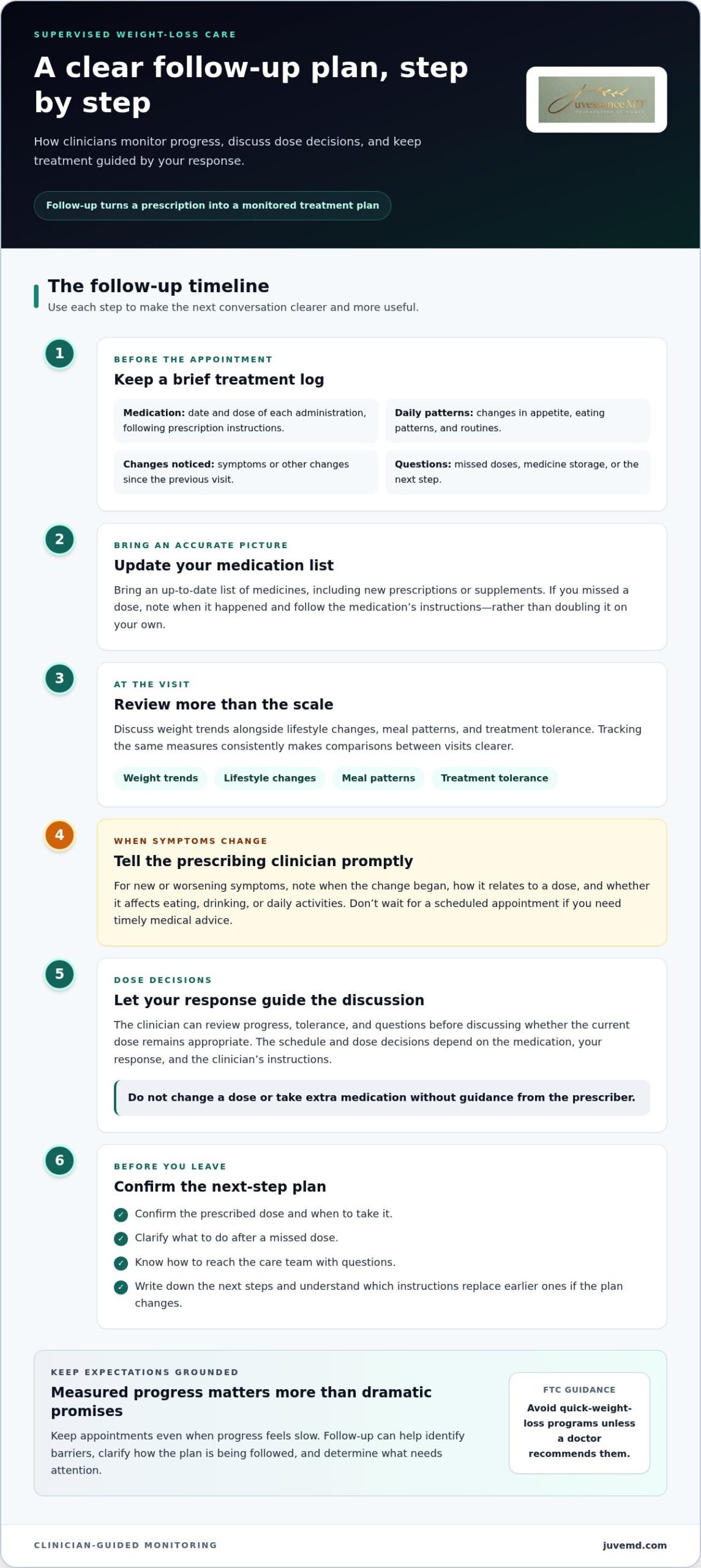
Follow-up turns a prescription into a monitored treatment plan. At each visit, the clinician can review progress, tolerance, and questions before discussing whether the current dose remains appropriate. The schedule and dose decisions depend on the medication, your response, and the clinician’s instructions. Don’t change a dose or take extra medication without guidance from the prescriber.
A brief log can make follow-up conversations more useful. Before an appointment, record:
- The date and dose of each medication administration, following the prescription instructions.
- Changes in appetite, eating patterns, and daily routines.
- Symptoms or other changes noticed since the previous visit.
- Questions about missed doses, medicine storage, or the next step.
Bring an updated medication list, too. A new prescription or supplement can affect the discussion, so your care team needs an accurate picture of what you take. If you miss a dose, note when it happened and follow the medication’s instructions rather than doubling it on your own.
Progress means more than a scale reading. At follow-up, review weight trends alongside lifestyle changes, meal patterns, and treatment tolerance. For example, appetite changes alongside difficulty maintaining daily routines are useful context for the next discussion. Tracking the same measures consistently makes comparisons between visits clearer.
Tell the prescribing clinician promptly about new or worsening symptoms. Note when the change began, how it relates to a dose, and whether it affects eating, drinking, or daily activities. These details can help the clinician decide what guidance or follow-up is appropriate. Don’t wait for a scheduled appointment if you need timely medical advice.
End each follow-up with a clear plan. Confirm the prescribed dose, when to take it, what to do after a missed dose, and how to reach the care team with questions. Write down the next steps before leaving. If the plan changes, make sure you understand which instructions replace the earlier ones.
Keep appointments even when progress feels slow. A discussion can identify barriers, clarify how the plan is being followed, and determine what needs attention. The Federal Trade Commission advises avoiding programs that promise quick weight loss unless a doctor recommends them. Measured progress and clinical guidance matter more than dramatic promises.
For a broader discussion of how medication fits into treatment goals, explore weight-loss care as part of a clinician-guided plan.
Physician oversight and dose adjustments
A physician connects medication decisions with your health history and treatment response. Before prescribing, the clinician reviews current medicines, relevant conditions, previous weight-loss approaches, and treatment goals. This assessment gives dose discussions context. A number on the scale alone cannot show whether a treatment is tolerable or fits your broader health needs.
At follow-up, bring specific observations rather than relying on memory. Note changes in appetite, eating patterns, daily activities, and any symptoms since your last appointment. For example, reduced appetite alongside difficulty maintaining regular meals gives the physician useful context. The goal is an informed discussion, not pursuing the highest dose.
Follow the prescriber’s instructions for dose decisions. Don’t increase, reduce, pause, or restart medication on your own. If you miss a dose or develop a new symptom, record what happened and contact the prescribing clinician for instructions. Keep the packaging and prescription directions handy, especially if you take several medicines.
A useful appointment can cover these points:
- Whether the current medication plan is being followed as prescribed.
- What changes in appetite, weight trend, or daily routine have occurred.
- Whether new symptoms or other medicines affect the treatment discussion.
- What instructions apply before the next follow-up.
These details help distinguish a temporary challenge from a pattern that needs attention. For instance, difficulty following meal routines may prompt a discussion about practical lifestyle changes. A new medicine can also affect how treatment is reviewed. Share both, even if they seem unrelated to weight management.
Physician oversight also means setting realistic expectations. The Federal Trade Commission advises avoiding programs that promise quick weight loss unless a doctor recommends them. A credible plan explains how progress will be reviewed and how to contact the prescriber with concerns. It should not promise results or pressure patients to change doses without clinical discussion.
Success in weight loss isn’t defined by rapid change alone. A physician can consider treatment response, tolerance, and how well the plan fits daily life. If progress stalls, discuss what has changed before assuming a higher dose is the answer. A clear account of meals, activity, medication use, and symptoms supports a more useful review.
Before leaving each appointment, summarize the agreed plan in your own words. Confirm the prescribed dose, when to take it, and what to do if a concern arises. Write down the next follow-up step and the clinician’s instructions. This routine can prevent confusion between visits and keep dose decisions connected to medical oversight.
Potential benefits of supervised weight loss
Supervised care adds structure to a weight-loss plan. Patients can review progress, discuss obstacles, and agree on practical next steps with a healthcare professional. Henderson medical weight-loss information reports program participants can lose 3%-5% more weight than people following a weight-loss program on their own. That comparison highlights a potential benefit of support, not a guaranteed result for every person.
A clear starting point makes later progress easier to interpret. At the first assessment, record your goals, current routines, and relevant health considerations. Then choose consistent measures to revisit at follow-up. For example, tracking weight trends alongside meal routines offers more context than relying on a single reading.
Regular check-ins create opportunities to address barriers early. If you struggle to plan meals during busy workdays, discuss a realistic routine and review how it worked at the next visit. Turning lifestyle changes into manageable actions helps show whether a plan needs adjustment or more time and consistency.
Medication discussions benefit from the same structure. A supervising clinician can consider how treatment fits your health history, goals, and reported experience. Bring questions about appetite changes, daily routines, or medication use to each appointment. This keeps treatment decisions connected to observed progress rather than assumptions.
Supervised programs can bring different parts of a weight-loss journey together. Nutrition guidance, progress reviews, and medication discussions can reinforce one another when included in the care plan. For instance, set a meal-planning goal, track how it fits your week, and discuss the results at follow-up. Each step gives the next conversation specific context.
Use appointments actively. Before each visit, prepare a short update:
- Note changes in weight trends and eating routines.
- Describe lifestyle changes that felt sustainable or difficult.
- List questions about treatment, progress, or next steps.
- Agree on one practical goal to revisit at the next appointment.
This routine supports shared decision-making and keeps goals realistic. A small, repeatable change, such as planning meals before the workweek, gives your next visit a concrete starting point. Note what helped, what got in the way, and which adjustment may make sense next.
Supervised weight loss is most useful when the plan fits everyday life. The 3%-5% reported difference offers a reason to consider structured support, while ongoing conversations help translate goals into specific actions. For patients ready to lose weight, the value lies in coordinated guidance, regular review, and a plan that responds to their experience throughout the loss journey.
What weight loss clinics are located in Henderson, NV?
Henderson residents can compare clinics focused on medical weight management with broader wellness practices that include weight-loss care. Services differ. One clinic may emphasize clinician-led assessments and medication discussions, while another may focus on nutrition guidance and lifestyle changes. Compare the actual care process, not just the clinic label.
To narrow your options, first decide what support you need. If you want to discuss medication, look for a program that describes health-history reviews, prescribing oversight, and follow-up. If lifestyle support is your priority, check whether nutrition education and progress reviews are included. A clear service description helps you match the approach to your needs.
Use these comparison points while reviewing Henderson practices:
- Clinical involvement: Identify which healthcare professionals conduct assessments and supervise care.
- Program scope: Check whether the clinic discusses medication, nutrition, lifestyle, or a combination.
- Follow-up: Look for a stated process for reviewing progress and addressing treatment questions.
- Practical fit: Consider the clinic’s location, appointment process, and published hours.
Ratings and reviews offer context, but they don’t establish clinical quality on their own. Look for specific examples, such as clear explanations, responsive follow-up, or difficulty understanding a plan. Compare those experiences with the services and clinician involvement the practice describes. A detailed review is more useful than a star score without explanation.
Before booking, review the clinic’s scheduling and intake process. Prepare your medication list, relevant health history, and questions about the program. For example, ask how the initial assessment leads into ongoing reviews. This helps you understand what the appointment covers and what to bring.
A weight loss clinic in Henderson, NV should explain its approach before treatment begins. Look for a clear description of how the team assesses goals, discusses treatment choices, and monitors progress. These details can help distinguish a structured program from an offer focused mainly on quick results.
Location and hours matter when attending appointments consistently. Compare each practice’s address with your usual route, then review its published hours and contact options. If follow-up requires recurring visits, travel time can affect whether the plan fits your routine. Save appointment details with your health notes so you can prepare efficiently.
Use your first conversation to clarify the next step, whether that’s an assessment, a review of program options, or a discussion of medical suitability. Choose a clinic whose services align with the support you’re seeking. That practical fit can help you begin a considered weight-loss plan near Henderson.
Compare clinics by whether they offer clinician-led assessments, medication discussions, nutrition guidance, and lifestyle support, and by how they handle follow-up. Reviews are most useful when they describe specific experiences, such as clear explanations or responsive follow-up, rather than giving only a star rating.
Options include clinics focused on medical weight management and broader wellness practices that offer weight-loss care. Services may range from clinician-led assessments and medication discussions to nutrition guidance and lifestyle changes.
JuveMD: Bioidentical Pellet Hormone Therapy
JuveMD offers weight-loss care for people seeking clinician-guided support with their goals and treatment options. If you’re considering a supervised program, discuss your health history, priorities, and questions about medication monitoring with the care team.
Bioidentical Pellet Hormone Therapy is a separate service, not a substitute for a weight-loss assessment. Hormone therapy does not determine medication eligibility. Keep the conversation focused on your individual needs and which service fits the concern you want to address.
For a considered next step, contact JuveMD or visit juvemd.com.
Choose a Next Step That Fits Your Goals
Start with a focused conversation about the support you want and what feels sustainable in daily life. If you’re considering a weight loss clinic in Henderson, NV, bring your priorities and questions to JuveMD to discuss an approach that fits your goals.
JuveMD offers weight-loss care, Bioidentical Pellet Hormone Therapy, injectables, and skin treatments. These are distinct services, so begin with the concern you want to address and discuss the relevant option directly.
Contact JuveMD to get started and take a thoughtful first step toward your wellness goals.
Frequently Asked Questions
How do I get started?
Start by booking an initial assessment with a weight loss clinic in Henderson, NV. Before your visit, write down your goals, current medications, relevant health history, and treatment questions. Note previous weight-loss approaches and what made them difficult to maintain. Use the appointment to understand the program’s steps, follow-up process, and what information the clinician needs before discussing treatment options.
What about diet changes?
Diet changes can support a weight-loss plan, but they should fit your routine and preferences. Start by noticing patterns such as skipped meals, frequent takeout, or limited meal planning. Choose one practical change to discuss, such as preparing lunch before work or keeping a simple food log. A clinician or nutrition professional can help connect lifestyle changes with your goals and any prescribed medication plan.
Do Henderson weight loss clinics prescribe GLP-1 medications such as semaglutide or tirzepatide?
Some clinics near Henderson offer medical weight management that includes assessment for prescription medication, but prescribing depends on the services offered and a clinician’s evaluation. Tirzepatide and semaglutide are medication options discussed for weight management. Bring your medication list and health history to the consultation, and ask how prescribing, pharmacy pickup, and follow-up fit into the program. A clinic visit does not mean a specific medication will be prescribed.
What are the eligibility requirements and steps to start a medical weight loss program in Nevada?
For considering tirzepatide, a BMI of 30 or above is a stated threshold; for semaglutide, a BMI of 30 or more is a stated criterion. These figures don’t replace a full health review. To begin, arrange an assessment, share your medical history and current medicines, discuss treatment goals, and review the follow-up plan. Semaglutide is not recommended during pregnancy or for people planning to become pregnant.
What are the risks and side effects of prescription weight loss medications?
Prescription weight-loss medications can cause unwanted effects, and relevant risks vary by medication and personal health history. Before treatment, ask the prescriber to explain medication-specific cautions, what changes to watch for, and how to report a concern. Keep the medication instructions available and don’t change your dose without clinical guidance. This information is educational only, not medical advice. Consult your own healthcare provider before making health-related changes.