
A testosterone pellet is small, but it is designed to release hormone over time. For men exploring testosterone pellets for mental clarity, the implants are placed just beneath the skin and release testosterone over several months. Low testosterone can be associated with brain fog or difficulty concentrating, but these symptoms alone do not show that testosterone is the cause.
If your focus feels less reliable than usual, it is natural to wonder whether hormones could be part of the picture. This guide explains what pellet therapy involves, how pellet size relates to hormone delivery, and what is and is not known about mental clarity.
You will also learn what to expect during insertion, how clinicians monitor treatment, and which side effects and medical considerations matter. Understanding these details can help you have a more informed conversation about whether testosterone evaluation may be appropriate for your symptoms.
Key Takeaways
- Pellet therapy is designed to release testosterone over several months, but levels can fluctuate as the body absorbs and metabolizes the hormone.
- Learn which side effects and health considerations may matter when weighing testosterone therapy, including the importance of monitoring.
- Insertion involves placing small pellets beneath the skin, followed by simple aftercare to help protect the site as it heals.
- Brain fog and trouble concentrating can occur with low testosterone, but they can also have other causes and need to be considered in context.
- Pellet size and dose help shape hormone delivery, so understanding how they relate can make treatment discussions more informed.
What Is Testosterone Pellet Therapy?
Testosterone pellet therapy places small implants beneath the skin, where they release hormone over time. In the United States, a qualified provider assesses symptoms alongside hormone levels and relevant safety considerations before considering treatment.
Pellet Placement and Hormone Delivery
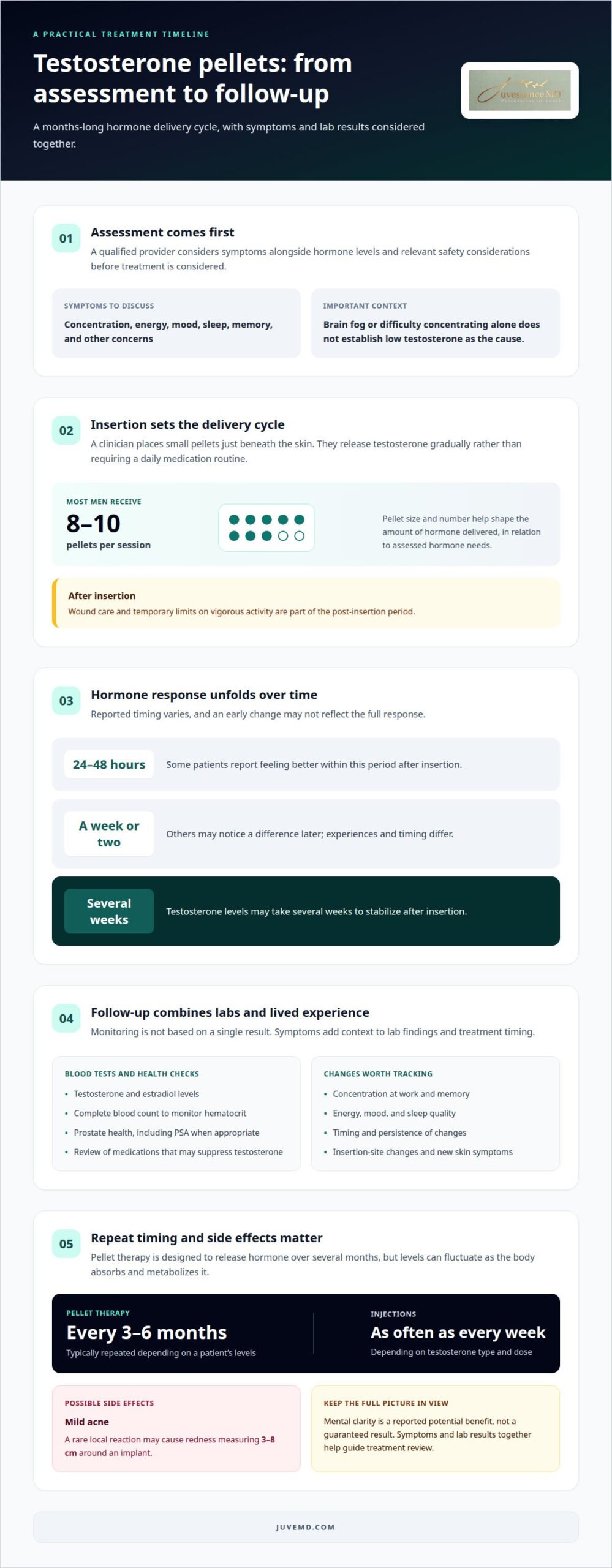
During the procedure, a clinician places small testosterone pellets just beneath the skin. They release testosterone gradually, providing a continuing dose rather than requiring a daily medication routine. Most men receive 8-10 pellets per session. Pellet size and the number used affect the amount of hormone delivered, so the treatment plan relates to the person’s assessed hormone needs.
Treatment Duration and Hormone Fluctuations
Pellet therapy is typically repeated every 3-6 months, depending on a patient’s levels. The implants are designed to last several months, but testosterone levels can change as the body absorbs and metabolizes the hormone. Levels may take several weeks to stabilize after insertion. Some patients report feeling better within 24-48 hours, while others may notice a difference after a week or two.
Lab and Symptom Monitoring
Monitoring combines blood tests with changes in symptoms, rather than relying on a single result. Assessment may include testosterone and estradiol levels, a complete blood count to monitor hematocrit, and prostate health, including PSA when appropriate. Follow-up testosterone testing helps track levels during replacement therapy. Tracking symptoms adds context: changes in concentration, energy, or other concerns can be considered alongside lab results and treatment timing.
Reported Benefits Beyond Mental Clarity
Mental clarity is a reported potential benefit of testosterone pellet therapy, but it is not guaranteed. Brain fog and difficulty concentrating can occur with low testosterone, and cognitive changes may include altered focus or memory. These symptoms can inform a discussion about hormone status, but they do not establish a diagnosis or show that pellets will address the cause.
Other treatment options follow different schedules. Depending on the testosterone type and dose, injections may be given as often as every week, while pellets are designed to release hormone over several months. A clinician can weigh the treatment schedule against lab findings, symptoms, and follow-up needs. Duration alone should not determine which form of replacement therapy is suitable.
Potential side effects and medical considerations
Changes after pellet insertion can involve hormone levels, mood, sleep, and the insertion site. Their timing and pattern provide useful context when reviewing treatment.
Mental Clarity and Mood Effects
Testosterone can be associated with cognitive clarity and emotional well-being, but a change in focus alone doesn’t identify its cause. Some patients report feeling better within 24-48 hours after insertion; others may take a week or two. Testosterone levels can take several weeks to stabilize, so an early symptom shift may not represent the full treatment response.
Track specific changes, such as concentration at work, memory, or mood throughout the day. Pairing these observations with hormone levels gives a more useful picture than judging treatment by one unusually good or difficult day. Libido and energy can also be discussed as symptoms, but assessment should consider the whole pattern rather than assume every change comes from testosterone.
Mood and Sleep Changes
Testosterone and estrogen work together in the brain and are involved in processes related to sleep and emotional well-being. This relationship makes sleep and mood relevant parts of a hormone assessment, rather than details to overlook. Record changes in sleep quality or emotional balance alongside concentration and other symptoms.
Pellet therapy aims to provide consistent hormone delivery, but reported experiences and their timing differ. Note whether sleep or mood changes appear soon after insertion or later, as hormone levels stabilize over several weeks. This timeline can help distinguish a short-lived change from a persistent concern during follow-up.
Potential Risks and Side Effects
Mild acne is a possible side effect of testosterone pellet therapy. A rare local reaction may cause redness measuring 3-8 cm around an implant. Changes at the insertion site and new skin symptoms are worth including in follow-up discussions, because they add practical context to the treatment review.
Medical considerations extend beyond the skin. Assessment may include a complete blood count to monitor hematocrit, testosterone and estradiol levels, and prostate health, including PSA when appropriate. Reviewing medications that may suppress testosterone also helps clarify the starting picture. These checks matter because symptoms and laboratory results together guide how therapy is monitored.
Pellets and injections differ in delivery, but neither format removes the need to assess effects and potential side effects. Frequent injections may involve a different treatment rhythm; pellet therapy’s longer release makes follow-up and symptom tracking important throughout treatment. Report persistent or concerning changes during clinical follow-up rather than relying on mental clarity alone to judge hormone balance.
For a treatment discussion, explore pellet therapy care in the context of your symptoms and monitoring needs.
How testosterone pellets are inserted and release hormones
A clinician inserts small testosterone pellets beneath the skin, where they release hormone over several months. Insertion is followed by wound care and temporary limits on vigorous activity.
Insertion Beneath the Skin
The procedure places the pellets just under the skin, where they remain as the hormone source. Their position allows gradual release without a daily dose. Most men receive 8-10 pellets per session, with the number and dose guided by the treatment plan. The insertion site is covered with an outer bandage after placement.
After insertion, an ice pack can be applied to the area for 20 minutes at a time during the first 12 to 24 hours to help minimize swelling or bruising. The outer bandage is removed after 48 hours. Follow these care timings to protect the site during its early healing period.
Vigorous physical activity should be avoided for up to 5-7 days after insertion to reduce the risk of pellet extrusion. That means strenuous exertion during this period can put the implant site at risk. The restriction is temporary, but it matters because a pellet that works its way out can disrupt the intended treatment.
Hormone Release and Treatment Duration
Once in place, the pellets release testosterone gradually rather than delivering a single dose. They are designed to last several months as the body absorbs and metabolizes the hormone. This steady-release approach differs from injections, which may be given as often as every week, depending on the testosterone type and dose.
Insertion may be needed 2-4 times a year, depending on how rapidly a person metabolizes hormones. Follow-up testing and symptoms help determine how treatment is progressing and when another session may be appropriate. A decline in hormone levels can be part of the timing decision, rather than simply following a fixed calendar.
Cost depends on the case, including hormone dose and the number of pellets, and is provided after a quote request. Discuss these factors as part of treatment planning, alongside the expected schedule and follow-up. Considering the procedure, recovery period, and repeat frequency together gives a clearer picture of what pellet therapy involves over time.
Brain fog and difficulty concentrating as possible low-testosterone symptoms
Brain fog and difficulty concentrating can be associated with low testosterone, but neither symptom alone establishes a hormone deficiency. For men considering testosterone pellets for mental clarity, the first step is understanding whether hormone status may relate to their broader symptom pattern.
Signs of Testosterone Deficiency
Androgen deficiency may involve changes in cognition, mental focus, and memory. These changes can show up as losing track of a conversation, struggling with a familiar task, or forgetting recently discussed details. Specific examples help explain what has changed and how it affects daily routines.
Symptoms are more informative when considered together rather than in isolation. Note whether concentration problems occur alongside changes in memory or focus. During a consultation, describe when each change began, which tasks are affected, and whether the pattern persists in different settings.
Low testosterone is not the only possible explanation for cognitive difficulty. Trouble focusing cannot, by itself, confirm a hormone deficiency. Assessment considers reported symptoms alongside hormone levels, rather than treating one missed detail or an unfocused afternoon as a diagnosis.
Before discussing hormone replacement, organize your concerns into clear observations. Separate concentration problems from memory lapses, and give a concrete example of each. If a familiar work task now takes more effort, that comparison is more useful than a general description such as “feeling off.”
Brain Fog and Concentration Difficulties
Brain fog describes a subjective sense of reduced mental sharpness, while concentration difficulty refers to trouble sustaining attention. Both can occur with low testosterone, but they describe experiences, not a diagnosis. Distinguishing them clarifies whether the main concern involves focus, recall, or broader cognitive changes.
Healthy testosterone levels support cognitive clarity and focus. This makes hormone status relevant when discussing persistent mental changes, but it does not show that testosterone is the only cause. For example, note whether you repeatedly reread a paragraph or lose your place during a familiar conversation.
Energy and muscle changes may also be useful topics during a consultation, without assuming they prove testosterone deficiency. Explain how each concern affects daily life, then discuss whether hormone assessment is appropriate. Clear examples help connect your symptom history with clinical evaluation.
For men exploring testosterone pellets for mental clarity, a focused discussion can center on personal symptoms and hormone levels. Describe changes in concentration, memory, or mental focus, including how they affect work or home routines. This context helps frame whether further assessment is appropriate.
Pellet size and testosterone release
Pellet size is only one part of testosterone delivery. Physical dimensions do not, by themselves, reveal the hormone dose or predict a person’s testosterone levels. For men considering testosterone pellets for mental clarity, this distinction matters: an implant’s appearance does not measure its clinical effect. Pellet count, prescribed dose, and follow-up results each describe different parts of treatment.
Most men receive 8-10 pellets per session. That count refers to the number of implants, not a universal dose or a guaranteed blood level. The intended dose is selected in light of the hormone evaluation. For example, two treatment plans using the same pellet count don’t necessarily indicate the same hormone response.
After placement beneath the skin, pellets release testosterone gradually as the body absorbs them. Their design supports delivery over several months, rather than a single immediate dose. This release pattern explains why pellet size alone cannot show how much testosterone reaches the bloodstream at a particular moment. Follow-up levels provide a more direct measure of hormone response.
Testosterone levels can change as the body metabolizes the hormone. Treatment is commonly repeated every 3-6 months, depending on a patient’s levels. That interval is not a fixed schedule for everyone; hormone measurements and symptoms add context when evaluating the timing of another session.
Pellet size and pellet count also describe separate procedural details. Count indicates how many implants are placed, while dose describes the intended hormone amount. Neither detail predicts a specific change in concentration or mental clarity. Men exploring testosterone pellets for mental clarity can use this distinction to ask how the proposed dose relates to their evaluation and follow-up plan.
Useful discussion points include how the dose was selected, which hormone measurements will be followed, and what results may inform future treatment decisions. These questions connect the implant’s physical characteristics with its purpose. They also help clarify why a steady-release design does not mean identical hormone levels or identical experiences for everyone.
The key takeaway is that pellet dimensions, implant count, and testosterone dose are related but distinct considerations. Assessment over time provides more useful information than appearance alone. Understanding these differences can support a more informed conversation about testosterone replacement and the role of pellet delivery in a personalized treatment plan.
JuveMD: Bioidentical Pellet Hormone Therapy
JuveMD offers Bioidentical Pellet Hormone Therapy for men exploring hormone treatment after symptoms such as brain fog or difficulty concentrating. A conversation about pellet therapy can connect those concerns with hormone levels, potential side effects, and the practical details of insertion and follow-up.
Consider discussing treatment when cognitive symptoms persist and you want to understand whether hormone evaluation or replacement therapy may be relevant. Pellet therapy is not a guaranteed solution for mental clarity, and symptoms alone do not establish low testosterone. A thoughtful discussion can clarify what the treatment involves and whether it fits your needs.
Contact JuveMD to discuss your questions about Bioidentical Pellet Hormone Therapy.
Make Your Next Conversation More Focused
For men considering testosterone pellets for mental clarity, a useful next step is to frame the discussion around personal goals, not a promised outcome. Write down what you hope to understand about your focus and the questions you want answered. This can help keep a consultation centered on your priorities and relevant options.
JuveMD offers Bioidentical Pellet Hormone Therapy, Injectables, and Skin Treatments. If you’re ready to discuss whether hormone therapy fits your concerns, start a conversation with JuveMD. A clear, informed discussion can help you consider your next step with confidence.
Frequently Asked Questions
How Do Pellets Compare to Other TRT Methods?
Pellets offer a longer interval between treatments than injections, which may be given as often as weekly, depending on type and dose. That difference can matter if frequent dosing feels difficult to maintain. Injections and pellets also differ in how testosterone is delivered, so convenience is not the only consideration. Discuss treatment schedule, lab monitoring, symptoms, and insertion preferences when weighing these replacement therapy options.
How Do They Work?
Testosterone pellets are small implants placed beneath the skin. The hormone gradually moves from the pellet into the body, providing ongoing delivery as the implant is absorbed. This differs from taking a dose at a specific moment. For example, a treatment discussion can distinguish the pellet’s gradual release from the timing of an injection, while follow-up hormone measurements show how the body responds.
How Quickly Will You See Results?
Reported timing varies: some patients begin to feel better within 24-48 hours after insertion, while others notice changes after a week or two. Testosterone levels may take several weeks to stabilize, so an early impression may not reflect the longer-term pattern. Note when changes occur and which symptoms shift, such as concentration or energy. That timeline can add useful context to follow-up.
What Results Can Men Expect and When?
Men may notice changes in symptoms associated with low testosterone, but the timing and type of change differ. For instance, track concentration separately from energy or libido instead of treating “feeling better” as one measure. Pellet therapy is designed to release hormone over several months; follow-up hormone levels and symptom patterns help assess response throughout that period.
Can testosterone pellets improve mental clarity or brain fog in men with low testosterone?
Pellets may help some men whose brain fog is related to low testosterone, but improvement is not assured. Difficulty concentrating can have causes beyond hormone levels, so the symptom itself does not establish that testosterone is responsible. To prepare for assessment, describe a specific change, such as losing focus during familiar tasks, and when it tends to happen.
What evidence supports testosterone therapy for cognitive function in men?
Low testosterone has been associated with brain fog and difficulty concentrating, and healthy testosterone levels support cognitive clarity and focus. These connections do not establish that testosterone therapy will improve cognition for every man. Mental clarity should be considered alongside other symptoms and hormone measurements. Do not treat a change in focus alone as proof of deficiency or evidence that therapy is working.
Which men qualify for testosterone pellet therapy and what tests are required?
Men with symptoms that could relate to testosterone deficiency may be considered for evaluation; symptoms alone do not establish eligibility. Assessment can include baseline testosterone and estradiol measurements, a complete blood count to monitor hematocrit, and prostate health review, including PSA when appropriate. Medication review also matters because some medicines may suppress testosterone. The clinician considers these findings together rather than relying on one symptom or lab result.
What testosterone levels and symptoms define hypogonadism in men?
Hypogonadism assessment considers both symptoms and measured testosterone levels; brain fog alone does not define it. This information does not provide a diagnostic cutoff, so do not apply a single number without clinical context. This content is educational, not medical advice. Discuss symptoms and test results with your own healthcare provider, who can interpret them in relation to your health and decide what evaluation is appropriate.