
Hormone therapy can help protect bone, but it isn’t the right prevention strategy for everyone. For some postmenopausal women, preventing osteoporosis with hormone therapy may be considered when menopausal symptoms also need treatment; other osteoporosis medicines may be considered first. The decision depends on bone health, symptoms, and personal health risks.
It’s also important to look beyond the usual menopause timeline. Menopause usually occurs between ages 45 and 55, according to the National Institute on Aging, but early or premature menopause can change how long someone may need hormone therapy and how bone health is managed.
This article explains who may benefit from preventing osteoporosis with hormone therapy, how estrogen-only and combined therapy differ, and why treatment choices depend on whether you have a uterus. It also covers bone-density monitoring, nutrition, and other osteoporosis medicines, including for people who experience menopause early. The aim is to clarify where hormone therapy may help and when another approach may be more appropriate.
Key Takeaways
- Hormone therapy may support bone health for some people, but symptoms, fracture risk, and personal health history all matter when weighing its role.
- Whether someone has a uterus affects whether estrogen is used alone or with a progestin.
- Bone-density monitoring can help show whether bone loss continues during treatment and inform future care decisions.
- Calcium and vitamin D, ideally from food, are part of a broader approach to supporting bone health.
- Early or premature menopause can change the timing and duration of hormone therapy, making an individualized plan especially important.
Hormone Therapy: Is It Right for Treating Osteoporosis?
Menopausal hormone therapy can slow bone loss, but it isn’t the preferred choice for everyone. Menopause usually occurs between ages 45 and 55, according to the National Institute on Aging. Symptoms, fracture risk, and health history all shape whether treatment may be appropriate.
Effects on Bone Health
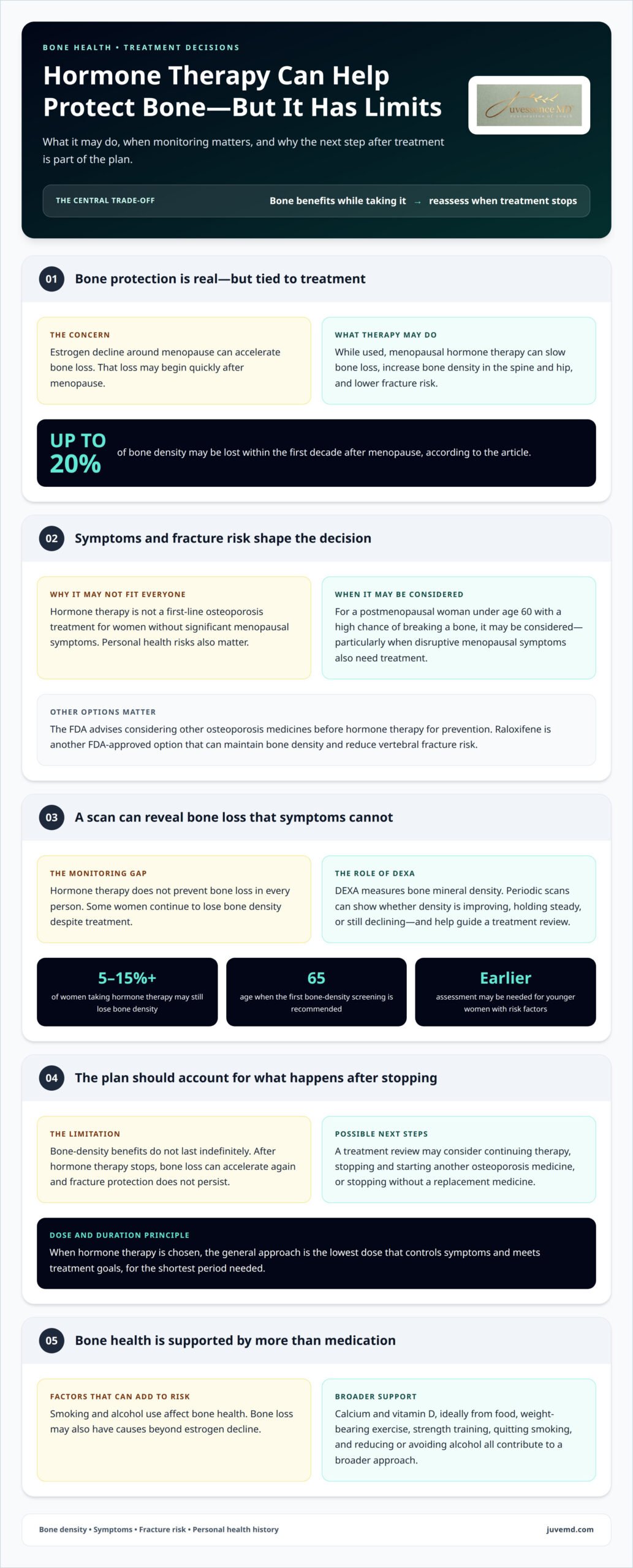
Estrogen helps maintain bone density, so its decline around menopause can accelerate bone loss. Menopausal hormone therapy can reduce bone loss, increase bone density in the spine and hip, and lower fracture risk while it is being used. For some postmenopausal women, preventing osteoporosis with hormone therapy may be considered when treatment also addresses disruptive menopausal symptoms.
The bone benefit does not last indefinitely after treatment stops. Bone loss can accelerate again, so another osteoporosis medicine may be considered to help maintain bone density. Smoking and alcohol use also affect bone health. Quitting smoking and reducing or avoiding alcohol can help lower osteoporosis risk. Weight-bearing exercise and strength training support bone health, while maintaining a healthy weight contributes to overall well-being.
DEXA Monitoring
A DEXA scan measures bone mineral density and helps assess osteoporosis risk. The first bone-density screening is recommended at age 65, while younger women with risk factors may need earlier assessment. For example, a history that raises fracture risk can make screening relevant before that age.
Monitoring remains useful during hormone therapy because some women continue to lose bone density despite treatment. Periodic testing can show whether bone loss continues or treatment is supporting bone health. Results help guide a treatment review, including whether another medicine should be considered.
Bone-Focused Hormone Therapy
In the United States, menopausal hormone therapy is approved to prevent osteoporosis in postmenopausal women. It may be considered for a woman under age 60 with a high chance of breaking a bone. The possibility of preventing osteoporosis with hormone therapy is particularly relevant when menopausal symptoms also need treatment.
The FDA advises considering other osteoporosis medicines before using hormone therapy for prevention. Estrogen therapy is not a first-line osteoporosis treatment for women without significant menopausal symptoms. Raloxifene is another FDA-approved option that can maintain bone density and reduce vertebral fracture risk.
Dosage Considerations
When hormone therapy is chosen, the general approach is to use the lowest dose that controls menopausal symptoms and meets treatment goals, for the shortest period needed. Available forms include tablets, skin patches, and sprays applied to the inner arm or inner thigh. The right form and dose depend on personal health risks and treatment goals.
Because hormone therapy’s bone-density benefits do not persist after treatment stops, a treatment review should consider what comes next. Options may include continuing therapy, stopping and starting another osteoporosis medicine, or stopping without a replacement medicine. DEXA results, fracture risk, and symptom control help guide decisions about preventing osteoporosis with hormone therapy.
Bone-density monitoring during hormone therapy
Menopause accelerates bone loss, while estrogen therapy can reduce it and improve bone density in the spine and hip. Hormone therapy lowers fracture risk while it is used. After stopping, bone loss can resume, and the bone-density benefit does not last.
Tracking Bone Density
Bone-density monitoring uses DEXA scans to track changes in bone mineral density over time. The results help show whether treatment is supporting bone health or whether loss continues. Monitoring matters because hormone therapy doesn’t prevent bone loss in every person: five to 15% or more of women taking it can still lose density.
Postmenopausal bone loss can also have causes beyond estrogen decline. A medical evaluation may include blood tests for 25-OH vitamin D, thyroid function, and complete blood counts, plus a 24-hour urine calcium assessment. Depending on the clinical picture, testing may also include parathyroid hormone, serum protein electrophoresis, celiac testing, 24-hour cortisol levels, or fasting urine NTX.
These results give clinicians a broader view than a scan alone. For example, low vitamin D or an abnormal thyroid result may point to a factor that needs attention alongside menopause-related bone changes. Periodic bone densitometry remains useful during treatment because scan trends can reveal ongoing bone loss that symptoms cannot show.
Density and Fracture Outcomes
Estrogen influences bone remodeling, the ongoing process through which old bone is removed and new bone forms. After menopause, lower estrogen levels can shift this balance toward greater bone breakdown. Bone loss accelerates during the first few years after menopause, and women can lose up to 20% of bone density within the first decade after menopause.
Menopausal hormone therapy reduces bone loss, increases bone density in the spine and hip, and reduces fracture risk in postmenopausal women. These effects are clinically meaningful, but apply while therapy is being taken. A DEXA result can track density changes, while a fracture-risk assessment helps show whether bone strength is translating into protection.
After hormone therapy stops, bone loss can become rapid, and the protective effect against fractures does not persist. A treatment review may lead to continued hormone therapy, a switch to another osteoporosis medicine, or stopping without another medicine. The choice depends on bone-density results, fracture risk, menopausal symptoms, and health history.
Estrogen-only and combined estrogen-progestin therapy
U.S. guidance recognizes menopausal hormone therapy for preventing osteoporosis in postmenopausal women, but the FDA advises considering other osteoporosis medicines first. The choice between estrogen alone and combined therapy depends chiefly on whether you have a uterus, as well as your symptoms and health risks.
Comparing Therapy Types
Estrogen-only therapy supplies estrogen without a progestogen, while combined therapy pairs estrogen with a progestogen such as progesterone. This distinction matters because estrogen alone can increase endometrial cancer risk in someone with a uterus. Adding progesterone helps protect the uterine lining; estrogen-only therapy is generally used after hysterectomy.
For bone health, both approaches can reduce bone loss while treatment continues. The balance changes when therapy is intended only to prevent osteoporosis, rather than also treat menopausal symptoms. In that situation, other osteoporosis medicines may be considered first. Age, fracture risk, menopausal symptoms, and medical history help shape the decision.
Estrogen Routes and Clot Risk
Estrogen may be taken orally or delivered through the skin, including as patches, gels, and sprays. Route matters because venous thromboembolism, or VTE, is a major safety concern with hormone therapy. Transdermal estrogen is recommended for women at increased VTE risk; for those without increased risk, estrogen may be given orally or transdermally.
Some hormone therapy tablets are linked with a small increase in stroke risk, especially as treatment begins later in life. The risk is low when therapy starts before age 60, and the evidence summarized here does not link patches, gels, and sprays with increased stroke risk. Form and timing therefore matter alongside a person’s clot history.
Benefits and Risks of Estrogen
Estrogen therapy can reduce bone loss and fractures while easing symptoms such as hot flushes and night sweats. These benefits need to be weighed against potential harms, including slightly higher risks of blood clots, heart attack, stroke, and breast cancer. A history of breast cancer or high breast-cancer risk weighs against menopausal hormone therapy.
The Women’s Health Initiative findings illustrate why context matters. Women taking Prempro were, on average, more than ten years past menopause. The study associated Prempro with fewer hip and other fractures, but slightly higher risks of breast cancer, stroke, heart attack, blood clots, and cognitive decline. Those findings should not be treated as an estimate of an individual’s risk.
Estrogen and Progestogen Options
For women with a uterus, combined estrogen-progestin therapy protects against endometrial hyperplasia and cancer. Estrogen may be taken orally or transdermally, while progestogen is added to protect the uterine lining. After hysterectomy, estrogen-only therapy may be appropriate because there is no uterus requiring that protection.
Other health factors can affect whether either approach is suitable. A history of breast, ovarian, or womb cancer, liver problems, unexplained vaginal bleeding, or blood clots may make hormone therapy unsuitable. A recent heart attack also matters. Review these factors alongside fracture risk and symptoms before choosing a regimen or route.
Calcium, vitamin D, and nutrition
Calcium and vitamin D support bone health, and getting them through food is preferable when practical. Nutrition can complement hormone therapy, but it does not replace treatment decisions based on bone density and fracture risk. Start by reviewing regular meals, identifying foods that provide these nutrients, and noticing where your eating pattern has gaps.
Calcium is found in foods such as milk, yogurt, cheese, and calcium-fortified alternatives. Tofu made with calcium and some leafy greens can also add variety. Rather than relying on one food, include calcium sources across meals. For example, yogurt at breakfast and a calcium-rich food at lunch can make intake part of an ordinary routine.
Vitamin D is present in foods such as fatty fish, egg yolks, and fortified products. Examples include salmon or fortified milk, depending on personal preferences and dietary needs. Pairing vitamin D sources with calcium-containing foods can make meals more supportive of bone health. A clinician may also consider a 25-OH vitamin D blood test when evaluating postmenopausal bone loss.
Consider your overall eating pattern, not just one nutrient. Review your usual breakfasts, lunches, dinners, and snacks, then identify simple substitutions. For example, someone who rarely consumes dairy might choose a fortified alternative, while someone who already eats yogurt could add another calcium-containing food. This makes it easier to assess your intake without guesswork.
Calcium and vitamin D intake can help reduce osteoporosis risk, but diet alone cannot determine whether hormone therapy is appropriate. Bone-density results, menopausal symptoms, and health history remain relevant. Breast cancer risk is also a separate consideration in hormone-therapy decisions; adding calcium-rich foods does not change that assessment.
For people taking hormone therapy, nutrition is one part of ongoing bone-health care. A clinician can review eating patterns alongside DEXA results and vitamin D testing, especially if bone density continues to decline. This discussion can clarify whether food choices are adequate, whether further evaluation is useful, and how nutrition fits into the broader treatment plan.
Hormone therapy for early and premature menopause
Menopause before age 45 is considered early, while premature menopause occurs before age 40. These timing differences matter because estrogen levels fall earlier, potentially extending the period when bone loss can develop. Hormone therapy may address menopausal symptoms and support bone health, but the timing and purpose of treatment differ from hormone therapy started after typical-age menopause.
For someone whose ovaries are removed in their 30s or early 40s, the loss of ovarian hormones can happen suddenly. Women in this situation may benefit from low-dose menopausal hormone therapy. Hormone therapy is also used for premature and early menopause in women under ages 40 to 45. The person’s symptoms, medical history, and bone-health assessment all help shape the treatment plan.
Duration is another important distinction. People who experience early or premature menopause will normally take hormone therapy at least until about age 50. This reflects the earlier loss of hormones, rather than a plan to use treatment indefinitely. Around that age, the purpose and balance of continuing treatment can be reviewed in light of current symptoms, bone health, and personal risk factors.
Dose also needs context. Hormone therapy for women with premature or early menopause is generally given at a higher dose than hormone therapy for postmenopausal women. That does not mean everyone needs the same regimen. The dose and form depend on the reason for treatment and the person’s health profile. For someone with early menopause, the plan may need to address both symptoms and the longer period of reduced estrogen exposure.
Bone monitoring can add useful information. A DEXA scan measures bone density, while a review of fracture risks puts the result into context. If bone density is falling, that trend may prompt a closer assessment of treatment goals and other contributors to bone loss. Nutrition, weight-bearing exercise, and strength training can support bone health alongside medical care, but do not replace evaluation of early hormone loss.
The key takeaway is that early menopause changes the timing of the conversation. A person who experiences menopause before age 45, or has their ovaries removed in their 30s or early 40s, may need a different treatment approach from someone reaching menopause later. A clinician can assess symptoms, hormone levels, bone density, and medical history to guide decisions about therapy and follow-up.
Explore hormone therapy options as part of a discussion about early menopause, symptoms, and bone-health goals.
JuveMD: Bioidentical Pellet Hormone Therapy
JuveMD offers Bioidentical Pellet Hormone Therapy for people exploring hormone care in Las Vegas. If menopause symptoms and bone-health concerns overlap, the therapy may be part of a discussion about your hormone-treatment goals and health history.
Hormone therapy is not automatically the right choice for preventing osteoporosis, and pellet therapy should not be treated as a substitute for bone-density monitoring or osteoporosis care. Treatment decisions should account for fracture risk, symptoms, and personal health factors. Understanding these distinctions can help you discuss whether hormone care fits your broader plan.
Contact JuveMD to discuss Bioidentical Pellet Hormone Therapy and your hormone-health goals.
Turn Bone-Health Questions Into a Care Plan
A useful next step is to clarify what you want treatment to address: menopausal symptoms, bone-health concerns, or both. This gives you a focused starting point for discussing whether preventing osteoporosis with hormone therapy belongs in your care plan or whether another approach better fits your goals.
Bring forward the concerns that matter most to you, including treatment priorities, health history, and how bone health will be followed over time. The choice should reflect your needs and risks, not an assumption that hormones are the answer. JuveMD offers Bioidentical Pellet Hormone Therapy in Las Vegas. A conversation can help you explore how it relates to your hormone-health goals while keeping osteoporosis prevention in perspective.
Contact JuveMD to discuss your options and take a thoughtful next step toward informed care.
Frequently Asked Questions
Is HRT as effective as other osteoporosis medicines?
HRT can reduce bone loss and fracture risk during treatment, but it is not interchangeable with every osteoporosis medicine. The choice depends on fracture risk, menopausal symptoms, and medical history. For example, bisphosphonates may be considered for someone with osteoporosis who does not want hormone therapy, while anabolic medicines may be considered for severe osteoporosis or fragility fractures. The treatment goal helps determine which option is appropriate.
Are there other preventive or therapeutic options for osteoporosis?
Yes. Options include osteoporosis medicines, weight-bearing exercise, strength training, and attention to calcium and vitamin D intake. Bisphosphonates may suit some people with osteoporosis, while denosumab or anabolic medicines may be considered in particular situations. Quitting smoking and reducing or avoiding alcohol can also support risk reduction. These approaches address different aspects of bone health, so they may be considered alongside bone-density results and fracture history.
How does a clinician help me decide whether HRT is right for me?
A clinician weighs menopausal symptoms, fracture risk, bone-density findings, and health history together. Factors such as a history of breast cancer, blood clots, liver problems, or unexplained vaginal bleeding can affect whether HRT is suitable. Age and whether symptoms need treatment also matter. For example, someone seeking osteoporosis prevention without significant menopausal symptoms may be considered for another medicine instead.
How does a clinician prescribe and guide me through HRT?
The treatment plan accounts for symptoms, medical risks, and whether you have a uterus. That distinction affects whether estrogen is prescribed alone or with a progestogen. The clinician also considers the route, such as a tablet or transdermal form, and uses the lowest dose that meets treatment goals for the shortest necessary period. Follow-up reviews help assess symptoms, side effects, and whether the plan still fits.
How does HRT work?
HRT replaces estrogen that falls during menopause. Estrogen influences bone remodeling, the process that removes older bone and forms new bone. Lower estrogen levels can shift that process toward bone breakdown; replacing estrogen can help preserve bone while treatment continues. HRT may also ease symptoms such as hot flushes and night sweats, making it relevant when bone concerns and menopause symptoms occur together.
How long can I take HRT for?
There is no treatment duration that applies to everyone. For menopause symptoms, the general approach is the lowest effective dose for the shortest period that meets treatment goals. Regular reviews consider symptom control, health risks, and bone health. Because bone loss can increase after HRT stops, the review should also consider whether another osteoporosis medicine is appropriate or whether ongoing monitoring is needed.
How will my treatment be monitored?
Monitoring can include symptom reviews, discussion of side effects, and periodic bone-density testing. DEXA scans help track changes in bone mineral density, while blood and urine tests may investigate other contributors to bone loss. For example, a clinician may assess vitamin D or thyroid function. The monitoring plan reflects your bone-health findings and risk factors, rather than relying on symptoms alone.
What are the possible side effects?
Possible effects include breast tenderness, vaginal bleeding for people with a uterus, and gallbladder disease. HRT is also associated with slightly increased risks of blood clots, stroke, heart attack, and breast cancer. The specific risk profile depends on factors such as health history, treatment route, and timing. Report new or concerning symptoms during follow-up so they can be assessed in context.