
Do you need to dress a certain way for your first hormone consultation? Usually, comfortable clothing is all you need. Preparing for your first hormone consultation is less about getting every detail perfect and more about bringing information and questions that help you explain what you’re experiencing.
It’s normal to feel unsure about what to say, especially when symptoms are personal or difficult to describe. You don’t need to arrive with a treatment decision. Your concerns, preferences, and questions are all useful parts of the conversation.
This guide explains what to bring, how to prepare emotionally, and what to discuss about hormone therapy’s potential risks and benefits. You’ll also learn how symptoms, health history, and test results may inform a personalized plan, along with questions about treatment options, timing, and follow-up. A little preparation can help you feel grounded and make an open, productive discussion easier.
Key Takeaways
- Bring a current list of medications, supplements, hormones, and health concerns to help make the conversation more complete.
- Write down your symptoms and questions so you can explain what has changed and what matters most to you.
- Use the consultation to understand potential benefits, risks, and alternatives before deciding whether treatment fits your goals.
- Ask how symptoms, health history, and any recommended test results may shape a personalized treatment plan.
- Share your preferences and concerns openly; you don’t need to arrive with a treatment decision already made.
Listing medications, supplements, and over-the-counter drugs
Bring a list of current medications, supplements, over-the-counter products, and relevant medical history. Include each item’s dose and how long you’ve taken it. The Centers for Disease Control and Prevention recommends including supplements, birth control, and hormones. Share past illnesses and health concerns, too.
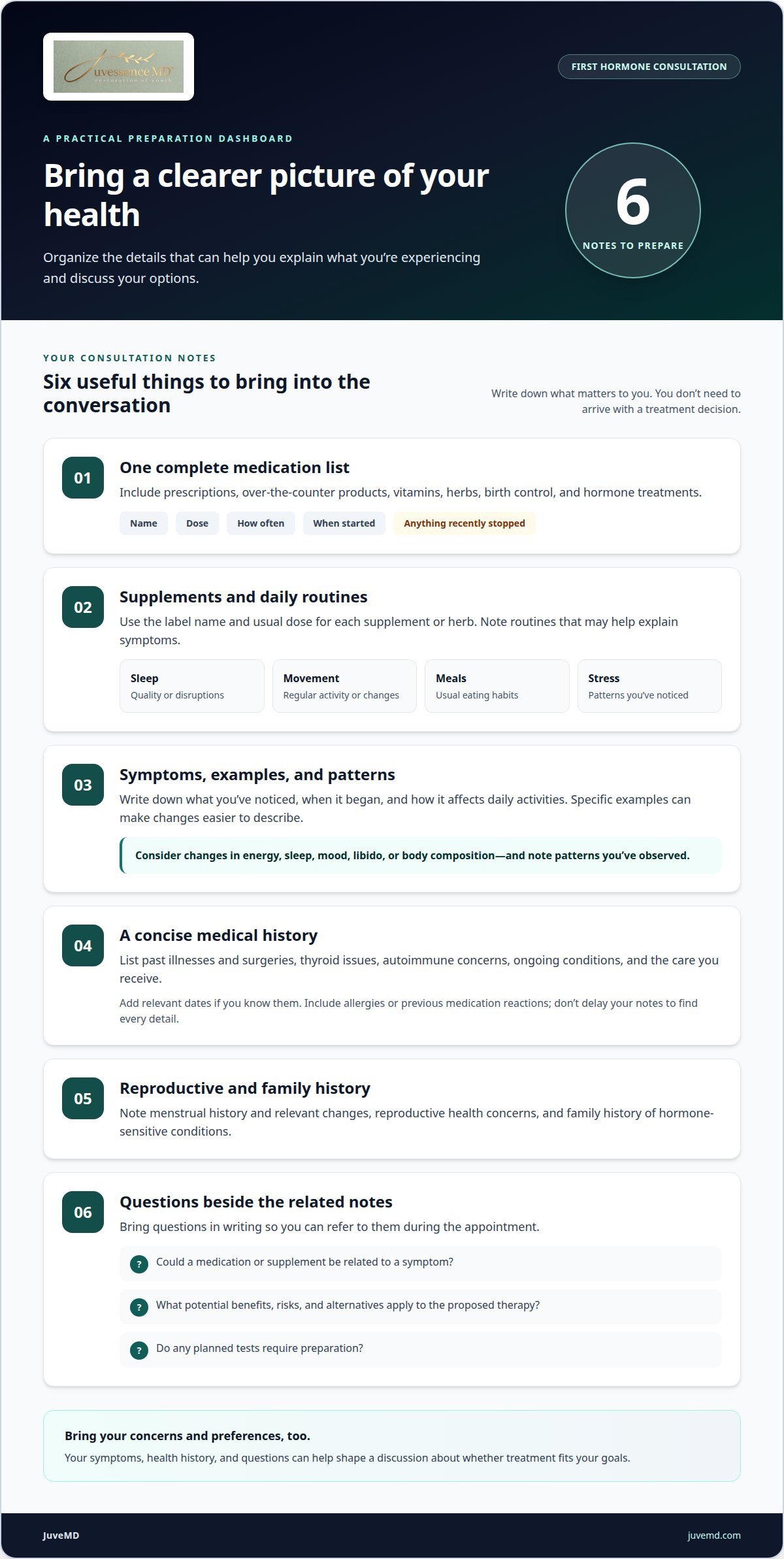
- Make one complete medication list. Include prescription medicines, over-the-counter products, vitamins, herbs, birth control, and any hormone treatment. For each, write the name, dose, how often you take it, and when you started. Note anything you recently stopped as well. A clear timeline helps distinguish current use from past use during the discussion.
- Record supplements and daily routines. List each supplement or herb by its label name and usual dose, rather than grouping items as “vitamins.” Note lifestyle patterns that may help explain symptoms, such as sleep quality, regular movement, meal habits, and stress. For example, record whether disrupted sleep or a change in exercise tends to coincide with low energy.
- Summarize symptoms with examples. Write down what you’ve noticed, when it began, and how it affects daily activities. “I feel tired” is less informative than explaining that fatigue makes a familiar task harder or that your sleep has become interrupted. Include changes in mood, libido, or body composition if they concern you, and describe any pattern you’ve noticed.
- Prepare a concise medical history. List past illnesses, surgeries, thyroid issues, and autoimmune concerns, along with ongoing conditions and the care you receive for them. Add relevant dates if you know them, but don’t delay preparing your notes to find every detail. Include allergies or previous medication reactions that are part of your health history.
- Include reproductive and family history. Note your menstrual history, including relevant changes, and list any reproductive health concerns you want to discuss. Record family history of hormone-sensitive conditions, such as conditions affecting close relatives. These details can place your symptoms and medication history in a broader health context.
- Write questions beside the related notes. For example, ask whether a medication or supplement could be related to a symptom, what potential treatment risks and benefits apply, and whether any planned tests require preparation. Bring your questions in writing so you can refer to them during the appointment. Preparing for your first hormone consultation is easier when your records and concerns are organized together.
Informed consent and hormone therapy risks and benefits
Use the consultation to understand the proposed therapy, its purpose, and its monitoring plan. Ask how your symptoms, hormone levels, and health priorities inform the decision.
Review Hormone Therapy Basics
- Clarify the goal of treatment. Hormone replacement therapy aims to ease symptoms associated with hormonal imbalances. These changes may occur during menopause or andropause, or relate to other conditions affecting hormone production. Ask which symptoms the proposed approach is intended to address and how progress will be assessed.
- Ask what bioidentical hormone replacement therapy means for your plan. BHRT is a form of hormone replacement therapy described as bioidentical. Ask which hormones and formulation are being considered, how they relate to your symptoms, and what monitoring would involve. Don’t assume the term alone explains the treatment’s benefits, risks, or suitability.
- Understand what the first visit may involve. A consultation can include a review of your symptoms and health history, an examination, and a discussion of diagnostic tests. Bloodwork may assess hormone levels and other health markers. Ask what each proposed test is intended to evaluate and whether preparation is needed.
Discuss Risks and Benefits
- Request a clear explanation before consenting. Ask about potential benefits, risks, alternatives, and how treatment could affect your daily activities. Have the clinician relate each point to the specific therapy under consideration. Ask what changes would prompt follow-up or a review of the plan.
- Compare professional settings with your needs. An endocrinologist may suit questions centered on endocrine function; a gynecologist may be appropriate for reproductive or menstrual concerns. A hormone clinic focuses on hormone-related evaluation and therapy. Consider the main concern you want addressed and the type of care involved.
- Clarify costs and insurance separately. In the United States, consultation costs vary with the scope of the visit and testing. Ask about fees before proceeding and review your insurance plan’s benefits, since coverage depends on the plan and care involved. Some hormone-related tests may be treated as diagnostic labs and apply to your deductible.
- Ask about habits that can support care. Discuss consistent, quality sleep, balanced meals, stress-reduction practices, and gentle movement such as walking or yoga. These habits may support overall health alongside therapy, but they don’t replace discussion of treatment risks or monitoring.
For a clearer view of hormone therapy options, bring these questions into a focused consultation and discuss how an individualized plan would address your concerns.
Treatment planning based on test results, examination, and symptoms
Use your symptom pattern, examination findings, and recommended testing to discuss a treatment plan. Bring clear examples of what affects your daily life and what you hope to address.
Track Symptoms Before the Visit
- Keep a symptom record for a few weeks. Note when each change occurs, how long it lasts, its severity, and any pattern or possible trigger. Include examples such as hot flashes, declining energy, anxiety, low mood, disrupted sleep, reduced libido, or changes in body composition. Record effects on daily activities, too. This turns broad concerns into details you can discuss at the appointment.
- Look for patterns without drawing conclusions. A symptom diary can show whether a concern appears at a particular time or alongside another change. Record what you observed, not what you think caused it. For example, note a hot flash and its effect on sleep, then let the clinician consider that detail alongside your medical history and any testing.
Discuss Symptoms and Treatment Goals
- Describe the concerns that matter most. At an initial HRT consultation, explain which symptoms prompted the appointment and how they affect your routine. Mention hot flashes, persistent fatigue, emotional changes, sleep disruption, sexual concerns, or body composition changes where relevant. Be specific about what has changed for you instead of relying only on a general label such as “hormone imbalance.”
- State what you want treatment to improve. Your priority might be fewer disruptive hot flashes, better sleep, or improved energy. Ask how those goals could be assessed and what other explanations may need consideration. Discuss your preferences and concerns openly, including any uncertainty about starting therapy. The treatment plan should connect proposed care with your symptoms and priorities.
Review Tests and Examination Findings
- Ask how each finding informs the plan. A consultation may include an examination and bloodwork that assesses hormone levels and other health markers. Common tests may include estrogen, progesterone, and testosterone, as well as thyroid tests such as TSH, T3, and T4. Insulin or fasting glucose may also be considered. Ask what each result can help evaluate.
- Discuss whether additional testing fits your symptoms. Depending on the assessment, a provider may use saliva or urine panels as additional tests. Ask how those results would be interpreted alongside bloodwork, examination findings, and your symptom record. Testing provides information for discussion, not a treatment decision by itself. Before leaving, clarify which results or symptoms will guide the next planning step.
Personalized treatment planning
Ask how the proposed plan reflects your symptoms, test results, health priorities, and preferences. Before agreeing, clarify the expected timeline, monitoring, and next steps.
Review Risks, Benefits, and Side Effects
- Discuss the specific treatment under consideration. Ask what benefits it aims to provide, what risks and side effects are associated with it, and how those concerns will be monitored. Request an explanation in plain language, including what changes you should report and how they could affect the plan. Understanding these details helps you weigh treatment against alternatives and your personal priorities.
Set Expectations for Results and Monitoring
- Clarify when changes may become noticeable. Some patients notice changes within a few weeks, while full BHRT results may emerge over 8 to 12 weeks or longer. Ask which changes the plan is intended to address first, and how progress will be reviewed. A timeline helps you distinguish early observations from the broader goals of treatment.
- Share preferences and treatment requirements. Tell the practitioner about approaches you prefer, concerns you have, or options you want to avoid. If you’d rather begin with lifestyle-based approaches, say so directly. This information helps shape a personalized plan around your priorities rather than assuming one treatment suits everyone.
- Ask how alternatives fit your goals. Discuss whether non-medication approaches or other recommendations could address your concerns. Ask how each option’s potential benefits, limitations, and monitoring needs compare with the proposed therapy. For example, ask how a lifestyle-focused approach could support your goals before considering medication.
- Confirm the follow-up schedule. Follow-up laboratory testing may be scheduled within a few months to assess how your body responds. Ask what the tests will evaluate and how results could inform adjustments. Clarify which symptoms or concerns to note between appointments so the next discussion reflects both your experience and the available results.
- Understand how adjustments are handled. A treatment plan may be refined over time, including dosage adjustments, as the practitioner reviews your response. Ask what factors guide changes and when they’ll be discussed. Knowing the decision points helps you understand how monitoring connects to the plan, rather than treating each appointment as a separate conversation.
- Discuss supportive habits alongside treatment. Ask how balanced meals, regular movement, stress management, and consistent, quality sleep may support your goals. For example, discuss walking or yoga as gentle movement, or mindfulness as a stress-reduction practice. These habits can be part of a broader plan, while treatment decisions remain tied to your health needs and preferences.
- Leave with a clear next step. Before the consultation ends, summarize the agreed plan, expected timeline, monitoring, and follow-up. Ask how to raise discomfort or new concerns during treatment. Follow your prescribed plan and discuss issues with your healthcare provider rather than changing treatment without guidance.
Preparing emotionally for the consultation
Preparing for an appointment also takes emotional effort, especially when symptoms affect confidence, relationships, or daily well-being. A few deliberate steps can help you speak openly without expecting yourself to have every answer.
- Name what feels difficult to discuss. Write down the concern you feel most hesitant to raise, such as changes in libido, mood, or energy. Add a sentence about how it affects your daily life. Bringing that note can make it easier to begin, even if the subject feels personal when you’re with the provider.
- Set a simple goal for the conversation. Choose one priority, such as understanding possible causes, discussing treatment choices, or learning what an evaluation involves. A clear goal gives the appointment direction without requiring you to arrive with a decision. If several concerns matter, mark the most urgent and keep the others in your notes.
- Prepare words for uncertainty. You can tell the provider, “I’m not sure how to describe this,” or “I’m concerned about how treatment could affect me.” These phrases can open a conversation when you feel nervous or overwhelmed. You can also pause, ask for a plain-language explanation, or request time to consider a proposed plan.
- Decide what support would help you feel present. Before the visit, consider whether taking notes, bringing written questions, or having a trusted support person would help you focus. If you prefer privacy around topics such as reproductive health or past surgeries, note that preference. You can tell the provider which subjects feel sensitive and ask to discuss them at a comfortable pace.
- Separate typical questions from self-judgment. Concerns about aging, body changes, mood, or sexual function are legitimate topics for a health discussion. You don’t need to prove a symptom is severe enough to mention. Describe what you’ve noticed and what you want to understand, rather than labeling your experience a personal failure.
- Plan how you’ll stay grounded during the appointment. Choose a practical reset, such as taking a slow breath before answering or looking at your notes if you lose your train of thought. If new information feels overwhelming, ask the provider to repeat the main point or summarize the next step. You can focus on understanding one decision at a time.
- Leave room for your feelings afterward. After the visit, note what you understood, what remains unclear, and how you feel about the discussion. For example, record one answered question and one point to revisit at follow-up. This brief reflection can help distinguish the information you received from worries that arose during the conversation.
JuveMD: Bioidentical Pellet Hormone Therapy
JuveMD offers Bioidentical Pellet Hormone Therapy for people exploring hormone-related care after reviewing their symptoms, health history, and treatment goals. A consultation is a natural next step if you want to discuss whether this option fits your needs and understand its potential benefits, risks, and monitoring. Bring your questions about the treatment approach, alternatives, and follow-up so the conversation can focus on your priorities. Treatment planning should reflect your individual health picture, not a one-size-fits-all assumption. If you’re ready to discuss your hormone health and possible next steps, contact JuveMD.
Move Forward With a Clear Next Step
Preparing for your first hormone consultation can start a more informed conversation, not commit you to a particular treatment. Keep your priorities at the center, ask for clear explanations, and take time to understand the options discussed.
A useful next step is to decide what you want the conversation to clarify. You may want to understand how a proposed approach relates to your health goals, what monitoring involves, or which questions remain before you decide. It’s reasonable to leave with points to consider rather than feeling pressured to settle everything at once.
JuveMD offers Bioidentical Pellet Hormone Therapy as one option to discuss in the context of your individual needs. If you’re ready to explore your questions and possible next steps, contact JuveMD to discuss your consultation. Taking the first step can help you approach your care with greater clarity and confidence.
Frequently Asked Questions
Do I need to dress a certain way for my appointment?
No special dress code is needed; choose comfortable clothing. If an examination is planned, clothing that’s easy to adjust can make that part of the visit more straightforward. Ask what the appointment involves when arranging it, especially if you have concerns about comfort or mobility. The focus is on discussing your health, not dressing formally.
Is this service confidential?
Medical information is confidential and protected under federal law. If you use private insurance, consider who is listed as the primary policyholder: that person may see services through an Explanation of Benefits. Ask how appointment communications and records are handled, and raise privacy concerns before sharing sensitive details. This is especially relevant if insurance statements go to someone else.
What should I bring to my appointment?
Bring your medication and supplement list, relevant medical history, and written questions. Include prescription and over-the-counter medicines, hormones, birth control, herbs, and vitamins, with doses and how long you’ve taken them. If previous test results or records related to a concern are readily available, bring them. A written note can also help you remember details you might otherwise overlook during the conversation.
What happens at a first hormone consultation?
A first consultation typically includes a discussion of your symptoms, health history, and goals, followed by consideration of examination or testing needs. The provider may explain which hormone or health markers could inform an evaluation. Ask what each proposed step is intended to clarify and whether results will be reviewed at a later visit. You don’t have to make a treatment decision before understanding the options.
How should I prepare for a hormone therapy appointment?
Organize your health notes and questions before the visit, then ask whether planned lab testing has preparation instructions. Some tests, including insulin or cortisol testing, may require fasting, so confirm whether that applies to your scheduled testing. Don’t assume every blood draw requires fasting. Note any concerns about treatment preferences, privacy, or the appointment itself so you can raise them clearly.
What questions should I ask a hormone specialist at my first visit?
Ask what the proposed treatment is intended to address, which potential risks and benefits matter for you, and what alternatives may suit your preferences. You can also ask when changes might be noticeable, whether treatment is expected to be long-term, and how progress will be monitored. If you prefer lifestyle-based approaches or want to avoid medication, say so directly so it can inform the discussion.
What lab tests are typically ordered before starting hormone therapy?
Testing depends on symptoms and health history. Possible blood tests include estrogen, progesterone, and testosterone levels, along with thyroid markers such as TSH, T3, and T4. Insulin and fasting glucose may also be considered. Saliva or urine panels can be additional options in some assessments. Ask what each test evaluates and whether preparation, such as fasting, applies to your specific testing.
What are the risks and side effects of hormone therapy?
Risks and side effects depend on the treatment being considered and your individual health context, so ask for an explanation specific to the proposed plan. Before consenting, discuss expected benefits, possible unwanted effects, alternatives, and what concerns should prompt follow-up. Ask how monitoring will help evaluate your response and whether the plan could be adjusted. Don’t begin or change therapy without discussing it with your healthcare provider.