
What if the “normal” results on your latest blood panel are actually the reason you don’t feel like yourself anymore? It’s a common frustration in 2026. You’re likely struggling with disrupted sleep and stubborn weight gain that resists both diet and exercise, yet clinical benchmarks suggest nothing is wrong. You aren’t imagining the shift in your body. Many women find that standard medical ranges fail to capture the early onset of perimenopause symptoms that quietly erode their quality of life and professional performance.
We believe that you deserve more than just “fine.” This article provides a clear checklist to help you identify the subtle and overt signs of hormonal decline, moving beyond basic diagnostics to understand the vital difference between being within a normal range and achieving optimal health. You’ll discover how clinical hormonal optimization, specifically through bioidentical pellet therapy, can address these imbalances at their source. By the end of this guide, you’ll have a roadmap to reclaim your energy, clear the brain fog, and finally see results from your wellness efforts again.
Key Takeaways
- Identify the subtle timeline of hormonal transition, which often begins up to a decade before your final period.
- Access a detailed checklist of perimenopause symptoms to help you validate your experience and prepare for clinical discussions.
- Decode the connection between fluctuating hormones and cognitive shifts like brain fog or sudden mood changes.
- Uncover why metabolic changes and weight redistribution happen during this phase and how hormonal optimization supports healthy body composition.
- Learn how bioidentical pellet therapy provides a consistent, long-term approach to restoring your quality of life compared to traditional methods.
What is Perimenopause? The Hormonal Transition Explained
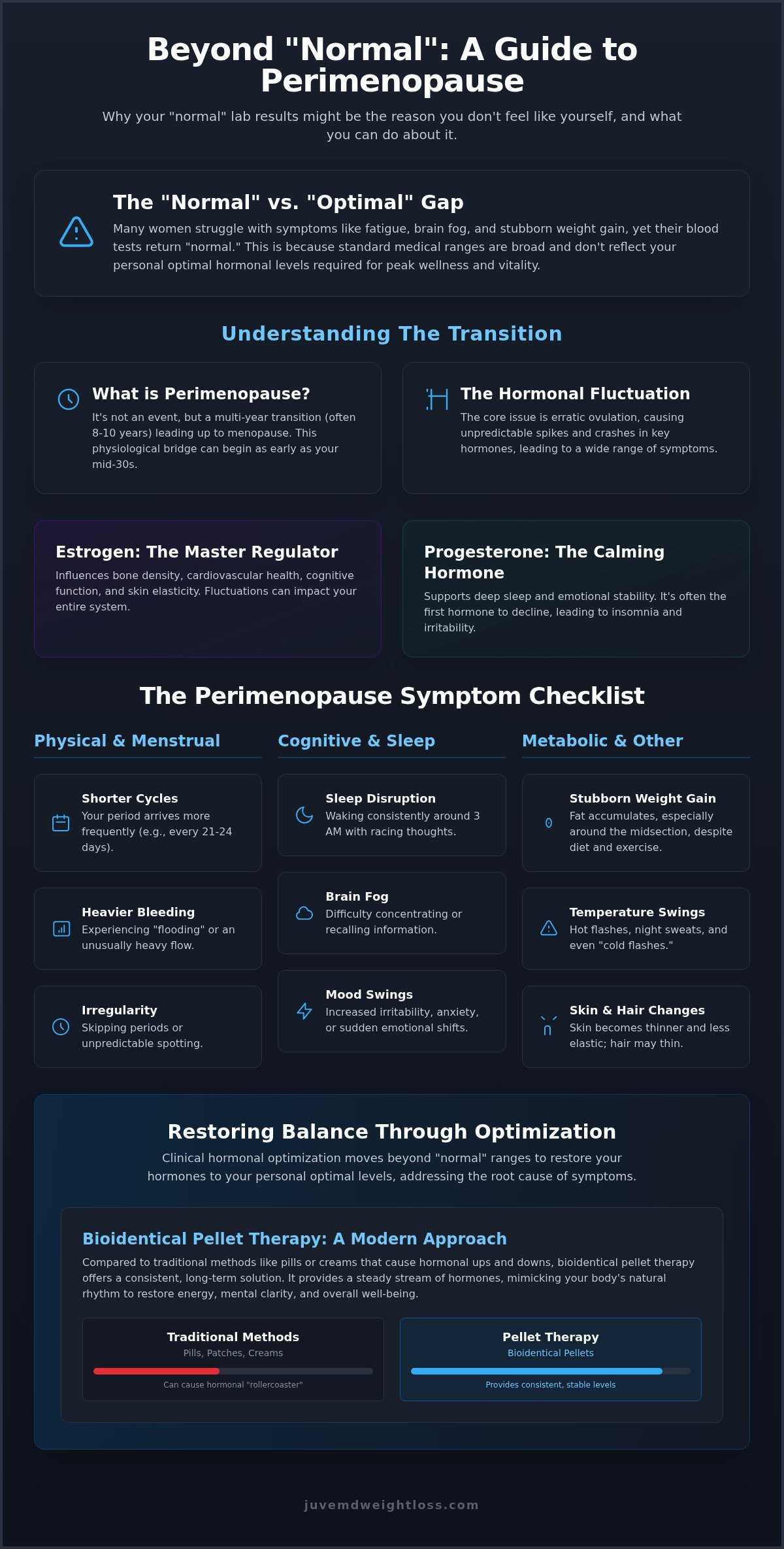
Perimenopause is the physiological bridge between your reproductive years and menopause. During this phase, the production of key hormones like estrogen and progesterone begins to fluctuate unpredictably. It isn’t a single event but a multi-year transition that can last between eight and ten years. While many believe this process begins in the late 40s, it’s increasingly common for women to experience the first signs in their mid-30s or early 40s. You aren’t just “getting older” when these changes start; your body is undergoing a complex neurological and endocrine recalibration.
The biological mechanism behind this shift is erratic ovulation. As your ovarian reserve naturally declines, the feedback loop between your brain and ovaries becomes less consistent. This creates a “hormonal rollercoaster” where levels might spike one day and crash the next. For a clearer perspective on these stages, Understanding Perimenopause and Menopause helps distinguish between the active transition and the eventual cessation of the menstrual cycle. It’s also distinct from menopause, which is defined as 12 consecutive months without a period, and premature ovarian insufficiency, which involves a loss of normal function before age 40.
The Role of Estrogen and Progesterone
Estrogen acts as a master regulator for your body. It influences everything from your bone density and cardiovascular health to cognitive function and skin elasticity. Progesterone, on the other hand, is your body’s natural “calming” hormone. It supports deep sleep and emotional stability. In early perimenopause, progesterone levels often drop first. This creates a relative estrogen dominance that can trigger a wide array of perimenopause symptoms, including irritability and insomnia. The delicate ratio between these two hormones dictates your daily well-being and energy levels.
Why Perimenopause is Often Misdiagnosed
Clinical oversight is common because many signs of hormonal decline mimic other conditions. Women are frequently told their fatigue, mood swings, or weight gain are simply results of stress, thyroid issues, or clinical depression. The primary challenge lies in “standard” lab ranges. Most traditional blood tests look for broad markers that only flag extreme deficiencies. However, a woman can be within a “normal” range but far from her personal optimal level. In 2026, leading practitioners prioritize a symptom-based diagnosis. Your lived experience and physical changes are often more accurate indicators of perimenopause symptoms than a single, static blood draw.
The Physical Signs of Perimenopause: A Comprehensive Checklist
Identifying the physical onset of hormonal decline requires paying close attention to subtle shifts in your baseline health. These changes aren’t just isolated inconveniences; they are systemic responses to fluctuating hormone levels. Vasomotor symptoms are the body’s internal thermostat failing due to low estrogen. While hot flashes are the most discussed, the full spectrum of perimenopause symptoms includes deep-seated changes in sleep architecture, skin integrity, and your monthly cycle.
The Menstrual Cycle Checklist
Your period is often the first indicator that progesterone and estrogen are no longer in sync. Track your cycle for these specific patterns:
- Shorter cycles: Moving from a standard 28-day cycle to 21 or 24 days.
- Heavier bleeding: Experiencing “flooding” that requires frequent changes of menstrual products during the first 48 hours.
- Irregularity: Skipping a month entirely, followed by several days of light spotting or an unexpectedly heavy flow.
Sleep and Temperature Regulation
Sleep disturbances in your 40s are rarely just about stress. You might find yourself falling asleep easily but waking up at 3:00 AM consistently with racing thoughts. This is frequently linked to a progesterone deficiency, as this hormone acts as a natural sedative for the brain. Temperature spikes, or night sweats, often force you to change pajamas or sheets in the middle of the night. You may also experience the “cold flash,” a sudden, intense chill that follows the heat as your body overcorrects its temperature. Researching clinical options for managing perimenopause symptoms can provide the necessary context to discuss these disruptions with a specialist.
Skin, Hair, and Tissue Changes
External physical markers are often the most visible signs of this transition. You might notice your skin becoming thinner and less elastic, or a significant loss of hair volume at the crown. Vaginal dryness is another common yet under-discussed symptom that occurs as estrogen levels drop, directly affecting the health of mucosal tissues. Because these physical changes often overlap with unexplained metabolic shifts, many women find success by combining hormone optimization with medical weight loss strategies to restore their body composition. Recognizing these perimenopause symptoms early allows for proactive intervention rather than waiting for the transition to complete.
Cognitive and Emotional Symptoms: Identifying the Mental Shift
While physical changes like night sweats are easier to quantify, the mental shifts often cause the most significant disruption to a woman’s professional and personal life. Many women find that the most distressing perimenopause symptoms aren’t the visible ones, but the cognitive and emotional changes that affect their sense of self. These shifts often feel like a loss of control. You might feel like you’re “losing your edge” or becoming a different person overnight, yet these experiences are deeply rooted in brain chemistry rather than a lack of resilience.
Understanding Perimenopausal Brain Fog
Estrogen receptors are concentrated in the areas of the brain responsible for memory and executive function, specifically the hypothalamus and hippocampus. When estrogen levels fluctuate and eventually decline, cognitive processing speed can slow down. This manifests as the classic “word-finding” struggle. You know the word you want to say, but you can’t retrieve it in the moment. It’s a physiological mental fatigue that differs from normal aging; it’s a direct result of the brain’s primary fuel source becoming inconsistent. Distinguishing this from early-onset dementia is crucial for peace of mind, as hormonal optimization often restores this lost clarity quickly.
The Emotional Impact of Hormonal Imbalance
The depletion of serotonin and GABA as progesterone levels fall creates a perfect storm for mood instability. Progesterone is a precursor to allopregnanolone, a neurosteroid that stimulates GABA receptors to produce a calming effect. When this “natural Valium” disappears, it’s replaced by unexplained anxiety, panic attacks, or “perimenopausal rage” that feels out of proportion to the situation. It’s vital to understand that emotional symptoms are physiological, not psychological, during this transition. Traditional antidepressants often fail to provide relief in these cases because they don’t address the underlying hormonal deficit that triggered the shift in the first place.
New or worsening anxiety that seems unrelated to external life stressors is a hallmark of this phase. Similarly, a clinical decrease in sexual desire and responsiveness often stems from these same neurological changes, as declining hormones affect the dopamine pathways responsible for motivation and pleasure. For a broader look at how these mental shifts intersect with physical health, the Office on Women’s Health provides a detailed breakdown of perimenopause and menopause symptoms. Recognizing these perimenopause symptoms as clinical markers of a transition in 2026 allows you to seek targeted solutions that go beyond talk therapy or standard mood stabilizers.
The Metabolic Factor: Weight Gain and Body Composition Changes
Unexplained weight gain is often the most frustrating of all perimenopause symptoms. You might notice your waistline expanding despite maintaining the same diet and exercise routine you’ve used for years. This phenomenon, often called the “Perimenopause Belly,” occurs because your body’s fat distribution priorities shift as estrogen levels decline. Estrogen plays a critical role in maintaining insulin sensitivity. When it drops, your cells become less efficient at processing glucose, which leads the body to store energy as visceral fat around the midsection.
Sarcopenia, or the age-related loss of muscle mass, also accelerates during this transition. Muscle is metabolically active tissue. Losing even a small amount of lean mass significantly lowers your resting metabolic rate. This makes it harder to maintain your weight, even if your caloric intake remains stable. It’s a physiological cycle that requires more than just willpower to break.
Cortisol levels also play a significant role. Chronic stress from poor sleep and hormonal fluctuations spikes this hormone, signaling the body to protect its energy reserves. This specifically triggers fat storage in the abdominal cavity. Addressing these metabolic shifts is essential for long-term cardiovascular health and overall vitality.
Hormone-Related Weight Gain
Traditional advice like “eat less and move more” often fails because it ignores the underlying endocrine shift. Your resting metabolic rate is tethered to your hormonal health. Without addressing the decline in estrogen and progesterone, the body remains in a storage-heavy state. For many women, a specialized Hormone-related weight gain treatment is the only way to break through this metabolic plateau. It’s about restoring the signals that tell your body how to use fuel efficiently.
Clinical Strategies for Weight Management
Modern management in 2026 involves a dual approach. Identifying these perimenopause symptoms early allows for a more targeted metabolic intervention. Optimizing your hormones through bioidentical pellet therapy provides the foundation for a healthy metabolism. When your hormones are balanced, your body responds more effectively to interventions like medical weight loss injections. This synergy ensures that you aren’t just losing weight; you’re improving your overall body composition and metabolic health. If you’re ready to address these changes, consider exploring a comprehensive medical weight loss program designed specifically for hormonal transitions.
Clinical Support: Restoring Balance through Optimization
Traditional medical approaches often focus on simply “managing” your condition until you reach menopause. This reactive strategy usually involves waiting for perimenopause symptoms to become unbearable before offering low-dose interventions. In 2026, the clinical consensus has shifted toward proactive hormonal optimization. This means looking beyond the “normal” lab ranges that many providers use and focusing on the levels where you actually feel your best. True optimization aims to restore your physiological function to its peak, rather than just masking the discomfort of the transition.
At JuveMD, our approach is rooted in the understanding that every woman’s hormonal blueprint is unique. Dr. Andrea Dempsey provides personalized treatment plans that bridge the gap between clinical data and your lived experience. By focusing on metabolic health alongside hormonal balance, we ensure that your Hormonal imbalance treatment addresses the root cause of your fatigue, weight gain, and cognitive shifts.
Why Bioidentical Pellets are the Gold Standard
One of the primary challenges with traditional hormone replacement therapy (HRT) is the “rollercoaster” effect. Pills, patches, and creams often cause hormone levels to spike and then dip rapidly throughout the day. Bioidentical pellet therapy solves this by providing a steady-state delivery system. These tiny pellets, placed just under the skin, release a consistent flow of hormones based on your body’s needs, much like your ovaries did in earlier years. This delivery method is a cornerstone of the ultimate guide to bioidentical pellet hormone therapy because it eliminates the daily fluctuations that often trigger mood swings and energy crashes.
Your Next Steps: The Consultation Process
The journey to feeling like yourself again begins with a comprehensive clinical evaluation. During your consultation, we don’t just ask about your perimenopause symptoms; we perform deep-dive lab testing to analyze your current baseline. Our diagnostic process typically evaluates:
- Estrogen and Progesterone: We determine the ratio driving your physical and emotional shifts.
- Testosterone: This is often overlooked in women, yet it’s essential for bone density, libido, and mental focus.
- Metabolic Markers: We include insulin and cortisol tests to address weight redistribution and energy levels.
Dr. Andrea Dempsey uses these specific insights to create a tailored plan designed for your unique profile. This ensures your treatment is medically supervised, safe, and precisely calibrated to restore your quality of life. You’ll leave the consultation with a clear understanding of your hormonal health and a predictable path toward feeling like yourself again.
Reclaiming Your Vitality Beyond the Transition
Recognizing that your experience is valid marks the beginning of your recovery. Whether you’re struggling with cognitive shifts, sleep disruptions, or the metabolic changes of the “Perimenopause Belly,” these perimenopause symptoms are clear signals that your body requires clinical support. By prioritizing hormonal optimization over passive symptom management, you can restore the steady state your system needs to thrive in 2026. This transition doesn’t have to be a period of decline; it’s an opportunity to recalibrate your health for the long term.
At JuveMD, Dr. Andrea Dempsey specializes in comprehensive metabolic and hormonal optimization. Our use of specialized bioidentical pellet hormone therapy ensures you receive a consistent, steady delivery of the hormones your body is no longer producing on its own. You don’t have to navigate this transition with “normal” but suboptimal health results that leave you feeling exhausted. Take the first step toward feeling like yourself again and Schedule Your Personalized Hormone Consultation at JuveMD today. Relief is entirely possible, and your quality of life remains our highest priority.
Frequently Asked Questions
Is it perimenopause or just stress?
Stress and perimenopause often mimic each other, but they’re frequently linked through the hormone cortisol. While life stressors cause temporary anxiety, perimenopause involves a systemic decline in progesterone that makes your nervous system more reactive. If your stress is accompanied by night sweats or cycle changes, it’s likely hormonal. Clinical testing can distinguish between situational stress and the physiological shifts of perimenopause symptoms to ensure you receive the correct support.
Can I still get pregnant during perimenopause?
Yes, pregnancy is still possible until you’ve reached menopause, which is defined as twelve consecutive months without a period. Although ovulation becomes erratic and fertility decreases significantly during this transition, you can still release eggs unexpectedly. If you aren’t seeking to become pregnant, it’s essential to continue using contraception. Hormonal fluctuations during this stage make cycle tracking less reliable for preventing pregnancy compared to your younger reproductive years.
How long do perimenopause symptoms typically last?
The perimenopausal transition typically lasts between seven and ten years, though the duration varies for every woman. Some experience a rapid shift over a few years, while others notice subtle changes starting in their mid-30s that persist into their early 50s. Because this is a long-term biological recalibration, finding a sustainable solution like bioidentical pellet therapy is often more effective than simply waiting for these perimenopause symptoms to pass on their own.
What is the best age to start hormone therapy?
There isn’t a single best age, as the right time to start depends entirely on your symptom profile and clinical needs. Many women find relief by starting therapy in their early 40s when the first signs of progesterone depletion appear. Research in 2026 suggests that initiating treatment within the critical window, typically within ten years of the onset of symptoms, provides the greatest long-term benefits for bone density and cardiovascular health.
Will hormone pellets help with perimenopausal weight gain?
Hormone pellets are highly effective at addressing the metabolic slowdown associated with hormonal decline. By restoring estrogen and testosterone to optimal levels, pellets help improve insulin sensitivity and support the maintenance of lean muscle mass. This makes it easier for your body to burn fat rather than store it. For the best results, we often combine pellet therapy with a medical weight loss program to address both hormonal and metabolic factors simultaneously.
Are bioidentical hormones safer than synthetic ones?
Bioidentical hormones are molecularly identical to the hormones your body produces naturally, which allows for more predictable processing and fewer side effects compared to synthetic versions. Synthetic hormones are often derived from non-human sources and have structural differences that can lead to unwanted reactions. Our clinical approach favors bioidentical pellets because they provide a steady, physiologic release that avoids the risks associated with the high-dose spikes common in synthetic delivery methods.
What happens if I leave perimenopause symptoms untreated?
Leaving hormonal imbalances untreated can lead to long-term health complications beyond daily discomfort. Chronic estrogen deficiency increases your risk for osteoporosis, cardiovascular disease, and cognitive decline over time. Additionally, untreated issues like chronic insomnia and metabolic dysfunction can significantly impact your mental health and professional performance. Seeking clinical optimization early helps protect your systemic health and ensures you maintain a high quality of life throughout the entire transition.