
What if the secret to shedding stubborn body fat wasn’t about eating less, but about re-teaching your cells how to burn energy? Many people feel trapped in a cycle of caloric restriction and chronic fatigue, only to hit a plateau that feels impossible to break. While you might be confused by the variety of options mentioned in the media, peptide therapy for weight loss offers a sophisticated way to address these metabolic hurdles. It’s common to fear that any progress will vanish the moment treatment ends, but the focus here is on foundational health rather than a temporary patch.
This clinical guide explores how these cellular messengers go far beyond simple appetite suppression. By optimizing your hormonal health, you can achieve sustainable fat loss without the burden of extreme hunger. We’ll examine the latest 2026 regulatory updates from the FDA, the emergence of advanced dual and triple-agonist therapies like retatrutide, and how to build a personalized protocol that prioritizes long-term metabolic flexibility and improved energy levels. You’ll discover how to move past the scale and toward a body that functions with precision and vitality.
Key Takeaways
- Understand how peptides act as precise signaling molecules that mimic your body’s natural biological processes to optimize metabolism from the inside out.
- Compare the clinical roles of popular options like Semaglutide for appetite control against targeted fat-burning fragments such as AOD-9604.
- Learn how growth hormone secretagogues like Ipamorelin stimulate fat loss while supporting hormonal balance and cellular repair.
- Discover why combining peptide therapy for weight loss with high-protein intake and resistance training is vital for preserving lean muscle mass.
- Identify the necessity of comprehensive lab work and expert medical guidance to ensure your protocol is safe, effective, and tailored to your unique biology.
What is Peptide Therapy for Weight Loss?
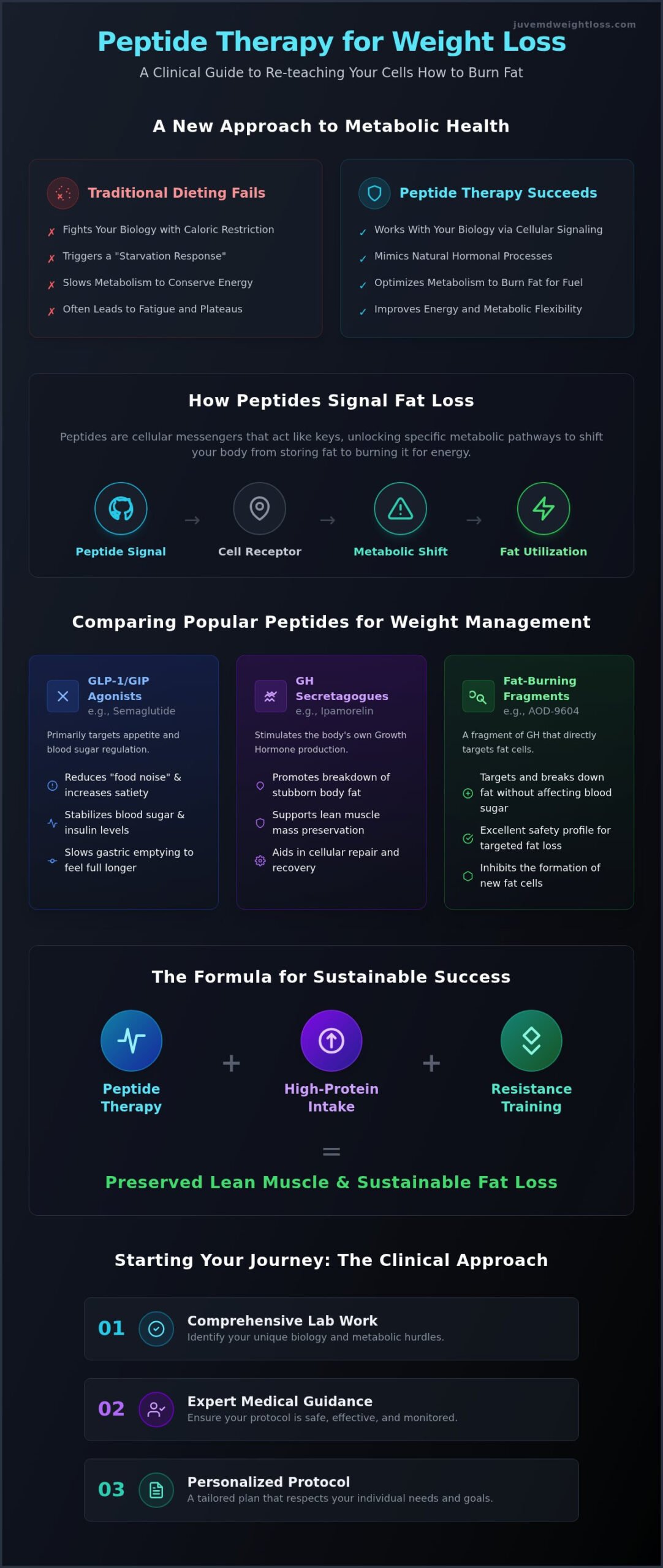
Peptides are short-chain amino acids that function as precise signaling molecules within the body. While they’re often compared to hormones, they’re actually the building blocks that tell hormones and cells how to behave. Unlike traditional diet drugs that frequently rely on stimulants to override your natural systems, peptide therapy for weight loss works by mimicking the biological processes your body already uses to regulate energy. This distinction is vital. It means we aren’t forcing the body into a state of stress; we’re restoring its natural ability to manage weight.
By 2026, the medical community has recognized that weight management isn’t just about the math of calories in versus calories out. It’s about metabolic signaling. Peptides have become the gold standard in clinical settings because they address the underlying cellular inefficiencies that make traditional weight loss so difficult for many patients. They provide a targeted approach that respects the complexity of human biology rather than simply suppressing a single symptom like hunger.
The Role of Cellular Messengers in Metabolism
Think of peptides as the software that runs your metabolic hardware. They “talk” to your cells to trigger fat oxidation, which is the process of breaking down fatty acids for energy. When these signals are clear, your body efficiently utilizes its fuel sources. However, as we age, natural peptide production can dwindle. This decline contributes to a higher metabolic age, where your body becomes less efficient at processing nutrients and more prone to storing fat in stubborn areas.
Clinical research into how peptides signal fat loss shows that these molecules can improve insulin sensitivity and stabilize blood sugar levels. This leads to better metabolic flexibility. Metabolic flexibility is the body’s ability to switch between burning carbohydrates and fat based on availability and demand. Without this flexibility, you might feel sluggish or experience intense cravings even after eating a full meal.
Why Traditional Dieting Often Fails
The primary reason most diets fail isn’t a lack of willpower; it’s metabolic adaptation. When you drastically cut calories, your body perceives a threat and enters a starvation response. It slows down your metabolism to conserve energy, making it nearly impossible to continue losing weight. This is often exacerbated when a hormone imbalance and belly fat create a self-sustaining cycle of insulin resistance and inflammation that resists standard exercise routines.
Peptides offer a way to bypass this biological roadblock. By maintaining active metabolic signaling, they help prevent the body from “shutting down” during a fat-loss phase. Instead of fighting your biology, you’re working with it to ensure that your metabolic rate remains healthy and your energy levels stay consistent. This creates a sustainable environment for long-term success rather than a temporary drop in water weight that inevitably returns.
The Biological Mechanism: How Peptides Signal Fat Loss
Understanding how peptide therapy for weight loss works requires looking past the scale and into the cellular environment. Peptides function as biological keys that unlock specific metabolic pathways. Instead of simply forcing weight loss through restrictive starvation, they shift the body’s state from lipogenesis (fat storage) to lipolysis (fat utilization). This transition is governed by several distinct pathways that work in concert to optimize how your body processes energy and manages its fuel stores.
GLP-1 and GIP: The ‘Incretin’ Effect
The “incretin effect” refers to the way gut hormones signal the brain and pancreas after a meal. Glucagon-like peptide-1 (GLP-1) and Gastric Inhibitory Polypeptide (GIP) are the primary drivers here. They signal the brain to feel full much earlier, effectively silencing the constant “food noise” that often leads to overeating. Beyond appetite, these peptides improve glucose disposal. By reducing insulin resistance, they help maintain blood sugar stability, which is essential for preventing the energy crashes that derail most weight loss efforts. A Clinical Review of Semaglutide highlights how these pathways significantly impact body weight by regulating glycemic control and gastric emptying.
Growth Hormone Signaling and Body Composition
Growth hormone secretagogues like Ipamorelin target a different but equally important mechanism. These peptides stimulate the pituitary gland to release natural growth hormone, which is essential for mobilizing visceral fat. This is the deep belly fat that is often the most resistant to traditional exercise routines. Unlike standard weight loss methods that can lead to muscle wasting, secretagogues help maintain lean muscle mass while the body is in a caloric deficit. Preserving muscle is the ultimate insurance policy against metabolic rebound because muscle tissue is the engine that drives your resting metabolic rate.
Newer developments in peptide research have also introduced mitochondrial optimizers like MOTS-c. This peptide works at the cellular level to increase energy expenditure by promoting the birth of new mitochondria, effectively turning up the heat on your internal furnace. When combined with hormonal optimization, this multi-layered approach ensures that weight loss comes from fat stores rather than vital tissues. If you’re ready to see how these pathways can be tailored to your biology, a consultation with a specialized clinical provider can help clarify the best path forward for your specific metabolic needs.
Comparing Popular Peptides for Weight Management
The media often portrays peptide therapy for weight loss as a single-option solution, usually focusing on the latest brand-name injections. In a clinical setting, however, we view the landscape much more broadly. Choosing the right peptide involves analyzing your specific metabolic hurdles, whether they stem from insulin resistance, low growth hormone levels, or mitochondrial sluggishness. While some patients require significant appetite suppression, others achieve better results by focusing on peptides that target localized fat stores or cellular energy expenditure.
GLP-1 Agonists: The Foundation of Modern Weight Loss
Semaglutide remains a cornerstone of modern treatment due to its proven ability to mimic the GLP-1 hormone, which regulates hunger and slows gastric emptying. Clinical trials have consistently shown its efficacy in helping patients reach a healthier body mass index. Tirzepatide has recently emerged as a powerful alternative, utilizing a dual-action mechanism that targets both GLP-1 and GIP (Gastric Inhibitory Polypeptide) receptors. This combination often leads to superior weight loss because it addresses two different pathways for fat metabolism and glucose regulation simultaneously.
Safety is a priority during this process. Specialized clinicians utilize a “slow and steady” titration schedule, gradually increasing the dosage over several months. This methodical approach allows the digestive system to adapt, significantly reducing the likelihood of nausea or other common side effects. It ensures that the treatment remains a supportive part of your lifestyle rather than a source of discomfort.
Metabolic Boosters and Fat Burners
While GLP-1s focus on appetite, other peptides act as “exercise mimetics” to improve cellular function. MOTS-c is a mitochondrial-derived peptide that has gained attention for its ability to enhance metabolic flexibility. It signals the body to utilize fatty acids for fuel more efficiently, essentially mimicking some of the metabolic benefits of physical activity. This makes it a valuable tool for patients who feel their metabolism has “stalled” despite a healthy diet.
AOD-9604 is another highly targeted option. It’s a modified fragment of human growth hormone that stimulates lipolysis (fat breakdown) without negatively affecting blood sugar or insulin sensitivity. For patients struggling with deep abdominal fat, Tesamorelin is often the preferred choice. It’s specifically researched for its potency in reducing visceral adipose tissue. Many successful protocols now involve a synergistic approach. For example, combining a GLP-1 with CJC-1295 can help maintain a robust metabolic rate and preserve lean muscle mass, ensuring that the weight you lose comes from fat, not vital tissue.
Optimizing Results: Beyond the Injection
While peptide therapy for weight loss is a powerful tool, it doesn’t exist in a vacuum. To achieve the best results, you must treat the injection as one piece of a larger metabolic puzzle. One of the most significant risks during rapid weight loss is sarcopenia, or muscle wasting. When you’re in a caloric deficit, your body may try to break down muscle tissue for energy. To prevent this, a high-protein diet is non-negotiable. Consuming adequate protein provides the amino acids necessary to maintain your lean mass, which keeps your resting metabolic rate high.
This is precisely why comprehensive medical weight loss programs integrate resistance training into the protocol. Lifting weights or performing bodyweight exercises signals your body to keep its muscle while burning fat. Without this physical stimulus, you risk becoming “skinny fat,” a state where you weigh less but have a higher body fat percentage and a slower metabolism. Maintaining muscle is the best way to ensure the scale stays down long after your initial treatment phase.
The Importance of Hormonal Balance
Peptides work in synergy with your existing endocrine system. If your thyroid is sluggish or you’re dealing with estrogen dominance, the efficacy of your treatment may be limited. For men, low testosterone can make it difficult to see the body composition changes they desire. Managing cortisol is equally important. High stress levels lead to elevated cortisol, which tells your body to store fat around the midsection regardless of your diet. For a complete approach to wellness, many patients find success by following a guide on bioidentical pellet therapy to address these foundational imbalances before or during their weight loss journey.
Avoiding the ‘Rebound’ Effect
The fear of regaining weight after stopping treatment is common. You can avoid this by focusing on a gradual tapering process rather than quitting cold turkey. This transition period allows your body to adjust its natural hormone production. The goal is to develop permanent metabolic flexibility. This means your body remains capable of switching between fuel sources efficiently even after the therapy concludes. Ongoing clinical monitoring ensures that your biomarkers remain in the optimal range and that your lifestyle habits have solidified.
Managing side effects is also a part of the journey. Nausea is common but often manageable through proper hydration and micronutrient support. B-vitamins and electrolytes can significantly improve how you feel during the initial titration phase. If you’re ready to build a sustainable plan, you can schedule a clinical consultation to discuss a personalized strategy that fits your unique biology.
Starting Your Peptide Journey: The Clinical Approach
Beginning your journey with peptide therapy for weight loss is a significant step toward reclaiming your health. It’s a medical intervention that requires more than a simple prescription; it demands a deep understanding of your unique internal chemistry. Many people are tempted by the convenience of buying peptides online through unregulated websites. However, products labeled for “research use only” lack the rigorous purity and safety standards of pharmaceutical-grade medications. Medically supervised care ensures you’re receiving the correct dosage and high-quality formulations that are verified for human consumption, protecting you from potential contaminants or incorrect concentrations. If you’re exploring how to start medical weight loss in Las Vegas with qualified specialists, understanding the full clinical onboarding process — from metabolic testing to hormonal optimization — is an essential first step.
A specialized provider doesn’t just look at your weight. They look at your entire metabolic profile. While a general practitioner might offer a standard script, a clinical expert like Dr. Andrea Dempsey focuses on the nuances of metabolic and hormonal optimization. This specialized expertise is what separates a temporary weight loss phase from a permanent health transformation. It’s about building a foundation where your body is biologically capable of maintaining its new weight long after the initial treatment concludes.
The Consultation and Diagnostic Process
At JuveMD, the clinical process begins with comprehensive lab work that goes far beyond a basic physical. We evaluate critical metabolic markers, including A1C, fasting insulin, and lipid panels, to understand how your body currently processes fuel. These diagnostics help us identify if you’re dealing with insulin resistance or other metabolic roadblocks. We also perform thorough hormonal screening. Identifying barriers like thyroid dysfunction or sex hormone imbalances is essential because these issues can create a cycle of weight resistance that no amount of dieting can overcome on its own.
During your initial consultation, we’ll set realistic expectations. We focus on fat loss rather than just total weight loss. This distinction is vital for your long-term health. We want to ensure that the weight you lose comes from adipose tissue while your vital lean muscle remains intact. Follow-up care is a steady, methodical process where we monitor your progress and adjust your protocol based on how your body responds to the treatment.
Personalized Protocol Design
One of the biggest mistakes in weight management is the “one size fits all” approach. Using the same dose for every patient often leads to unnecessary side effects or frustrating plateaus. Dr. Dempsey specializes in designing personalized protocols that are tailored to your specific biology. For complex metabolic cases, a multi-peptide approach may be necessary to target different pathways simultaneously. This synergy allows for a more efficient transition into a fat-burning state while minimizing the discomfort often associated with rapid weight changes.
By tailoring the titration schedule and selecting the specific peptides that align with your lab results, we can navigate around common hurdles like “food noise” or energy crashes. This level of personalized attention ensures that your journey is as comfortable as it is effective. When you’re ready to move beyond generic solutions and invest in a medically grounded strategy, you can schedule a specialized consultation to begin your transformation.
Your Path to Sustainable Metabolic Vitality
Choosing to integrate peptide therapy for weight loss is a commitment to understanding and optimizing your body’s internal signaling. This journey goes beyond the scale, focusing on the preservation of lean muscle and the restoration of hormonal synergy. By addressing the root causes of weight resistance through precise, lab-based protocols, you can move past the cycle of “rebound” weight gain and toward a future of lasting metabolic flexibility.
At JuveMD, our approach is led by Dr. Andrea Dempsey, a dedicated metabolic health expert. We provide comprehensive, medically supervised plans tailored to your unique biology. Our focus remains on clinical excellence and personalized care to ensure your transformation is both safe and effective. It’s time to stop fighting against your biology and start working with it to achieve your health goals. Schedule your personalized medical weight loss consultation with JuveMD today and take the first step toward a more vibrant, energized version of yourself. You deserve a partner who prioritizes your total wellness every step of the way.
Frequently Asked Questions
How quickly can I expect to see results with peptide therapy for weight loss?
You can expect to notice changes in your appetite and “food noise” within the first week of starting peptide therapy for weight loss. However, significant body composition changes usually become apparent after 4 to 8 weeks. This timeline allows your body to move through the initial titration phase and begin fat oxidation. Consistency is the primary factor in seeing steady results as your metabolism adjusts to the new signaling molecules.
Is peptide therapy safe for long-term use?
Peptide therapy is generally considered safe for long-term use when managed by a qualified medical professional. Since these molecules mimic natural biological processes, they don’t typically carry the same risks as synthetic stimulants. We prioritize ongoing clinical monitoring and regular lab work to ensure your biomarkers remain in an optimal range. This proactive approach allows us to adjust your protocol as your health goals and body composition evolve over time.
What is the difference between peptides like Semaglutide and traditional fat burners?
Traditional fat burners typically rely on stimulants to artificially spike your heart rate and metabolic speed. In contrast, peptide therapy for weight loss works by optimizing your body’s internal communication systems, such as insulin sensitivity and growth hormone production. This biological approach targets the root causes of weight gain rather than just masking symptoms. It results in a more stable and sustainable fat-loss journey without the “crashes” associated with over-the-counter supplements.
Can I use peptide therapy if I am already on hormone replacement therapy (BHRT)?
You can absolutely use peptide therapy alongside bioidentical hormone replacement therapy (BHRT). In fact, many patients find that balancing their sex hormones or thyroid levels makes peptides even more effective. When your hormones are in harmony, your cells are more responsive to the metabolic signals that peptides provide. A specialized clinician will look at your total hormonal profile to create a cohesive plan that supports both weight loss and overall vitality.
Will I regain the weight once I stop taking peptides?
Weight regain is not a guaranteed outcome if you focus on building metabolic flexibility during your treatment. By preserving lean muscle mass and utilizing a gradual tapering process, you help your body maintain its new, lower weight set point. The goal is to use the therapy as a tool to establish permanent lifestyle changes. Clinical monitoring during the transition phase ensures that your metabolism remains active and healthy after the injections conclude.
What are the most common side effects of weight loss peptides?
The most common side effects include mild nausea, constipation, or slight irritation at the injection site. These symptoms are typically temporary and often occur only during the initial titration phase as your body adapts. We manage these effects by starting with a conservative dose and increasing it slowly over several weeks. Staying well-hydrated and focusing on micronutrient support can also significantly improve your comfort level during the first few months of therapy.
Do I need to follow a specific diet while on peptide therapy?
You don’t need to follow a restrictive “diet,” but specific nutritional choices will significantly enhance your results. A high-protein intake is vital to prevent muscle loss while you are in a caloric deficit. We also recommend focusing on low-glycemic, whole foods to maintain stable blood sugar levels. Proper nutrition provides the fuel your body needs to respond to the peptide signals, ensuring that the weight you lose comes primarily from fat stores.
How are peptides administered, and can I do it myself at home?
Most peptides are administered through a small subcutaneous injection, which uses a very fine needle to deliver the medication just under the skin. Your clinical team will provide comprehensive training to ensure you feel confident performing these quick injections at home. This delivery method is preferred because it allows the peptides to enter the bloodstream directly. It ensures maximum bioavailability and precise dosing that oral supplements simply cannot match in a clinical setting.