
Persistent insomnia can affect more than how rested you feel and may increase the likelihood of weight gain or health problems such as hypertension. Effective night sweats and insomnia treatment in Las Vegas starts by identifying what is disrupting sleep and matching care to the cause. For persistent insomnia, the National Heart, Lung, and Blood Institute recommends cognitive behavioral therapy for insomnia (CBT-I) as a first-line treatment. Menopause-related hot flashes may call for a separate discussion of treatment options.
If you wake overheated, struggle to fall back asleep, or feel drained during the day, it can be hard to tell whether hormones, habits, or another issue is involved. Understanding the likely cause can clarify your next step.
This article explains how menopause and hormonal changes can contribute to night sweats, which daily habits may worsen symptoms, and what treatment approaches may help. You’ll also learn when recurring symptoms warrant medical attention and why addressing both sweating and insomnia can matter for better rest.
Key Takeaways
- Sleep disruption can have hormonal, emotional, medical, and medication-related contributors, so noticing patterns and related symptoms can help clarify what needs attention.
- Estrogen, progesterone, and testosterone have different roles; hormone therapy should be considered in context rather than treated as a universal insomnia solution.
- Recurring, drenching night sweats or sweating accompanied by other symptoms warrant medical evaluation, since menopause is not the only possible cause.
- Try practical trigger changes, such as adjusting bedroom comfort and avoiding late-evening exercise or spicy foods, and observe whether they affect your sleep.
- For menopause-related symptoms, JuveMD’s Bioidentical Pellet Hormone Therapy may be part of a personalized discussion about treatment options and symptom goals.
Are bio-identical hormones effective?
Hormone therapy may help when hormonal changes drive symptoms, but insomnia can have other causes. Matching treatment to your sleep pattern and related symptoms matters.
Hormone Effects on Sleep
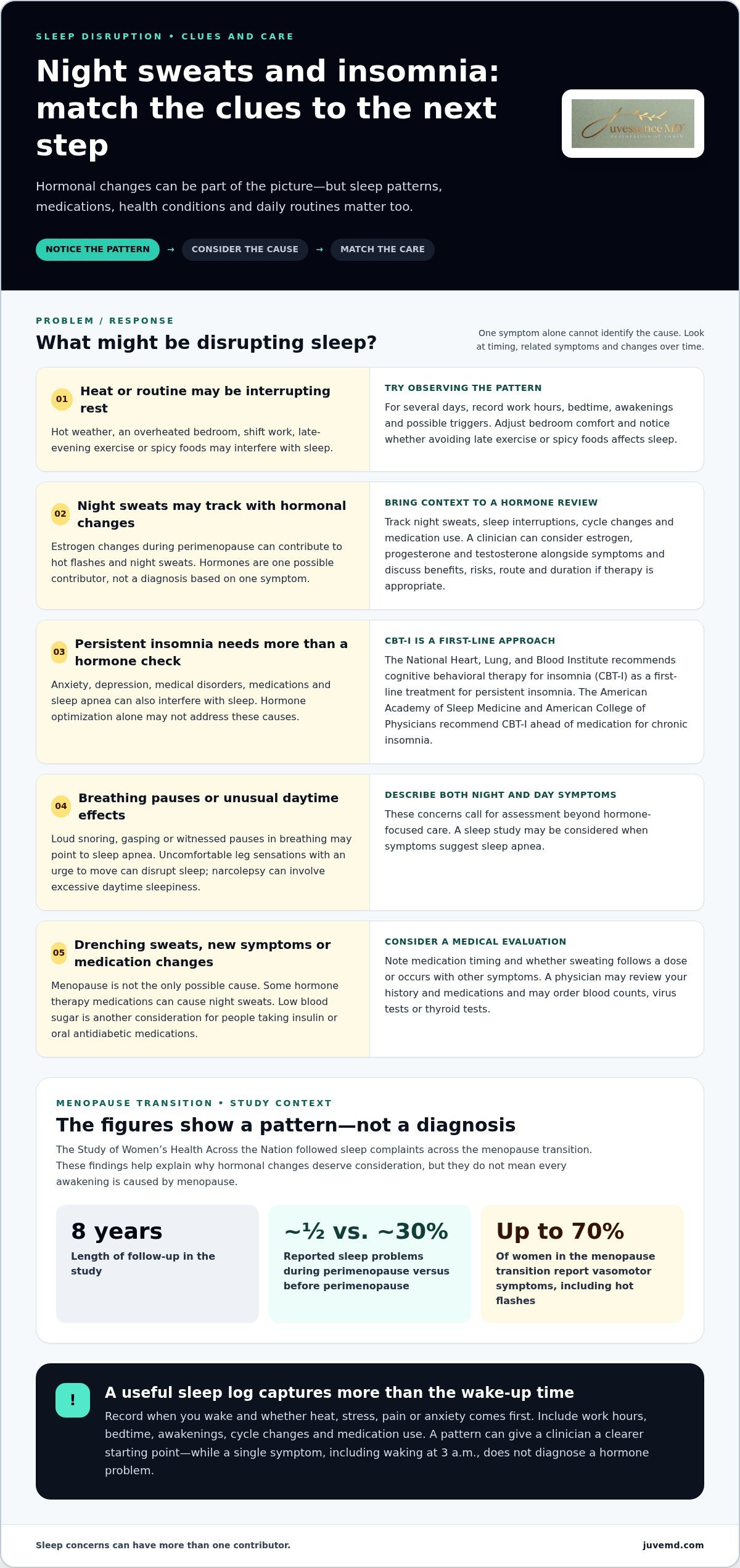
Estrogen changes during perimenopause can contribute to hot flashes and night sweats that interrupt sleeping. Progesterone and testosterone also belong in a hormone review, but an individual sleep problem cannot be diagnosed from hormone levels or one symptom alone. Track symptoms, cycle changes, and medication use to give a clinician a clearer picture. Bioidentical hormones are an individualized option when appropriate, with benefits, risks, route, and duration considered together.
Cortisol and Nighttime Awakenings
Cortisol follows a daily rhythm, normally peaking within 30 to 60 minutes of waking. In an experimental study of premenopausal women, sleep fragmentation combined with estradiol suppression raised bedtime cortisol by approximately 27 percent and reduced the cortisol awakening response by roughly 57 percent. These findings illustrate a possible interaction, not a diagnostic test. Note the timing of awakenings and whether heat, stress, or another symptom occurs first.
Hormones aren’t the only possible explanation. Sleep apnea may involve loud snoring, gasping, or witnessed pauses in breathing, which are reasons to consider a sleep study. Restless leg syndrome can disrupt sleep with uncomfortable sensations and an urge to move the legs. Narcolepsy can cause excessive daytime sleepiness. These conditions require assessment beyond hormone-focused care, so describe both nighttime symptoms and daytime effects.
The Study of Women’s Health Across the Nation followed sleep complaints across the menopause transition for eight years. Roughly half of women reported sleep problems during perimenopause, compared with about 30 percent before perimenopause. Up to 70 percent of women in the menopause transition report vasomotor symptoms, including hot flashes. These figures show why hormonal changes deserve consideration, not why every awakening should be attributed to menopause.
Las Vegas routines can also affect sleep quality. Shift work may disrupt a consistent day-night schedule, while late-evening exercise, hot weather, or an overheated bedroom can interfere with rest. For several days, record work hours, bedtime, awakenings, and possible triggers. This simple log can help distinguish a recurring hormonal pattern from schedule or lifestyle factors.
How much do insomnia appointments, sleep studies, and treatment cost in Las Vegas? Costs vary according to the visit, testing, and treatment involved. The price depends on the individual case and is provided after a quote request.
Does insurance cover sleep specialists, sleep studies, or menopause treatment in Nevada? Coverage varies by plan and by whether care involves a specialist visit, diagnostic testing, or menopause treatment, so there is no single rule for every policy.
Where can Las Vegas residents find sleep clinics or specialists, and how soon can they get an appointment? Sleep clinics assess concerns such as snoring and breathing pauses, while clinicians focused on hormonal symptoms can evaluate menopause-related changes. Appointment timing depends on clinic schedules and whether testing is needed.
Can hormone optimization alone fix my insomnia?
No. Hormone changes can contribute to sleep disruption, but anxiety, depression, medical disorders, medications, and sleep apnea can also interfere. A useful evaluation looks beyond hormone levels at symptom patterns, current treatments, and mental health.
Medically Supervised Hormone Therapy
When symptoms point to hormonal changes, supervised therapy involves weighing benefits, risks, route, and duration together. Track night sweats, sleep interruptions, and other symptoms before an appointment to give the clinician a clearer starting point. During treatment, response is monitored and dosing adjusted to seek symptom control with the lowest effective exposure. Hormone therapy medications can also cause night sweats, so report any new or changing symptoms.
Medical Evaluation and Testing
A medical assessment begins with your health history and a review of medications, symptoms, and sleep patterns. For night sweats, a physician may order blood counts, virus tests, and thyroid tests. A focused history, medication review, and screening labs, including thyroid and metabolic testing when indicated, help assess possible contributors. Describe when you wake and whether sweating, pain, or anxiety comes first.
Other Medical Contributors
Anxiety, depression, chronic pain, stress, alcohol or illicit drug use, and sleep apnea can all contribute to insomnia. Low blood sugar is another consideration: people taking insulin or oral antidiabetic medications may sweat when glucose drops. Note medication timing and whether sweating follows a dose or occurs alongside other symptoms. Waking at 3 a.m. by itself does not diagnose a hormone problem.
Medication and Hormone Treatment
Treatment depends on the cause, so hormone therapy alone won’t address every sleep disorder or mental health concern. The American Academy of Sleep Medicine and the American College of Physicians recommend cognitive behavioral therapy for insomnia (CBT-I) ahead of medication for chronic insomnia. The National Heart, Lung, and Blood Institute also recommends CBT-I as a first-line treatment for persistent insomnia. These recommendations make CBT-I an important topic to discuss during care planning.
Bring a current medication list and a short sleep record to your appointment. Include caffeine use, bedtime, awakenings, night sweats, and daytime effects. This helps distinguish a possible hormone-related pattern from medication effects, hypoglycemia, or anxiety. If symptoms coincide with insulin or oral antidiabetic medication, mention that detail promptly. For a closer look at hormone-related sleep concerns, consider how symptoms and treatment response fit together.
Menopause-related hot flashes and night sweats
Menopause-related hot flashes can cause sudden heat, sweating, flushing, and heart palpitations that interrupt sleep. Tracking when symptoms occur can help distinguish a recurring pattern from other causes.
Menopause-Related Sleep Disruption
Perimenopause is the 5 to 10 year transition before menopause, and sleep changes can develop during this period. Insomnia affects 40 to 60 percent of women going through the perimenopause and menopause transition. A common pattern is waking between 2 and 4 AM, sometimes after sweating or feeling overheated, then struggling to fall asleep again.
True night sweats are severe hot flashes that can drench sleepwear and sheets. Skin-sensor research found that measured night sweats explained about a third of awakenings, while other factors can also disrupt rest. Note whether you wake with heat, sweating, stress, or changes in breathing, and whether you feel rested the next morning. This record adds useful detail to an assessment.
The 2017 CDC survey found that 56 percent of U.S. perimenopausal women aged 40 to 59 slept less than seven hours per night. Menopause is defined as 12 consecutive months without a menstrual period; the average age among U.S. women is around 51 to 52 years. These milestones offer context, but they don’t establish the cause of an individual’s insomnia. Hot flashes can also occur outside menopause because of medical conditions or treatments.
Doctors Treating Night Sweats and Insomnia
In Las Vegas, a physician can assess recurring night sweats and review possible menopause-related symptoms. A gynecologist or clinician focused on menopause can discuss hormonal changes, while a sleep medicine specialist evaluates persistent sleep difficulties and possible sleep disorders. The right clinician depends on your symptom pattern: sweating, repeated awakenings, or daytime exhaustion may call for different types of assessment.
For an appointment, note how often you wake, whether sweating drenches your clothing or bedding, and whether hot flashes include flushing or palpitations. Include menstrual changes, medications, and daytime effects such as poor concentration. More than a third of postmenopausal women report trouble staying asleep four or more nights a week, so the frequency and impact of awakenings are useful details to share.
Regular night sweats that interrupt sleep warrant a physician appointment. Fever or unexplained weight loss alongside night sweats also calls for medical evaluation. Take these symptoms seriously rather than assuming they are due to menopause. This information supports prompt assessment but does not define an emergency threshold; sudden, severe symptoms require urgent medical attention.
Lifestyle and trigger-reduction strategies
Start with practical changes to bedroom conditions, evening routines, and recurring triggers. A short sleep log can show which adjustments help and which symptoms persist.
Spicy food or hot drinks before bed, an overheated bedroom, heavy bedding, and exercise close to bedtime can contribute to night sweats. Las Vegas heat can make bedroom temperature especially noticeable. Try changing one factor at a time, such as removing an extra blanket, exercising earlier, or avoiding spicy food late in the evening. Record the change and your sleep response the next morning.
- Keep the bedroom cool and comfortable; the page recommends 65 to 68 degrees for managing hot flashes and night sweats.
- Choose light sleepwear, dress in layers, and keep a fan nearby for sudden warmth.
- Use paced breathing when stress or emotional strain builds before bed.
- Limit screens and bright light for 60 to 90 minutes before bedtime.
Stress that causes daytime sweating can also contribute to sweating at night. Alcohol and other factors may contribute to insomnia, so note evening habits alongside awakenings. A simple log can include bedtime, sweating, room conditions, exercise, food, and alcohol. This can reveal patterns without assuming one cause explains every restless night.
Sleep hygiene means establishing routines and bedroom conditions that support regular rest. For example, reduce bright light before bed, follow a consistent wind-down routine, and remove excess blankets if overheating is a trigger. These steps can improve your sleep environment, but persistent insomnia may need a structured approach. The American Academy of Sleep Medicine and the American College of Physicians recommend cognitive behavioral therapy for insomnia (CBT-I) before medication for chronic insomnia.
CBT-I works on thoughts and behaviors that keep insomnia going, using strategies tailored to sleep patterns. It usually takes 6 to 10 weekly sessions. The National Heart, Lung, and Blood Institute recommends CBT-I as a first-line treatment for persistent insomnia. Sleep hygiene can support this therapy, but it is not the same treatment.
Oral appliances address a separate breathing-related sleep concern, not night sweats or insomnia in general. Loud snoring, gasping, or witnessed pauses in breathing are reasons to consider a sleep study for possible sleep apnea. If these signs occur, record them and seek assessment rather than relying only on bedroom adjustments. A sleep log can help describe both breathing symptoms and lifestyle triggers during an appointment.
Hormonal shifts such as menopause
Hormone changes can affect sleep before, during, and after menopause. Insomnia is more common among women than men, and hormonal shifts during the menstrual cycle, pregnancy, or menopause may contribute. For patients in Nevada, connecting sleep changes with other symptoms can help focus a medical discussion.
The National Center for Health Statistics data discussed here covers women aged 40 to 59. In the cited CDC dataset, trouble falling asleep affected 27.1 percent of postmenopausal women. More than a third of postmenopausal women report trouble staying asleep four or more nights a week. These figures describe different difficulties: falling asleep can be hard at bedtime, while staying asleep involves repeated awakenings. Note which pattern fits your experience.
Hormonal shifts affect people differently. One person may wake after a hot flash, while another may lie awake without sweating. Record symptom timing, menstrual changes, and daytime effects such as fatigue or difficulty concentrating. This practical record can help a specialist assess whether sleep disruption fits a hormonal pattern or points to another cause.
Menopause-related changes are only one part of the assessment. Hot flashes can also occur because of medical conditions or treatments, and some medications can contribute to sweating. During an appointment, describe new prescriptions, changes to existing medication, and whether symptoms began before or after those changes. Include other relevant symptoms, not just the time you wake.
A useful next step is to bring a sleep and symptom diary to a clinician. Include bedtime, how long it takes to fall asleep, each awakening, sweating, and how you feel the next day. Add menstrual changes and medication details. For patients considering night sweats and insomnia treatment in Las Vegas, these notes can help focus a local care discussion.
Hormone therapy is an individualized option when appropriate. Shared decision-making considers potential benefits, risks, route, and duration alongside the symptoms being treated. A specialist can monitor your response and adjust dosing to seek symptom control with the lowest effective exposure. For night sweats and insomnia treatment in Las Vegas, hormone-focused care should be considered alongside assessment of other causes, such as persistent insomnia or breathing-related sleep disruption.
Use your symptom notes to guide a conversation about hormone-focused sleep concerns. Clear details about when symptoms began, how often you wake, and what accompanies each awakening can help make that discussion more productive.
JuveMD: Bioidentical Pellet Hormone Therapy
JuveMD offers Bioidentical Pellet Hormone Therapy as a hormone-focused option for people whose symptoms may be connected to hormonal changes. It may be worth discussing if night sweats or hot flashes repeatedly disrupt sleep and you want to understand potential benefits, risks, route, and duration. Treatment decisions should account for your symptoms and health history, rather than assume every case of insomnia has a hormonal cause.
During hormone therapy, response can be monitored and dosing adjusted to seek symptom control with the lowest effective exposure. Bring notes about night sweats, sleep interruptions, and other changes to help guide the discussion. If sleep problems may have another cause, such as breathing-related symptoms, that concern also deserves assessment.
Contact JuveMD to discuss whether a hormone-focused evaluation fits your concerns.
Take the Next Step Toward More Restful Nights
Make your next step a focused conversation about how poor sleep affects your energy, mood, and daily life. Consider what you most want help with, such as waking overheated, difficulty falling asleep, or feeling unrefreshed. Clear priorities can make a discussion of possible causes and care options more useful.
For night sweats and insomnia treatment in Las Vegas, hormone-related symptoms may be one part of the discussion, alongside other factors affecting sleep. JuveMD offers Bioidentical Pellet Hormone Therapy, Injectables, and Skin Treatments. If hormonal changes seem connected to your symptoms, ask whether hormone-focused care may be appropriate for you.
There’s no need to dismiss persistent sleep disruption or assume one explanation fits every night. A thoughtful assessment can help clarify what to address next. Contact JuveMD about your sleep concerns and take a considered step toward better rest.
Frequently Asked Questions
What happens if I don’t treat my insomnia?
Persistent insomnia can affect daytime functioning and may increase the likelihood of weight gain or health problems such as hypertension. Poor sleep can also make concentration, memory, productivity, and mood harder to manage. If you repeatedly struggle to fall asleep or stay asleep, note how it affects work, relationships, or daily tasks. Sharing these effects at an appointment helps explain why the sleep problem needs attention.
What is the best first step for perimenopause insomnia?
Start by recording sleep changes alongside menstrual changes and other symptoms, then bring your notes to a medical appointment. Include how often you wake, whether sweating occurs, and how rested you feel the next day. A clinician can review medications and possible causes. For persistent insomnia, the National Heart, Lung, and Blood Institute recommends cognitive behavioral therapy for insomnia as a first-line treatment.
Why Am I Not Sleeping?
Insomnia can stem from several overlapping factors, including stress, anxiety, depression, chronic pain, hormone fluctuations, medications, alcohol or illicit drug use, and sleep apnea. A change in routine or a new medication may coincide with the first restless nights. Track when the problem began and what else changed. Waking at a particular time, such as 3 a.m., doesn’t by itself identify a hormone problem.
How long will treatment take to work?
Timing depends on the treatment and the symptoms being addressed. Hormone therapy often reduces hot flashes within days to weeks, while lifestyle changes may improve symptoms gradually over several weeks. Cognitive behavioral therapy for insomnia usually involves 6 to 10 weekly sessions. A sleep and symptom log can help you notice changes during treatment and give your clinician specific information to guide follow-up.
What causes night sweats and insomnia, and when should you see a doctor?
Possible causes include menopause-related hot flashes, medication effects, hormone or thyroid problems, infections, and other medical conditions. Arrange a physician appointment if night sweats occur regularly, interrupt sleep, or come with fever or unexplained weight loss. Tuberculosis is the infection most commonly associated with night sweats, but sweating alone does not establish an infection. Describe any accompanying symptoms and when they began.
What tests may doctors order to diagnose night sweats and insomnia?
Testing depends on your history and symptoms. A physician may review medications and order blood counts, virus tests, or thyroid tests; screening labs may also include thyroid and metabolic testing when indicated. Loud snoring, gasping, or witnessed pauses in breathing can prompt consideration of a sleep study for possible sleep apnea. Share a medication list and notes about when sweating or awakenings occur.
What treatments help night sweats and insomnia, including menopause-related symptoms?
Treatment may combine approaches that address the likely cause. For chronic insomnia, the American Academy of Sleep Medicine and the American College of Physicians recommend cognitive behavioral therapy for insomnia before medication. Menopause-related hot flashes may lead to an individualized discussion of hormone therapy, including potential benefits, risks, route, and duration. Practical sleep-routine changes can complement care, while other causes may need separate evaluation.
What medications can treat night sweats or insomnia, and what are their risks?
Medication choice depends on the suspected cause, medical history, current prescriptions, and symptoms being treated. Possible side effects and interactions are important considerations, so discuss them with the prescribing clinician and follow the directions provided. Don’t start, stop, or change prescribed medication without medical guidance. For chronic insomnia, the American Academy of Sleep Medicine and the American College of Physicians recommend cognitive behavioral therapy before medication. This information is educational, not medical advice; consult your healthcare provider.