
What does “hormone balance” mean for you? It isn’t a single number to reach. It depends on your health, symptoms, and stage of life. If you’re searching for natural hormone balance for women Las Vegas, changes in sleep, mood, or energy can leave you wondering whether hormones are involved or whether something else may be contributing. Online advice about diets and supplements can make it harder to sort through the possibilities.
Everyday habits can support your overall well-being, but no routine or supplement can promise to balance everyone’s hormones. This guide explains what hormone balance means, offers practical starting points, and outlines when persistent symptoms may merit a personalized medical evaluation.
You’ll also learn what information to bring to a conversation with a clinician and why seeking guidance doesn’t mean you’ve agreed to treatment. JuveMD is a Las Vegas clinic focused on hormonal health and wellness. Its hormone education and individualized approach can help make the next steps easier to understand.
Key Takeaways
- Hormones are signaling chemicals, and what’s balanced depends on personal context, not one ideal number.
- Consistent sleep, balanced nutrition, movement, and stress management can support overall health, but they aren’t guaranteed hormone fixes.
- Track symptoms and when they occur. If concerns persist or disrupt daily life, bring that context and your health history to a clinician.
- Exploring natural hormone balance for women Las Vegas starts with understanding possible causes and considering an individualized evaluation, not self-diagnosis.
- JuveMD provides hormone education and offers treatment options, including bioidentical pellet hormone therapy and injectables, when medically appropriate.
What Does Natural Hormone Balance Mean for Women?
Fatigue, disrupted sleep, and mood changes can feel unsettling, especially when they happen together. Hormones may be part of the picture, but stress, changes in routine, medications, and other health factors can also contribute. When looking into natural hormone balance for women Las Vegas, start with the circumstances around your symptoms rather than assuming one hormone is “out of balance.”
Hormones are chemical messengers that travel through the body and help coordinate functions such as reproduction, metabolism, growth, and responses to stress. Estrogen is one example; its forms and roles are outlined in this overview of estrogen. Hormone levels can shift over time, and what’s typical depends on factors such as life stage, individual health, and the hormone being considered.
Hormone balance describes the relationship between hormones, symptoms, health history, and life stage. It isn’t one ideal number that applies to every woman. Test results can be useful, but they need to be interpreted in context. Symptoms alone don’t establish that a hormone disorder is present, and a result outside a reference range doesn’t automatically explain how someone feels.
Can hormone levels change without a hormone disorder?
Yes. Hormone patterns can vary during the menstrual cycle and across life stages, including pregnancy, postpartum, perimenopause, and menopause. Health conditions and certain medications may also affect symptoms or test results. These changes don’t automatically mean treatment is needed. Supporting general health is different from assessing a specific concern, which means considering its pattern and possible explanations.
For example, a few nights of poor sleep or a stressful period may affect energy and mood without proving a hormonal cause. If a change continues, worsens, or interferes with daily life, seek clinical guidance rather than trying to identify a disorder from a checklist. A clinician can consider the full picture and decide whether further assessment is appropriate.
Why the phrase natural hormone balance can be misleading
“Natural” can sound like a guarantee, but it doesn’t establish that an approach is effective, risk-free, or right for a particular person. Be just as cautious with products and programs promising to “balance hormones” broadly. Ask what outcome is being claimed, what evidence supports it, and whether that evidence relates to your concern.
The phrase can blur two different ideas: everyday well-being and medical evaluation of a possible hormone-related condition. A balanced approach avoids assuming every symptom signals a disorder, but also avoids dismissing persistent symptoms because they seem common. The goal is to understand what has changed, consider the context, and seek an individualized assessment when concerns merit one. The next sections cover practical habits and how to prepare for a conversation with a clinician.
Everyday Factors That Support Hormone Health in Las Vegas
Healthy routines can support overall well-being, but they aren’t a shortcut to a particular hormone result. If you’re exploring natural hormone balance for women Las Vegas, start with manageable habits that fit your daily life. Sleep, nutrition, movement, and stress management are foundations, not substitutes for assessing persistent symptoms or a diagnosed hormone condition.
Sleep, stress, nutrition, and movement: realistic starting points
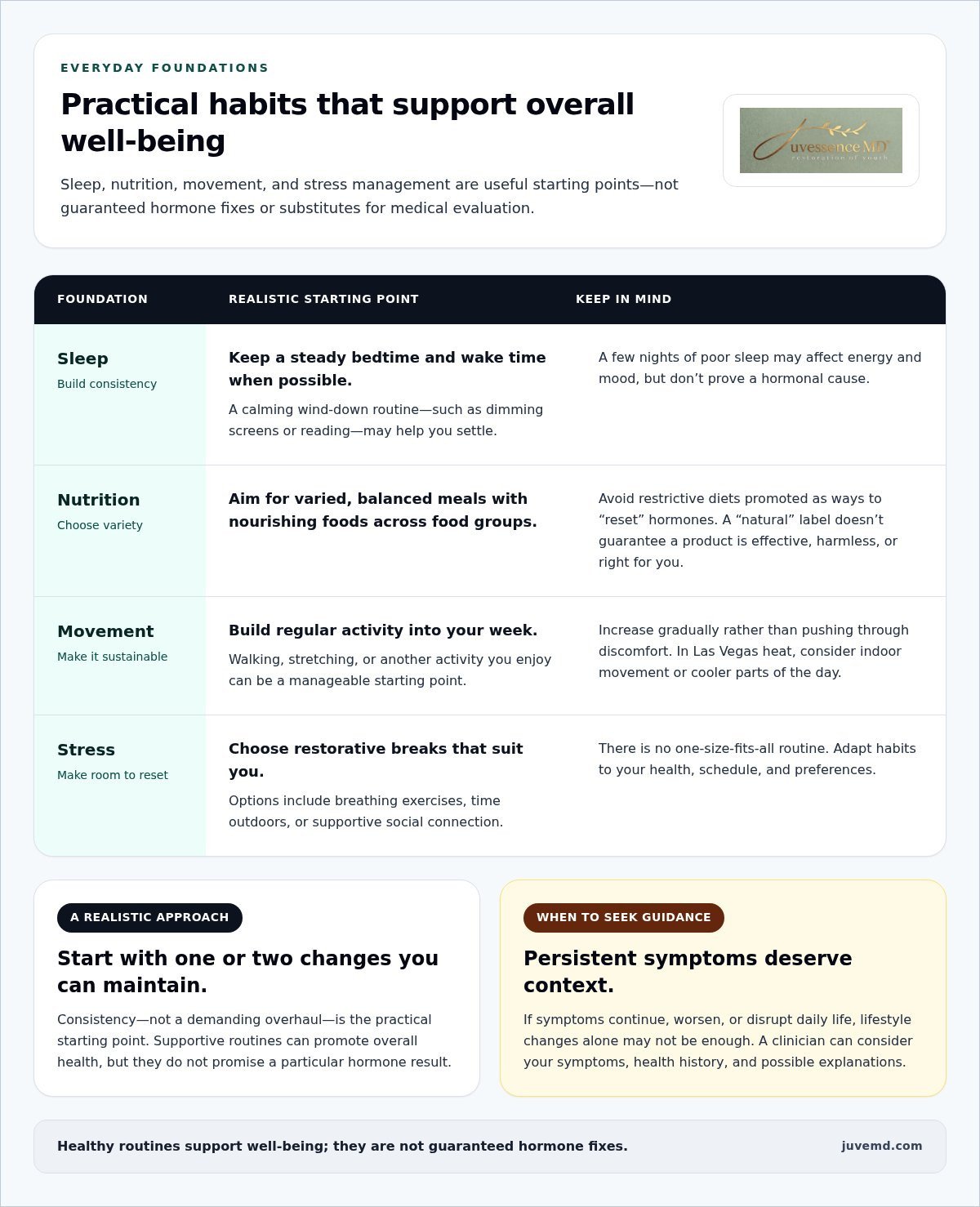
Start with consistency, not a demanding overhaul. Choose one or two changes you can maintain and adapt them to your health, schedule, and preferences.
- Sleep: Keep a steady bedtime and wake time when possible. A calming wind-down routine, such as dimming screens or reading, may help you settle.
- Nutrition: Aim for varied, balanced meals with nourishing foods across food groups. Avoid restrictive diets based on promises to “reset” hormones.
- Movement: Build regular activity into your week in a sustainable way, such as walking, stretching, or another activity you enjoy. Increase gradually rather than pushing through discomfort.
- Stress management: Make room for restorative breaks, breathing exercises, time outdoors, or supportive social connection. Choose what feels calming to you.
Las Vegas heat can affect when and where outdoor activity feels comfortable. Consider indoor movement or cooler parts of the day, and follow CDC heat-safety guidance rather than relying on a one-size-fits-all hydration target. Health needs vary, so ask a clinician for guidance if you have a condition or take medication that affects your fluid needs.
Supportive routines can promote overall health, but they don’t replace medical evaluation or treatment for a diagnosed hormone condition. If symptoms continue, worsen, or disrupt daily life, lifestyle changes alone may not be enough.
How to evaluate natural hormone-balancing claims
Be cautious of broad promises that a diet, supplement, or program will “balance” hormones for everyone. Look for credible evidence, a clearly defined outcome, and honest limits. Claims based mainly on testimonials or dramatic language without explaining the evidence deserve scrutiny. If a product’s purpose or risks aren’t clear, don’t treat its marketing as medical guidance.
“Natural” doesn’t guarantee that a supplement is harmless or appropriate. Supplements can have side effects and may interact with medications or other treatments. Before starting one, discuss the specific product and your health context with a qualified clinician, especially if you use prescription medication or have an ongoing condition. For questions about life stages, the U.S. Office on Women’s Health offers Menopause and Hormone Health information, including discussion of menopause symptoms and care.
Small, sustainable habits can provide a sensible foundation, while ongoing concerns call for individualized attention. For more information about hormone health and care, explore JuveMD’s hormone education as a starting point for an informed conversation.
How to Explore Hormone Concerns With a Las Vegas Clinician
A focused appointment starts with your experience, not a preselected test or treatment. If you’re considering natural hormone balance for women Las Vegas, a few notes can make the conversation more specific. You don’t need to arrive with a diagnosis. Explain what has changed and what you’d like to understand.
Before your visit, organize information that may help a clinician recognize patterns and consider other possible causes:
What information should you bring to an appointment?
A brief timeline can be more useful than trying to recall every detail during the appointment. Note what you’ve noticed, when it began, whether it comes and goes, and how it affects sleep, work, relationships, or daily activities. Include relevant changes in your health or routine, and bring a current list of medications and supplements.
- Record your main concerns. Describe the changes that matter most to you and how they affect everyday life.
- Note the timing. Include when symptoms began and any patterns you’ve observed, such as a relationship to your menstrual cycle or a life-stage transition.
- Review your health context. List relevant health conditions, past procedures, medications, and supplements. Don’t stop a medication or supplement just to prepare for an appointment.
- Prepare questions. Ask what explanations may fit, whether evaluation is appropriate, and what potential benefits and risks come with any proposed next step.
It can also help to say what you hope to get from the visit: understanding possible causes, discussing evaluation options, or learning whether follow-up makes sense. A medical conversation doesn’t obligate you to choose treatment.
Why testing should be interpreted in context
There isn’t one hormone test or lab panel that applies to every woman with fatigue, sleep changes, or mood concerns. Whether testing is useful depends on symptoms, health history, life stage, and the question the clinician is trying to answer. A physical examination may also be considered when relevant. These details need to be considered together rather than treating a symptom or test result as a diagnosis on its own.
For example, a hormone result needs to be considered alongside why it was ordered and the person’s broader clinical picture. A value outside a reference range doesn’t automatically explain symptoms, while a result within range doesn’t necessarily resolve every concern. Ask what a test can clarify, what it cannot establish, and whether the result would change the plan. Avoid interpreting results in isolation or relying on a universal target presented online.
The American College of Obstetricians and Gynecologists’ guidance on the menopause years provides information about evaluating menopause-related concerns. Recommendations can depend on individual circumstances, so discuss findings and possible next steps with your treating clinician. The aim is a clear, shared understanding of your concerns, not a predetermined conclusion.
A Practical, Safe Plan for Supporting Hormone Health
A useful plan should be manageable, not another source of pressure. Choose routines that support your general well-being, pay attention to how you feel, and reassess if concerns continue. Searching for natural hormone balance for women Las Vegas can lead to sweeping advice, but an individualized approach is more useful than trying to diagnose yourself or change everything at once.
Try this simple framework:
- Choose one sustainable habit. Pick a small change that fits your current routine, such as keeping a regular bedtime or adding gentle movement to your week. Make it realistic enough to maintain.
- Notice what changes. Use a brief journal or phone note to record symptoms and relevant context. Don’t treat a pattern as proof of a hormone disorder.
- Reassess and seek guidance when needed. If concerns persist, worsen, or interfere with daily life, bring your notes to a clinician rather than adding more self-directed remedies.
Track patterns without turning self-monitoring into diagnosis
A short record can capture when a concern occurs, how it affects your day, and what else was happening at the time. You might note sleep, daily routines, stressors, medication or supplement changes, and relevant life-stage context. You don’t need to record every detail or draw a conclusion. The purpose is to explain your experience during a clinical conversation.
Keep tracking flexible. If writing things down increases worry, simplify the record or stop. Don’t delay seeking care just to collect more entries if a concern feels significant or affects your ability to function. A journal can support a discussion, but it can’t determine the cause or replace an evaluation.
When self-care is not enough
Consider a medical evaluation when a symptom continues, becomes more disruptive, or makes everyday responsibilities harder. You don’t need to prove hormones are the cause before asking for help. A clinician can discuss possible explanations and whether further assessment makes sense. Seeking an evaluation doesn’t mean you’ve agreed to medication or another treatment.
Bring your observations and questions, then discuss a reasonable next step for your circumstances. That may involve clarifying the concern, considering appropriate evaluation, or reviewing how your health context affects available options. Avoid starting supplements or changing prescribed care based only on an online claim or a pattern you’ve interpreted yourself.
JuveMD is a Las Vegas clinic focused on hormonal health and wellness, with hormone education to support informed conversations. If persistent concerns have you looking for clarity, explore JuveMD’s hormone education as a starting point for learning about individualized care.
Personalized Hormone Care for Women in Las Vegas
Clear hormone care begins with a conversation about you, not a universal checklist or predetermined treatment. JuveMD is a Las Vegas clinic focused on hormonal health and wellness, led by Dr. Andrea Dempsey. Its approach includes hormone education and an individualized discussion of concerns, health context, and possible next steps. For women exploring natural hormone balance for women Las Vegas, learning about options is different from being advised to pursue them.
What a personalized hormone conversation should clarify
A useful discussion makes room for your goals and questions. Describe what has changed, how it affects daily life, and what you hope to understand. Sharing relevant health history and medications provides context. The clinician can then discuss whether further evaluation or a treatment option may be appropriate for you. Before considering a decision, make sure you understand potential benefits, limitations, and risks.
A consultation is an opportunity to explore, not a commitment to treatment. Ask what an option is intended to address, what is known about it, and what uncertainties or alternatives matter in your situation. Calling a treatment “natural” or “bioidentical” doesn’t establish that it is safer, effective, or suitable for everyone. Individual assessment remains essential.
Explore women’s hormone care in Las Vegas
JuveMD offers bioidentical pellet hormone therapy and injectable treatments. These options aren’t automatically right for everyone, and a discussion should account for individual health circumstances before any treatment decision. Clear education can help you understand an option and have a more informed conversation about whether it fits your needs.
As you consider care, focus on the questions that matter to you: What concern are you hoping to address? What evaluation may be relevant? What benefits, limitations, and risks should you understand? A thoughtful conversation should leave space for those questions and for a decision that reflects your circumstances, rather than pressure to choose a particular path.
If you’re ready to discuss your concerns, JuveMD can provide a starting point for an individualized conversation about hormone health in Las Vegas. Explore hormone care and request a consultation to learn more.
Take Your Next Step With Clarity
Understanding natural hormone balance for women Las Vegas is less about finding a universal fix and more about knowing which questions matter for your health. If symptoms continue to affect your life, bring your observations and priorities into a conversation without arriving with a diagnosis or committing to treatment. A next step can simply be learning what options may be relevant and what deserves further evaluation.
JuveMD’s hormone education can help you approach that discussion with greater clarity. A consultation is a chance to share your concerns, ask about potential benefits and risks, and consider whether an option such as bioidentical pellet hormone therapy may be appropriate for your individual circumstances. Care decisions should be personal, informed, and made without pressure.
Explore personalized hormone care at JuveMD and take a thoughtful next step toward understanding your options. You deserve clear information and care that respects your goals.
Frequently Asked Questions
Can you balance hormones naturally without medication?
You can support overall health without medication, but no lifestyle routine can guarantee that hormone levels will normalize or treat a diagnosed condition. Regular sleep, nourishing meals, enjoyable movement, and stress-management practices can be worthwhile foundations. Try adjusting one routine at a time and noticing how you feel. If symptoms persist, worsen, or interfere with daily activities, discuss them with a clinician instead of relying on self-care alone.
What are the signs of hormone imbalance in women?
Possible concerns can include changes in menstrual patterns, hot flashes, sleep disruption, shifts in mood, or changes in sexual desire. Experiences vary, and each can have causes unrelated to hormones. A symptom checklist can help you describe what’s happening, but it can’t confirm a hormone disorder. Consider the pattern, duration, and effect on daily life, then discuss ongoing or troubling changes with a qualified clinician.
Do hormone-balancing supplements work?
Some supplements are marketed for hormone balance, but marketing language alone doesn’t show that a product works for a particular symptom or person. Look for clear information about evidence, intended use, and limitations rather than relying on testimonials or broad promises. Supplements may cause side effects or interact with medications. Before starting one, share its name and ingredients with a clinician or pharmacist, especially if you take prescription medication.
Can stress affect hormone health?
Stress can influence the body’s responses and may affect experiences such as sleep, appetite, or mood. That doesn’t mean stress explains every symptom or that persistent concerns should be dismissed as emotional. If you notice changes during a particularly demanding period, noting the context may help you discuss them. Seek an individualized assessment if symptoms continue, become more disruptive, or don’t improve as circumstances change.
When should I see a hormone specialist in Las Vegas?
Consider a clinical conversation if symptoms persist, worsen, or interfere with work, relationships, sleep, or other daily activities. You don’t need to know that hormones are responsible before seeking guidance. For questions about natural hormone balance for women Las Vegas, bring a concise description of the changes and ask what explanations or evaluation options may be relevant. A conversation can clarify next steps without guaranteeing a diagnosis or requiring treatment.
Are bioidentical hormones automatically safer because they are natural?
No. Calling a hormone “natural” or “bioidentical” doesn’t establish that a particular product is safer, risk-free, or appropriate for you. Suitability depends on individual health factors and the specific treatment being considered. Ask the clinician to explain the evidence, potential benefits and risks, limitations, and alternatives for your situation. Take time to understand those details before deciding whether to proceed with any treatment.
How can I prepare for a hormone evaluation?
Bring a brief account of what has changed, when it began, and how it affects your routine. Note relevant menstrual or life-stage context, health conditions, medications, and supplements, including when you started any new product. A medication list or photos of supplement labels can make details easier to review. Write down your main questions, such as what might explain the concern and what an evaluation could clarify.