
What if menopause-related irritability isn’t caused by hormones alone? When a shorter fuse starts affecting relationships, work, or everyday routines, it’s natural to look for one clear explanation. Yet sleep disruption, hot flashes, stress, and hormonal changes can all contribute. If you’re searching for “managing irritability during menopause Las Vegas,” start by looking for patterns rather than assuming there is one cause.
You don’t have to dismiss the changes or assume hormone therapy is a cure-all. This guide covers common contributors to irritability, practical ways to track and manage it, and treatment categories to discuss with a clinician. It also explains when persistent mood changes deserve individualized attention.
JuveMD is a Las Vegas clinic focused on hormonal health and wellness, led by Dr. Andrea Dempsey. Its approach to hormone-related care is personalized, rather than based on a one-size-fits-all assumption. Read on to learn how to track symptoms, consider options, and prepare for a useful conversation about your health and goals.
Key Takeaways
- Irritability can feel like a shorter fuse or lower frustration tolerance. Notice whether mood changes persist or interfere with daily life.
- Look for patterns between mood, sleep, hot flashes, cycle changes, and stress instead of assuming a single cause.
- Compare self-care, psychological support, and clinician-guided options. Lifestyle changes may not be enough for persistent symptoms.
- Prepare for an appointment by tracking symptoms and context, noting how they affect your routine, and writing down questions and goals.
- For managing irritability during menopause Las Vegas, an individualized hormone-health conversation can help you consider next steps without treating hormone therapy as a guaranteed solution.
What Menopause-Related Irritability Can Feel Like, and When It Deserves Attention
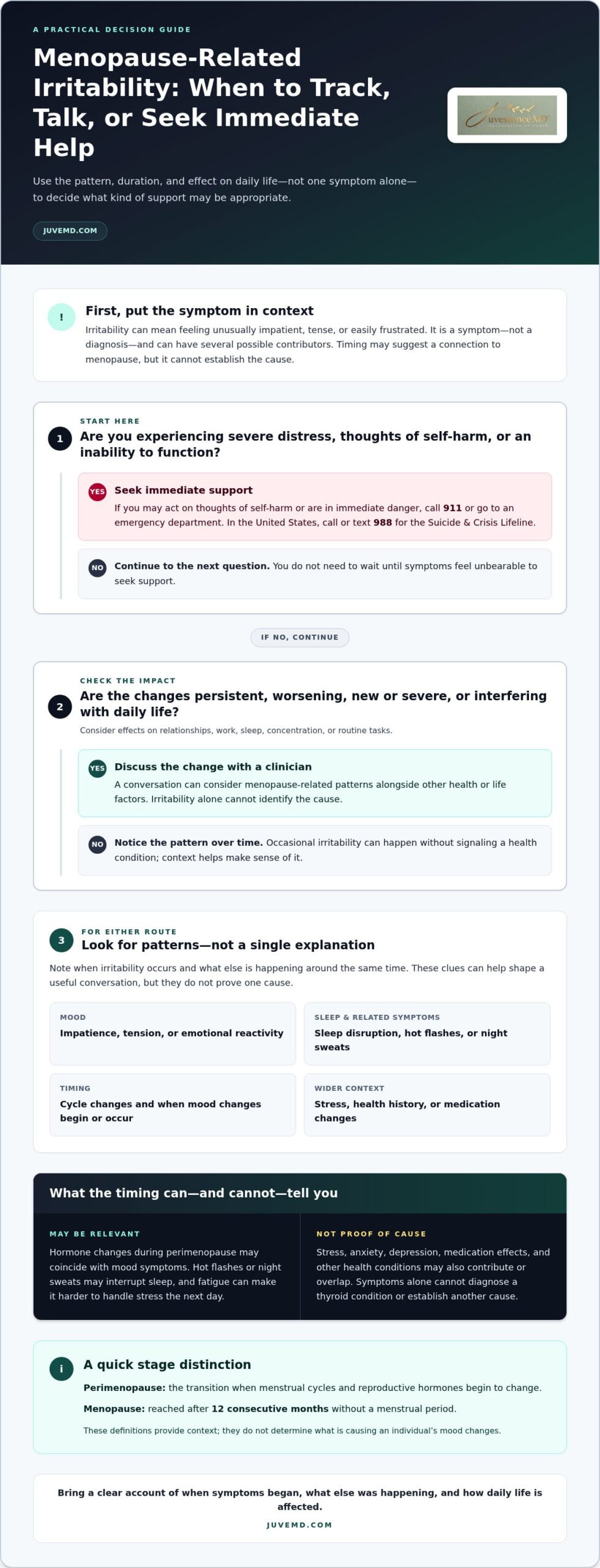
A shorter fuse can feel unlike you. Small delays, a noisy room, or a familiar request may suddenly seem harder to handle. That shift can be upsetting, especially when it affects people you care about. Irritability means feeling unusually impatient, tense, or easily frustrated. It can happen now and then without signaling a health condition, but a persistent change deserves attention and context.
Irritability is a symptom, not a diagnosis. It can have several possible contributors, so its timing, severity, and impact matter. It may occur alongside menopause-related changes, but it doesn’t establish that hormones are the cause. Depression can involve a persistent low mood or loss of interest, while anxiety often includes ongoing worry or fear. These experiences can overlap, and a qualified clinician can assess what may be contributing.
Perimenopause is the transition when menstrual cycles and reproductive hormones begin to change. Menopause is reached after 12 consecutive months without a menstrual period. The Menopause overview describes the stages and range of possible symptoms, but an individual’s mood changes still need to be considered in context.
How irritability may show up during the menopause transition
Some people notice more impatience, tension, or emotional reactivity than they used to; others have few or no mood changes. Irritability may come and go, or feel more noticeable in particular situations. It can strain conversations with a partner or coworkers, make concentration harder, or add friction to daily responsibilities. If hot flashes or night sweats interrupt sleep, fatigue may also make it harder to manage stress the next day. These patterns are useful to track, but they don’t prove a single cause.
When irritability is more than an occasional mood change
Consider discussing symptoms with a clinician if they persist, worsen, or interfere with relationships, work, sleep, or routine tasks. A conversation can explore menopause-related patterns alongside other possible health or life factors. Educational information can help you describe what’s happening, but it can’t diagnose the cause. A clear account of when symptoms began, what was happening around the same time, and how they affect daily life can make an individualized discussion more useful.
Seek immediate help for severe distress, thoughts of self-harm, or an inability to function. If you may act on thoughts of self-harm or are in immediate danger, call 911 or go to an emergency department. In the United States, call or text 988 for the Suicide & Crisis Lifeline. You deserve support; you don’t need to wait for symptoms to become unbearable.
Why Irritability Can Change During Perimenopause and Menopause
Mood can shift during the menopause transition, but timing alone doesn’t prove that hormones are responsible. Estrogen and progesterone levels change during perimenopause, and those changes may coincide with irritability or other mood symptoms. The pattern differs from person to person and can vary over time. The Office on Women’s Health guide to menopause symptoms and relief includes mood changes among a range of possible menopause symptoms.
When irritability appears during the menopause transition, timing may suggest a connection, but it can’t diagnose the cause. Consider sleep, stress, other symptoms, health history, and medications to put that timing in perspective.
Hormone shifts, sleep disruption, and overlapping symptoms
Hormonal changes may be one part of the picture, not a complete explanation. Hot flashes and night sweats can interrupt sleep for some people. After a restless night, fatigue may leave less capacity to handle pressure, interruptions, or everyday frustrations. That doesn’t mean everyone with poor sleep will feel irritable, or that every episode of irritability comes from a hot flash. Note whether these symptoms tend to occur together so you can discuss the pattern with a clinician.
Patterns can change through perimenopause and menopause. For example, someone might notice more tension after nights disrupted by sweating, while another person’s mood changes don’t line up with sleep or cycle changes. The relationship among symptoms is individual, so avoid treating one clue as an answer.
Why a broader health picture matters
Stressful events, anxiety, depression, medication effects, and other health conditions may contribute to mood changes or overlap with menopause symptoms. A clinician can consider these factors alongside the timing and nature of irritability. Symptoms alone can’t diagnose a thyroid condition or establish another cause. Attributing everything to menopause may delay a more useful assessment.
Consider seeking clinical guidance if irritability is new, severe, persistent, worsening, or affecting your daily life, especially if it doesn’t fit your usual pattern. Bring details about when it occurs and what else is happening, such as sleep disruption, hot flashes, stress, or a medication change. JuveMD is a Las Vegas clinic focused on hormonal health and wellness, and offers an individualized hormone-health evaluation as one part of a discussion about your concerns.
Comparing Ways to Manage Menopause-Related Irritability
There isn’t one best response for everyone. The right approach depends on what may be contributing to irritability, how much it affects daily life, and what matters to you. The comparison below outlines what each category may offer and when individualized guidance can be useful.
| Approach | What it may support | What to keep in mind |
|---|---|---|
| Self-care | Consistent sleep routines, regular movement, stress-management practices, and symptom tracking can support overall wellbeing. | These habits can be helpful foundations, but they may not resolve persistent or severe symptoms on their own. |
| Psychological support | Counseling or cognitive behavioral approaches may help with coping, emotional wellbeing, and responses to stress. | Support can be tailored to your concerns; it doesn’t replace assessment when symptoms are disruptive or may reflect another condition. |
| Clinician-guided medical options | A clinician can assess symptoms and discuss whether menopause-related treatment or care for a mood concern is appropriate. | Options depend on your health history, goals, symptom pattern, and the potential benefits and risks of treatment. |
Everyday strategies and psychological support
Start with manageable observations rather than trying to overhaul everything at once. When irritability occurs, make a brief note about the previous night’s sleep, the day’s stress, hot flashes, and any other recurring factor. A steady bedtime routine, movement that suits your abilities, and a calming practice such as paced breathing may support wellbeing. Counseling or cognitive behavioral therapy can offer structured ways to understand triggers and practice coping skills. These approaches aren’t guaranteed to correct hormone-related symptoms. Don’t treat supplements or specific diets as proven fixes without appropriate guidance.
Medical options and individualized hormone discussions
If symptoms persist, a clinician can consider the full picture: what you’re experiencing, your medical history, your goals, and relevant treatment risks. Hormone therapy may be discussed as a clinician-led option for some people, but it isn’t a guaranteed mood treatment and isn’t suitable for everyone. Assessment also matters because depression or anxiety may need their own evaluation and care, rather than being assumed to be menopause symptoms.
No single strategy fits every person or every cause of irritability. An individualized conversation can help clarify which options best fit your symptoms and health context. For broader background on hormone therapy, read the complete bioidentical hormone replacement therapy guide.
How to Prepare for a Menopause Irritability Appointment in Las Vegas
A few brief notes can make it easier to explain what’s changed, especially if symptoms are hard to recall in the moment. You don’t need a perfect record. A simple phone note or calendar entry can help a Las Vegas clinician understand the pattern and guide an individualized assessment.
What to track before discussing irritability
- Track symptoms. Note when irritability occurs, how intense it feels, how long it lasts, and whether it’s becoming more frequent.
- Record the context. Include sleep quality, hot flashes or night sweats, cycle changes, stressors, and effects on relationships, concentration, work, or daily routines. Brief entries are enough.
- Gather relevant health details. Write down current medications and recent changes, relevant health history, and other symptoms you’ve noticed. Don’t try to determine the cause yourself; the details help provide context.
- List questions and goals. Note what you want help with, such as understanding possible contributors, improving sleep, or discussing treatment options. Include mood concerns, even if they feel uncomfortable to describe.
These notes can help distinguish a difficult day from a recurring pattern. They also make it easier to explain connections you’ve noticed without assuming that a particular symptom proves a hormonal cause. If keeping a detailed record feels burdensome, focus on the details that seem most relevant, such as whether sleep disruption and irritability occur together.
What to expect from an individualized clinical discussion
A clinician may review your symptoms, health history, medications, and personal goals, then discuss appropriate next steps. The conversation can explore whether symptoms fit a menopause-related pattern and whether other factors deserve attention. Any evaluation or treatment recommendation depends on your individual circumstances; don’t assume that a particular test or treatment will be recommended in advance.
Be open about how irritability feels and what it affects. You might say, “I’m getting frustrated more easily, and it’s affecting conversations at home,” or describe how often poor sleep coincides with a mood change. Clear, ordinary language is useful. You don’t need to arrive with a diagnosis.
For more background on one treatment category, read about hormone pellet therapy for women in Las Vegas. You can also explore JuveMD’s hormone-health care in Las Vegas as a starting point for an individualized conversation.
Finding a Thoughtful Next Step for Menopause Irritability in Las Vegas
Irritability during perimenopause or menopause doesn’t point to one cause or one automatic treatment. A useful next step is to look at the pattern, consider factors such as sleep, stress, health history, and menopause symptoms, then discuss care that fits your needs. If mood changes persist, strain relationships, or disrupt daily functioning, a professional assessment can help clarify what support may be appropriate.
How to choose a next step that fits your symptoms
Bring both physical symptoms and emotional wellbeing into the conversation. For example, describe whether irritability seems to coincide with night sweats or cycle changes, and whether you’re also experiencing ongoing anxiety or low mood. These details can help a clinician explore more than one possible contributor rather than assuming hormones explain everything. The goal is a clearer picture, not a quick label.
Severe depression or thoughts of self-harm call for prompt mental-health support. If you feel at immediate risk, seek emergency help. Menopause education can help you recognize patterns, but it isn’t a substitute for urgent or individualized care.
What individualized hormone-health care can contribute
JuveMD is a Las Vegas clinic focused on hormonal health and wellness, led by Dr. Andrea Dempsey. A personalized medical evaluation can explore hormone-related concerns alongside your symptoms, health history, and goals. If appropriate, bioidentical pellet hormone therapy may be discussed as one option, with individual assessment and ongoing monitoring. It isn’t a guaranteed solution for irritability, and whether it belongs in a care plan depends on your circumstances.
For readers searching for “managing irritability during menopause Las Vegas,” a thoughtful clinical conversation can help clarify what is known and what still needs assessment. JuveMD’s hormone-health care in Las Vegas can be a starting point if you want to understand your symptoms or consider whether an individualized hormone discussion makes sense for you.
Take a Thoughtful Next Step Toward Feeling More Like Yourself
Irritability during menopause can have several overlapping contributors, so noticing symptom patterns is more useful than assuming one cause. Sleep changes, hot flashes, stress, and hormonal shifts may all be relevant. If mood changes persist or begin affecting relationships, work, or everyday routines, an individualized clinical conversation can help clarify what support may fit your needs.
Managing irritability during menopause Las Vegas starts with understanding your experience, sharing it openly, and considering options with a clinician. Hormone therapy may be part of that discussion for some people, but it isn’t a universal or guaranteed solution. Any hormone-related care should be based on individual assessment and ongoing monitoring.
JuveMD is a Las Vegas medical clinic focused on hormonal health and wellness, led by Dr. Andrea Dempsey. To discuss your hormone-health concerns and explore personalized care, explore JuveMD’s hormone-health care in Las Vegas.
Frequently Asked Questions
Can menopause cause irritability?
Menopause-related changes may contribute to irritability, but they aren’t the only possible cause. Shifts in reproductive hormones can coincide with mood changes, while sleep disruption, stress, medications, mental-health concerns, and other health conditions may also play a part. Irritability alone can’t confirm that menopause is responsible. Consider when it began, what else is happening, and whether it persists or affects daily life.
Is irritability a symptom of perimenopause or menopause?
Irritability can occur during perimenopause, the transition leading up to menopause, and may continue after menopause. Experiences vary: some people notice mood changes, while others don’t. Menopause is reached after 12 consecutive months without a menstrual period. If irritability appears around this transition, that timing may be useful information, but it doesn’t establish the cause. Track related symptoms and discuss persistent changes with a clinician.
How can I manage irritability during menopause?
Start by noticing patterns and supporting your overall wellbeing. Briefly track mood, sleep, hot flashes, stress, and cycle changes. A consistent sleep routine, regular movement, and stress-management practices may help; counseling or cognitive behavioral approaches are also options to discuss. These steps can support coping, but may not resolve persistent or severe symptoms. If irritability disrupts daily life, a clinician can help consider next steps suited to your needs.
Can hormone therapy help with menopause-related irritability?
Hormone therapy may be discussed as an option for some people, but it isn’t a guaranteed treatment for irritability and may not be appropriate for everyone. A clinician should consider your symptom pattern, health history, goals, and potential benefits and risks before discussing treatment. Mood symptoms can also have causes that need separate assessment. Avoid starting hormone treatment based on irritability alone; an individualized medical discussion can help clarify appropriate options.
When should I talk to a doctor about irritability during menopause?
Talk with a clinician if irritability persists, worsens, feels unusual for you, or affects relationships, work, sleep, or everyday responsibilities. Share when it began and any accompanying symptoms or medication changes. A professional assessment can consider menopause alongside other possible contributors without assuming one cause. Severe distress, thoughts of self-harm, or inability to function warrant immediate help. If you may be in immediate danger, call emergency services or contact a crisis line.
Could poor sleep or hot flashes make menopause irritability worse?
They can contribute for some people. Hot flashes or night sweats may interrupt sleep, and feeling tired can make it harder to manage everyday stress or frustration. This pattern doesn’t happen to everyone, and poor sleep or irritability can have other causes. Keep brief notes on nights with disrupted sleep and how you feel the next day. That information can help a clinician assess whether symptoms seem connected.
What should I track before a menopause appointment in Las Vegas?
Keep brief notes on when irritability occurs, how intense it feels, and how it affects daily life. Include sleep quality, hot flashes or night sweats, cycle changes, stressors, medication changes, and relevant health history. Add questions and goals, such as wanting to understand possible contributors or discuss treatment options. If you’re researching “managing irritability during menopause Las Vegas,” this record can help a local clinician understand your experience and guide an individualized discussion.