
You find yourself snapping at a loved one over a minor inconvenience, only to feel a wave of overwhelming guilt and confusion moments later. It isn’t just stress or having a bad day; it feels like you’ve lost the steering wheel to your own emotions. Many individuals searching for hormone therapy for mood swings feel as though they’re losing their mind while primary care providers dismiss their concerns as typical aging. This irritability and unpredictability don’t just affect your internal peace. They strain your most precious relationships and cloud your professional focus.
We understand that feeling like a stranger to yourself is exhausting and isolating. You deserve to feel like your old self again, with the mental clarity and emotional predictability that allow you to thrive. This guide explores how clinical hormone optimization can stabilize your emotional health by providing a consistent physiological state. We will examine why traditional treatments often fail to address the root cause of these shifts and how a personalized, data-driven approach can provide the lasting relief you’ve been seeking.
Key Takeaways
- Understand how estrogen and progesterone act as vital chemical messengers that directly influence brain architecture and serotonin levels.
- Discover why emotional stability depends on the OAT axis, which is the critical interplay between your ovaries, adrenal glands, and thyroid.
- Learn why consistent delivery via bioidentical pellets is the preferred standard for hormone therapy for mood swings las vegas compared to the fluctuations of oral pills.
- Identify the essential clinical diagnostic steps and comprehensive blood work needed to create a personalized emotional health plan.
- Explore how precision medicine and expert-led hormone optimization can restore mental clarity and return you to your old self.
Understanding the Link Between Hormonal Fluctuations and Mood Swings
Hormones are often reduced to their role in reproductive health, but their influence extends far deeper. These chemical messengers are fundamental to brain architecture, acting as the primary regulators of how we process emotions and react to stress. When these levels shift, even slightly, the brain’s delicate chemistry changes in tandem. This is why many people seeking hormone replacement therapy find that their primary goal isn’t just physical relief, but emotional stability. For individuals researching hormone therapy for mood swings las vegas, the objective is often to stop the exhausting cycle of highs and lows that feel outside of their control.
The Estrogen-Serotonin Connection
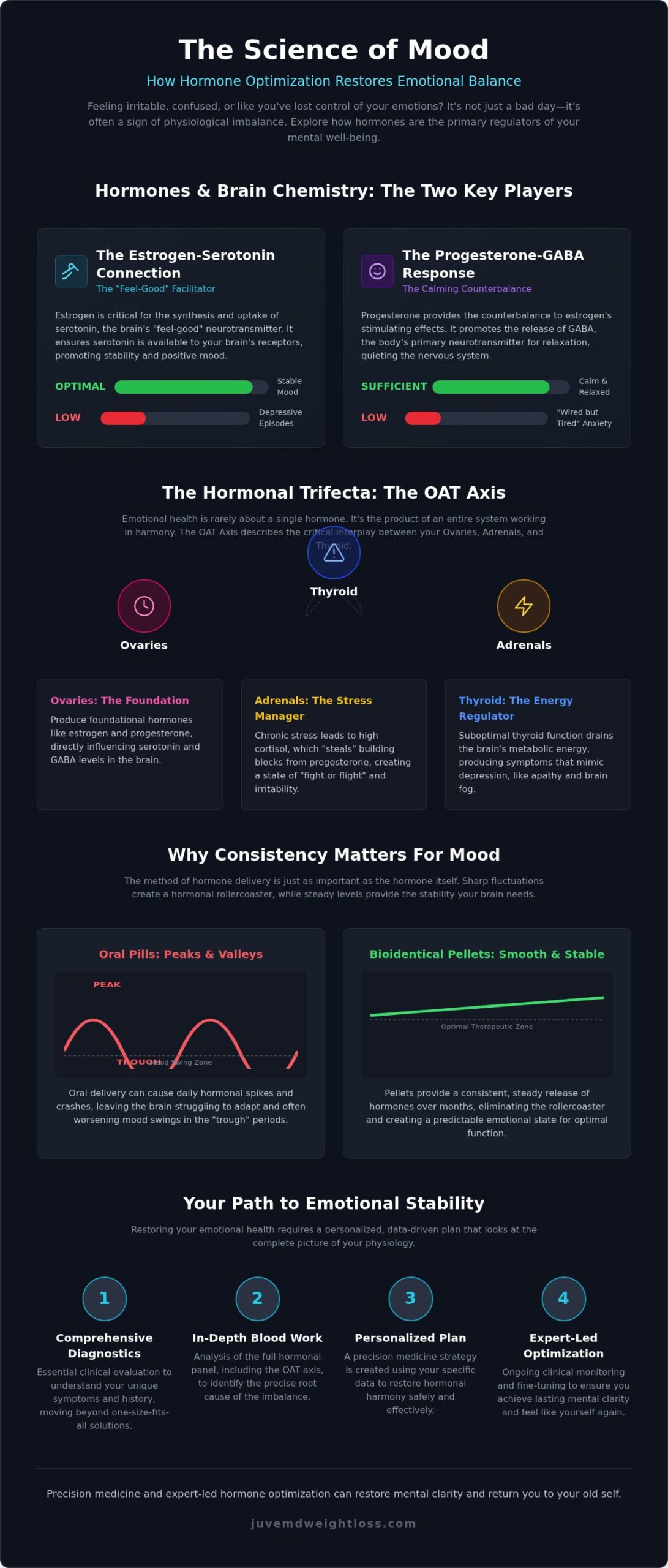
Estrogen plays a critical role in the synthesis and uptake of serotonin, the neurotransmitter often called the “feel-good” hormone. It essentially acts as a facilitator, ensuring that serotonin remains available to the brain’s receptors for longer periods. When estrogen levels decline, serotonin production often follows suit. This drop can trigger a cascade of emotional symptoms, including depressive episodes and disrupted sleep patterns. The estrogen-serotonin link serves as a primary driver of emotional stability.
Progesterone and the GABA Response
While estrogen stimulates, progesterone provides the necessary counterbalance. It metabolizes into a neurosteroid called allopregnanolone, which binds directly to GABA receptors in the brain. GABA is the body’s primary inhibitory neurotransmitter, responsible for signaling relaxation and quietness in the nervous system. Without sufficient progesterone, you might experience a specific type of “wired but tired” anxiety. You’re exhausted, yet your brain won’t shut off. This physiological imbalance makes it nearly impossible to maintain a calm baseline without clinical intervention.
The most intense mood swings often occur during the “withdrawal” phase, where hormone levels drop sharply rather than tapering gradually. This sudden loss of chemical support leaves the brain struggling to recalibrate its neurotransmitter levels. The result is often a surge in irritability, sudden tearfulness, or a feeling of being on edge. By using hormone therapy for mood swings las vegas to stabilize these levels, you move away from the peaks and valleys toward a predictable emotional state. It’s about providing the brain with the steady environment it needs to function optimally.
The Hormonal Trifecta: Beyond Estrogen and Progesterone
While the previous section highlighted the importance of sex hormones, focusing solely on estrogen and progesterone often leaves a significant part of the puzzle missing. Clinical practitioners recognize the “OAT axis,” which represents the intricate communication between the ovaries, adrenal glands, and thyroid. This triad functions as a feedback loop. When one gland is out of sync, the others compensate, often leading to the emotional volatility that drives people to seek hormone therapy for mood swings las vegas. Emotional health is rarely the result of a single hormone deficiency; it is the product of this entire system working in harmony.
Thyroid Health and Emotional Regulation
The thyroid is your body’s metabolic engine, regulating the energy production of every cell, including those in your brain. When thyroid function is suboptimal, even if laboratory results fall within a standard “normal” range, the resulting symptoms are often indistinguishable from clinical depression. You might experience a heavy sense of apathy, persistent brain fog, or a lack of motivation that doesn’t respond to traditional antidepressants. These mood issues stem from the brain cells lacking the metabolic energy required to maintain a stable emotional baseline. Because these symptoms overlap so significantly with mental health conditions, a thorough evaluation is necessary to distinguish a physiological thyroid issue from a primary psychological one.
Adrenal Fatigue and the Cortisol Spike
Your adrenal glands manage your response to stress through the production of cortisol. In a state of chronic stress, your body prioritizes survival over reproduction, leading to a phenomenon where cortisol effectively “steals” the chemical building blocks intended for progesterone and estrogen. High levels of cortisol don’t just deplete your hormone supply; they can also block progesterone receptors, preventing what little hormone you have from doing its job. This puts you in a constant “fight or flight” state. You might find your patience has vanished, replaced by a hair-trigger irritability that strains your relationships.
Addressing adrenal health is often a prerequisite for a successful outcome. There is significant evidence for hormone therapy and mood stabilization, but it works best when the entire endocrine system is balanced. If your cortisol is constantly spiking, even the most precise dose of bioidentical hormones may struggle to provide the relief you need. Understanding these connections is why we take a comprehensive view of your health. If you’re ready to look beyond surface-level symptoms, you can schedule a personalized consultation to explore your unique hormonal profile and restore your emotional equilibrium.
Comparing Hormone Delivery Methods: Why Consistency Matters for Mood
The brain is highly sensitive to fluctuating hormone levels. If you’re exploring hormone therapy for mood swings las vegas, you’ve likely realized that emotional stability is fragile. Even minor drops in hormone concentration can trigger irritability or anxiety. Most delivery methods fail because they create a non-physiological cycle of highs and lows that the brain struggles to manage. When hormone levels are inconsistent, the neurotransmitters responsible for mood regulation cannot reach a stable baseline.
Oral pills must pass through the digestive system and liver; this is called first-pass metabolism. This process results in a sudden surge followed by a rapid decline, which can put unnecessary stress on the liver over time. Creams and gels often suffer from inconsistent absorption rates depending on skin temperature, humidity, or the specific application site. There is also the constant risk of accidental transference to family members, children, or pets, which can cause serious health complications for them.
Bioidentical Pellets vs. Synthetic Options
Bioidentical hormones are molecularly identical to what your body produces naturally. This means your body recognizes and utilizes them more efficiently than synthetic alternatives. In contrast, synthetic options often contain “side-chain” molecules. These artificial additions can lead to unwanted side effects, such as bloating or headaches, which only complicate your emotional recovery. Choosing the right formulation is as important as the delivery method itself. For a deep dive into safety and efficacy, you can read our guide on bioidentical pellet hormone therapy. Partners and spouses of men experiencing mood and energy disruptions may also find it helpful to explore how hormone pellet therapy for men addresses the same “spike and crash” cycle through steady, continuous hormone release.
Avoiding the ‘Spike and Crash’ Cycle
Daily applications often lead to emotional “peaks” and “valleys.” The brain is forced to recalibrate its neurotransmitter levels every few hours as the medication wears off. This creates a “rollercoaster” effect that can leave you feeling more volatile than before you started treatment. Pellets provide a constant flow of hormones based on your cardiac output. When you’re active and your heart rate increases, the pellet releases more hormones. When you’re resting, it releases less. This method mimics the body’s natural secretion patterns for three to five months at a time.
There’s a significant psychological benefit to “set it and forget it” therapy. You don’t have to remember a daily pill or worry about the mess and timing of a cream. This consistency allows your brain chemistry to stabilize permanently rather than reacting to a daily dose. It removes the anxiety of wondering when the next mood shift will occur. By maintaining a steady state, you give your body the best chance to return to its old self and reclaim your quality of life.
How to Start Your Hormone Optimization Journey
Beginning a clinical protocol for hormone optimization is a significant step toward reclaiming your emotional state. This isn’t a generic wellness routine; it’s a precise medical procedure that relies on high-quality diagnostic data to be effective. When you’re researching hormone therapy for mood swings las vegas, you need a process that prioritizes your safety and individual biology above all else. This methodical approach ensures that your treatment is tailored specifically to your body’s requirements.
- Step 1: Comprehensive Blood Work. We begin by gathering a detailed hormonal and metabolic profile to understand your current baseline. A comprehensive approach to hormone therapy for mood swings las vegas ensures that every facet of your endocrine health is addressed from the start.
- Step 2: Detailed Medical Consultation. Your symptoms, such as irritability or anxiety, are mapped directly to your lab results to identify specific imbalances that a standard physical might miss.
- Step 3: Personalized Dosing. Based on your unique metabolic needs, a precise dose of bioidentical hormones is calculated to restore your levels to an optimal range.
- Step 4: Insertion and Monitoring. The pellets are placed during a brief office visit, followed by ongoing monitoring to ensure your levels reach the steady state required for emotional stability.
What to Look for in a Hormone Specialist
The success of your treatment depends heavily on the expertise of your provider. You should seek a specialist who treats the patient, not just the laboratory numbers. Bioidentical pellet insertion is a specific clinical skill set that requires precision and experience to ensure consistent delivery. During your initial consultation, ask how the provider specifically targets mood goals and how they handle the nuances of the OAT axis mentioned earlier. A supportive guide will prioritize your comfort and clinical understanding at every stage of the journey.
Comprehensive Testing: More Than Just ‘The Basics’
Standard lab tests often only look at “total” hormone levels, which can be misleading. It’s essential to measure “free” levels, which represents the amount of hormone actually available for your cells to use. Additionally, a thorough panel should include markers for systemic inflammation and vitamin deficiencies, as these can often mimic or worsen hormonal mood swings. A full diagnostic panel is non-negotiable because treating emotional health without a complete metabolic picture is merely guesswork. This level of detail ensures that your protocol is built on facts rather than assumptions. The same diagnostic precision applies when evaluating male patients, where hormone pellet therapy for men relies on comprehensive free testosterone and metabolic panels to eliminate the frustrating energy fluctuations and mood instability that standard testing often misses.
Taking the first step toward balance starts with accurate information and professional guidance. If you’re ready to move toward a more predictable emotional life, contact us today to schedule your comprehensive hormone evaluation and begin your journey back to yourself.
Personalized Hormone Solutions at JuveMD
At JuveMD, we recognize that mood swings aren’t merely a personality trait or a reaction to stress. They’re a clinical symptom of a physiological imbalance that requires a specialized approach. Dr. Andrea Dempsey’s philosophy is rooted in precision medicine, focusing on restoring the “whole person” rather than treating isolated symptoms. By prioritizing bioidentical pellet therapy, we provide the steady-state hormone levels required for true emotional stability and mental clarity. This constant delivery method eliminates the peaks and valleys that often undermine the effectiveness of other treatments, allowing you to regain control over your daily life.
Our commitment to your health extends beyond hormone levels alone. We often integrate our protocols with a medical weight loss program to ensure comprehensive metabolic health. When your metabolism and hormones work in harmony, the results are more profound and lasting. This holistic view is why many individuals seeking hormone therapy for mood swings las vegas choose our practice for their care. We focus on foundational health to create a sustainable path toward emotional predictability.
The JuveMD Consultation Experience
Your journey begins with a deep dive into your medical history and emotional wellness goals. We don’t just look at numbers on a page; we listen to how you feel and how your symptoms affect your daily life. This consultation is a collaborative process characterized by transparent communication about expectations and timelines for relief. Dosing isn’t a static decision; it’s a personalized protocol that evolves as your body responds and your needs change over time. This ensures that your treatment remains as unique as your biological blueprint.
Long-Term Monitoring for Emotional Stability
Achieving balance is the first step, but maintaining it is where long-term health is found. We utilize regular follow-up labs to ensure you stay within the optimal clinical range for your specific profile. As you age or experience lifestyle changes, your hormonal needs may shift. We adjust your protocols proactively to prevent symptoms from returning. We view ourselves as a long-term partner in your wellness journey, providing the authoritative guidance and supportive care you need to stay at your best. If you’re ready to find a permanent solution, exploring hormone therapy for mood swings las vegas at JuveMD can be the turning point you’ve been waiting for. We are here to guide you through every stage of your transformation.
Reclaiming Your Emotional Equilibrium
Emotional stability isn’t a luxury; it’s the foundation of a high-quality life. We’ve explored how the delicate interplay of the OAT axis and the steady delivery of bioidentical pellets can replace unpredictability with clarity. By addressing the root physiological causes of your symptoms, you can move beyond the “wired but tired” cycle and return to your old self. Led by Dr. Andrea Dempsey, our practice specializes in Bioidentical Pellet Hormone Therapy, providing the consistent hormone levels your brain needs to thrive. We rely on personalized, data-driven treatment plans to ensure your protocol is as unique as your biology.
If you’re ready to explore hormone therapy for mood swings las vegas, don’t wait for your symptoms to escalate. You deserve a supportive partner who values transparency and clinical excellence. Schedule your comprehensive hormone consultation with JuveMD today and take the first step toward lasting emotional health. You have the power to feel balanced and empowered once again.
Frequently Asked Questions
Can hormone therapy help with anxiety and depression?
Yes, hormone therapy can be highly effective for anxiety and depression when these conditions are rooted in endocrine imbalances. By stabilizing estrogen and progesterone levels, the brain can better regulate serotonin and GABA. This approach addresses the underlying physiological cause rather than just masking the symptoms. It’s a vital consideration for those exploring hormone therapy for mood swings las vegas to achieve long-term emotional stability.
How long does it take for hormone therapy to improve mood swings?
Most patients begin to notice improvements in their mood, sleep, and energy levels within 4 to 8 weeks of starting bioidentical hormone replacement therapy. While some initial shifts may occur sooner, it takes time for the brain chemistry to recalibrate to a steady state. Achieving the full clinical benefits for emotional health and cognitive function typically requires a few months of consistent, optimized levels.
Is hormone therapy for mood swings safe for long-term use?
Current medical guidelines from the Menopause Society support the safety of hormone therapy for most healthy individuals when started within ten years of menopause onset. Long-term use is managed through regular clinical monitoring and personalized dosing adjustments. We prioritize your safety by using bioidentical pellets, which provide a steady release and avoid the risks associated with the “spike and crash” cycle of other delivery methods.
What are the signs that my mood swings are caused by hormones?
Signs of hormonal mood swings often include a cyclical pattern of irritability, sudden tearfulness, or feeling “wired but tired.” If your emotional shifts are accompanied by physical symptoms like night sweats, sleep disturbances, or brain fog, it’s a strong indicator of a hormonal root. Unlike general psychological issues, these swings often feel like a sudden loss of control over your typical personality.
Can hormone therapy help with ‘brain fog’ as well as mood?
Yes, hormone therapy frequently resolves brain fog alongside mood instability. Estrogen is essential for cognitive processing, while thyroid hormones provide the metabolic energy your brain cells need to function. When these levels are optimized, patients often report improved focus and mental clarity. This comprehensive restoration of cognitive health is a primary reason many seek hormone therapy for mood swings las vegas to regain their productivity.
How do hormone pellets differ from antidepressants for mood?
Antidepressants generally work by keeping neurotransmitters in the brain longer, whereas hormone pellets address the physiological deficiency that causes neurotransmitter depletion in the first place. Pellets provide a constant, steady-state release that mimics your body’s natural rhythm. This method offers a foundational correction of the endocrine system, which can often reduce or eliminate the need for purely symptomatic psychiatric medications that don’t address the root cause.
What happens if I stop hormone therapy for mood swings?
If you discontinue hormone therapy, your body will eventually return to its previous deficient state, and your symptoms will likely resurface. Because pellets dissolve gradually over three to five months, the transition is smoother than stopping oral medication. However, without the steady-state support of optimized hormones, the emotional volatility and irritability you previously experienced will typically return as your levels decline to their baseline.
Are there side effects of BHRT that affect mood?
While bioidentical hormones are designed to minimize side effects, some patients may experience a brief adjustment period. You might feel a temporary surge in energy or mild breast tenderness as your body recalibrates to its new, healthier baseline. Because we use personalized dosing based on your specific clinical data, we can minimize these effects and ensure your transition to emotional stability is as comfortable and predictable as possible.