
BHRT is only one part of menopause care; the habits around treatment matter, too. Bioidentical hormone replacement therapy uses hormones described as bioidentical, while lifestyle changes that support BHRT can help you care for your sleep, strength, bone health, and overall well-being. These habits complement a treatment plan rather than replace it.
When menopause affects daily life, it makes sense to look beyond medication. Exercise, nutrition, stress management, and sleep routines can all influence how you feel. Tracking symptoms can also help you discuss changes in your health with your healthcare provider.
This article covers practical lifestyle changes to support BHRT, including aerobic and strength-building activity, sleep strategies, hot-flash triggers, and bone-supportive choices. It also explains why following your prescribed plan and attending follow-up appointments matter. The aim is a sustainable routine that complements treatment and helps you have informed conversations about your health.
Key Takeaways
- Combine aerobic movement, strength work, and flexibility exercises to support energy, mobility, and bone health.
- A consistent, cool sleep environment and attention to hot-flash triggers can make rest easier to prioritize.
- Build bone-supportive habits through nourishing food choices and regular weight-bearing activity.
- Stress-management practices such as deep breathing, meditation, or mindful movement can support emotional well-being.
- Follow your prescribed BHRT plan, keep track of symptoms, and share health changes during follow-up care.
1. Regular aerobic, weight-bearing, strength, and flexibility exercise
Movement supports several parts of menopause health alongside hormone replacement therapy. The World Health Organization defines menopause as 12 consecutive months without a menstrual period. During this transition, a varied exercise routine can support cardiovascular fitness, muscle strength, mobility, and bone health. These are practical foundations for lifestyle changes to support BHRT, not a substitute for prescribed hormone therapy.
Build a routine with different kinds of movement rather than relying on one activity. Walking, dancing, and running are weight-bearing options that load bones as you move. Strength training with resistance bands or weights challenges muscles and supports strength. Low-impact cardio can build cardiovascular fitness, while yoga or Pilates can add flexibility and balance.
Give bone health specific attention during menopause. Lower estrogen is associated with increased bone-density loss, so weight-bearing and resistance exercise can be useful parts of a bone-supportive routine. Walking, dancing, and strength exercises place different demands on the body. Pairing movement with calcium- and vitamin-D-rich foods supports a broader approach to maintaining bone health.
Choose activities that suit your abilities and daily routine. For example, combine a walk with simple resistance-band exercises, then add gentle stretching or yoga. If a long workout is hard to maintain, break activity into manageable periods throughout the day. Consistency matters more than a complicated schedule that is difficult to follow.
What diet supports hormone health during BHRT? Choose a balanced pattern built around vegetables, fruits, whole grains, lean proteins, and healthy fats. Leafy greens, fiber-rich vegetables, and omega-3 fats are useful examples. Meals with these food groups can complement exercise and support overall health during hormone replacement therapy.
Hydration can round out your routine. Keep water available during the day, especially around walks, dance sessions, or strength workouts. A balanced diet and adequate hydration may also help with weight gain and bloating while using BHRT. These habits support general wellness but don’t replace an individualized treatment plan.
Stress management belongs alongside food and movement. Try deep breathing after a walk or a relaxing yoga practice on a busy day. Practical, brief steps make stress reduction feel manageable rather than like another demanding task. Diet, exercise, and stress management address different parts of well-being during menopause.
Start by choosing an aerobic activity, a strength exercise, and a flexibility practice you enjoy. Rotate options such as walking, resistance-band training, and Pilates to keep your routine varied. Adjust the mix as your needs change, and discuss new symptoms or health concerns at treatment follow-ups. A sustainable routine can support menopause health without making exercise feel like a second job.
2. Managing sleep difficulties and hot flashes
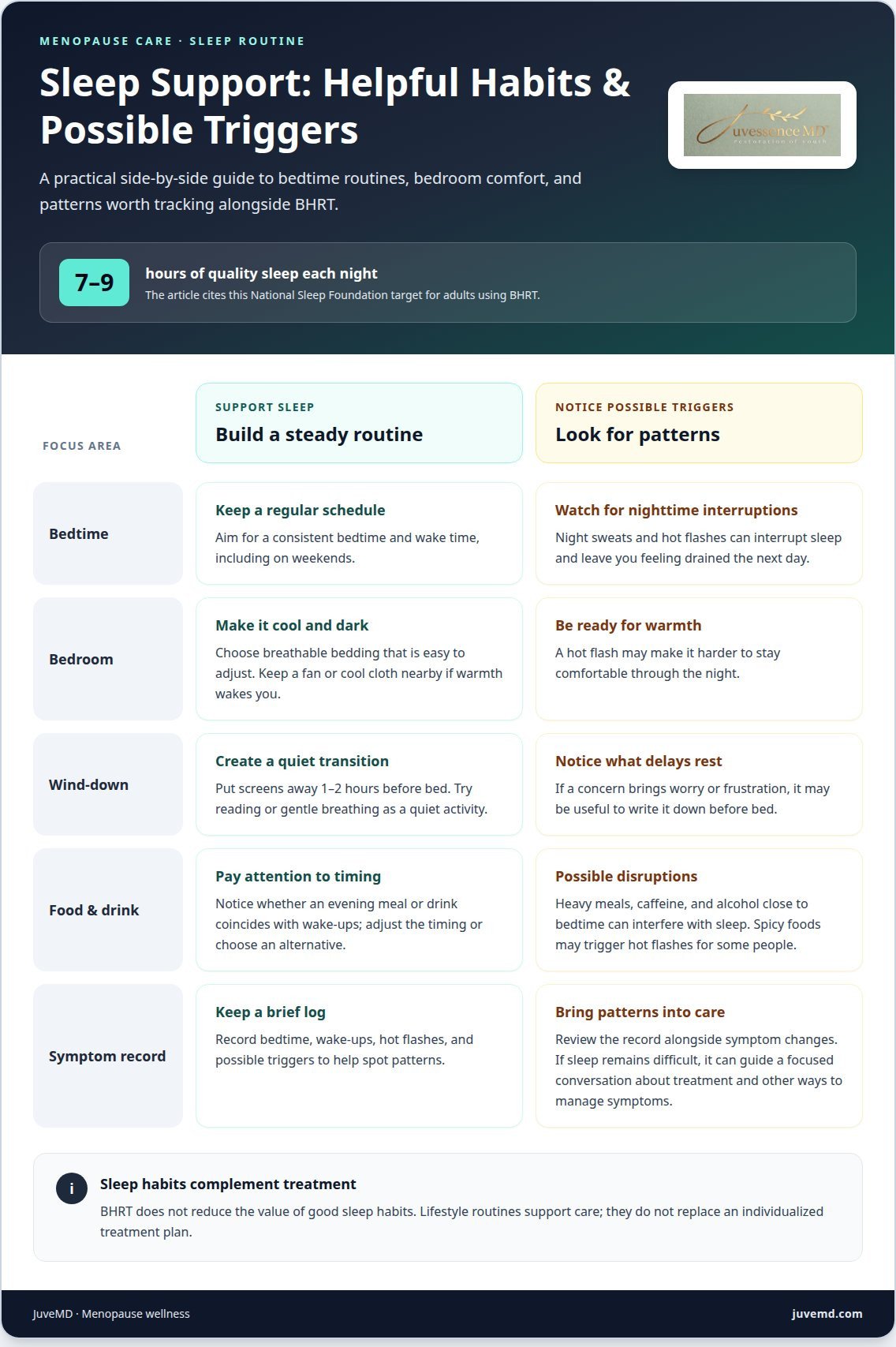
Menopause symptoms such as night sweats can interrupt sleep and leave you feeling drained the next day. Adults using BHRT are advised by the National Sleep Foundation to aim for 7-9 hours of quality sleep each night. A steady routine gives your body a predictable cue to wind down, even when changing hormone levels make rest less consistent.
Keep a regular bedtime and wake time, including on weekends. Make your bedroom cool and dark, and use breathable bedding that is easy to adjust during a hot flash. If warmth wakes you, keep a fan or cool cloth nearby. These steps can make it easier to return to sleep without turning on bright lights or starting a lengthy nighttime routine.
Give your mind a clear signal that the day is ending. Put screens away 1-2 hours before bed, then choose a quiet activity such as reading or gentle breathing. Cognitive behavioral therapy can reduce the impact of hot flashes and support sleep and emotional well-being. If symptoms bring worry or frustration, writing down the concern before bed may help separate it from your wind-down time.
Food and drink can affect comfort at night. Heavy meals, caffeine, and alcohol close to bedtime can interfere with sleep; spicy foods may also trigger hot flashes for some people. Notice whether a particular evening meal or drink coincides with wake-ups, then adjust the timing or choose an alternative. Tracking symptoms this way can make patterns easier to discuss during care.
What lifestyle habits can worsen BHRT side effects or risks? Caffeine and alcohol may intensify hot flashes or disrupt sleep, while smoking and excessive alcohol can negatively affect hormonal balance. These habits can aggravate menopause symptoms, but they don’t determine whether hormone treatment is appropriate or safe.
Bioidentical hormone replacement doesn’t reduce the value of good sleep habits. Keep a brief record of bedtime, wake-ups, hot flashes, and possible triggers, then review it alongside changes in symptoms. If sleep remains difficult, the record can guide a focused conversation about treatment and other ways to manage menopause symptoms.
For a treatment discussion that considers persistent symptoms alongside your sleep patterns, explore Bioidentical Pellet Hormone Therapy. A clear account of nighttime symptoms can make that conversation more specific and useful.
3. How can lifestyle support bone health during menopause?
Bone-supportive habits matter during perimenopause and after menopause, when lower estrogen is associated with bone-density loss. A practical approach combines calcium-rich foods, vitamin D, and weight-bearing or resistance exercise. These choices complement hormone therapy, including bioidentical hormone treatment, but don’t replace the prescribed plan.
Calcium is found in foods such as milk, yogurt, kale, almonds, salmon, and fortified products. Add a source to meals you already eat, such as yogurt at breakfast or kale alongside lunch. Vitamin D helps the body absorb calcium, so both nutrients matter in a bone-supportive eating pattern. Sunlight exposure also enables the body to produce vitamin D naturally.
People over age 70 are recommended to consume 20 micrograms of vitamin D daily, according to the National Institutes of Health, Office of Dietary Supplements. Needs can differ by age and health context, so this figure should not be treated as a personal supplement dose. A varied diet can include vitamin-D-containing foods such as salmon and fortified products.
Which supplements may interact with BHRT or affect hormone levels? Omega-3, vitamin D, and calcium supplements should be discussed with your healthcare provider before you start them while using BHRT. Include magnesium, too, if you’re considering it for sleep quality or muscle cramps, and share the product and dose information during that discussion.
Supplements aren’t the only way to support bone health. Build meals around vegetables, fruits, whole grains, fish, nuts, and healthy fats, as in a Mediterranean-style pattern. Fish and nuts provide examples of foods containing omega-3 fats. Pair those choices with reducing highly processed foods, rather than relying on a single nutrient or supplement to do all the work.
For a simple routine, include a calcium-rich food at a meal, choose fish or nuts for healthy fats, and make room for weight-bearing activity during the week. Walking and strength exercises place different demands on bones and muscles. Together, these habits can support mobility and strength while you manage menopause-related changes.
Sleep and bone health can be supported by everyday habits. If you’re considering magnesium for sleep or cramps, discuss it alongside your BHRT and other supplements. Reducing caffeine late in the day may also support a calmer bedtime routine, and a consistent wind-down can help protect sleep. Coordinate supplements, food, and treatment rather than adding products without review.
4. What are key lifestyle changes that help manage menopause?
Stress management can be part of a menopause wellness routine because chronic stress affects hormone balance. It can raise cortisol, which may interfere with estrogen, progesterone, and testosterone production. Choose one practical pause each day: try deep breathing after lunch, a guided meditation before bed, or a brief journal entry after work. A repeatable habit is easier to maintain than a demanding new schedule.
Movement can provide structure for managing daily tension. A walk outdoors, yoga, or tai chi pairs gentle activity with focused attention. Try noticing your breathing during a familiar route or movement practice. Meditation and deep breathing are options on days when a workout feels like too much. Aim for a sustainable stress-reduction practice, not another source of pressure.
Food choices can support weight management and steadier eating habits. Build meals around fiber-rich vegetables, fruits, whole grains, and protein, such as lentils with brown rice or leafy greens with eggs. Fiber adds variety and structure to meals, while protein can support fullness. Eating slowly gives you time to notice when you feel satisfied, especially as appetite cues change during menopause.
Menopause can bring changes that affect overall health, so sustainable eating habits and regular activity may be helpful. A balanced eating pattern and regular physical activity can support overall health and help address weight changes. Focus on sustainable habits, such as adding vegetables to lunch or taking a walk after sitting for a long time. Avoid making rapid weight loss the goal of menopause care.
Weight gain and bloating can have different causes, so track patterns instead of assuming they share one. Note meals, activity, hydration, and symptoms in a simple daily log. Adequate water and balanced meals may help address bloating, while regular activity supports weight management. If a change persists, bring the pattern and other menopause symptoms to a healthcare appointment.
Stress practices and nutrition work best as complementary parts of care. For example, pair a calming breathing exercise with a regular meal that includes vegetables, whole grains, and protein. Limit habits that can undermine well-being, including smoking and excessive alcohol. These steps support wellness and may help manage symptoms, but they don’t replace prescribed treatment or attention to bone density and calcium intake.
5. Following the BHRT treatment plan
BHRT is part of a broader care plan, so follow the prescribed directions and attend scheduled follow-ups. Don’t change how you use treatment or adjust a dose on your own. At each visit, share changes in symptoms, health, or daily habits. This context helps your healthcare provider review your progress and decide whether the plan needs adjustment.
A symptom record makes those conversations more specific. Note the symptom, when it occurs, how it affects your day, and any related changes. For example, record night sweats, interrupted sleep, mood shifts, and changes in energy. Include new medications or supplements, as well as changes in alcohol use or exercise. The record can help distinguish a persistent pattern from one difficult day.
Monitoring involves more than symptom relief. Describe practical changes in your routine, such as whether your muscle strength, sleep, or daily activity feels different. Hormone levels are one part of the treatment context; symptoms and overall health also inform follow-up discussions. Don’t treat a single symptom or measurement as proof that treatment is working or failing. Share the full picture at your appointment.
How should patients track symptoms and monitor progress while using BHRT? Keep a brief, consistent log of symptoms, timing, sleep, and relevant habit changes, then bring it to scheduled follow-ups. Report side effects or health changes promptly rather than waiting for the next appointment.
Does alcohol or smoking affect BHRT safety or effectiveness? Smoking and excessive alcohol can negatively affect hormonal balance, and alcohol may disrupt sleep or intensify hot flashes. Tell your healthcare provider about your use so it can be considered alongside your symptoms and treatment.
Consistency matters, but your care plan should account for meaningful changes. If night sweats continue, symptoms shift, or a new side effect appears, record when it began and how often it occurs. Don’t stop or alter treatment based on that observation alone. Share the details with your care team so they can review the pattern and discuss appropriate next steps.
Keep follow-up focused by bringing symptom notes, questions, and a current list of medications and supplements. Mention changes that affect metabolism, activity, sleep, or alcohol use, even if they seem unrelated. These details provide context for discussing hormone levels and treatment balance. Following the plan means staying engaged and communicating clearly, not interpreting every change on your own.
If skin changes are part of your wellness concerns, explore skin treatment options as a separate part of your care. Keep any new skin concerns in your symptom notes and discuss them during follow-up, especially if they appear after a treatment change.
JuveMD
JuveMD provides hormone education and Bioidentical Pellet Hormone Therapy for people exploring menopause care in Las Vegas. If you’re considering BHRT or already following a treatment plan, a consultation can help you discuss how symptoms, daily habits, and treatment fit together. Bring questions about sleep, exercise, nutrition, or changes you’ve noticed to make the conversation useful to you. JuveMD also offers injectables, skin treatments, and weight-loss programs. Lifestyle habits can complement clinical care, while treatment decisions should be discussed with a qualified healthcare professional. Contact JuveMD to discuss your hormone health questions and possible next steps.
Build a care plan that fits your life
Progress is easier to sustain when the next step feels manageable. Choose one change you can keep practicing, then notice how it fits your routine and overall care. Lifestyle changes to support BHRT are most useful when they complement a treatment plan that reflects your symptoms, priorities, and health history.
Use your next care conversation to clarify what you want to address, what changes you’ve noticed, and what questions remain. A focused discussion can help you understand how BHRT may fit into menopause care and what follow-up could involve. You don’t need every answer before starting that conversation.
Contact JuveMD to discuss BHRT and explore a thoughtful next step for your care. Small, considered decisions can help you move forward with greater confidence.
Frequently Asked Questions
What is BHRT?
BHRT is hormone therapy that uses hormones described as bioidentical, meaning they have the same molecular structure as hormones found in the body. The term can refer to different formulations, so treatment and evidence depend on the specific product. FDA-approved menopausal hormone therapies differ from compounded bioidentical therapies. This information is educational, not medical advice. Consult your healthcare provider about treatment options.
How can lifestyle support bone health during menopause?
Support bone health by combining nutritious meals with regular weight-bearing and resistance activity. For example, calcium-rich yogurt and fortified cereal add bone-supportive nutrients, while strength exercises challenge muscles and bones. Vitamin D helps the body absorb calcium. Before adding calcium or vitamin D supplements, discuss them with your healthcare provider, especially if you take medications or other supplements.
What are key lifestyle changes that help manage menopause?
Build a manageable routine around movement, nourishing meals, restorative sleep, and stress reduction. Choose habits that fit your day, such as a short walk after work or a few minutes of quiet breathing before a busy task. Keep notes on symptoms alongside these habits. They can help you see which changes support your comfort and what to raise at a follow-up appointment.
What are the best diets for women going through menopause?
No single diet is best for everyone during menopause. A Mediterranean-style eating pattern is one option, featuring vegetables, fruit, whole grains, fish, nuts, and healthy fats. A practical meal might pair roasted vegetables and whole grains with fish, or beans and greens with olive oil. Adapt food choices to your preferences and health needs, and discuss individual nutrition concerns with your healthcare provider.
What lifestyle changes can support bioidentical hormone replacement therapy (BHRT)?
Follow treatment directions, attend scheduled follow-ups, and share changes in symptoms or health. Keep a current list of prescriptions and supplements, including products you take only occasionally. If a new symptom appears after a treatment change, note when it began and how it affects daily activities. This record gives your healthcare provider useful context for reviewing your care plan.
How does exercise affect BHRT results and hormone levels?
Exercise supports general health, muscle strength, cardiovascular fitness, and bone health, but it shouldn’t be used to control hormone levels or replace prescribed therapy. Notice how different activities affect your energy, sleep, and symptoms. For example, record whether a walk feels manageable on days when you’re fatigued. Share notable changes with your healthcare provider rather than adjusting treatment based on exercise alone.
How much sleep is recommended for people using BHRT?
The National Sleep Foundation advises adults using BHRT to aim for 7-9 hours of quality sleep each night. A consistent sleep and wake schedule can make that target easier to work toward. If symptoms interrupt rest, note the timing and frequency of wake-ups, then share the pattern at follow-up. Persistent sleep difficulties deserve attention as part of your overall menopause care.
Can stress management improve BHRT outcomes?
Stress-management practices can support emotional well-being alongside BHRT, but they don’t replace treatment or follow-up care. If stress and menopause symptoms affect daily life, discuss structured support, such as cognitive behavioral therapy, with your healthcare provider. You can also track mood and stressful situations alongside symptoms to make conversations about your needs more focused and practical.