
What if the sluggishness and loss of focus you’ve attributed to “getting older” are actually clear signals of a treatable medical condition? It’s easy to dismiss a softening midsection or a fading drive as an inevitable part of the middle-age experience. You might feel like you’re losing your edge, struggling with persistent brain fog at work, or watching your motivation vanish despite your best efforts. Many people overlook the clinical signs of low testosterone men experience because they assume these changes are permanent. However, your symptoms are real, and they’re often the result of a measurable hormonal shift rather than a simple passage of time.
You deserve to understand exactly what’s happening in your body and how to reclaim your vitality. In this guide, we’ll provide a comprehensive checklist of twelve physical and cognitive indicators that suggest your levels may be out of balance. We’ll explore the latest 2026 clinical standards for diagnosis and help you prepare for a meaningful conversation with a specialist about hormonal optimization and the foundational benefits of restoring your metabolic health.
Key Takeaways
- Learn to distinguish between the natural aging process and clinical hormonal decline by identifying the specific cognitive and physical shifts that impact your daily quality of life.
- Recognize the primary physical signs of low testosterone men frequently encounter, such as persistent fatigue and an increase in stubborn abdominal fat that resists traditional exercise.
- Gain clarity on how hormonal imbalances contribute to significant emotional changes, including a loss of motivation, increased irritability, and a noticeable decrease in sexual drive.
- Understand the clinical thresholds for a diagnosis and why a symptom-based evaluation is just as critical as your laboratory results for total and free testosterone.
- Establish a clear roadmap for hormonal optimization, moving from initial symptom tracking to exploring specialized treatments like bioidentical pellet therapy for consistent and precise results.
Understanding Male Hypogonadism: What Is Low Testosterone?
Testosterone is the primary androgen, a vital chemical messenger responsible for developing male physical characteristics and maintaining metabolic health. It’s the foundation of masculine vitality, influencing everything from muscle mass to how your body processes energy. While many people think of it solely in the context of fitness, it’s actually a master regulator for your entire system, impacting your heart, bones, and even your mood.
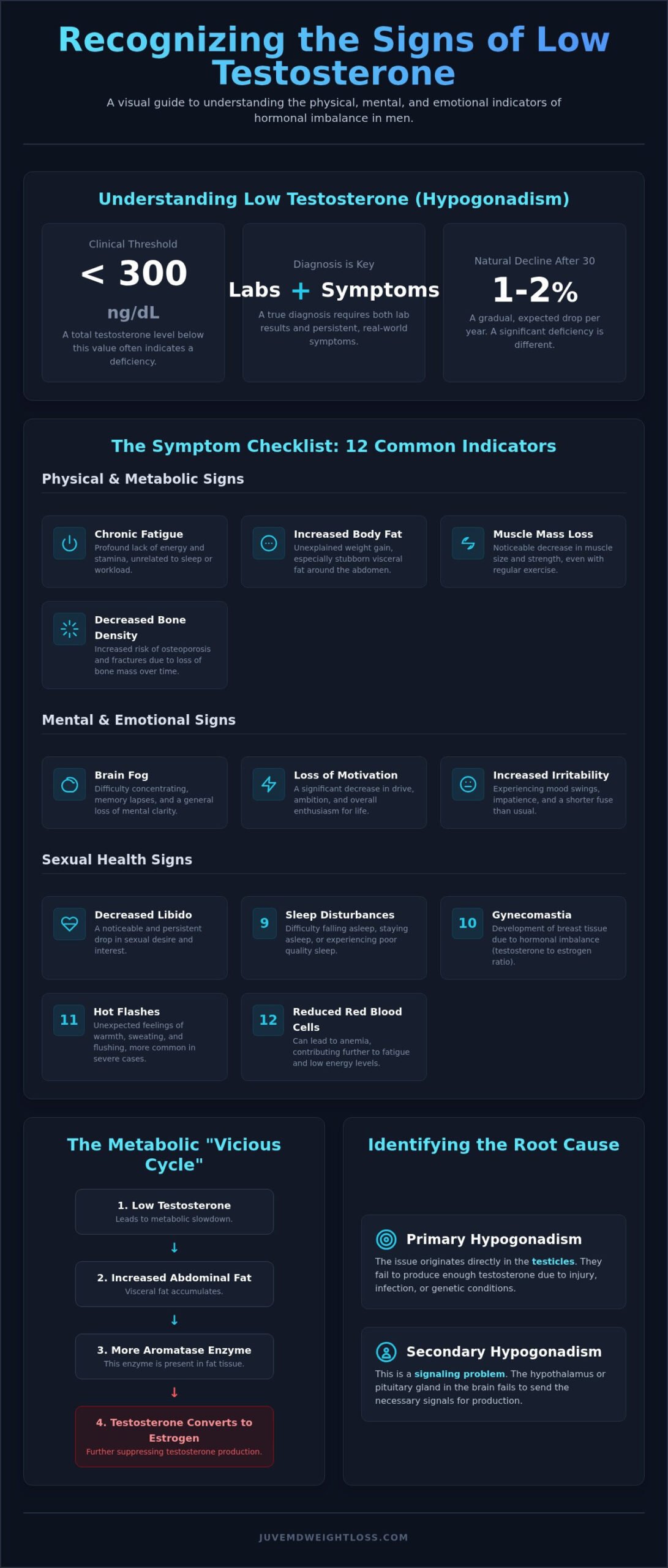
When doctors evaluate the signs of low testosterone men exhibit, they often look for a total testosterone level that falls below 300 ng/dL. However, focusing only on a single number can be misleading. A clinical diagnosis of hypogonadism requires a careful balance between laboratory data and the presence of real-world symptoms that impact your quality of life. To better understand the clinical definition, you can explore What Is Low Testosterone? to see how it affects the body over time. It isn’t just about hitting a numerical target; it’s about how your body functions on a daily basis.
It’s natural for levels to dip slightly as you get older, typically by about 1% to 2% each year after age 30. This gradual shift is sometimes referred to as “andropause,” the male equivalent of menopause. While a slow decline is expected, a clinically significant deficiency is different. It’s a state where your body no longer produces enough hormone to support its basic biological needs. Recognizing the early signs of low testosterone men encounter is the first step toward reclaiming that balance before it affects your long-term health.
Why Testosterone Levels Matter for Total Wellness
Testosterone plays a critical role in maintaining bone density and supporting cardiovascular health. It stimulates the bone marrow to produce red blood cells, which carry oxygen throughout your body. Additionally, your metabolic rate is closely tied to your hormone levels. When testosterone is optimal, your body is more efficient at burning fat and maintaining lean muscle. Without it, you may find yourself gaining weight despite no changes to your diet or exercise routine.
The Difference Between Primary and Secondary Low T
Identifying the root cause of a deficiency is essential for choosing the right treatment path. Primary hypogonadism occurs when the issue lies within the testicles themselves, often due to injury, infection, or certain genetic conditions. Secondary hypogonadism is a signaling problem. In these cases, the hypothalamus or pituitary gland in the brain fails to send the necessary messages to trigger testosterone production. Distinguishing between these two types allows for a more precise, personalized approach to hormonal optimization.
Physical Signs: The Body Composition and Energy Checklist
When hormones fall out of balance, your body often provides the first set of warnings through visible and structural changes. One of the most pervasive signs of low testosterone men report is a profound, chronic fatigue that persists regardless of how many hours they sleep. This isn’t the typical tiredness that follows a long work week. It’s an exhausting lack of energy that makes even routine activities feel like a significant hurdle, often accompanied by a noticeable decline in physical stamina and endurance.
Beyond energy levels, testosterone is a critical driver for maintaining bone density. When levels remain low for an extended period, bone mass can decrease, leading to a condition known as osteoporosis. This makes the skeletal system more fragile and increases the risk of fractures from minor falls or stresses. Because these changes happen internally, they often go unnoticed until a more serious injury occurs, highlighting why early screening is essential for long-term mobility.
The Metabolic Connection: Fat Gain and Muscle Loss
Hormonal health is the engine of your metabolism. Testosterone helps your body build lean muscle and manage how it stores fat. When levels drop, you might experience a frustrating loss of muscle mass and a decrease in strength during your workouts. This often coincides with an unexplained increase in body fat, particularly visceral fat around the midsection.
This creates a difficult cycle. Excess body fat, especially in the abdominal area, contains an enzyme called aromatase that converts testosterone into estrogen, further suppressing your natural hormone production. Breaking this “vicious cycle” often requires a specialized approach, such as a medical weight loss program that prioritizes metabolic health alongside hormonal balance. Addressing both factors simultaneously is often the most effective way to restore your physique and energy.
Physical Changes Beyond the Scale
Lowered androgen levels can also lead to aesthetic changes that impact your confidence. An imbalance between testosterone and estrogen may cause the development of breast tissue, a condition called gynecomastia. You might also notice your body hair becoming thinner or your facial hair growing more slowly than it once did. In some cases, the testicles may become smaller or feel softer to the touch. These shifts are often linked with other Sexual health signs of low testosterone, creating a comprehensive picture of hormonal decline. If you recognize these signs of low testosterone men shouldn’t ignore, a consultation with a specialist can help you determine if restoring your hormonal balance is the right next step for your wellness journey.
Mental and Emotional Indicators of Hormonal Decline
While physical changes are often the most visible, the mental and emotional shifts can be the most disruptive to a man’s professional and personal life. These internal changes are subtle but significant signs of low testosterone men often experience, yet they’re frequently dismissed as stress or simple burnout. Understanding how hormones influence your brain is the key to recognizing why you might feel like a different version of yourself lately.
Many men describe a persistent “brain fog” that makes concentrating on complex tasks at work feel like an uphill battle. It’s not just about being tired; it’s a cognitive sluggishness that interferes with decision-making and productivity. This often leads to a frustrating loss of “drive” or that competitive edge that previously defined your career success. You might find yourself withdrawing from challenges you once enjoyed or feeling a general lack of enthusiasm, a state known as anhedonia.
You might also notice a “shorter fuse” with family members or colleagues. Increased irritability and sudden mood swings are common when hormones are out of alignment. Over time, this can evolve into symptoms that mimic depression. You may feel a persistent low mood or a sense of apathy that doesn’t seem to have a clear external cause. Recognizing these signs of low testosterone men encounter is the first step toward regaining your mental clarity and emotional stability.
Cognitive Function and Memory
Testosterone acts as a neuroprotective agent, influencing the balance of neurotransmitters in the brain. When levels are deficient, the communication between neurons can become less efficient. This is why men often feel like they’re “losing their edge,” struggling with short-term memory or verbal fluency. It’s critical to distinguish this hormonal apathy from clinical depression. While the symptoms overlap, the root cause is biochemical. This means that traditional mental health approaches might not provide full relief unless the underlying hormonal deficiency is addressed.
Sleep Disturbances and Night Sweats
Quality rest is the cornerstone of hormone production, yet low levels often trigger disruptive sleep patterns. There’s a strong correlation between low T and obstructive sleep apnea, a condition that pauses breathing during the night. This creates a destructive feedback loop: poor sleep further degrades testosterone production, which in turn worsens the sleep disorder. Some men also report night sweats, which are sudden bouts of intense heat and perspiration. These are distinct red flags for hormonal fluctuations that should never be ignored if you want to restore your energy and focus.
Sexual Health and Vitality: Recognizing the Shift
Sexual health is often the most direct indicator of a man’s internal hormonal state. While physical fatigue or weight gain can sometimes be attributed to a busy lifestyle, a persistent shift in sexual function is harder to ignore. One of the most common signs of low testosterone men report is a noticeable and steady decline in libido. This isn’t just a temporary dip caused by a stressful week; it’s a fundamental loss of interest in sexual activity that can strain relationships and impact your sense of self-worth.
Beyond desire, there are several mechanical indicators that your levels might be suboptimal. You may notice a decrease in the frequency or quality of spontaneous erections, often referred to as “morning wood.” These erections are a natural barometer for hormonal and vascular health. Additionally, a reduced volume of semen during ejaculation is a clinical sign that the body’s androgen-driven processes are slowing down. The cumulative effect of these changes often creates a significant psychological burden, leading to decreased confidence and feelings of inadequacy. Recognizing these signs of low testosterone men encounter is the first step toward restoring a sense of normalcy.
Libido vs. Performance: Understanding the Difference
It’s vital to distinguish between a lack of desire and a lack of physical ability. While vascular issues often cause erectile dysfunction (ED), low testosterone primarily affects the “want” rather than just the “how.” If you find that you still have the desire but struggle with performance, the issue might be circulatory. However, if the very thought of intimacy feels like a chore, hormones are likely the culprit. This is why checking your T levels is a critical first step before starting standard ED medications, which only address blood flow and not the underlying hormonal drive.
Fertility and Sperm Count
Testosterone is the fuel for sperm production. When levels are chronically low, the quantity and quality of sperm can diminish, making conception more difficult. This creates a unique challenge for younger men who are balancing the need for symptom relief with their fertility goals. It’s a delicate equilibrium that requires expert guidance to ensure you aren’t sacrificing one for the other. Testosterone therapy must be managed carefully for men wishing to conceive, as traditional replacement can sometimes suppress natural sperm production. If you’re ready to address these concerns with a customized, expert-led plan, you can schedule a consultation for hormonal optimization to explore your options safely.
Moving from Awareness to Optimization: Next Steps
Once you recognize the signs of low testosterone men often experience, the path to recovery begins with clear data and a structured plan. It’s easy to feel overwhelmed by shifting symptoms, but taking a methodical approach ensures you address the root cause rather than just the surface-level effects. Your journey from awareness to optimization follows a logical progression designed to restore your vitality and confidence.
- Step 1: Track your symptoms using a daily log for at least two weeks. Note your energy levels, mood fluctuations, and any changes in physical performance or libido.
- Step 2: Schedule comprehensive blood work. This should be done in the morning when levels are typically at their peak to ensure the most accurate reading.
- Step 3: Consult with a hormone specialist. A professional can help you interpret the difference between a “normal” lab range and a “sub-optimal” level that is causing your specific symptoms.
- Step 4: Explore personalized treatment options. For those seeking long-term stability, bioidentical pellet hormone therapy offers a sophisticated and effective way to maintain hormonal balance.
The Importance of Specialized Testing
Standard lab reports can be misleading because they rely on broad averages that don’t account for individual wellness. You might fall within a “normal” range but still endure the persistent signs of low testosterone men find so disruptive. A specialized evaluation looks at Total Testosterone alongside Free Testosterone, which is the bioavailable portion your body can actually use. We also monitor markers like Sex Hormone Binding Globulin (SHBG), Estrogen, and Luteinizing Hormone (LH). This thoroughness ensures we understand the full picture of your endocrine health before starting any treatment.
Why Bioidentical Pellet Therapy is a Premier Choice
For men who value both precision and convenience, bioidentical pellets are often the preferred delivery method. Unlike creams or weekly injections that can cause a “rollercoaster” effect of spikes and crashes, pellets provide a steady, consistent release of hormones. This mimics the body’s natural production, resulting in more stable energy levels and mood. The treatment journey is also simplified, as the long-lasting pellets only require a quick procedure every few months. Working with an expert like Dr. Andrea Dempsey ensures your plan is customized to your unique biology, providing a high-end experience that prioritizes your comfort and long-term health results.
Reclaiming Your Vitality and Focus
Recognizing the signs of low testosterone men experience is the first step toward restoring the vitality you deserve. These symptoms aren’t just an unavoidable consequence of getting older. They’re often the result of a treatable hormonal shift that impacts your metabolism, focus, and emotional health. By looking past generic lab ranges and focusing on your unique symptoms, you can begin a path toward genuine optimization.
At JuveMD, we provide a sophisticated, clinical approach to male wellness led by hormone expert Dr. Andrea Dempsey. We specialize in bioidentical pellet therapy, which ensures optimal absorption and a steady release of hormones without the spikes and crashes of other methods. You don’t have to accept persistent fatigue or a loss of drive as your new normal. With a customized plan and expert support, you can reclaim your edge and feel like yourself again. Schedule your personalized hormone consultation with Dr. Andrea Dempsey today and start your journey toward a more vibrant future.
Frequently Asked Questions
What is the most common sign of low testosterone in men?
Low libido and persistent fatigue are the most frequently reported symptoms. While many men expect sexual changes, the profound lack of energy often impacts daily life first. These common signs of low testosterone men experience can manifest as a general loss of “drive” in both the boardroom and the bedroom. Recognizing these early indicators allows for a more proactive approach to hormonal health before more severe metabolic issues develop.
Can you have low T even if your lab results are in the ‘normal’ range?
Yes, you can suffer from a deficiency even if your total testosterone falls within the standard “normal” range. Lab reference ranges are based on broad population averages rather than your unique baseline for peak performance. A specialist looks for “sub-optimal” levels where your symptoms persist despite a technically passing score. We prioritize how you feel and function, ensuring your treatment plan targets your specific biological needs rather than a generic numerical threshold.
Does low testosterone cause weight gain around the stomach?
Low testosterone is a primary driver of visceral fat accumulation, specifically around the midsection. When levels drop, your metabolic rate slows down, making it much harder to burn calories efficiently. This creates a challenging cycle where abdominal fat actually converts remaining testosterone into estrogen, further depressing your natural levels. Restoring hormonal balance is often the foundational step needed to make diet and exercise efforts effective again for long-term weight management.
Is low testosterone just a normal part of aging after 40?
While a gradual decline of about 1% per year is expected after age 30, experiencing life-altering symptoms is not a mandatory part of aging. Many men in their 40s and 50s suffer from “late-onset hypogonadism,” which is a treatable clinical condition. You shouldn’t have to accept a lower quality of life just because of your age. Modern optimization techniques allow men to maintain their vitality, strength, and cognitive clarity well into their later decades.
How do I know if I have brain fog from low T or just stress?
Stress-related fatigue usually improves with rest or a change in environment, but hormonal brain fog is persistent and structural. If you find yourself struggling with focus, memory, or decision-making even during low-stress periods, it’s likely a biochemical issue. These cognitive signs of low testosterone men deal with are often related to neurotransmitter imbalances. Specialized testing can help determine if your mental sluggishness is a reaction to your lifestyle or a result of declining hormone production.
What is the difference between bioidentical and synthetic testosterone?
Bioidentical hormones are derived from plant sources and engineered to be molecularly identical to the testosterone your body naturally creates. This allows for more seamless integration and a lower risk of side effects compared to synthetic versions. Synthetic testosterone is often chemically modified to allow for patenting, which can lead to a “rollercoaster” of levels. We prefer bioidentical pellet therapy because it provides a steady, natural release that mirrors your body’s innate rhythms.
Can lifestyle changes like lifting weights actually fix low T?
Resistance training and proper sleep are vital for supporting healthy hormone levels, but they rarely “fix” a clinical deficiency on their own. While heavy lifting can provide a temporary boost, it cannot overcome the underlying signaling issues or physical decline associated with hypogonadism. Lifestyle changes should be viewed as a powerful complement to medical optimization. Combining healthy habits with professional treatment ensures you get the most out of your body’s natural potential.
How long does it take to see results after starting hormone therapy?
Most men begin to notice improvements in energy and mood within 3 to 6 weeks of starting treatment. However, more significant physical changes, such as increased muscle mass and fat loss, usually take 3 to 6 months of consistent therapy to become fully evident. Every man’s timeline is unique, but the steady release of bioidentical pellets ensures a smooth transition toward your goals without the abrupt shifts associated with other delivery methods.