
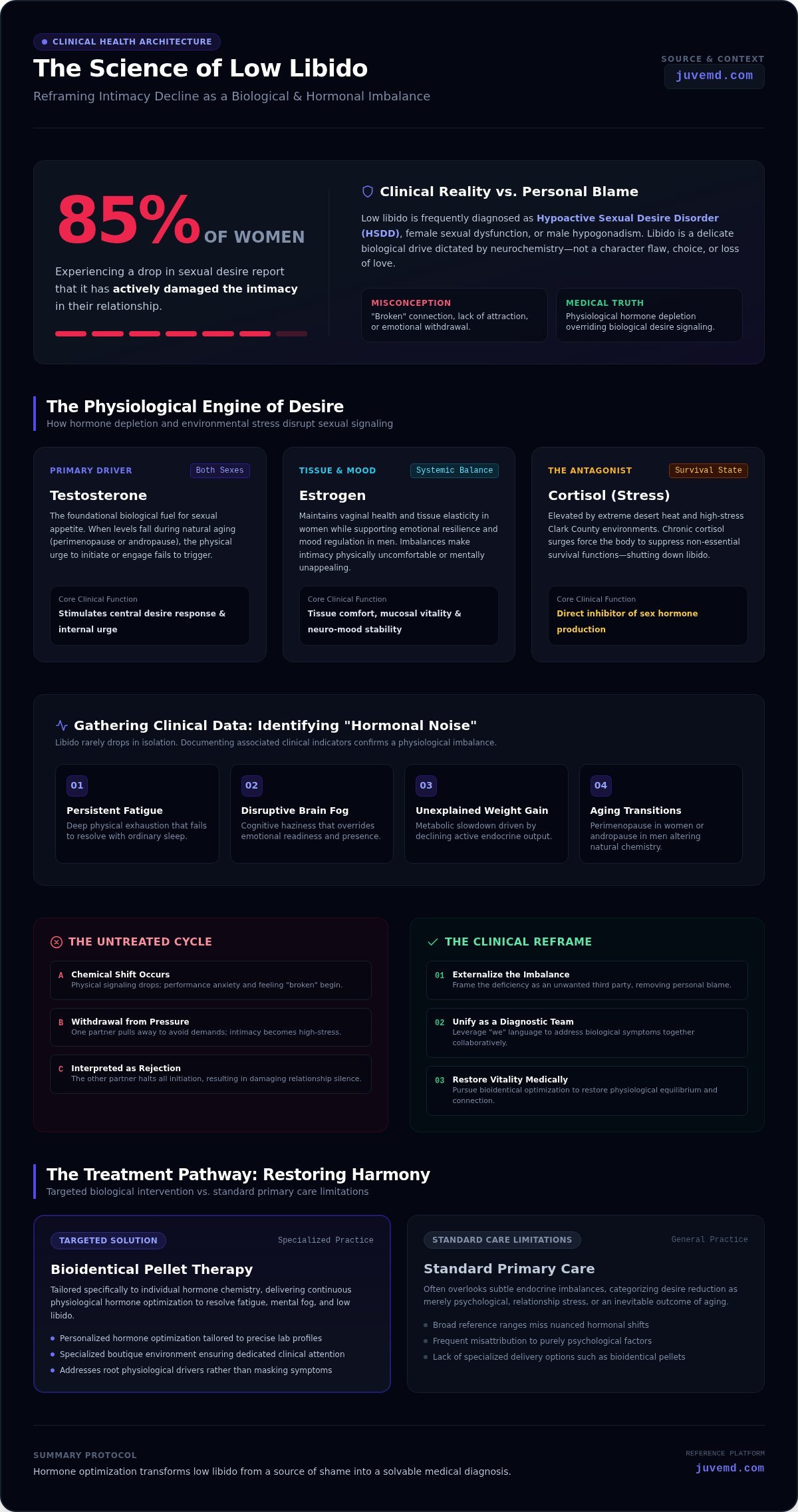
Did you know that 85% of women experiencing a drop in sexual desire report that it has actively damaged the intimacy in their relationship? It’s a heavy burden to carry, especially when you feel “broken” or fear that your partner will mistake a biological shift for a lack of attraction. If you’re searching for hormone therapy for low libido Las Vegas, you already know that this isn’t just in your head; it’s a clinical reality that deserves a clinical solution. You likely feel a mix of anxiety and shame, worrying that bringing it up will only cause more distance between you and the person you love.
We’re here to help you bridge that gap by reframing the conversation entirely. In this guide, you’ll learn the exact medical framework and communication scripts needed to discuss low libido with your partner while shifting the focus from personal blame to biological evidence. We’ll move through the “how” and “why” of hormonal imbalances, explaining how bioidentical pellet therapy can restore your vitality and sense of self. By the end, you’ll have a clear path toward medical treatment and a strategy to restore the harmony and connection your relationship deserves.
Key Takeaways
- Shift your perspective by viewing low libido as a clinical symptom of hormonal imbalance rather than a personal failure or relationship issue.
- Utilize a structured five-step communication framework to discuss intimacy changes with your partner in a way that prioritizes vulnerability and mutual support.
- Learn to address emotional roadblocks and common partner concerns by providing evidence-based reassurance and clinical context.
- Discover how personalized hormone therapy for low libido Las Vegas restores biological balance and revitalizes your connection through Bioidentical Pellet Therapy.
- Understand why seeking care in a specialized boutique environment ensures a more focused and effective approach to hormone optimization than standard primary care.
Understanding the Science of Low Libido as a Medical Symptom
Low libido is often characterized by a persistent or recurrent deficiency of sexual fantasies and desire for sexual activity that causes marked distress. In a clinical setting, this is frequently diagnosed as hypoactive sexual desire disorder (HSDD). It is essential to recognize that libido is a biological drive influenced by a delicate chemical balance within the body. When this balance shifts, the “hunger” for intimacy can vanish regardless of how much you love your partner. This isn’t a choice or a personality trait; it’s a physiological state.
Both men and women rely on a precise ratio of testosterone and estrogen to maintain sexual health. While testosterone is the primary driver of desire in both sexes, estrogen levels play a critical role in vaginal health for women and mood regulation for men. When these levels drop, the physical urge to connect simply isn’t triggered. Living in Las Vegas introduces unique environmental stressors that can exacerbate these issues. The extreme desert heat and the high-octane, high-stress lifestyle often found in Clark County can lead to chronically elevated cortisol levels. Cortisol, the “stress hormone,” acts as a biological antagonist to sex hormones, effectively shutting down non-essential functions like libido to prioritize survival. This is why seeking hormone therapy for low libido Las Vegas is a logical step for residents who feel their vitality has been drained by their environment.
Why It’s Not Just ‘In Your Head’
While psychological factors like stress or body image certainly matter, physiological hormone decline is often the silent culprit. As we age, we enter phases like perimenopause or andropause where hormone production slows significantly. This creates “hormonal noise,” a state of physical fatigue and brain fog that overrides emotional attraction. It’s not that you don’t want to want your partner. Instead, your body’s internal signaling system is failing to send the right messages. Differentiating between a mental block and a hormone deficiency is the first step toward effective treatment.
The Role of Hormone Imbalance in Relationship Strain
Untreated hormone imbalances frequently trigger a destructive cycle of rejection and withdrawal. One partner feels “broken” and retreats to avoid the pressure of performance, while the other feels rejected and eventually stops initiating altogether. This silence is far more damaging than the medical truth. Validating that your body is undergoing a chemical shift can alleviate the pressure. Your partner likely feels the shift in energy too, and naming it as a medical symptom allows you both to face the problem together as a team rather than as adversaries.
Preparing Your Mindset: Shifting from Shame to Science
Before you sit down with your partner, you must first address the internal dialogue that often accompanies a drop in desire. Many people fall into a “shame spiral,” feeling as though they’re failing their relationship or letting their partner down. It’s vital to pivot from a mindset of failure to one of a patient seeking answers. When you view yourself through a clinical lens, you realize that low libido is simply a symptom of a larger physiological picture. This perspective shift is the foundation for successfully seeking hormone therapy for low libido Las Vegas, as it allows you to communicate from a place of empowerment rather than apology.
Start by gathering your “data.” Libido rarely exists in a vacuum, and you’ve likely noticed other signs of hormonal decline that affect your quality of life. These might include persistent fatigue, unexplained weight gain, or disruptive brain fog. These are all clinical indicators of female sexual dysfunction or male hypogonadism, which are medical conditions, not character flaws. By documenting these symptoms, you move the conversation toward a goal of health optimization. This is a collaborative effort to restore your vitality and overall well-being.
Externalizing the Problem
One of the most effective ways to reduce tension is to externalize the issue. Instead of saying, “I don’t want to be intimate,” try using “we” language. Frame the hormone imbalance as a third party that has temporarily moved into your relationship. For example, you might say, “We haven’t been as connected lately because my hormones are out of balance.” This removes blame from both parties and positions you and your partner on the same side, fighting against a biological obstacle. It’s much easier to tackle a medical hurdle together than it is to navigate the pain of perceived personal rejection.
The Power of Education
Coming to the table with facts replaces uncertainty with a clear roadmap for the future. Researching your options beforehand gives you the confidence to explain that this is a fixable medical issue. Reviewing the Bioidentical Hormone Replacement Therapy Las Vegas Guide provides the clinical context needed to show your partner that a solution exists. When you can explain how hormone therapy for low libido Las Vegas works to stabilize your internal chemistry, the problem feels manageable rather than permanent. Education transforms a vague, emotional worry into a concrete medical plan. If you’re ready to explore these biological solutions, you can schedule a personalized wellness assessment to begin your journey toward restoration.
The Communication Framework: 5 Steps for a Productive Conversation
Approaching this topic requires a balance of empathy and clinical objectivity. The goal is to move the discussion away from the emotional weight of rejection and toward a shared medical objective. Success begins with a structured approach that prioritizes clarity over conflict. By following a specific framework, you can ensure your partner feels valued while you advocate for your own health needs.
- Step 1: Select the Environment. Timing is everything. Choose a neutral location away from the bedroom, such as a quiet walk or a relaxed dinner at home. This detaches the conversation from the immediate pressure of sexual performance, allowing for a more logical exchange.
- Step 2: Lead with Vulnerability. Start by reaffirming your bond. When communicating with a partner about low libido, it’s essential to state clearly that your love and attraction haven’t changed.
- Step 3: Introduce the Biological Factor. Explain that you’ve been researching the role of hormones like testosterone and estrogen. Mention that you suspect a chemical imbalance is affecting your drive.
- Step 4: Collaborative Solution-Seeking. Ask for their support as you explore treatment options. This shifts the dynamic from “my problem” to “our journey toward wellness.”
- Step 5: Define the Action Item. Conclude by suggesting a professional evaluation. A consultation for hormone therapy for low libido Las Vegas provides the diagnostic data needed to move forward.
The ‘Attraction First’ Reassurance
The most common fear for a partner is that the lack of desire is a sign of fading attraction. Address this head-on. You might say: “I love you and find you deeply attractive, but I’ve noticed a change in how my body responds.” This separates your emotional devotion from your physical drive. Maintain non-sexual physical touch, like holding hands or sitting close, to reinforce that your connection remains strong even while your libido is in a clinical dip.
Scripting the Medical Pivot
Once you’ve established emotional safety, pivot to the science. Explain that your low desire is part of a larger cluster of symptoms. You might say: “I’ve been reading about how testosterone and estrogen affect drive, and I realized I’m also feeling tired and foggy lately.” For men, discussing Testosterone Pellet Therapy in Las Vegas is a constructive way to present a gold-standard solution. This clinical framing helps your partner understand that hormone therapy for low libido Las Vegas isn’t just about sex; it’s about restoring your total health and vitality.
Navigating Common Reactions and Emotional Roadblocks
Even with a medical framework in place, your partner might still ask the difficult question: “Is it me?” It’s a natural human response to feel a sense of personal rejection when intimacy fades. You must meet this reaction with steady, clinical facts. Explain that while your emotional bond is intact, the biological “switch” that triggers desire is currently stuck in the off position. This isn’t a reflection of their desirability or your love. It’s an endocrine issue that requires professional intervention through hormone therapy for low libido Las Vegas. By keeping the focus on chemistry, you protect your partner’s self-esteem while advocating for your health.
Addressing the ‘Attraction’ Misconception
To help your partner understand the disconnect, try using the “hunger” analogy. You can deeply love a specific restaurant and appreciate everything on the menu, but if your metabolism is off or you’re physically ill, you simply won’t feel hungry. Libido works in much the same way. It’s a physiological signal, not a conscious choice you make every day. For women, providing educational resources like this guide on Hormone Pellet Therapy for Women in Las Vegas can help validate that these changes are common and medically treatable.
You may also encounter the myth that you can “just get over it” or “try harder” to be in the mood. It’s important to clarify that willpower cannot fix a testosterone deficiency or an estrogen imbalance. Trying harder without addressing the underlying biology often leads to performance anxiety, which only worsens the distance between you. Be firm but kind in explaining that you’re seeking a medical solution because you want to restore your vitality, not just for yourself, but for the long-term harmony of the relationship.
When the Partner Wants to Help
If your partner is eager to support you, invite them into the clinical process. Suggesting they attend your initial consultation at JuveMD can be incredibly grounding for both of you. It allows them to hear the diagnostic data directly from a specialist and ask their own questions about the treatment plan. This transforms them from a confused bystander into a supportive partner in your health optimization. It also reinforces the idea that this is a medical journey you are taking together.
Managing expectations is also a key part of this journey. Recovery isn’t instantaneous. Most patients start to feel a significant shift in their energy and drive within a “30-day recovery” window after starting hormone therapy for low libido Las Vegas. Building a shared goal around this timeline helps both of you stay patient and optimistic as your body recalibrates. If you’re ready to take the next step together, you can request a consultation at JuveMD to begin your personalized optimization plan.
Moving Toward Solutions: Hormone Optimization in Las Vegas
Once you have navigated the initial conversation with your partner, the focus shifts from communication to clinical action. Many patients find that their general practitioner may dismiss low libido as a standard part of aging if lab results fall within a broad “normal” range. However, a specialized clinic understands that “normal” is not the same as “optimal.” Seeking hormone therapy for low libido Las Vegas at a dedicated center ensures you receive care from experts who prioritize your specific quality of life over generic medical averages. This specialized focus is what allows for true restoration rather than just symptom management.
We utilize Bioidentical Pellet Therapy as our primary method of delivery because it offers a steady-state release of hormones. Unlike topical creams or weekly injections that can cause significant emotional and physical fluctuations, pellets provide a consistent dose that mimics the body’s natural rhythm. This steady delivery is crucial for stabilizing the neurochemical signals that trigger desire. Furthermore, this optimization restores far more than just libido. Patients frequently report that as their levels balance out, they experience a profound return of cognitive clarity, deeper sleep cycles, and a more resilient mood, all of which contribute to a healthier relationship dynamic.
The JuveMD Clinical Approach
Our process, led by Dr. Andrea Dempsey, begins with highly detailed lab testing that examines the interplay between your sex hormones, thyroid function, and metabolic health. We don’t believe in a one-size-fits-all protocol. Instead, we develop personalized wellness plans that address your unique biological needs. Our boutique clinic provides a discreet and professional environment in the heart of Las Vegas, ensuring that your journey toward health optimization is both private and comfortable. We focus on long-term vitality, helping you build a foundation of health that lasts well beyond 2026.
Your First Step to Reconnection
Booking an initial evaluation is the most critical step in moving from relationship strain to resolution. We often encourage a “couple’s approach” to hormonal health. When both partners understand the clinical roadmap and the biological reasons behind the changes, it fosters a supportive partnership rather than a source of tension. This transparency removes the mystery from the recovery process and allows your partner to be an active participant in your wellness journey. It’s important to remember that you aren’t alone and your symptoms are treatable. With the right medical intervention, you can restore the intimacy and harmony that define a thriving relationship.
Reclaiming Intimacy Through Clinical Clarity
You’ve learned that a drop in desire isn’t a character flaw or a sign of a failing relationship. It is a biological symptom that responds to specialized medical treatment. By shifting your mindset from shame to science, you can use the communication scripts we discussed to invite your partner into a collaborative health journey. This transparency replaces confusion with a shared goal for restoration. You’re moving toward a future where hormonal imbalance no longer interferes with your emotional connection or your sense of self.
Choosing hormone therapy for low libido Las Vegas allows you to address the root cause of your symptoms with precision. Led by Dr. Andrea Dempsey, JuveMD specializes in Bioidentical Pellet Therapy to provide steady, natural hormone delivery that avoids the peaks and valleys of other methods. Our personalized Las Vegas wellness protocols are designed to restore your energy, mood, and drive. Schedule your clinical hormone consultation with JuveMD today to begin your optimization plan. You don’t have to navigate these biological changes alone. Restoration is possible, and a vibrant, connected future is well within your reach.
Frequently Asked Questions
Is low libido a normal part of aging in 2026?
While a decline in desire is common as we age, it is not an inevitable or “normal” state you must accept in 2026. Low libido is a clinical symptom of hormonal shifts that can be corrected through targeted optimization. By addressing the biological root cause, you can maintain your vitality and connection well into your later years. It’s a medical issue that deserves a medical solution rather than silent resignation.
How do I know if my low libido is hormonal or psychological?
Diagnostic blood testing is the most reliable way to determine if your low libido is hormonal or psychological. Hormonal imbalances often present alongside physical symptoms like chronic fatigue, brain fog, and unexplained weight gain. If your desire has vanished despite a strong emotional connection to your partner, it’s likely a biological shift. Clinical evaluations at JuveMD identify these deficiencies, helping you choose the right path for hormone therapy for low libido Las Vegas.
What is the best time of day to talk to my partner about sex drive?
The ideal time for this conversation is during a neutral, low-stress period when you are both fully awake and away from the bedroom. Avoid bringing it up late at night or immediately after a rejection, as these moments are often charged with frustration. A weekend morning or a relaxed afternoon walk provides the emotional space needed for a logical discussion. This environment encourages a supportive partnership rather than a defensive reaction.
Can hormone therapy really fix a relationship issue?
Hormone therapy can effectively resolve relationship strain when the core issue is a biological desire discrepancy. While it cannot fix deep-seated personality conflicts, it removes the physical barrier of low drive that often leads to cycles of rejection and withdrawal. By restoring your natural desire, you create a foundation where intimacy can flourish again. Many couples find that optimization revitalizes their bond by bringing back the physical connection they once shared.
Will my partner think I’m making excuses by calling it a medical issue?
Most partners respond with relief rather than skepticism when you provide a clinical explanation for your changes in desire. Framing the issue as a medical condition, supported by lab work, proves that the distance isn’t a choice or a lack of attraction. It transforms the problem from a personal rejection into a shared health objective. Partners are generally more supportive when they understand that a fixable chemical imbalance is the primary culprit.
What are the first signs that hormone therapy is working for libido?
Improved sleep quality and a noticeable lift in your daily energy levels are typically the first signs that treatment is taking effect. While the return of sexual desire is the goal, your body must first restore its foundational vitality. Most patients at JuveMD notice a decrease in brain fog and a more stable mood within the first few weeks. These systemic improvements signal that your hormone levels are stabilizing, paving the way for restored libido.
Should my partner come with me to a hormone therapy consultation in Las Vegas?
Bringing your partner to your consultation in Las Vegas is highly recommended to build a shared understanding of the process. Hearing Dr. Andrea Dempsey explain the science of bioidentical pellets helps your partner see the treatment as a legitimate medical necessity. This collaborative approach ensures they know what to expect during the optimization phase. It also allows them to ask questions, which often reduces any lingering anxiety they may have about the changes.