
What if low desire during perimenopause isn’t a sign that one hormone is “out of balance,” but a response to several changes happening at once? If you’re wondering how to improve libido during perimenopause, it can help to know that vaginal discomfort, disrupted sleep, stress, mood shifts, relationship dynamics, and hormonal changes may all play a part. A change in desire can feel unexpected, and it’s understandable if it’s difficult to bring up.
There isn’t one solution that works for everyone, and online claims can make treatment options sound simpler or more certain than they are. A useful first step is to consider what has changed for you and which factors are affecting intimacy or well-being. Low-pressure adjustments may help, while persistent or distressing symptoms are worth discussing with a clinician.
This guide covers common contributors to libido changes, practical steps you can try, and signs it may be time to seek medical advice. It also explains how to prepare for a conversation about individualized options, including hormone-related care, without assuming any treatment will guarantee a change in desire.
Key Takeaways
- Learn how to improve libido during perimenopause by noticing patterns in desire, comfort, sleep, mood, stress, and medication changes.
- Use brief symptom notes to prepare for a clinical conversation, not to diagnose yourself.
- Talk about intimacy and make room for connection without pressure or expectations.
- Understand how a clinician may weigh symptoms, health history, risks, and preferences when discussing care options.
- Bring a concise timeline and questions to an appointment if the change is distressing or affecting your well-being.
How Perimenopause Can Affect Libido, and Why Desire Changes
A change in sexual desire can feel personal or confusing, especially if it differs from what you’re used to. It’s also a valid health concern to discuss. Perimenopause is the transition leading up to menopause, when menstrual cycles and hormone patterns change. Menopause is identified after 12 consecutive months without a menstrual period; symptoms and timing during the transition vary from person to person.
Libido is interest or desire for sexual activity; it isn’t the same as sexual function or comfort. You may feel desire but experience pain or dryness, or feel physically comfortable without much interest. The broad concept of Libido can help orient you, but your experience is shaped by more than one biological factor.
Which perimenopause-related changes may influence desire?
Hormone patterns shift during the transition, but a hormone level alone can’t predict how much desire someone will feel. Changes in sleep, mood, and stress can also affect energy, attention, and interest in intimacy. For example, repeated night waking may leave you tired, while anxiety or low mood can make connection feel less appealing.
Some people develop vaginal or urinary symptoms associated with genitourinary changes around menopause. Vaginal dryness, irritation, or discomfort during sex can make intimacy less comfortable, and urinary symptoms can add to the strain. These experiences don’t mean desire is “all in your head,” and they don’t automatically point to one treatment. They are possible contributors to mention in a clinical conversation.
Why libido is not a simple hormone test
Desire differs between individuals and can change across life stages, relationships, and circumstances. Health conditions, medication changes, emotional well-being, relationship dynamics, privacy, and life stress may all influence whether intimacy feels inviting. Several factors can overlap, such as poor sleep alongside discomfort or a demanding period at work.
Low desire by itself doesn’t establish a hormone deficiency or reveal a single cause. A clinician can consider the full picture, including your symptoms, health history, medications, and concerns, rather than treating one number as an explanation. If you’re exploring how to improve libido during perimenopause, identifying what has changed for you is a more useful starting point than assuming one hormone explains everything.
How to Identify What May Be Affecting Your Perimenopause Libido
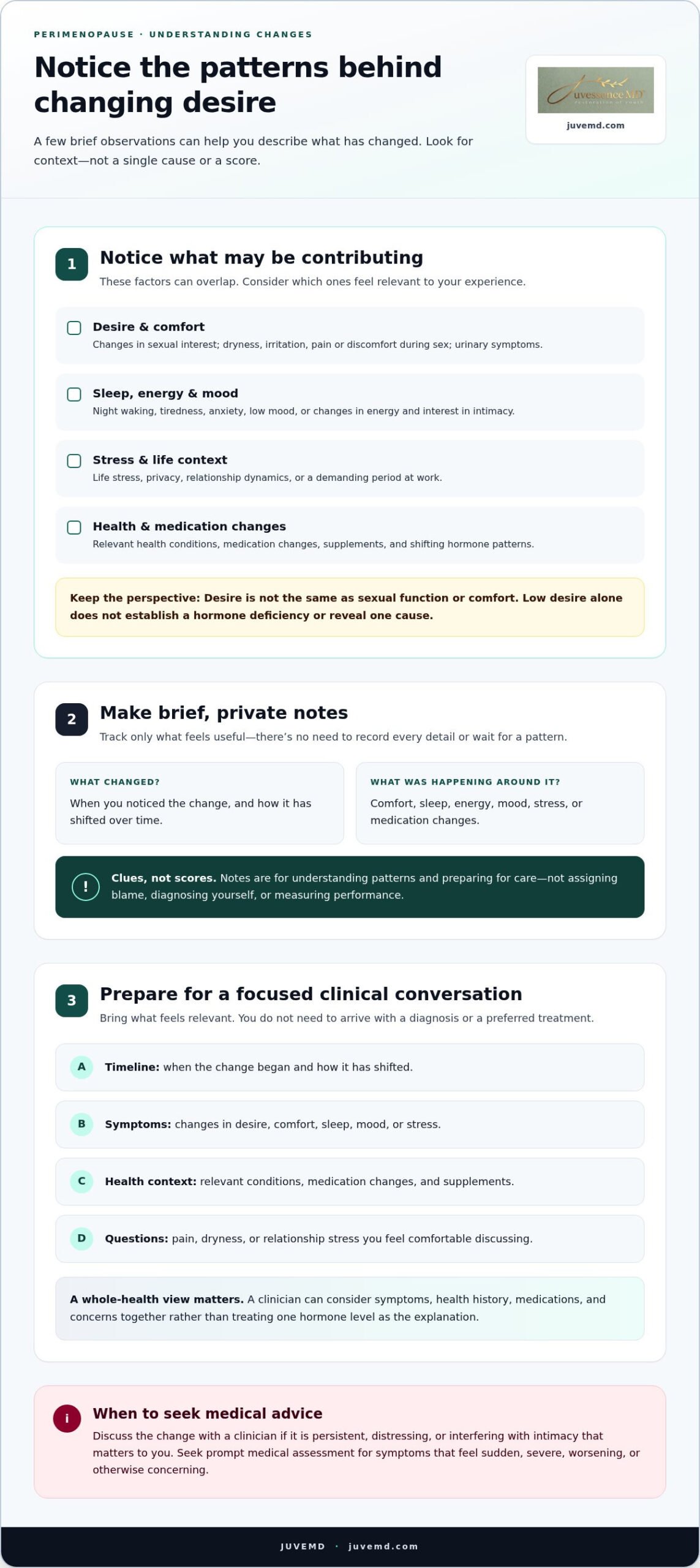
Start with curiosity, not self-diagnosis. A few observations can help you describe what’s changed and decide whether it’s affecting your well-being or intimacy you value. You don’t need to track every detail or wait for a particular pattern before seeking care. The goal is to give yourself and a clinician a clearer starting point.
Track patterns without turning intimacy into a performance test
If it feels useful, make brief private notes about desire and the context around it. Include comfort, energy, sleep, mood, stress, and any medication changes. You might notice that interest shifts after several poor nights of sleep, or that discomfort is more prominent than a lack of desire. Treat these notes as clues, not scores. There’s no target to reach; the purpose is to understand patterns, not assign blame.
The Office on Women’s Health offers a patient-friendly overview of Menopause and sexuality. Use it to prepare questions, while keeping your own experience central. Consider whether the change is persistent, distressing, or interfering with intimacy that matters to you. If so, discussing it with a clinician is reasonable; you don’t have to wait until it feels severe.
Prepare for a focused clinical conversation
A short list can make an appointment feel more manageable. Consider bringing:
- When you noticed the change and how it has shifted over time
- Changes in desire, comfort, sleep, mood, or stress
- Relevant health conditions, medication changes, and supplements
- Questions about symptoms such as pain or dryness, and any relationship stress you feel comfortable discussing
A whole-health assessment can be more useful than looking at one symptom alone, because desire may be shaped by overlapping physical, emotional, medication-related, and relationship factors. Mention what feels relevant, even if it’s difficult to explain. You can also say what you hope to understand or change, without arriving with a diagnosis or preferred treatment.
Seek prompt medical assessment for symptoms that feel sudden, severe, worsening, or otherwise concerning. If you’re considering how to improve libido during perimenopause, a personalized conversation about your symptoms and health history can help clarify possible next steps. JuveMD provides hormone-related care and monitoring in Las Vegas. Read about hormone health care.
Practical Ways to Support Libido During Perimenopause
There’s no single routine that reliably restores desire, but supportive changes can make intimacy feel more comfortable and less pressured. Think of these steps as ways to care for your overall well-being, not as a test you have to pass or a replacement for medical care when symptoms persist.
Address comfort, stress, and connection
Start with an honest, non-blaming conversation with a partner, if that feels safe and appropriate. You might explain what has changed, share what feels comfortable now, and discuss forms of affection or intimacy that don’t create pressure for sex. Allowing time for closeness without expecting a particular outcome may help connection feel more inviting.
Discomfort deserves attention. Vaginal dryness, pain, or urinary symptoms shouldn’t be dismissed as an inevitable part of aging. The Menopause Society’s sexual health guidance discusses menopause-related changes and potential care approaches. A clinician can assess persistent symptoms and discuss options that may suit your health history and preferences. Don’t assume a product or treatment is right for everyone.
Review health habits and medications thoughtfully
Sleep disruption, ongoing stress, and low energy can make intimacy harder to prioritize. Consider what might support rest and reduce strain in your daily routine. Keep expectations realistic: better sleep or less stress may improve how you feel overall, but neither guarantees a change in libido. Movement that feels manageable and enjoyable can support general health without becoming another obligation.
Alcohol use and medication changes may also be relevant to discuss. Some medicines can affect sexual interest or function, but don’t stop or change a prescribed medication on your own. A clinician can review possible effects alongside your symptoms and health needs.
If you’re considering how to improve libido during perimenopause, start with one or two low-pressure changes that fit your circumstances, then notice whether comfort, energy, or connection shifts. For more context on individualized care discussions, read about perimenopause hormone therapy options in Las Vegas. Hormone-related treatment may be part of a conversation for some people, but suitability and expected benefits need to be considered individually.
Comparing Clinical Options for Perimenopause-Related Libido Concerns
Clinical care can begin with understanding the concern rather than choosing a treatment immediately. Depending on what’s affecting desire, the next step may focus on discomfort, sleep, mood, medication effects, or a broader discussion of hormone therapy. These approaches aren’t interchangeable, and none can guarantee increased libido. Suitability depends on symptoms, medical history, potential risks, preferences, and clinician judgment.
| Potential focus | Clinical discussion | Individualized considerations |
|---|---|---|
| Understanding the change | Review of symptoms, health history, medications, and relevant examination or testing when appropriate | Evaluation depends on the clinical context; libido changes alone don’t establish a hormone deficiency |
| A specific symptom affecting intimacy | Discuss care directed at concerns such as vaginal discomfort, sleep disruption, or mood changes | The likely contributor, other health factors, and personal preferences help guide the conversation |
| Hormone-related symptoms | Consider whether hormone therapy is appropriate for the symptoms and overall health picture | Potential benefits, risks, formulation, and follow-up require individualized review |
What a clinician may assess before discussing treatment
A clinician may ask when the change began, which symptoms occur alongside it, and how it affects your well-being. They may review your health history and medications, and consider an examination or testing when appropriate. Testing isn’t automatically needed for every person; decisions should reflect the whole clinical picture. For broader background, see bioidentical hormone replacement therapy in Las Vegas.
If hormone therapy comes up, clarify which symptom it is intended to address. Estrogen may be discussed for certain menopause-related symptoms, including vaginal discomfort, but that doesn’t mean it will directly increase desire for everyone. Testosterone is sometimes prescribed off-label for low desire in women; it isn’t FDA-approved for this use, so potential benefits and risks require a careful clinician discussion. Pellet therapy should not be assumed to be a proven or universal solution for libido.
Questions to ask about benefits, risks, and expectations
Before deciding, consider asking: What symptom is this option meant to target? What outcome is realistic? What potential risks and alternatives should I understand? What follow-up is needed, and how will we review whether it’s helping? Clear answers can make a treatment discussion more useful and help align next steps with your priorities.
JuveMD provides personalized hormone-related care and monitoring in Las Vegas. The clinic offers bioidentical pellet hormone therapy, but whether hormone-related care is relevant to a libido concern is an individualized clinical question. More information is available through JuveMD’s hormone health care.
When to Seek Help for Perimenopause Libido Changes in Las Vegas
You can seek care if a change in desire is causing distress, affecting intimacy that matters to you, or raising questions about your health. There’s no need to wait until the concern becomes severe. A clinical conversation can help put symptoms in context and identify whether next steps are appropriate.
What to expect from an individualized discussion
A focused conversation may cover what has changed, when it began, which symptoms accompany it, and what you’d like help understanding. Your clinician may also review your medical history and medications, then discuss possible next steps in light of your circumstances. Treatment decisions and monitoring should be individualized. For background on one hormone-related approach, read about hormone pellet therapy for women in Las Vegas.
Preparing a few notes can make it easier to start. Consider bringing:
- A brief timeline of changes in desire and related symptoms
- Relevant medication or health history
- Questions about possible causes and options
- Your priorities, including what you hope may improve and what concerns you
You don’t need to have a diagnosis or treatment preference before the discussion. It’s reasonable to ask what an option is intended to address, what benefits and risks apply to your situation, and how you and your clinician would review your response over time.
Explore hormone-health care with JuveMD
JuveMD is a Las Vegas clinic focused on hormonal health and wellness, offering personalized hormone-related care and monitoring. A clinical conversation can explore whether hormone-related care is relevant to your concerns alongside your broader health context. Suitability and effects vary, and no treatment should be presented as a guaranteed way to increase desire.
Understanding how to improve libido during perimenopause starts with recognizing that desire can have several contributors, considering practical supportive steps, and seeking an individualized assessment when the change affects your well-being. JuveMD’s hormone-health information is available at JuveMD.
Take a Thoughtful Next Step for Your Sexual Well-Being
There’s no single explanation or universal fix for changing desire during perimenopause. Start by noticing what has shifted, including comfort, sleep, mood, stress, or medications. Then consider which supportive changes feel manageable and whether the concern is affecting your well-being. That fuller picture can help you discuss how to improve libido during perimenopause without assuming one hormone or treatment holds the answer.
If symptoms persist or feel distressing, a clinician can help review your concerns, health history, and possible next steps. Treatment decisions should be individualized, and no option can promise a specific change in desire.
JuveMD, led by Dr. Andrea Dempsey, provides personalized hormone-related care and monitoring in Las Vegas. Explore personalized hormone-health care with JuveMD to take a next step toward an individualized clinical conversation. You deserve clear information and care that respects your experience.
Frequently Asked Questions
Is low libido a normal part of perimenopause?
Desire can change during perimenopause, but experiences differ, and low libido isn’t inevitable for everyone. A change may relate to sleep, mood, physical symptoms, medications, overall health, or relationship context. Common doesn’t mean you have to ignore distress or discomfort. If the change feels troubling or persists, consider discussing it with a clinician. They can review your circumstances and explore possible contributors without assuming a single cause.
Can hormone therapy improve libido during perimenopause?
Hormone therapy may be discussed in some clinical situations, but it isn’t a guaranteed treatment for low libido. Whether it’s suitable depends on your symptoms, health history, potential risks, preferences, and a clinician’s assessment. Ask what specific concern a proposed treatment is intended to address and what benefits are realistic. A hormone level or treatment plan can’t be assumed to restore desire, and decisions should follow current clinical guidance.
How can I increase my libido naturally during perimenopause?
Supportive steps may include addressing sleep and stress, communicating with a partner about intimacy, and seeking care for discomfort. These practices can support overall well-being, but they don’t guarantee a change in desire. A clinician can review health factors and medications that may be relevant. Don’t stop a prescribed medication or start hormone products on your own. When considering how to improve libido during perimenopause, focus on your circumstances rather than relying on a one-size-fits-all routine.
Can vaginal dryness affect libido during perimenopause?
Yes. Vaginal dryness or related discomfort can make intimacy less appealing for some people, though experiences vary. Persistent dryness, pain, or other vaginal symptoms deserve assessment and a conversation about suitable options. Don’t assume dryness is the only reason desire has changed, since other physical, emotional, medication-related, or relationship factors may contribute. A clinician can consider your health context and discuss care choices without prescribing a one-size-fits-all approach.
When should I talk to a doctor about low libido during perimenopause?
Consider talking with a clinician if a change in desire causes distress, affects your well-being, or occurs alongside symptoms that concern you. You can bring a brief timeline of changes, a medication list, and questions about possible contributors and options. A clinician can review your health context and discuss next steps that fit your needs. There’s no need to wait for a specific threshold, and not every change requires treatment.
Does testosterone therapy help libido during perimenopause?
Testosterone is a topic for careful, individualized medical assessment, not a recommendation for everyone experiencing low desire. In some clinical contexts, a clinician may discuss it, including potential off-label use. Evidence, possible risks, eligibility, and appropriate monitoring should be reviewed using current guidance and your health history. No outcome can be promised. Ask what symptom the treatment is meant to address and how its benefits and risks would be assessed for you.