
Hormone therapy may ease some menopause-related symptoms, but it isn’t a universal fix or a treatment for depression. If you’re considering hormone therapy to feel like yourself again, whether it’s appropriate depends on your symptoms, health history, and the treatment being considered. The U.S. Food and Drug Administration says hormone therapy isn’t approved to treat depression and isn’t a first-line intervention for depressive symptoms.
It’s understandable to want clear answers before making a decision, especially when mood changes, disrupted sleep, or hot flashes affect daily life. This guide explains which symptoms hormone therapy may help with, what to know about safety and bioidentical hormones, and how treatment is monitored over time.
You’ll also learn what mood changes may look like during treatment and when improvements might begin. Some symptoms may ease within weeks, while emotional changes can take longer. Knowing what to expect can help you have a more informed conversation about your options.
Key Takeaways
- Track mood, sleep, and hot flashes separately so you can recognize which changes may be connected to treatment.
- Understand why HRT is reassessed after 6-8 weeks and what may guide a dose adjustment.
- Learn how HRT’s effects on mood differ from treatment for depression.
- Compare bioidentical hormone therapy with other options, including what the term “bioidentical” means.
- Explore how Bioidentical Pellet Hormone Therapy may fit into a personalized approach to hormonal health.
How long does it take for HRT to improve mood swings?
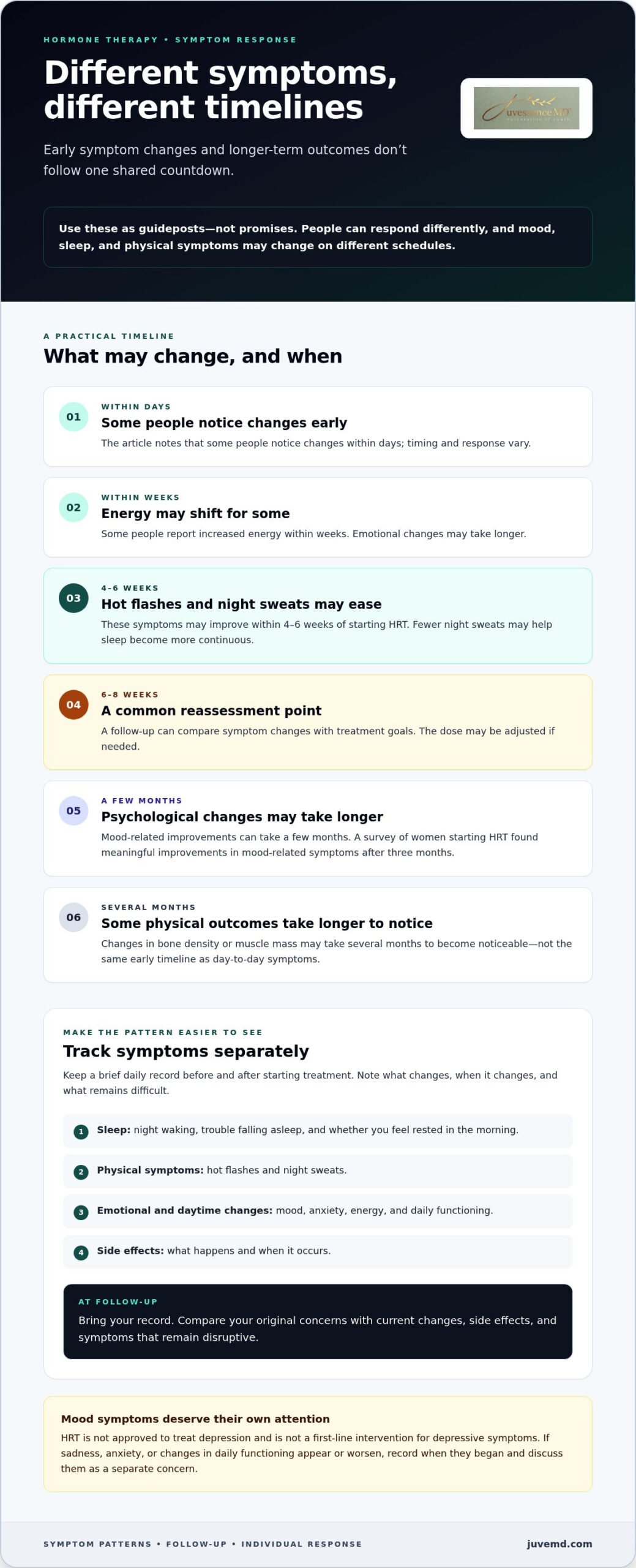
HRT may ease mood swings indirectly when it reduces symptoms that interfere with sleep. Hot flashes and night sweats may improve within 4-6 weeks, while psychological changes can take a few months.
HRT Effects on Mood and Sleep
Hormone therapy may support mood and sleep by easing night sweats and stabilizing hormone fluctuations. Repeated nighttime waking can leave you fatigued and less emotionally steady during the day. Someone might describe the hope as, “I’m considering hormone therapy to feel like myself again.” Tracking sleep and mood separately makes that goal more specific.
Hot flashes and night sweats may improve within 4-6 weeks of starting HRT. Some people notice changes within days, while psychological improvements can take a few months. These are different timelines, not one countdown to feeling better. A survey of women starting HRT found meaningful improvements in mood-related symptoms after three months.
Sleep quality involves more than avoiding night sweats. Note whether you wake often, struggle to fall asleep, or feel rested in the morning. For example, fewer night sweats may lead to more continuous sleep while daytime fatigue remains. Tracking these signs separately gives a clearer picture than judging progress by one difficult night.
BHRT, Mood, Sleep, and Energy
Bioidentical hormone therapy, or BHRT, may address hormone-related symptoms. Its potential relevance to mood, sleep, and energy depends on the symptoms involved: night sweats can interrupt rest, and poor rest can affect daytime motivation. Some people report increased energy within weeks, while emotional changes may take longer.
Low estrogen in women and low testosterone in men may worsen anxiety. Anxiety can make it harder to settle at bedtime, while disrupted sleep may add to fatigue and make mood swings harder to manage. If anxiety persists as hot flashes improve, record that difference rather than treating every symptom as one result.
Keep a daily note of sleep interruptions, hot flashes, anxiety, energy, and mood. Compare patterns over several weeks, including changes in comfort and daytime functioning. At follow-up, a clear record can help show what changed first and what remains difficult. A person might say, “I want hormone therapy to feel like myself again,” then identify which symptoms that means improving.
Ongoing monitoring and treatment adjustments
HRT monitoring compares symptom changes with treatment goals over time. A common reassessment point is 6-8 weeks, when the dose may be adjusted if needed.
Individual Responses and Treatment Choices
People can respond differently to hormone treatment, so choices should reflect their symptoms and progress. One person may focus on sleep disruption, while another tracks mood changes or fatigue. That distinction matters: monitoring the symptoms that affect daily life helps show whether the current approach is meeting its goals.
Keep a brief record before and after starting treatment. Note changes in sleep, mood, energy, and any side effects, including when they occur. For example, if sleep improves but fatigue remains, that pattern offers a clearer basis for reviewing treatment than a general impression that you feel better or worse.
HRT Evaluation and Treatment Planning
An HRT evaluation connects a person’s symptoms with a treatment plan and follow-up goals. Planning should address what the person wants to improve, rather than treating every symptom as the same problem.
Before a medical discussion, list the symptoms that interfere most with daily routines and when they began. Include a concrete example, such as waking repeatedly or losing focus during work. A doctor can use those details, together with your medical history, to discuss whether HRT fits your needs and what changes to track.
Treatment Adjustments and Follow-Up
Follow-up allows the treatment plan to be reviewed against real changes, with reassessment commonly occurring after 6-8 weeks. That timing gives the person and doctor an opportunity to discuss symptom patterns and consider a dose adjustment when needed.
Bring your symptom record to the review. Compare your original concerns with current changes, including side effects and symptoms that remain disruptive. Improvements in bone density or muscle mass may take several months to become noticeable, so don’t judge these outcomes on the same early timeline as day-to-day symptoms.
Marianne’s Treatment Experience
Marianne’s experience highlights the role of preparation and recognizing symptoms. Four years before turning 50, she began focusing on getting fit and healthy in preparation for menopause. In 2017, she realized that she and a close friend were both experiencing menopause symptoms.
Her story isn’t a treatment timeline or proof that one plan suits everyone. It shows why noticing patterns matters: Marianne connected her own experience with changes shared by someone close to her. If you’re considering HRT, recording symptoms and discussing specific goals can make treatment planning more focused.
Can HRT cause mental health issues?
Mood changes during hormone replacement deserve attention, but they don’t automatically show that treatment caused them. Hormone type, delivery method, symptoms such as night sweats, and the timing of changes all matter when interpreting them.
The U.S. Food and Drug Administration says hormone therapy isn’t approved to treat depression and isn’t a first-line intervention for depressive symptoms. Treatment for hormone-related symptoms shouldn’t be treated as a substitute for care focused on depression. If sadness, anxiety, or changes in daily functioning appear or worsen, record when they began and discuss them as a separate concern.
One study examined an estrogen patch in 50 perimenopausal women with depression over 12 weeks. Depression went into remission for 68% of participants receiving the patch, compared with 20% receiving placebo. Those results describe that study group and treatment period. They don’t establish that every HRT formulation has the same effect, or that hormone therapy is a general depression treatment.
Delivery method also shapes what a study can tell you. A separate four-year study enrolled 693 recently postmenopausal women in three randomized treatment groups, comparing oral estrogen, transdermal estrogen, and placebo. Its design included different formulations and routes, but the available result here does not report mental health outcomes. It therefore shouldn’t be used to claim that one route prevents or causes mood symptoms.
A practical first step is to keep a dated record of mood, sleep, and hormone treatment. Note the formulation and route shown on your treatment plan, then record changes such as new anxiety, irritability, or waking after night sweats. Add relevant lifestyle context, such as a disrupted sleep schedule. This timeline helps distinguish a symptom pattern from a single difficult day without assuming the cause.
Estrogen and progesterone are distinct hormones, not interchangeable labels for every treatment. Don’t infer a mental health effect from a hormone name alone; consider the formulation, delivery method, treatment timing, and symptoms recorded. The same applies to hormone levels: one measurement cannot explain every mood change without clinical context.
If low mood persists or interferes with daily life, describe that directly during medical follow-up. Bring your symptom timeline and note whether changes began before or after treatment. Separating depression concerns from hot flashes, sleep disruption, and other symptoms keeps the discussion focused: what needs attention, and what does the treatment pattern show?
Menopause and perimenopause symptoms
Menopause and perimenopause can involve physical and emotional symptoms that affect sleep, energy, and daily routines. Fatigue, mood swings, weight gain, hot flashes, and decreased libido are among the symptoms hormone therapy may address.
Symptoms can overlap, so patients can note what changes and when. For example, record whether irritability occurs alongside poor sleep, or whether hot flashes interrupt a usual routine. Up to 70% of perimenopausal women experience irritability, and more than 40% of menopausal women have trouble sleeping. These figures show why a symptom-focused consultation can be more useful than describing the experience as simply feeling unlike yourself.
Sleep loss and mood symptoms also deserve separate attention. Over 80% of menopausal women experience sleep loss, and over 30% experience depression during menopause. In a survey of 978 perimenopausal and postmenopausal women starting HRT, 90% reported irritability. These findings describe groups, not an individual diagnosis. A dated symptom record helps distinguish low mood, irritability, and sleep disruption during a medical discussion.
Muscle strength is another area to discuss. A 20-week controlled trial examined how resistance training affected body composition in middle-aged women, depending on menopause. The available finding describes the trial’s focus, not a specific outcome. If hormones are broadly settled but you still don’t feel like yourself, strength work, nutrition, sleep habits, and stress regulation may need deliberate attention.
Nutrition discussions are most useful when tied to everyday examples, such as meal patterns, appetite changes, and energy across the day. Bring those details to a menopause consultation alongside your symptoms and treatment goals. A menopause-focused evaluation can help organize these concerns, rather than treating each change as unrelated.
Menopause isn’t the only life stage associated with hormone-related symptoms. If you’re experiencing menopause or andropause alongside prolonged anxiety, discuss potential treatments or medication with your doctor. For a consultation, note when the anxiety began and whether sleep, mood, or other symptoms changed at the same time.
Testosterone therapy may address symptoms linked to low testosterone. Its risks include treatment-related effects and concerns about whether it is suitable; medical history, symptoms, and treatment choice are central to weighing them.
Bioidentical hormone therapy
Bioidentical hormone therapy uses hormones with the same molecular structure as hormones naturally found in the body. That describes the term, but it doesn’t establish which treatment is appropriate for you.
Bioidentical hormones are made from synthetic plant-based material. “Bioidentical” describes molecular structure, not whether a treatment is FDA-approved or compounded. The distinction matters when comparing treatment options, because product status and preparation are separate from the hormone’s structure.
Approved and Compounded Hormone Options
FDA-approved hormone therapy and compounded bioidentical hormones differ in the status and preparation of the finished product. FDA-approved therapies have approval for specific uses, while compounded preparations are made by combining or altering ingredients for an individual prescription.
Both may use bioidentical hormones, so the word alone doesn’t tell you whether a product is FDA-approved. Ask which hormone and formulation a treatment contains, and whether the finished product is approved or compounded. This distinction helps you compare options without assuming that “bioidentical” automatically means safer, more effective, or better matched to an imbalance.
Bioidentical hormone therapy may address symptoms such as hot flashes, but it isn’t suitable for everyone. Treatment choices depend on symptoms and health context, not simply a goal of changing weight or achieving hormone “balance.” Some patients experience breast tenderness or slight bloating; these minor side effects usually resolve within a few weeks.
Hormone Therapy Costs and Insurance
With insurance, what a patient pays depends on plan coverage and the prescribed treatment.
Cost depends on the formulation, delivery method, and insurance coverage. The exact amount depends on the case and is provided after a quote request. These factors matter because hormone replacement therapy can involve different products and routes, and coverage varies by plan.
Consider the treatment goal alongside the formulation. For example, someone focused on hot flashes may discuss symptom relief, while another person may prioritize sleep or mood changes. HRT may help reduce the risk of osteoporosis and heart disease, but that potential benefit doesn’t make every formulation suitable for every patient.
Track symptoms and side effects after starting treatment, then bring your observations to follow-up. Breast tenderness or bloating, changes in hot flashes, and shifts in sleep are useful details to report. Bioidentical therapy is one treatment category, not a guarantee of a particular result or a substitute for individualized monitoring.
If you’re comparing bioidentical options, explore Bioidentical Pellet Hormone Therapy as part of a discussion about your symptoms, treatment goals, and ongoing monitoring.
JuveMD: Bioidentical Pellet Hormone Therapy
JuveMD’s Bioidentical Pellet Hormone Therapy offers a focused next step for people exploring hormone treatment after learning about symptoms, options, and monitoring. A discussion can center on your concerns, treatment goals, and whether this approach fits the questions you want answered.
Bring a concise record of symptoms and changes over time, such as shifts in sleep, mood, or energy. That context can make a treatment discussion more specific and grounded in your experience. If you’re also considering other wellness goals, JuveMD offers injectables, skin treatments, and weight-loss services.
Contact JuveMD to discuss Bioidentical Pellet Hormone Therapy and your next steps.
Make your next step personal
Start by getting clear about what you want to change. Choose the concerns that matter most in daily life, such as sleep, concentration, or emotional steadiness. Then consider what progress would look like for you, rather than relying on a broad idea of feeling better. This gives a treatment conversation a practical focus.
If you’re considering hormone therapy to help you feel like yourself again, bring your questions and symptom notes to a discussion about your options. Your goals, medical history, and response to treatment can guide what to explore and how to evaluate progress. JuveMD offers Bioidentical Pellet Hormone Therapy, injectables, and skin treatments as part of its wellness services.
Contact JuveMD to discuss your options and take a thoughtful next step toward care that reflects your needs.
Frequently Asked Questions
Is Hormone Replacement Therapy safe?
HRT safety depends on the person, the hormone, and the treatment plan. HRT can address menopause symptoms and may help reduce osteoporosis and heart disease risk, but it isn’t appropriate for everyone. Before considering it, discuss your medical history, current symptoms, and treatment goals with a healthcare provider. This information is educational only, not medical advice, and shouldn’t replace individualized care.
Can HRT help with weight gain or low energy?
HRT may address symptoms such as fatigue, but it isn’t a guaranteed weight-loss treatment. Weight changes can have multiple influences, so consider them alongside sleep, activity, appetite, and other symptoms rather than assuming hormones are the sole cause. For example, note when weight or energy changes began and whether hot flashes or disrupted sleep appeared around the same time. This context can make a treatment conversation more specific.
How Does BHRT Treatment Help Balance Out Hormone Levels?
BHRT uses bioidentical hormones, which have the same molecular structure as hormones naturally found in the body. The term describes the hormone’s structure, not a promise that levels will reach a particular target or that symptoms will resolve. For example, someone considering treatment for hot flashes can discuss the symptom, hormone type, and formulation together. Treatment choices should reflect the person’s health and goals.
How can HRT help with mental health during menopause?
HRT can support mood indirectly when it eases menopause symptoms that disrupt sleep, such as night sweats. However, the U.S. Food and Drug Administration says HRT isn’t approved to treat depression and isn’t a first-line intervention for depressive symptoms. If persistent low mood or anxiety affects daily life, describe those concerns directly to a healthcare provider instead of relying on hormone treatment alone.
How long does it take for HRT to fully work?
There isn’t one point when HRT is fully effective for everyone. Different symptoms can change on different timelines, and treatment goals may include sleep, hot flashes, or mood. Changes in bone density and muscle mass can take several months to become noticeable. Track each symptom separately and review the pattern at follow-up instead of judging treatment by one outcome.
How long does it take to see results from HRT?
Some people notice changes within days, while hot flashes and night sweats may improve within 4-6 weeks. Psychological improvements can take a few months, so mood and physical symptoms may not shift together. Record when treatment begins and note changes in sleep, hot flashes, and mood. This creates a clearer timeline to discuss at the usual 6-8-week reassessment.
How much does HRT cost without insurance?
The amount depends on the prescribed formulation, delivery method, and related care, so broad ranges don’t predict an individual’s expense. Insurance coverage also varies by plan. Compare the specific treatment and associated costs being considered, rather than assuming every hormone therapy option has the same price.
What types of hormone therapy can help someone feel like themselves again?
Options include hormone formulations that differ by hormone type and delivery method, as well as bioidentical hormone therapy. Bioidentical hormones have the same molecular structure as hormones naturally found in the body, but that label alone doesn’t determine suitability. For example, a person focused on hot flashes may discuss different goals from someone concerned about mood or sleep. The best fit depends on individual symptoms and medical history.