
Could a hormone shift be contributing to your anxiety, or might another factor be involved? If you’re researching hormone imbalance and anxiety treatment Las Vegas options, it can be hard to know where to start, especially when mood changes overlap with sleep, stress, or other symptoms.
Hormonal fluctuations can affect mood, but anxiety may have multiple contributing factors. A symptom alone can’t confirm a hormone imbalance, and hormone therapy shouldn’t be treated as a guaranteed anxiety solution. A clinical evaluation can help put your symptoms and health history in context and clarify what care may be appropriate.
This guide explains how hormonal changes and anxiety may overlap, what to discuss during an evaluation, and how to consider hormone-focused care alongside other treatment approaches. JuveMD is a Las Vegas clinic focused on hormonal health, led by Dr. Andrea Dempsey, with bioidentical pellet hormone therapy as its primary service. Knowing what to track and what to ask can help you decide whether a hormone-health discussion is a useful next step.
Key Takeaways
- Track when anxiety and changes in sleep, energy, or mood occur to give a clinician a clearer picture of your symptoms.
- Understand what a clinical evaluation may consider and why lab results need to be interpreted alongside your health history.
- Compare the questions addressed by anxiety-focused care and hormone-focused care before considering next steps for hormone imbalance and anxiety treatment Las Vegas.
- Prepare for a consultation with a symptom timeline, relevant health history, questions, and personal care goals.
- Learn how JuveMD’s hormonal-health focus and bioidentical pellet hormone therapy may fit into a broader care discussion, without assuming hormone therapy will relieve anxiety.
Hormone Imbalance and Anxiety in Las Vegas: What Symptoms Can, and Cannot, Tell You
When anxiety occurs alongside changes in sleep, energy, or mood, it’s natural to wonder whether one issue is causing the others. The overlap alone doesn’t identify the cause. Hormones may be one part of the picture, while stress, health conditions, medications, disrupted sleep, or life changes may also contribute to anxiety or similar symptoms.
A hormone imbalance is a difference in hormone levels or activity that affects how the body functions. No single symptom or feeling proves that an imbalance is present. Anxiety can involve persistent worry, tension, or unease, and it may occur on its own or alongside other concerns. A symptom is an experience a person reports; a clinical diagnosis is a clinician’s assessment based on relevant history, symptoms, and evaluation.
That distinction matters when researching hormone imbalance and anxiety treatment Las Vegas. Search results and symptom lists can suggest questions to raise, but they can’t identify the cause. If anxiety appears during a period of hormonal change, the timing is useful context to share, not proof that hormones are responsible.
How hormonal changes and anxiety symptoms may overlap
Changes in mood, sleep, concentration, or energy can occur alongside hormonal shifts, but they aren’t specific to hormones. Someone may notice restlessness and difficulty sleeping during a life stage when hormone levels are changing; another person may have similar symptoms in a different health context. Menstrual-cycle patterns, perimenopause, and postpartum changes may be relevant history to discuss, not grounds for self-diagnosis.
An overview of hormonal fluctuations and mental health discusses possible connections during the menstrual cycle. For an individual, a clinician needs to consider the timing alongside symptoms and broader health context. When preparing for a conversation, note what changed and when rather than assuming a particular hormone is the cause.
When anxiety symptoms deserve a closer clinical look
Consider discussing symptoms with a clinician when they persist, recur, feel intense, or interfere with work, relationships, sleep, or everyday responsibilities. Note when they began, how often they occur, how long they last, and what else was happening at the time. Recording changes in sleep or energy alongside anxiety can make the pattern easier to describe without deciding in advance what caused it.
Physical sensations such as a racing heartbeat, fatigue, or difficulty sleeping can have more than one explanation. A checklist or online search can’t distinguish among those possibilities. Seek an assessment that considers your symptoms and health context as a whole, especially if changes are new, worsening, or disrupting daily life. The goal is to clarify what to explore next, not to assume every symptom has a hormonal cause.
How a Clinical Evaluation Connects Anxiety Concerns With Hormone Health
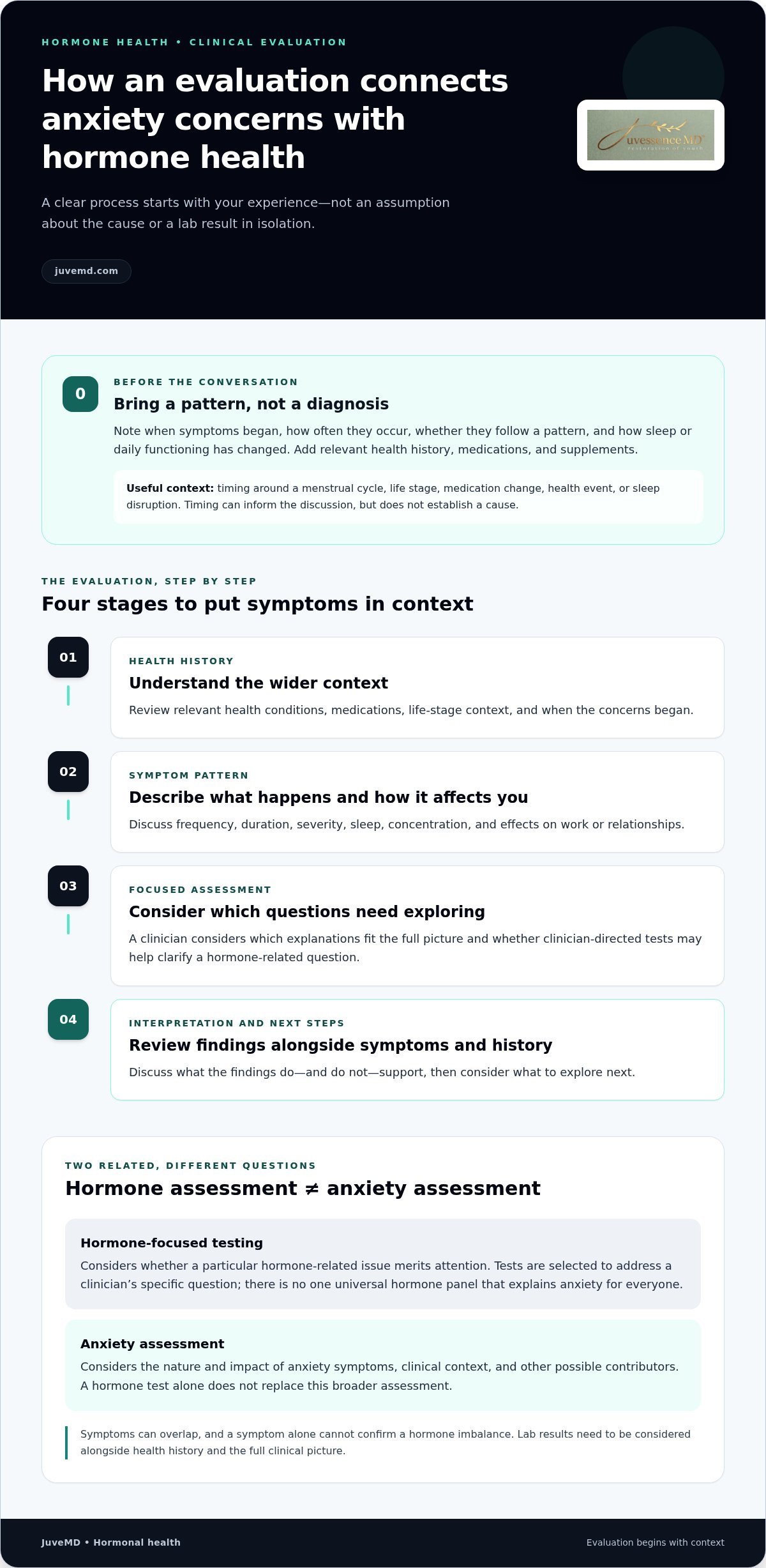
A useful evaluation doesn’t begin with a lab result or an assumption about the cause. It starts with your experience: what changed, when it began, how symptoms affect daily life, and what health factors may be relevant. A clinician can then consider whether hormone testing could answer a specific question and whether anxiety concerns call for a separate, broader assessment.
What to record before discussing anxiety and hormone symptoms
A few notes can make the conversation more specific. Track when symptoms began, how often they occur, whether they follow a noticeable pattern, and how sleep or daily functioning has changed. If symptoms vary with a menstrual cycle or life stage, record the timing without drawing conclusions about what it means. Bring a list of medications and supplements, along with relevant health history.
Don’t stop or change a prescribed medication to see whether symptoms improve without first discussing it with the prescribing clinician. The timing of a medication change, health event, or sleep disruption can provide useful context, but it doesn’t establish a cause by itself.
How clinicians can organize the evaluation
The approach depends on the person and the clinical question. An evaluation may include:
- Health history: Review relevant conditions, medications, life-stage context, and when the concerns began.
- Symptom pattern: Discuss frequency, duration, severity, sleep, concentration, and effects on work or relationships.
- Focused assessment: Consider which explanations fit the full picture and whether clinician-directed tests may help clarify a hormone-related question.
- Interpretation and next steps: Review findings alongside symptoms and history, then discuss what they do and don’t support.
Hormone assessment and a comprehensive anxiety evaluation address related but different questions. Hormone-focused testing considers whether a particular hormone-related issue merits attention. An anxiety assessment considers the nature and impact of anxiety symptoms and other possible contributors. One doesn’t replace the other. The National Institute of Mental Health describes anxiety disorders as conditions assessed through a person’s symptoms and clinical context, not a hormone test alone.
What hormone testing can and cannot establish
There isn’t one universal hormone panel that explains anxiety for everyone. Tests should be selected to answer a clinician’s specific question, and results need to be interpreted in context. A value outside a reference range may warrant discussion, but it doesn’t automatically prove that hormone levels caused anxiety. A result within range also needs to be considered alongside the reason for testing and the person’s overall health.
For menopause-related questions, the American College of Obstetricians and Gynecologists’ guidance offers information about this life stage. If you’re exploring hormone imbalance and anxiety treatment Las Vegas, JuveMD’s hormone-focused care provides a place to discuss hormonal health without assuming hormone therapy will resolve anxiety.
Comparing Anxiety Care and Hormone-Focused Treatment Without Assuming the Cause
Anxiety-focused care and hormone-focused care can both be relevant to a person’s health, but they answer different clinical questions. Comparing their aims can help you discuss options without assuming anxiety signals a hormone problem or that one treatment approach should replace the other.
| Care pathway | Clinical goal | Assessment may consider | Questions it addresses |
|---|---|---|---|
| Anxiety-focused care | Assess and address anxiety symptoms and their effect on daily life. | Symptoms, timing, severity, health context, and other potential contributors. | What kind of anxiety concern is present? What care may be appropriate for these symptoms? |
| Hormone-focused care | Evaluate hormone-related concerns and discuss whether hormone treatment is appropriate for an identified health goal. | Relevant symptoms and health history, with clinician-directed testing when indicated. | Is there a hormone-related concern to address? What potential benefits and limitations should be considered? |
The pathways may inform a broader discussion, but neither is a shortcut to the other. A hormone test doesn’t independently assess an anxiety disorder, and anxiety symptoms alone don’t establish that hormone therapy is appropriate. Hormone therapy shouldn’t be described as a proven or guaranteed cure for anxiety. Consider the specific goal of any proposed care and how it relates to your symptoms and health history.
What hormone-focused care is intended to address
JuveMD is a Las Vegas clinic focused on hormonal health and wellness, led by Dr. Andrea Dempsey. Its primary service is bioidentical pellet hormone therapy. That describes the clinic’s hormone-focused area of care, not a promise to diagnose, treat, or relieve an anxiety disorder. If you’re considering bioidentical hormone replacement therapy in Las Vegas, distinguish hormone-related goals from expectations about anxiety. An individualized assessment can help frame that conversation.
Weighing potential benefits, limitations, and questions
Whether hormone treatment is suitable depends on the person’s health context, evaluation, and goals. A careful discussion should cover why treatment is being considered, what benefit is sought, what is uncertain, and what risks apply to that individual. Avoid relying on broad claims about benefits or risks when the relevant question is how a treatment may relate to your own circumstances.
Monitoring also depends on the treatment and the person’s circumstances. Ask what follow-up is appropriate for the treatment being considered and how progress or concerns will be reviewed. These are useful topics for an informed discussion, not evidence that treatment will produce a particular result.
If your search for hormone imbalance and anxiety treatment Las Vegas has led you to consider hormone care, let your goals and evaluation guide the conversation. JuveMD’s hormonal health care offers a hormone-focused setting for exploring those concerns, while anxiety symptoms still deserve attention in their own right.
Preparing for a Hormone and Anxiety Consultation in Las Vegas
A little preparation can turn a broad concern into a more focused conversation. You don’t need to know what’s causing your symptoms before speaking with a clinician. Describe what you’ve noticed in plain language, then use your questions and health history to guide the discussion.
A practical preparation checklist
- Symptom timeline: Note when anxiety or other changes began, how often they occur, how long they last, and whether you’ve noticed patterns over time.
- Sleep and daily impact: Record changes in sleep, energy, concentration, or mood, and describe how symptoms affect work, relationships, or everyday routines.
- Relevant history: Bring a list of current medications and supplements, along with health history or recent changes that may provide context.
- Care priorities: Identify what you most want help understanding, such as symptom patterns, possible hormone-related factors, or treatment options.
- Questions and concerns: Write down what you’re unsure about, including questions about testing, potential treatment, or how progress would be discussed.
Describe symptoms directly rather than labeling them a hormone imbalance. For example, “I’ve been feeling unusually tense and waking during the night” gives a clinician specific experiences to explore without deciding their cause. Mention any current treatment and concerns about it, too. Don’t stop or adjust prescribed medication without guidance from the clinician who manages it.
Questions to bring to a hormone-health discussion
Clear questions can help you understand the reasoning behind an evaluation and what different findings may mean. Consider asking:
- What findings would support or make a hormone-related contribution less likely?
- What testing, if any, is relevant to my symptoms and health history?
- How will results be interpreted alongside my symptoms rather than on their own?
- What goals would hormone-focused treatment address, and what limitations or risks should I understand?
- What follow-up would be appropriate for the treatment being considered?
The answers should reflect your individual circumstances, not a one-size-fits-all promise. If anxiety is affecting daily life, make that a clear part of the conversation so it isn’t reduced to a hormone question alone.
Making the conversation useful in Las Vegas
JuveMD is a Las Vegas clinic focused on hormonal health, led by Dr. Andrea Dempsey. If you’re considering hormone imbalance and anxiety treatment Las Vegas, bring your priorities and practical questions to a hormone-health discussion. This can help clarify whether hormone-focused care relates to your goals without assuming it will resolve anxiety.
To explore a hormone-focused discussion, learn about JuveMD’s care.
Considering JuveMD for Hormone-Focused Care in Las Vegas
If anxiety concerns have led you to explore hormones, the next step is not to assume the cause. It’s to understand whether a hormone-related concern is relevant to your health and what options, if any, fit your goals. JuveMD is a Las Vegas clinic focused on hormonal health and wellness, led by Dr. Andrea Dempsey. Its primary service is bioidentical pellet hormone therapy.
That focus may be relevant if you’re seeking a hormone-centered discussion, but it doesn’t mean hormone therapy is an anxiety treatment. Anxiety can have multiple contributors, and hormone therapy shouldn’t be presented as a proven or guaranteed way to resolve it. A clinical conversation considers your concerns in context and clarifies what the available information supports.
Where bioidentical pellet therapy fits in the care discussion
Bioidentical pellet hormone therapy is a hormone-focused option offered at JuveMD. The decision to consider hormone treatment should follow an individualized discussion, not a conclusion drawn from anxiety symptoms alone. Explain the health goals you hope to address and discuss the evidence, potential risks, limitations, and alternatives relevant to your circumstances.
Suitability, treatment expectations, and follow-up depend on clinical evaluation and the specific care being considered. Avoid relying on generalized claims about results or assuming one approach is right for everyone. A clear discussion should help you understand what is known, what remains uncertain, and how a proposed treatment relates to your goals.
A clear next step for Las Vegas patients
Before a consultation, gather notes that describe your experience: when symptoms began, how they change, what effect they have on daily life, and any relevant health history or current treatment. Then bring the questions that matter most to you. You may want to understand whether hormone factors deserve assessment, what findings could inform that discussion, and how anxiety concerns fit alongside other health priorities.
This preparation can make a hormone-focused conversation more specific without requiring you to self-diagnose. It can also help distinguish between wanting clarity about possible hormone-related concerns and expecting a particular treatment to relieve anxiety. For anyone searching for hormone imbalance and anxiety treatment Las Vegas, that distinction supports a more grounded next step.
JuveMD focuses on hormonal health, with bioidentical pellet hormone therapy as its primary service. Explore JuveMD’s care to consider whether a hormone-focused discussion fits the questions you want to address. Explore JuveMD’s hormone-focused care.
Take Your Next Step With a Clearer Question
You don’t have to settle on a cause before seeking clarity. Start with the question you most want answered: what might be contributing to these changes, and what information could help guide a thoughtful next step? This keeps the focus on your experience and leaves room for an evaluation to shape the discussion instead of fitting symptoms into a predetermined explanation.
If you’re considering hormone imbalance and anxiety treatment Las Vegas, keep your goals realistic and personal. Hormone-focused care may be one part of a broader conversation, but anxiety deserves attention in its own right, and hormone therapy isn’t a guaranteed anxiety treatment. Take time to understand the rationale, uncertainties, and options before deciding what feels appropriate for you.
Explore JuveMD’s hormone-health care and consider whether a hormone-focused discussion aligns with the questions you want to address. Explore JuveMD’s hormone-health care in Las Vegas. A clear, informed next step can help you move forward with greater confidence.
Frequently Asked Questions
Can a hormone imbalance cause anxiety?
Hormonal changes may be related to mood or sleep changes, but they’re only one possible part of the picture. Anxiety that appears alongside a new sleep pattern or life-stage change is worth describing, but timing alone can’t identify the cause. A clinician can consider your health context and whether hormone assessment is relevant. Persistent anxiety or anxiety that disrupts daily activities deserves individualized clinical attention.
How do I know if my anxiety is hormone-related?
There’s no single sign that confirms anxiety is hormone-related. Notice whether symptoms seem to change around particular events, life-stage transitions, or changes in routine, but treat those observations as clues rather than proof. If you’re researching hormone imbalance and anxiety treatment Las Vegas, a brief written record can make a clinical conversation more specific. Share what you’ve noticed and let a qualified clinician assess what it may mean.
What tests check for hormone imbalance when I have anxiety?
The right tests depend on the clinical question, so there isn’t one universal panel for anxiety. Before testing, ask what a proposed test is meant to assess and how the result could inform the discussion. A test may provide information about a particular hormone, but it can’t by itself explain every mood or sleep concern. Testing decisions and interpretation should take your health context and relevant history into account.
Does hormone replacement therapy treat anxiety?
Hormone replacement therapy shouldn’t be presented as a guaranteed or standalone anxiety treatment. A clinician may discuss it when there’s a relevant hormone-related concern, while also considering whether anxiety needs broader assessment. Before deciding, ask what goal the treatment is intended to address, what evidence applies to that goal, and what risks, alternatives, or follow-up considerations matter for you. Don’t change another prescribed treatment based on assumptions about hormones.
Can bioidentical hormone pellet therapy help with anxiety?
Bioidentical pellet therapy is hormone-focused care, not a promised anxiety cure. Whether hormone treatment is relevant depends on an individual clinical evaluation and the health concern being addressed. JuveMD, a Las Vegas clinic specializing in hormonal health and wellness, is led by Dr. Andrea Dempsey and offers bioidentical pellet hormone therapy as its primary service. In a discussion, clarify the treatment goal and how it relates to your specific concerns.
When should I seek help for anxiety and possible hormone changes?
Consider seeking clinical guidance if anxiety persists, worsens, or makes everyday tasks difficult. Bring a concise account of what has changed and how it affects your routines, and mention any current care or medication concerns. Don’t stop or adjust prescribed treatment on your own. If you feel in immediate danger or might harm yourself, seek emergency support now rather than waiting for a routine consultation.