
Feeling old in your 40s isn’t a verdict on how the rest of your life will feel. If you’re asking what to do when you feel old in your 40s, start by noticing what’s changed, support your day-to-day well-being with sustainable habits, and seek medical guidance if symptoms are affecting your life. Around age 40, you might start to make less estrogen, according to the National Institute on Aging, but that doesn’t mean every change in how you feel is caused by hormones.
It can be unsettling when your energy, mood, sleep, or sense of self seems different from before. You don’t have to dismiss that feeling as “just aging,” or assume there’s one explanation for it. Menopause often occurs between ages 45 and 55, according to the Centers for Disease Control and Prevention, and the transition can look different for each person.
This guide offers practical ways to feel more like yourself, from reviewing everyday routines to considering whether hormonal changes may be involved. Learn how to take manageable steps, notice persistent changes, and prepare for a focused conversation about your health and what to do next.
Key Takeaways
- Notice which changes are affecting your energy, mood, sleep, or daily life so you can identify patterns and choose a useful next step.
- Build supportive routines into everyday life, including regular movement and less uninterrupted sedentary time.
- Menopause often occurs between ages 45 and 55, according to the Centers for Disease Control and Prevention (CDC), but changes in how you feel can have different causes.
- If hormonal changes are a concern, learn how Bioidentical Pellet Hormone Therapy at JuveMD may fit into a health-focused conversation.
- Focus on practical changes that help you feel more connected to your needs and the activities that matter to you.
Feeling old in my 40s what to do
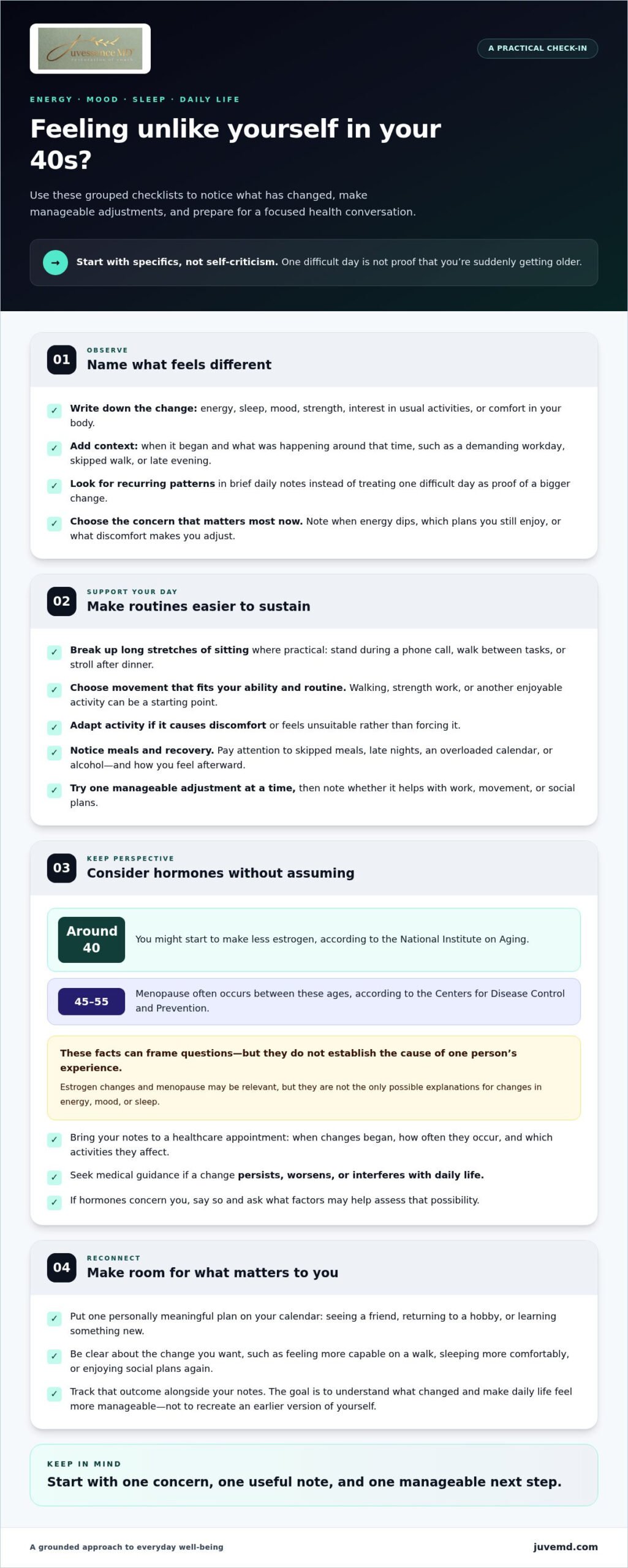
If you’re wondering what to do when you’re feeling old in your 40s, begin with specifics, not self-criticism. Write down what feels different: energy, sleep, mood, strength, interest in usual activities, or how comfortable you feel in your body. Add when each change began and what was happening around that time. A clear record helps you notice patterns and explain your concerns during a medical appointment.
Age alone doesn’t explain every change. Around age 40, you might start to make less estrogen, according to the National Institute on Aging. Menopause often occurs between ages 45 and 55, according to the Centers for Disease Control and Prevention (CDC). These facts can help frame questions about hormonal changes, but they don’t establish the cause of any one person’s experience.
Start with the changes you can observe
Start with a brief daily note. Record how rested you feel, your mood, movement, and any changes that disrupt your routine. Add context, such as a demanding workday, a skipped walk, or a late evening. Look for recurring connections over time rather than treating one difficult day as proof that you’re suddenly getting older.
Choose the concern that matters most right now. If low energy makes an evening walk difficult, note when your energy dips. If you feel less engaged with friends, record which plans you still enjoy. If discomfort limits your activities, describe what you had to adjust. Specific examples are more useful than a general label like “I feel old.”
Make everyday routines easier to sustain
Review how a typical day is structured and break up long stretches of sitting where practical. Stand during a phone call, walk briefly between tasks, or take a stroll after dinner. Choose movement that suits your current ability and routine.
Strength work, walking, and other enjoyable activities can help you build a consistent movement routine. Start with something repeatable, such as a neighborhood walk or a weights class. If an activity causes discomfort or feels unsuitable, adapt it rather than forcing it. Aim for regular meals that support your day, and notice whether skipping meals leaves you feeling depleted.
Pay attention to recovery habits, too. A late night, an overloaded calendar, or alcohol may affect how you feel the next day. Look for patterns in your notes instead of assuming the same routine works every day. Make one manageable adjustment at a time, then notice whether it helps you take part in work, movement, or social plans.
Consider hormonal changes without assuming
Estrogen changes and menopause may be relevant, but they are not the only possible explanations for feeling unlike yourself. Bring your notes to a healthcare appointment and describe when changes began, how often they occur, and which activities they affect. Raise questions about hormones if they concern you. A focused discussion can help identify what needs attention and what may respond to routine changes.
Seek medical guidance if a change persists, worsens, or interferes with daily life. Describe its effect plainly: “I’m avoiding plans because I feel exhausted,” or “My sleep has changed, and work feels harder.” Specific examples give a clinician something concrete to discuss. If your concern is hormonal, say so and ask what factors may help assess that possibility.
Reconnect with what makes you feel like yourself
Feeling older can also reflect a life crowded with obligations and short on rewarding activities. Put one personally meaningful plan on your calendar, such as seeing a friend, returning to a hobby, or learning something new. Treat it as a real commitment. Notice whether it changes your sense of connection, even if other concerns remain.
Be clear about the change you want: feeling more capable on a walk, sleeping more comfortably, or enjoying social plans again. Track that outcome alongside your daily notes. The goal isn’t to recreate an earlier version of yourself. It’s to understand what has changed and take steps toward a daily life that feels more manageable and more like yours.
JuveMD: Bioidentical Pellet Hormone Therapy
If hormonal changes are among the concerns you’ve identified, JuveMD’s Bioidentical Pellet Hormone Therapy may be an option to discuss. Bring notes about your symptoms, when they occur, and how they affect daily life. A conversation about your individual goals can help determine whether this therapy is relevant to what you want to address.
Hormone therapy isn’t a substitute for investigating every change in energy, mood, or sleep. Share your full concerns so the discussion reflects your individual experience, not just one symptom. JuveMD also offers injectables, skin treatments, and weight-loss counseling for people considering those specific wellness or aesthetic goals.
To discuss Bioidentical Pellet Hormone Therapy and your concerns, contact JuveMD.
Choose a Next Step That Fits You
Your next step doesn’t need to be a sweeping overhaul. Choose one concern you want to understand better, then decide what kind of support would help you move forward. If you’re still wondering what to do when you’re feeling old in your 40s, start with a conversation focused on your goals, symptoms, and priorities.
JuveMD offers Bioidentical Pellet Hormone Therapy, Injectables, and Skin Treatments. These options address different concerns, so the most relevant discussion depends on what you want help with. You can bring questions about hormonal health or aesthetic goals and talk through which path aligns with them.
Reaching out doesn’t commit you to a particular treatment. It gives you a chance to explore your options and make a considered decision. Contact JuveMD to discuss your options, and take the next step at a pace that feels right for you.