
What if “normal” lab results don’t tell the whole story? If brain fog, fatigue, unexplained weight gain, low libido, or mood changes persist, it’s reasonable to ask why you still feel off. Finding the right hormone specialist las vegas patients can trust means looking beyond a single test result and considering your symptoms, health history, and individual needs.
You deserve clear answers, not a one-size-fits-all prescription. Hormone care can feel confusing, especially when you’re weighing synthetic and bioidentical options or trying to understand what treatment may involve. A careful evaluation can put those choices in context and help clarify whether hormone therapy is appropriate for you.
In this guide, you’ll learn what to look for when choosing a Las Vegas hormone specialist, what questions to ask, and how to assess an individualized approach to care. We’ll also cover key considerations around bioidentical pellet hormone therapy, JuveMD’s area of specialization, and the “normal lab” paradox Dr. Andrea Dempsey helps patients understand, so you can take an informed next step.
Key Takeaways
- Persistent symptoms deserve a broader conversation. Ask how your health history and test results will be considered together, rather than focusing on a single lab value.
- When comparing care options, look for a hormone specialist las vegas patients can speak with about treatment rationale, monitoring, and how a plan will be tailored to their needs.
- Bioidentical pellet hormone therapy is JuveMD’s primary hormone service. Learn what pellet treatment involves and discuss whether it may be appropriate for you.
- “Hormone specialist” isn’t a formal board certification, so verify a clinician’s credentials, relevant experience, and role in your care.
- JuveMD is led by Dr. Andrea Dempsey. Her focus on pellet therapy can help guide an informed discussion about treatment options.
When to Consult a Hormone Specialist in Las Vegas
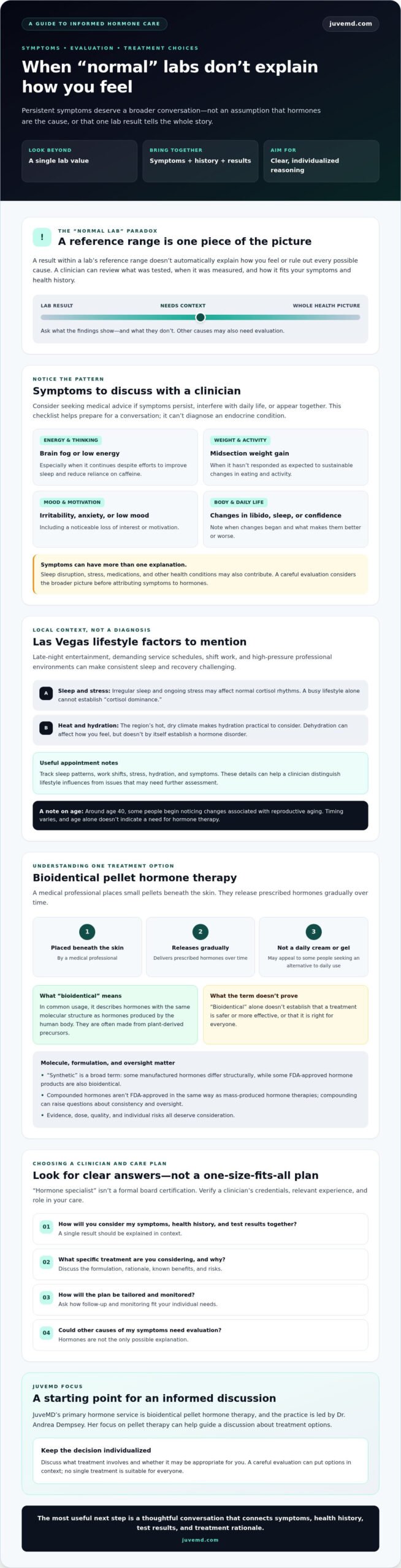
Persistent fatigue, brain fog, changes in libido, or weight gain can be frustrating, especially when routine test results are described as “normal.” A result within a lab’s reference range doesn’t automatically explain how you feel or rule out every possible cause. Symptoms can also stem from sleep disruption, stress, medications, or other health conditions, so they deserve careful evaluation rather than an assumption that hormones are responsible.
This is the “normal lab” paradox: a test may fall within a broad reference interval while your symptoms and health history still warrant discussion. A clinician can review what was tested, when it was measured, and how the result fits your overall picture. A hormone specialist las vegas patients consider should explain both what the findings show and what they don’t, including whether other causes need evaluation.
The Impact of the Las Vegas Lifestyle on Hormonal Health
Las Vegas’s late-night entertainment, demanding service schedules, shift work, and high-pressure professional environments can make consistent sleep and recovery challenging. Irregular sleep and ongoing stress may affect normal cortisol rhythms, but “cortisol dominance” isn’t a diagnosis that can be inferred from a busy lifestyle alone. The region’s hot, dry climate also makes hydration a practical consideration. Dehydration can affect how you feel, but it doesn’t by itself establish a hormone disorder.
If you live or work in Las Vegas, track your sleep patterns, work shifts, stress, hydration, and symptoms before an appointment. These details can help a clinician distinguish lifestyle influences from issues that may need further assessment.
Symptom Checklist: Is it Time for a Specialist?
Consider seeking medical advice if symptoms persist, interfere with daily life, or appear together. Note when they began and what makes them better or worse. This list can help you prepare for a conversation, but it can’t diagnose an endocrine condition:
- Brain fog or low energy that continues despite efforts to improve sleep and reduce reliance on caffeine.
- Midsection weight gain that hasn’t responded as expected to sustainable changes in eating and activity.
- Irritability, anxiety, low mood, or a noticeable loss of interest and motivation.
- Changes in libido, sleep quality, or physical confidence.
Managing one symptom may offer temporary relief, but understanding the pattern can guide a more complete evaluation. Around age 40, some people begin noticing changes associated with reproductive aging, but timing varies, and age alone doesn’t indicate a need for hormone therapy. A clinician should assess symptoms and relevant health factors before discussing treatment. For context on terminology and ongoing debate about bioidentical hormones, see this overview of Bioidentical hormone replacement therapy.
The Science of Bioidentical Pellet Hormone Therapy
Bioidentical pellet hormone therapy is one way to deliver prescribed hormones over time. A medical professional places small pellets beneath the skin, where they release hormone gradually. This method may appeal to people who prefer not to manage a daily cream or gel, but it isn’t appropriate for everyone. “Bioidentical” alone doesn’t establish that a treatment is safer or more effective.
Bioidentical vs. Synthetic: Understanding the Molecular Difference
In common usage, bioidentical hormone replacement therapy refers to replacement hormones, often made from plant-derived precursors, that have the same molecular structure as hormones produced by the human body. “Synthetic” is a broad term: some manufactured hormones differ structurally, while some FDA-approved hormone products are also bioidentical. A molecule’s source or similarity doesn’t replace careful consideration of evidence, dose, quality, and individual risks. A scientific review of bioidentical hormone therapy discusses distinctions between compounded preparations and approved treatments.
Claims that medicine has broadly shifted from synthetic to bioidentical options oversimplify the evidence. Compounded hormones aren’t FDA-approved in the same way as mass-produced hormone therapies, and compounding can raise questions about consistency and oversight. Ask your clinician what specific medication is being considered, why that formulation fits your situation, and what is known about its benefits and risks.
Why Pellet Delivery Can Offer Convenience
Pellets release hormones gradually, so they avoid the daily application routine of gels and creams. But no delivery method guarantees perfectly constant blood levels. Hormone absorption and levels vary between individuals, and pellets don’t automatically adjust to exercise, stress, or changing health needs. Unlike a cream that can be adjusted or stopped, a pellet already placed under the skin isn’t as readily titrated. Discuss these trade-offs, including how treatment will be monitored, before choosing a method.
For active Las Vegas residents, fewer daily treatment steps may be convenient. Avoid assuming a universal replacement schedule, though. Timing depends on the prescribed treatment and individual clinical assessment. JuveMD specializes in Bioidentical Pellet Hormone Therapy, with care led by Dr. Andrea Dempsey.
From Testing to an Individualized Plan
A responsible process starts with a clinical conversation, not a default dose. A clinician should review symptoms, health history, medications, and relevant laboratory results, then explain whether hormone therapy is appropriate and how response will be assessed. Lab testing helps inform decisions, but results need context. Follow-up matters too: symptoms, side effects, and repeat testing may guide whether a plan should continue or change.
If you’re considering this option, learn more about JuveMD’s hormone therapy approach and prepare questions about formulation, monitoring, and the benefits and limitations of pellet delivery.
Specialist vs. General Practitioner: Why Expertise Matters
A general practitioner can be an important partner in your health. The distinction is often the focus of care: routine primary care addresses broad health needs, while a clinician with focused hormone experience may spend more time evaluating hormone-related symptoms, treatment options, and follow-up. “Optimization” shouldn’t mean pursuing a target number at any cost. It should mean making careful, individualized decisions grounded in symptoms, medical history, test results, and evidence.
Pellet therapy also calls for specific knowledge. Dosing decisions and follow-up require a clinician who understands the treatment, its limitations, and how to assess a patient’s response. Rather than assuming every generalist lacks that experience, ask how often the clinician manages pellet therapy, how dosing is determined, and what monitoring is planned. A hormone specialist las vegas patients consider should explain the reasoning behind a recommendation in clear terms.
Interpreting Lab Results in Context
“My doctor said my levels are normal” can feel like a dead end. A reference range describes results observed in a defined population; it doesn’t, by itself, explain an individual’s symptoms or establish an “optimal” level for treatment. There isn’t one ideal target that applies to everyone. A careful clinician considers the specific test, timing, symptoms, health history, and possible non-hormonal explanations before drawing conclusions.
Depending on the clinical picture, evaluation may include thyroid testing or other measures such as DHEA or vitamin D. These aren’t mandatory tests for every patient, and results need context. Ask what each test could clarify and how it would affect the care plan. More testing isn’t automatically better; each test should have a reason.
Choosing a Setting That Supports Follow-Up
Hormone care can involve nuanced questions and decisions that benefit from clear discussion. A brief appointment may not leave enough room to review symptoms, explain options, and address concerns, so ask how the clinic structures consultations and follow-up. Also clarify who will review your results, who will answer treatment questions, and how your response will be tracked over time. These details matter more than the clinic’s size or setting alone.
Hormone health can intersect with other goals, including weight management, but combined care should remain individualized. JuveMD offers weight-loss programs alongside its focus on Bioidentical Pellet Hormone Therapy. Explore medical weight loss and hormone therapy as related topics, and ask your clinician whether coordinating these goals makes sense for your health.
Hormone Specialist Las Vegas: What to Look for in a Clinic
Choosing a clinic is about more than finding a provider who offers hormone therapy. Look for clear clinical accountability, individualized decision-making, thoughtful follow-up, and explanations you can understand. The phrase “hormone specialist” isn’t a formal board certification, so check the clinician’s license, relevant experience, and who evaluates you, prescribes treatment, and monitors your care. Ask who will be involved at each step.
A personalized plan shouldn’t mean selecting a standard pellet dose from a menu. Your symptoms, medical history, test results, and response to treatment should inform decisions. Ask how the clinic determines whether you’re a candidate, what follow-up is planned, and how concerns or side effects are handled. A trusted clinician should welcome those questions and explain the reasoning, including when treatment isn’t appropriate.
Evaluating Protocols, Safety, and Recovery
Before treatment, ask what screening is performed and which laboratory tests are relevant to your situation. Find out how results will be reviewed and whether follow-up testing may help guide care. You can also ask where pellets are sourced, whether they’re compounded, and what quality controls apply. For practical questions about the initial recovery period, review this guide to the pellet therapy first 30 days, then confirm aftercare instructions directly with your clinician.
Considering Aesthetic and Wellness Goals
Hormonal changes can occur alongside shifts in skin or hair, but those concerns have many possible causes. Hormone therapy shouldn’t be presented as a guaranteed way to improve skin elasticity or hair density. A clinic with relevant offerings can help you discuss separate, appropriate options. JuveMD offers hair restoration and injectables alongside its focus on Bioidentical Pellet Hormone Therapy, but each service should have its own assessment and clear rationale.
If hair changes are a concern, ask whether evaluation should include causes beyond hormones and what treatment options fit your needs. JuveMD provides information on hair restoration treatment las vegas. For aesthetic goals, learn what cosmetic injectables can and cannot address. These services may complement a broader wellness plan, but they aren’t substitutes for evaluating persistent symptoms.
Education is part of good care. Before deciding, make sure you understand the expected benefits, uncertainties, alternatives, and follow-up plan. To learn about JuveMD’s approach to personalized hormone care, explore the clinic’s information and prepare questions for a medical consultation.
The JuveMD Difference: Personalized Care Under Dr. Andrea Dempsey
Hormone concerns can feel personal and complicated. JuveMD is a Las Vegas medical clinic specializing in Bioidentical Pellet Hormone Therapy, led by Dr. Andrea Dempsey. A careful evaluation considers your symptoms, health history, test results, and goals together, then explains what the findings may mean and what they can’t establish.
Before making a decision, ask practical questions about your care. Who will review your case? How will you discuss treatment options and follow-up? What privacy practices does the clinic use? Clear answers help you understand the process before choosing a next step.
Tailored Considerations for Men and Women
Hormone needs and treatment decisions vary by person, including among men and women. JuveMD offers Bioidentical Pellet Hormone Therapy. These guides provide more information about testosterone pellet therapy and hormone pellet therapy for women. Any discussion of dosing should be specific to your evaluation, with the clinician explaining what monitoring is appropriate and how treatment decisions may be revisited over time.
Preparing for an Initial Consultation
To make the conversation useful, bring a list of symptoms, when they began, medications and supplements you take, and any recent laboratory results. Note changes in sleep, energy, mood, libido, or weight, too. Ask what other causes might explain your symptoms, whether additional testing is justified, and what benefits, risks, and alternatives apply to your situation. A consultation is a chance to learn, not an obligation to begin treatment.
Hormone care is an ongoing clinical decision, not a promise of sustained improvement. If treatment is appropriate, follow-up helps assess your response and discuss whether the plan still fits your needs. Results vary, and ongoing monitoring doesn’t guarantee a particular outcome.
If persistent symptoms continue despite “normal” lab results, consider discussing them with a clinician experienced in hormone care. A consultation with JuveMD and Dr. Dempsey can help you understand your results, explore whether pellet therapy is appropriate, and identify informed next steps toward your health goals.
Take an Informed Next Step Toward Feeling Like Yourself
Persistent symptoms deserve thoughtful evaluation, even when initial lab results fall within a reference range. The right care starts with connecting those results to your experience, considering other possible causes, and discussing treatment options without assuming hormone therapy is automatically the answer.
As you compare a hormone specialist las vegas residents may consider, look for focused experience with the treatment being discussed, clear explanations, and a plan for follow-up. Bioidentical Pellet Hormone Therapy is JuveMD’s specialty, and Dr. Andrea Dempsey leads its Las Vegas medical clinic with a personalized approach.
A consultation is an opportunity to ask questions, understand what your symptoms and tests may indicate, and decide on an appropriate next step. Bring your concerns and any recent test results, and ask how a personalized plan would be monitored. There’s no need to decide on treatment before you understand your options.
Schedule a consultation with Dr. Andrea Dempsey at JuveMD to begin a clear conversation about your hormone health.
Frequently Asked Questions
How do I know if I need a hormone specialist instead of my regular doctor?
Consider a focused hormone evaluation if symptoms persist, affect daily life, or remain unexplained after discussing them with your regular doctor. A clinician experienced in hormone care can review your symptoms, medical history, and test results together while also considering other possible causes. If you’re searching online for “hormone specialist las vegas,” look for relevant experience, clear explanations, and a defined follow-up plan, rather than assuming a particular treatment is right for you.
What are the most common signs of a hormone imbalance in adults over 40?
Possible signs include changes in sleep, energy, mood, libido, body composition, or menstrual patterns, but none confirms a hormone imbalance on its own. Similar symptoms can result from other health conditions, stress, medications, or lifestyle factors. Adults over 40 can track when symptoms began and how they change, then discuss that history with a clinician. An evaluation should interpret test results in context rather than diagnose from symptoms alone.
Are bioidentical hormone pellets safer than synthetic hormone treatments?
No hormone type or delivery method is automatically safer for everyone. “Bioidentical” describes a molecular structure matching a hormone the body produces; it doesn’t prove a treatment is safer or more effective. Some approved hormone therapies are bioidentical, while compounded preparations have different regulatory considerations. Ask the clinician to explain the specific product, evidence, potential risks, alternatives, and monitoring plan. Your health history and treatment goals matter more than a broad label.
How long does it take to feel the effects of hormone pellet therapy?
There isn’t one predictable timeline for everyone. The time it takes to notice changes can depend on the individual, the hormone prescribed, the dose, and the symptoms being addressed. Some effects may take time to assess, and not every symptom will necessarily improve with hormone treatment. Before starting, ask your clinician what changes to monitor, when to follow up, and how they’ll decide whether the treatment is helping or needs reconsideration.
Will insurance cover my visit to a hormone specialist in Las Vegas?
Coverage depends on your insurance plan, the clinician, and the services involved. Some plans may cover consultations or laboratory work, while compounded bioidentical hormones or pellet procedures may not be covered. Don’t assume coverage based on a clinic’s location or specialty. Contact your insurer and the clinic to ask about benefits, billing, and any out-of-pocket responsibility before care begins. Ask JuveMD directly about its fees and payment process.
Can hormone optimization help with weight loss when diet and exercise fail?
Hormone therapy isn’t a general weight-loss treatment, and it shouldn’t be prescribed solely to change body weight. If weight changes occur alongside other symptoms, a clinician can assess whether hormones or another health factor may be involved. Results vary, and addressing a hormone condition doesn’t guarantee weight loss. JuveMD offers weight-loss programs as well as Bioidentical Pellet Hormone Therapy, but each needs an appropriate clinical assessment and individualized plan.
How often do I need to visit the clinic for pellet insertion?
There’s no single schedule that applies to every patient. The timing for another insertion depends on the prescribed treatment, individual response, and clinical assessment. Ask the clinician how they determine when to reassess, whether follow-up testing is appropriate, and what signs should prompt you to get in touch sooner. Don’t rely on a general online interval as your personal schedule; confirm timing with the practitioner managing your care.
Is there any downtime after a hormone pellet procedure?
Recovery instructions can vary based on the procedure and your individual circumstances. Ask the clinic what to expect at the insertion site, how to care for it, and whether you should temporarily modify exercise or other activities. Follow the clinician’s aftercare guidance, and contact the clinic if you have concerns about healing or unexpected symptoms. Before scheduling, clarify who to contact with questions and what follow-up is recommended.