
What if the right BHRT plan starts with questions, not a recommendation for pellets? Changes in energy, mood, or well-being can feel disruptive, but their cause isn’t always clear. With so many online claims about hormone therapy, it can be difficult to know what deserves a closer look. Choosing a BHRT specialist Las Vegas residents can talk with openly means having space to discuss symptoms, health history, goals, and whether an evaluation is appropriate before considering a treatment format.
A useful conversation can clarify what an evaluation may involve, how lab results fit alongside your personal experience, and how different approaches compare. Pellets are one option, not a universal answer. This article explains what to discuss during a specialist-led evaluation and how individualized care differs from a one-size-fits-all recommendation.
At JuveMD, Dr. Andrea Dempsey leads hormone-focused care for men and women in Las Vegas, including bioidentical pellet hormone therapy, injectable treatments, and hormone education. Read on to learn how JuveMD approaches personalized hormone-health discussions and how to prepare for a more informed next step.
Key Takeaways
- A BHRT specialist Las Vegas patients consult can help put symptoms, health history, and clinical context into perspective.
- Prepare for an evaluation by noting your concerns, relevant medical history, medications, and questions.
- Testing and possible next steps depend on individual circumstances and clinical judgment.
- Pellets and injectable treatments are different formats; neither is automatically appropriate simply because it is available.
- JuveMD’s hormone education and care for men and women can support a more personalized discussion.
What Does a BHRT Specialist in Las Vegas Help You Understand?
A BHRT specialist helps you make sense of questions about hormone health, symptoms, and possible care options. Bioidentical hormone replacement therapy (BHRT) refers to hormone therapy using hormones chemically identical to those produced by the body. The term alone doesn’t tell you whether treatment is suitable for a particular person. For background on the terminology and common uses, see What is Bioidentical Hormone Replacement Therapy?
BHRT specialist care is a focused conversation about hormone-related concerns, personal health context, and possible next steps, not a promise of a particular diagnosis or result. Education can explain hormone terminology and treatment formats. An individualized medical evaluation goes further by considering a person’s history and circumstances before discussing whether treatment may be appropriate.
That distinction matters because symptoms don’t point to one cause on their own. Changes in energy, sleep, mood, sexual wellness, or menstrual patterns can have different explanations. A symptom list or online hormone quiz can’t establish an imbalance. Clinical context helps determine which questions to explore and whether evaluation or testing may be useful.
When might a hormone-health conversation be useful?
Adults may want to discuss persistent changes that affect daily life, such as disrupted sleep, shifts in mood, reduced sexual interest, or changes associated with menopause or aging. These examples aren’t a diagnosis or proof that hormones are responsible. Before an appointment, note when a concern began, how often it occurs, and what activities or aspects of well-being it affects. For example, instead of noting only “poor sleep,” record whether the issue is falling asleep, waking during the night, or feeling unrested. Specific observations make the conversation more focused.
How can specialist care differ from a general wellness search?
Online information can introduce terms and options, but it can’t interpret your full health picture. A focused discussion makes room for relevant medical history, current concerns, and personal goals before treatment is considered. That differs from general hormone education, which explains concepts but doesn’t evaluate an individual or determine a care plan.
People in Las Vegas may seek focused hormone-health care when broad wellness advice doesn’t answer their questions. A useful conversation should clarify what is known, what still needs clinical consideration, and which next steps may make sense for that individual. Hormone care also isn’t limited to one gender or life stage. JuveMD, a Las Vegas clinic led by Dr. Andrea Dempsey, serves both men and women seeking hormone-focused care and education.
For men and women alike, the starting point is personal context, not an assumption that the same symptoms mean the same thing or call for the same approach. A BHRT specialist Las Vegas patients speak with can help frame those questions and explain relevant options. An individualized evaluation determines what conclusions, if any, are appropriate.
What Happens During a Personalized BHRT Evaluation?
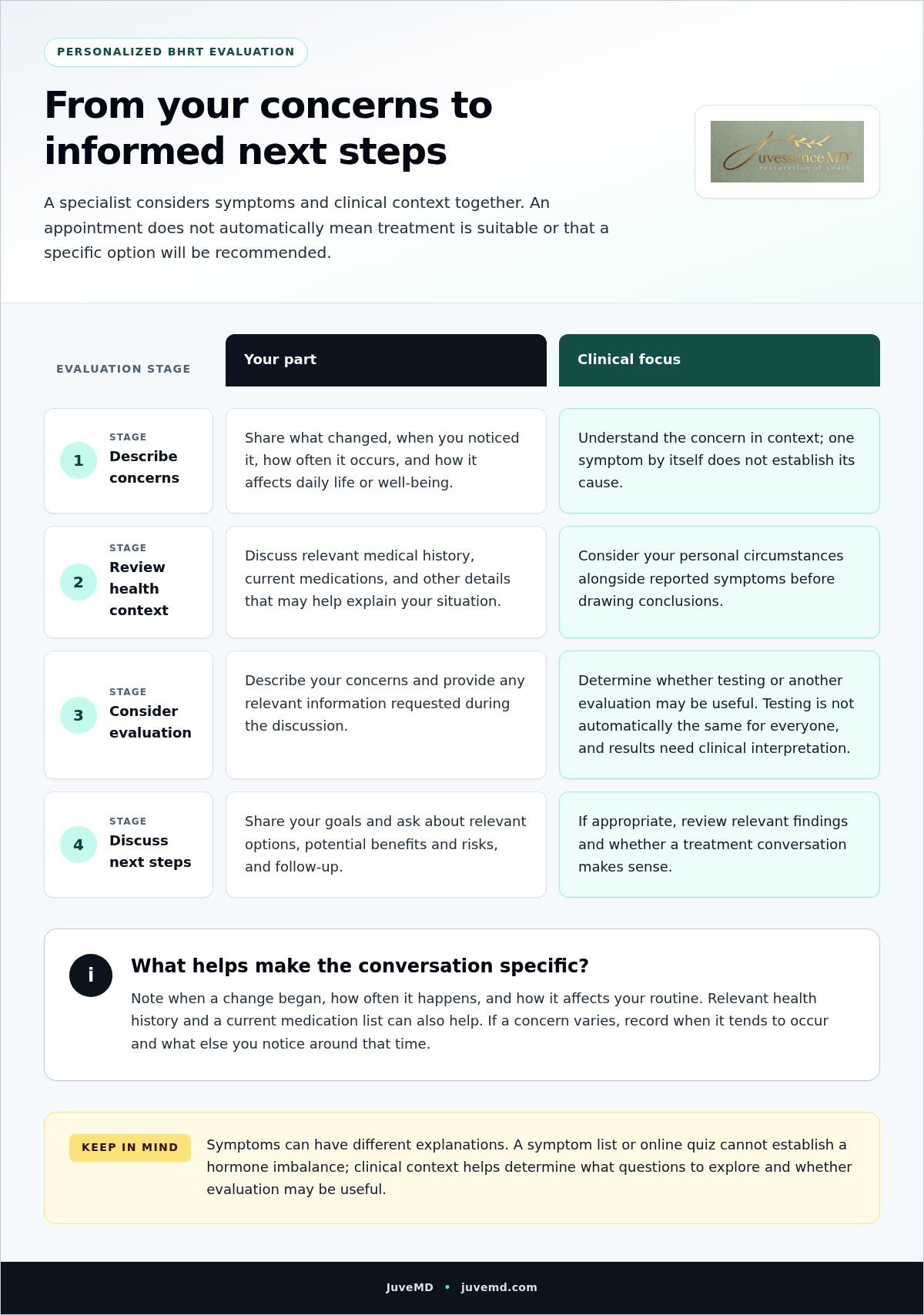
A personalized evaluation gathers information and considers it in context. It isn’t a shortcut from a symptom to a prescription. A conversation with a BHRT specialist Las Vegas patients consult may help clarify which questions deserve attention, whether further evaluation is appropriate, and what options could be discussed. A first appointment doesn’t automatically mean hormone therapy is suitable or that a specific treatment will be recommended.
Symptoms and clinical context should be considered together because the same concern can have different explanations for different people. A clinician’s interpretation depends on a person’s history, reported symptoms, and relevant findings, not on one symptom or result viewed in isolation.
- Describe your concerns. Share what has changed, when you noticed it, how often it occurs, and how it affects daily activities or well-being. Concrete examples can help distinguish a recent change from a longer-term pattern.
- Review relevant health context. Discuss medical history, current medications, and other details that may help a clinician understand your situation.
- Consider clinical evaluation. The clinician determines whether testing or another evaluation may be useful based on your circumstances. Testing isn’t automatically the same for everyone, and results require clinical interpretation.
- Discuss possible next steps. If appropriate, review relevant findings, personal goals, potential benefits and risks, and whether a treatment conversation makes sense.
What information can help make the consultation useful?
A few notes can help you explain your concerns clearly. Record when changes began and how they affect sleep, work, relationships, or other parts of your routine. Bring relevant health history and a current medication list, including supplements if applicable. If a concern varies, note when it tends to happen and what else you’ve observed around that time. Prepare questions about possible options, risks, and follow-up so you can leave with a clearer understanding of what was discussed.
How does a clinician discuss possible treatment paths?
Treatment discussions should connect your goals with relevant clinical findings while making room to consider possible benefits, risks, and alternatives. The clinician determines whether more evaluation is appropriate before discussing treatment. Don’t assume a particular format fits simply because it is available. For additional perspective on compounded formulations, the Endocrine Society’s View on Compounded BHRT offers context for questions patients may want to raise.
JuveMD’s hormone-focused care includes education for men and women, alongside bioidentical pellet hormone therapy and injectable treatments. If you’re preparing for a hormone-health conversation, explore JuveMD’s hormone-focused care in Las Vegas as a local resource for learning about your options. The purpose of an evaluation is a more informed discussion, not a guaranteed outcome or an automatic decision to begin therapy.
Are Hormone Pellets the Right BHRT Option for Everyone?
No single delivery format is automatically right for every person. Pellets are one form of bioidentical hormone therapy, while injectables deliver treatment by injection. These descriptions explain how the formats differ, not which one is appropriate for you. A treatment decision should follow an individualized clinical discussion, not a preference based only on convenience or an online claim.
“Bioidentical” describes hormones that are chemically identical to hormones produced by the body. The term doesn’t mean a therapy is risk-free, more effective, or inherently superior to other approaches. Potential benefits and risks depend on the specific treatment and a person’s health context. A clinician can help explain what is known, what remains uncertain, and which alternatives may be relevant.
What questions help clarify whether pellet therapy fits?
Use the conversation to connect your treatment preferences with your health history and goals. Ask how the clinician assesses candidacy, what potential benefits and risks apply to your situation, and what alternatives could be considered. You can also ask what follow-up may involve, how progress or concerns would be reviewed, and how decisions could be revisited if your needs or circumstances change.
Symptoms alone aren’t enough to determine whether pellets are suitable. A clinician needs to weigh the broader picture, including relevant history and evaluation findings, before discussing treatment. Bring up concerns that could affect your preferences, such as wanting to understand how care is monitored or how a plan could be reconsidered. These questions support a shared discussion; they don’t predetermine the answer.
How should patients compare pellets with injectable treatments?
Compare the delivery format as one part of the decision, alongside your goals, clinical context, and the clinician’s judgment. Pellets and injectables are different ways of delivering hormone treatment, but format alone doesn’t establish comparative effectiveness or safety. Ask the clinician to explain the considerations that apply to each option for you, including potential benefits, risks, alternatives, and follow-up. Avoid assuming a method is better simply because it seems simpler or more appealing.
The right questions may also depend on why you’re considering hormone care and on your circumstances. Men and women can have different health histories and goals, so treatment discussions should reflect the individual rather than rely on a gender-based assumption. A BHRT specialist Las Vegas patients speak with should explain these considerations without treating one format as the default for everyone.
At JuveMD, bioidentical pellet hormone therapy and injectable treatments are part of hormone-focused care for men and women. Learning about the options can help you arrive prepared, but the clinician-led discussion is where personal context, potential risks, and next steps come together. The aim is an informed decision, not a predetermined recommendation.
How to Prepare for a BHRT Specialist Appointment in Las Vegas
A little preparation can help you use a hormone-health conversation well. You don’t need to arrive with a diagnosis or decide on a treatment in advance. Bring clear observations and questions instead. A BHRT specialist Las Vegas patients meet with can guide which details matter and whether further evaluation may be relevant to your circumstances.
What should you write down before your visit?
Use a short note on your phone or paper to organize what you want to discuss. Specific examples can help you describe your experience without having to remember every detail during the conversation.
- Record your concerns. Note what prompted you to seek information, when you first noticed the changes, and whether they come and go or feel persistent.
- Describe the effect on daily life. Consider whether the concerns affect sleep, work, relationships, routines, or your general sense of well-being. You don’t need to label the cause.
- Gather relevant health information. Prepare a brief health-history summary and a current list of medications and supplements. The clinician can help determine which details are relevant.
- Write down questions. Include what you want to understand about treatment options, uncertainty, potential risks, and what follow-up could involve.
If you have existing health information that seems relevant, bring it or make a note of where it came from. You don’t need to decide which tests or records matter on your own. The clinician can guide what information or evaluation steps may be useful based on your individual situation.
What should you expect from a local care discussion?
A first conversation is an opportunity to explain your concerns, share relevant context, and understand possible next steps. It may lead to more questions or evaluation rather than an immediate treatment recommendation. Preparation doesn’t guarantee a particular plan; it helps make your priorities and uncertainties easier to discuss.
Clinical terms can feel unfamiliar. Ask for a plain-language explanation if a phrase, test, or treatment option isn’t clear. You might say, “What does that mean for my situation?” or “What information would help guide this decision?” You can also ask the clinician to explain what is known, what remains uncertain, and how potential benefits and risks are weighed. It’s reasonable to take time to understand before making a decision.
For people seeking hormone-focused care in Las Vegas, preparation can make the discussion more personal and focused without assuming symptoms have a single cause. JuveMD’s hormone care includes education for men and women, with discussions tailored to individual concerns and context.
Explore JuveMD’s hormone care to learn more about a local, personalized approach to hormone health.
Explore Personalized BHRT Care with JuveMD in Las Vegas
Choosing where to discuss hormone health is a personal decision. JuveMD is a Las Vegas clinic led by Dr. Andrea Dempsey, focused on hormonal health and wellness for both men and women. Its care includes hormone education, bioidentical pellet hormone therapy, and injectable treatments. The starting point isn’t a preset treatment format. It’s a conversation about your concerns, health context, and questions.
That focus can bring clarity to a topic crowded with strong online claims. Information about BHRT may explain general terms and options, but it can’t determine what’s appropriate for an individual. A treatment discussion should be guided by clinical judgment and shaped around the person, not based on a promise that one approach works for everyone.
How does JuveMD fit into a patient’s next-step decision?
If you’ve prepared notes about your concerns, health history, medications, and goals, you can use them to guide a focused hormone-health discussion. JuveMD’s hormone education can help make treatment concepts easier to understand, while any discussion of possible care remains individualized and clinically guided. Pellets and injectable treatments are among the approaches offered, but neither is the automatic choice for every person.
People researching hormone care may want to consider what is known about their situation, what further evaluation may be relevant, and how potential benefits and risks should be understood before considering BHRT. JuveMD’s hormone education can provide context for those considerations. Keep your own questions at the center: general information is a starting point, not a substitute for an individual clinical discussion.
What is a reasonable next step if you are considering BHRT?
Start by identifying what you hope to understand. List the changes you’ve noticed, what you want to ask about treatment formats, and what remains unclear. A thoughtful conversation doesn’t require you to arrive with a firm decision. It can help you understand whether further evaluation or a treatment discussion is appropriate, and which questions to consider next.
JuveMD’s hormone-focused care serves both men and women, recognizing that personal health context and goals differ. There’s no need to assume that one symptom points to a particular imbalance or that the same care path fits everyone. A measured, informed discussion is a reasonable next step, whether you’re exploring pellet therapy, injectable treatments, or seeking clearer hormone education.
Explore JuveMD’s hormone care in Las Vegas to learn about the clinic’s approach and consider a next step at your own pace.
Take a Thoughtful Next Step
You don’t need to arrive with every answer. A useful next step is to identify what you’d like clarity on and bring those questions into a focused conversation. If you’re looking for a BHRT specialist Las Vegas patients can turn to for personalized hormone care, consider what matters most to you: understanding your symptoms, learning about treatment considerations, or deciding whether an evaluation is appropriate.
Give yourself room to ask questions and consider the information you receive. A clinical discussion should help you understand possible next steps in the context of your health and goals, without assuming that hormone therapy is right for everyone. The decision to explore care can begin with curiosity, not pressure.
Explore personalized hormone care at JuveMD to learn about hormone-focused care in Las Vegas and take a considered next step toward understanding your options.
Frequently Asked Questions
What does a BHRT specialist do?
A BHRT specialist helps patients understand hormone-related concerns and whether further clinical evaluation may be relevant. The role can include explaining hormone terminology, considering symptoms alongside health history, and discussing possible next steps. For example, if low energy is a concern, a specialist can help explore what context may matter rather than treating that symptom alone as proof of a hormone imbalance. Education and individual medical decisions are related, but they aren’t the same.
How do I find a BHRT specialist in Las Vegas?
A search for “BHRT specialist Las Vegas” can help you find local hormone-focused care, including JuveMD, a Las Vegas clinic led by Dr. Andrea Dempsey. JuveMD provides hormone education and personalized hormone optimization discussions for men and women. As you consider local care, think about the questions you want answered, such as what an evaluation may involve and how possible treatment choices are discussed.
Is bioidentical hormone therapy the same as natural hormone therapy?
Not exactly. “Bioidentical” describes hormones that are chemically identical to hormones produced by the body; “natural” can be used more loosely and doesn’t explain a treatment’s source, formulation, or evidence. The word “natural” also doesn’t establish that a therapy is risk-free or appropriate for everyone. If a product or treatment is described as natural, ask what that means in practical terms and discuss its potential risks with a clinician.
Are hormone pellets right for everyone?
No. Pellets are one hormone-delivery format, and their suitability depends on individual clinical judgment. They’re placed under the skin and release hormones over time; once inserted, the dose can’t be adjusted. Discuss this feature before considering the approach. Ask how the clinician weighs your health history and goals, what alternatives may be relevant, and how follow-up and treatment decisions would be handled.
Can men and women both see a BHRT specialist?
Yes. Men and women may both seek hormone-focused care, though their concerns, health histories, and goals can differ. JuveMD serves both men and women. A useful discussion should focus on the individual rather than assume the same symptoms or treatment considerations apply to everyone. Explain what prompted your interest and ask how your circumstances shape the evaluation, including whether hormone-related questions warrant further clinical attention.
What should I bring to a hormone specialist appointment?
Bring a current medication and supplement list, relevant health-history notes, and a short record of the concerns you want to discuss. Include when each concern began and whether you’ve noticed patterns, such as changes during a particular part of your routine. Recent lab results may also be useful if you have them. A clinician can help determine which details matter and whether any additional evaluation is appropriate.
Does an appointment with a BHRT specialist mean I will receive hormone therapy?
No. An appointment is a chance to discuss your concerns and understand possible next steps, not a commitment to start treatment. The clinician may recommend further evaluation, explain why a particular option may not be appropriate, or discuss treatment considerations if that’s clinically relevant. You can ask questions, request clear explanations, and take time to consider the information before making a decision.