
What if fatigue, low mood, or changes in sexual health aren’t caused by low testosterone? These symptoms can affect daily well-being, but they may have other explanations. A search for treatment for andropause symptoms Las Vegas can lead to confident promises. A responsible care decision starts by understanding what may be behind your symptoms, not assuming hormone treatment is the answer.
If you’re concerned, it makes sense to want clear answers and options that fit your health and priorities. A clinical evaluation can consider your symptoms, medical history, and appropriate testing, while helping distinguish possible hormone changes from other causes. Treatment isn’t one-size-fits-all, and a clinician should assess suitability individually.
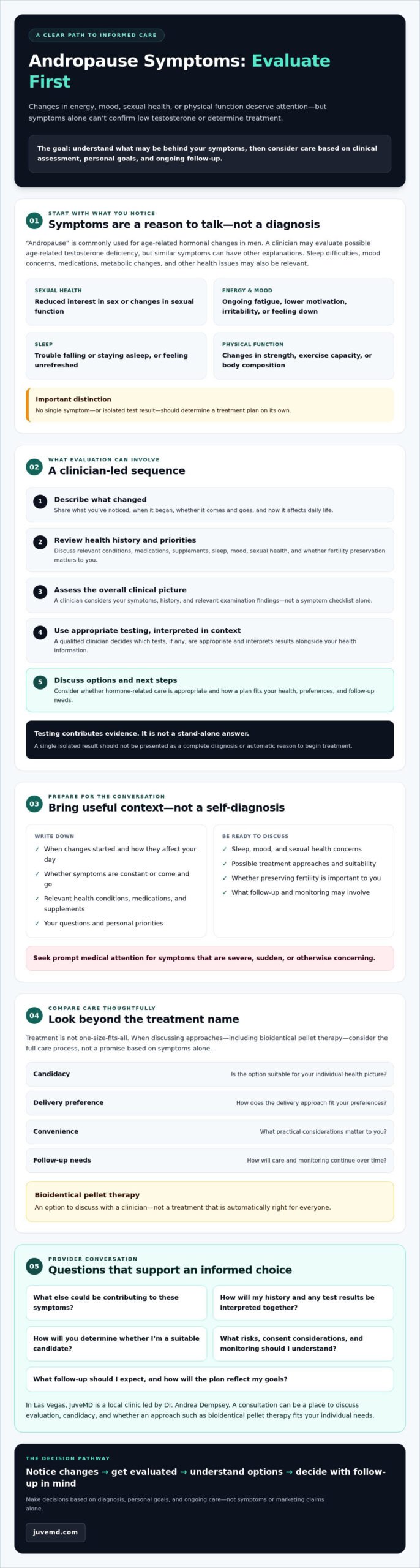
This guide explains what to expect from an evaluation, how to compare approaches such as bioidentical pellet therapy, and what to ask about candidacy and follow-up. You’ll also learn how to prepare for a personalized hormone consultation in Las Vegas, including with JuveMD, a local clinic led by Dr. Andrea Dempsey. The goal is to help you make an informed decision based on diagnosis, personal goals, and ongoing care, rather than symptoms or marketing claims alone.
Key Takeaways
- Persistent changes in energy, mood, or sexual health deserve attention, but symptoms alone can’t confirm a hormone condition.
- Learn what to expect from a clinician-led assessment, including health history, clinical review, and appropriate test interpretation.
- Compare treatment for andropause symptoms Las Vegas options by candidacy, delivery preference, convenience, and follow-up needs.
- Use practical questions about risks, consent, and monitoring to assess whether a provider’s approach fits your needs.
- Explore bioidentical pellet therapy as an option to discuss with JuveMD, not a treatment that’s automatically right for everyone.
When Andropause Symptoms in Las Vegas Deserve a Medical Evaluation
Persistent changes in energy, mood, sexual health, or physical function can be unsettling, especially when they affect work, relationships, or daily routines. They’re worth discussing with a clinician, but they don’t automatically mean testosterone is low. “Andropause” is a commonly used term for age-related hormonal changes in men, not a diagnosis confirmed by symptoms alone. Clinicians may use the term late-onset hypogonadism when evaluating possible age-related testosterone deficiency.
Symptoms can prompt an evaluation, but only clinical assessment and appropriate testing can help establish whether a hormone condition is present. This distinction matters before considering treatment for andropause symptoms Las Vegas providers may discuss. Sleep difficulties, mood concerns, medications, metabolic changes, and other health issues can cause similar changes. A careful evaluation helps guide the next step.
Which changes may prompt a conversation with a clinician?
Consider raising changes that persist, worsen, or interfere with daily life. Tell the clinician what you’ve noticed and when it began, rather than trying to diagnose the cause yourself. Symptoms vary, and none of these experiences is specific to testosterone levels.
- Sexual health: Reduced interest in sex or changes in sexual function.
- Energy and mood: Ongoing fatigue, lower motivation, irritability, or feeling down.
- Sleep: Trouble falling or staying asleep, or feeling unrefreshed.
- Physical function: Changes in strength, exercise capacity, or body composition.
For broader symptom context, see this low testosterone signs guide. Use it as background for a conversation, not as a tool for self-diagnosis.
Why symptoms alone cannot determine treatment
A clinician considers the pattern and duration of symptoms alongside your health history, relevant examination findings, and appropriate laboratory testing. They may ask about sleep quality, mood, medications, and other health changes to identify possible explanations beyond hormones. Testing and interpretation should be guided by a qualified clinician. A single symptom or test result shouldn’t determine a treatment plan on its own.
Before exploring treatment options, note when the changes started, how they affect you, and any medications or supplements you take. Seek prompt medical attention for symptoms that are severe, sudden, or otherwise concerning. A focused evaluation can help clarify what needs attention and whether hormone-related care is appropriate.
What a Las Vegas Andropause Evaluation Should Include
A thoughtful evaluation follows a clear sequence: discuss what’s changed, review your health history, assess your overall clinical picture, interpret any appropriate tests, and then consider options. This grounds decisions in both your experience and relevant medical information, rather than a symptom checklist or a single lab result.
“A hormone test becomes useful when a clinician interprets it alongside your symptoms, health history, and examination.” The Mayo Clinic’s overview of understanding male menopause also explains why evaluation matters: similar concerns can have causes other than hormone changes.
What to discuss during the first appointment
A little preparation can make the conversation more focused. Note when changes began, whether they’re constant or come and go, and how they affect your day. Bring a list of relevant health conditions, medications, and supplements, along with your questions and personal priorities. For example, you might want to understand possible treatment approaches, discuss sexual health privately, or share whether preserving fertility is important to you.
Be candid about sleep, mood, sexual health, and fertility concerns, even if they feel difficult to raise. A clinician may ask about medical conditions or medicines that could affect symptoms or influence whether a treatment is suitable. These details help shape a safer, more individualized discussion.
How testing fits into a diagnosis
Laboratory testing can contribute useful evidence, but it’s one part of an evaluation, not a stand-alone answer. A qualified clinician decides which tests, if any, are appropriate and interprets the results in context. A single isolated result shouldn’t be presented as a complete diagnosis or automatic justification for treatment. The clinician may explain whether further assessment is needed and how the findings relate to your reported changes.
This matters before considering treatment for andropause symptoms Las Vegas clinics may discuss. Ask what a test can and can’t establish, how the result will inform the decision, and whether other possible explanations should be considered. For general background on hormone therapy, read this bioidentical hormone therapy guide.
After reviewing the findings, the clinician can explain whether treatment is appropriate to consider, what uncertainties remain, and what follow-up questions matter. If you’re exploring local hormone care, you can review JuveMD’s hormone and wellness information as a starting point for a personalized discussion.
Comparing Andropause Treatment Options in Las Vegas
If a clinician confirms a hormone-related condition and discusses treatment, the delivery method is one part of the decision. Injections, topical formulations, and pellets are routes that may be considered in testosterone care, but availability and suitability vary by provider and patient. JuveMD’s primary hormone offering is bioidentical pellet therapy. The clinic also lists injectables, but ask directly which treatments are currently available rather than assuming a specific injectable hormone is offered.
Use this comparison to organize questions, not to choose a treatment without medical guidance. The right option depends on your diagnosis, health history, preferences, and follow-up plan.
| Route to discuss | Candidacy and delivery preference | Convenience, adjustment, and follow-up |
|---|---|---|
| Pellets | A clinician can assess whether implanted pellets fit your clinical needs and preferences. JuveMD offers bioidentical pellet hormone therapy. | Ask about the care involved in placement, when treatment can be reassessed, and what options exist if your needs change. Pellets aren’t adjusted day to day like a treatment you administer yourself. |
| Injectables | Discuss whether an injectable treatment is clinically appropriate and what specific medication and administration plan are being considered. | Ask who administers it, how often it is given, and what monitoring or reassessment is needed. These details depend on the prescribed treatment and provider. |
| Topical formulations | A clinician can explain whether a topical route suits your health situation and daily routine. | Ask about regular application, precautions, and how the dose could be reviewed or changed. Follow-up needs depend on the specific medication and your response. |
Questions to compare before choosing a delivery method
Ask how each option fits your diagnosis, medical history, and priorities. Clarify the administration schedule and follow-up plan for the specific treatment proposed; don’t rely on general assumptions about a route. Find out how the clinician will respond if symptoms persist, side effects arise, or your health goals change. A preference for pellets, injections, or another format doesn’t replace diagnosis, informed consent, or monitoring.
Benefits, limitations, and safety discussions
Potential benefits and risks vary with the person and treatment. Discuss fertility goals, relevant health conditions, contraindications, and other risks before deciding. Ask what uncertainties apply in your case and how treatment could be reassessed. “Bioidentical” describes a hormone’s chemical structure; it doesn’t mean a therapy is risk-free, superior for everyone, or automatically appropriate. A careful conversation about treatment for andropause symptoms Las Vegas should cover both the reasons to consider an option and its limitations.
How to Choose an Andropause Provider in Las Vegas
Choosing a provider is about more than finding a clinic that discusses hormones. Look for a clear, clinician-led process that explains how diagnosis is considered, how treatment choices are made, and what support is available afterward. If you’re considering treatment for andropause symptoms Las Vegas, use these questions to assess whether a provider’s approach feels thorough and transparent.
Before starting hormone treatment, verify who will oversee your care, what evidence supports the diagnosis, which risks and alternatives were discussed, how you’ll give informed consent, and how follow-up will work.
Questions to bring to a hormone consultation
Bring your questions in writing so you can compare the answers and take time to consider your options. A provider should be willing to explain the reasoning behind recommendations in language you understand.
- Diagnosis: What findings support the diagnosis? What other possible explanations for my symptoms were considered?
- Qualifications and responsibility: Which clinician will assess me, make treatment decisions, and oversee follow-up? How can I verify their qualifications?
- Options and trade-offs: Which treatments may be suitable for me, what are their limitations and risks, and what alternatives are available?
- Consent and review: What should I understand before agreeing to treatment? How will we review progress and decide whether the plan needs to change?
- Communication: Who should I contact with side effects, new symptoms, or questions, and what should I do if I can’t reach the care team?
Records and goals to prepare before the visit
Preparation helps the clinician understand your situation and keeps the conversation focused on what matters to you. Bring an updated medication and supplement list, along with relevant medical history or previous test results if available. Write down when symptoms began, what has changed, and any questions you don’t want to forget.
Be direct about your priorities, including fertility plans, sexual health, energy, or other personal goals. These details can affect how a clinician discusses suitability and treatment choices. You can also ask whether appointments are available in Las Vegas and how ongoing care, follow-up, and communication are arranged. Confirm these practical details directly with the clinic rather than assuming every provider offers the same access.
A careful provider should welcome questions and explain how your health history, clinical findings, preferences, and concerns shape the discussion. If you’d like to explore a personalized hormone consultation in Las Vegas, contact JuveMD to discuss your evaluation.
Discuss Andropause Symptom Treatment with JuveMD in Las Vegas
After learning what an evaluation should cover and how to assess a provider, you can bring those questions to a local clinician. JuveMD is a Las Vegas hormone and wellness clinic led by Dr. Andrea Dempsey. Its primary hormone offering is bioidentical pellet hormone therapy, which may be discussed as an option after an individualized evaluation. Pellets aren’t appropriate for everyone, and treatment isn’t guaranteed to address every symptom.
A consultation is an opportunity to understand your health picture and ask whether hormone-related care makes sense for your needs. You can discuss what the assessment involves, what findings might support a treatment discussion, and what other explanations or considerations matter in your situation.
What to discuss with JuveMD about pellet therapy
Ask whether pellet therapy may be appropriate in light of your symptoms, clinical assessment, and health history. Request a clear explanation of potential benefits, limitations, uncertainties, and risks, as well as what monitoring and follow-up may involve. Share fertility plans and other health priorities so they can be considered in the conversation. A treatment recommendation should be based on your circumstances, not on the delivery method alone.
For more background before discussing this option, read JuveMD’s testosterone pellet therapy guide. Use it to prepare questions, not to decide on a diagnosis or treatment without a clinician’s input.
A thoughtful next step for Las Vegas patients
Bring a short list of your symptoms, personal goals, health history, and questions. You might ask what information the clinician needs to assess your concerns, whether pellet therapy is among the options to discuss, and how follow-up works if treatment is considered. This can help you evaluate treatment for andropause symptoms Las Vegas based on clinical fit and informed choice rather than assumptions.
Appointment access and current services can change, so confirm those details directly with JuveMD. If you’re considering a consultation, reach out to ask whether an evaluation fits your concerns and what to prepare. You don’t need to arrive with a self-diagnosis; the purpose is to have a personalized, informed discussion about possible next steps.
Take the Next Step Toward Clearer Answers
Persistent changes in energy, mood, sexual health, or physical function deserve thoughtful attention, but they don’t prove testosterone is the cause. A careful evaluation can put symptoms, health history, and appropriate testing into context before treatment is considered.
As you compare treatment for andropause symptoms Las Vegas options, focus on more than the delivery method. Ask how a provider individualizes recommendations, explains potential risks and alternatives, and plans follow-up. Bioidentical pellet hormone therapy may be an option to discuss, but suitability depends on an individual clinical evaluation.
JuveMD is a Las Vegas hormone and wellness clinic led by Dr. Andrea Dempsey, with bioidentical pellet hormone therapy as a primary service. If you’d like to discuss your concerns and learn whether a hormone consultation fits your needs, contact JuveMD to discuss your hormone health.
You don’t need to have every answer before you begin. Bring your questions and goals, and take the next step at a pace that feels right for you.
Frequently Asked Questions
What are common symptoms associated with andropause?
Commonly reported changes include lower sexual interest, changes in sexual function, persistent fatigue, reduced motivation, mood changes, disrupted sleep, and changes in strength or body composition. Symptoms and their combinations vary from person to person. They can also have causes unrelated to testosterone, so use them as reasons to discuss your health with a clinician, not as proof of a hormone condition or a reason to start treatment on your own.
How is andropause diagnosed?
Andropause is a commonly used term, not a diagnosis established by symptoms alone. A clinician reviews your symptom history and health background, assesses your overall clinical picture, and decides whether laboratory testing is appropriate. Test results need interpretation in context, and one isolated result shouldn’t be treated as a complete diagnosis. Ask the clinician to explain what the findings support, what remains uncertain, and whether other explanations should be considered.
Is testosterone treatment right for every man with andropause symptoms?
No. Symptoms don’t establish that testosterone is low or that treatment is suitable. A qualified clinician needs to consider your individual symptoms, health history, appropriate test results, potential risks, and personal goals before discussing treatment. The conversation should include possible benefits, limitations, and alternatives. If treatment is considered, ask how the care team will monitor your health and what steps to take if concerns or new symptoms arise.
What treatment options can I discuss in Las Vegas?
Depending on your evaluation and local provider, options to ask about may include testosterone delivered through injections, topical formulations, or pellets. JuveMD is a Las Vegas hormone and wellness clinic whose primary hormone offering is bioidentical pellet therapy. It also lists injectable treatments, but confirm which specific options are currently available. Ask a clinician which choices, if any, fit your diagnosis, preferences, health history, and follow-up needs.
Are testosterone pellets suitable for everyone?
No. Pellets are one delivery method, not a universal solution. Whether they’re appropriate depends on an individualized clinical evaluation, including your symptoms, health history, treatment goals, and relevant risks. Before deciding, ask the clinician to explain potential benefits and uncertainties, what the treatment involves, and how your health will be monitored. Bioidentical describes a hormone’s chemical structure; it doesn’t mean treatment is risk-free or automatically right for you.
What should I ask a Las Vegas hormone specialist before treatment?
Ask what findings support the diagnosis and whether other causes of your symptoms were considered. Find out which options may suit you, what risks and alternatives apply, how follow-up will work, and who to contact with side effects or questions. You can also confirm who oversees your care and whether the clinic’s Las Vegas appointment access and ongoing-care arrangements fit your needs. Clear answers help you make an informed decision.
Can fatigue or low mood alone mean I have low testosterone?
Fatigue or low mood alone can’t confirm low testosterone. These concerns may have several possible explanations, including sleep difficulties, mood-related factors, medications, or other health issues. If a change persists or affects your daily life, describe its timing and impact to a clinician. They can consider your broader health picture and determine whether testing is appropriate, rather than assuming a hormone condition from one symptom.