
The lowest-cost plan isn’t always the most affordable if it leaves the reasons for weight gain unaddressed. Affordable weight loss programs in Las Vegas may combine physician supervision with individualized care, helping patients explore whether medication such as semaglutide is appropriate and what support may be involved.
If previous approaches haven’t lasted, that doesn’t mean you’ve failed. Medical and lifestyle factors can affect weight management, so a structured program may provide more guidance than a plan focused on willpower alone.
This article explains how physician-supervised weight loss works, which kinds of support and insurance coverage may be relevant, and how semaglutide program pricing fits into your options. You’ll also learn what can shape the overall cost and what to consider when deciding whether a medical program is the right next step.
Key Takeaways
- Learn why physician-supervised care may address factors that make weight loss difficult to sustain, beyond food choices and exercise alone.
- See how nutrition counseling and behavior support can be shaped around daily routines and individual needs.
- Understand what to review in your insurance benefits to determine whether any part of weight-management care may be covered.
- Explore how semaglutide program pricing can depend on the medication and the care included, without assuming every program costs the same.
- Find out what physician supervision involves and how to decide whether a medical weight-loss program fits your goals.
Why Medical Weight Loss Works When Other Approaches Have Not?
Medical weight-loss care considers more than a meal plan or exercise target. A physician can review health history, current medications, eating patterns, sleep, and previous efforts before discussing a plan. This assessment can identify practical barriers, such as overnight shifts, as well as factors that may warrant medical treatment. For someone working changing hours in Las Vegas, care can account for irregular meal timing instead of assuming a standard daytime routine. The aim is a supervised approach informed by the patient’s circumstances.
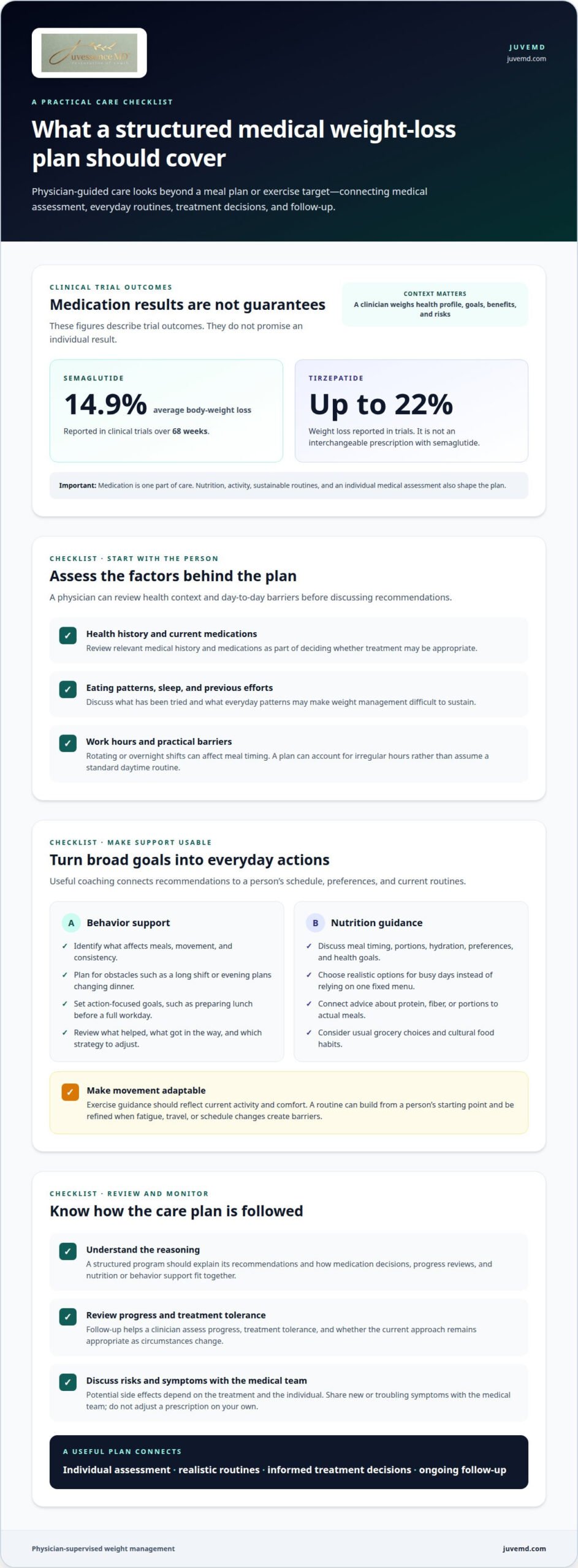
GLP-1 medications are one option a clinician may consider. Semaglutide and tirzepatide act on pathways involved in appetite and fullness, but they aren’t interchangeable prescriptions. Clinical trials report average weight loss of 14.9% of body weight with semaglutide over 68 weeks. Trials report weight loss of up to 22% with tirzepatide. These results describe trial outcomes, not a promised result for each patient. A prescription decision weighs the person’s health profile, treatment goals, possible benefits, and potential risks.
Physician-guided care also allows a plan to be reviewed as circumstances change. Someone whose work schedule shifts, for example, may need different meal-planning strategies and follow-up than someone with predictable hours. Monitoring helps the clinician assess progress, treatment tolerance, and whether the current approach remains appropriate. A prescription is only one part of medical weight management: nutrition, activity, and sustainable routines also shape how care fits into daily life.
Medically supervised programs and medications can involve risks and side effects. Reactions depend on the treatment and the individual. A clinician reviews relevant health history, explains potential concerns, and responds to symptoms during care. Share new or troubling symptoms with your medical team rather than adjusting a prescription on your own. This safety discussion should take place before treatment and continue as the plan is reviewed.
A well-structured Las Vegas program should start with an individualized medical assessment, explain the reasoning behind its recommendations, and include follow-up. It should clarify how medication decisions, progress reviews, and nutrition or behavior support fit together. Someone working rotating shifts, for example, needs a plan that accounts for those hours rather than a generic schedule. These details help patients understand what care includes and how adjustments are handled. They also make it easier to compare affordable weight loss programs Las Vegas residents may consider, beyond medication alone.
Behavior modification and nutrition counseling
Nutrition counseling and behavior support can turn broad goals into practical routines. In a Las Vegas weight-management consultation, discussing work hours, food choices, and activity patterns can reveal what shapes everyday decisions.
Behavior Change Support
Behavior support focuses on the actions surrounding meals, movement, and consistency. A useful discussion might explore what happens during a long work shift, how evening plans affect dinner, or what makes exercise hard to maintain. Look for guidance that turns those patterns into practical strategies. Planning a satisfying meal before a late shift, for example, can address a recurring obstacle more effectively than relying on willpower at the end of the day.
Nutrition and Lifestyle Guidance
Nutritional guidance should connect food choices with a person’s routines, preferences, and health goals. Instead of relying on one fixed menu, coaching can discuss meal timing, portions, hydration, and realistic options for busy days. Someone who often eats between appointments might identify convenient meals that feel satisfying. Exercise guidance should reflect current activity and daily demands, building toward a manageable routine rather than an abrupt change.
At the first consultation, useful topics include a typical weekday, weekend meals, sleep habits, work hours, and previous efforts. These details can reveal where a plan may be difficult to follow. Someone with early starts and late meetings, for instance, may need different meal strategies across the week. Tracking these patterns can help the care team identify practical changes without treating every missed goal as a lack of commitment.
Behavior goals are most useful when they describe an action rather than just an outcome. “Prepare lunch before a full workday” is more actionable than “eat better.” Other examples include setting a regular meal window, adding a planned walk to an existing routine, or noticing situations that prompt unplanned snacking. Follow-up discussions can then focus on what helped, what got in the way, and which strategy to adjust.
Nutrition coaching should explain recommendations in clear language. Advice about protein, fiber, or portions is most useful when connected to actual meals, such as choosing a balanced breakfast before a demanding day. Food preferences and cultural habits matter too; guidance that ignores them can be difficult to follow. A practical test is whether the advice fits the patient’s usual grocery choices and schedule.
Exercise guidance should start with a person’s current routine and comfort. A desk-based worker might add brief walking periods, while someone already active may need help maintaining consistency around changing shifts. The plan should make movement specific and adaptable. At follow-up, discussing barriers such as fatigue, travel, or schedule changes can help refine the routine and keep nutrition and lifestyle coaching relevant.
Insurance coverage
Insurance can affect the out-of-pocket cost of medical weight-loss care, but coverage depends on the individual plan. Benefits for appointments, nutrition support, prescription medication, and related services may be assessed differently. For example, a plan may handle a clinician visit separately from semaglutide or tirzepatide. Review your plan’s benefit documents to understand which categories may apply.
Health-plan wellness benefits or community-center programs in Las Vegas may offer low-cost or free options. Availability, eligibility, and included services vary. Review program descriptions and your health-plan benefits before counting on coverage.
A benefits review is most useful when it addresses the specific treatment being considered. During an appointment, a licensed medical professional can explain the proposed care; the insurer’s plan materials describe how benefits may apply. Useful questions to resolve include:
- Does the plan cover medical weight-management visits, and what patient costs may apply?
- Are nutrition counseling or lifestyle services included as a separate benefit?
- Is a prescribed medication such as tirzepatide reviewed under the pharmacy benefit?
- Does the plan require prior authorization or other documentation before coverage?
Medication coverage may depend on the plan’s formulary, its list of covered prescriptions, and the reason a medication is prescribed. A plan may treat a weight-management prescription differently from one for another indication. Compare the medication name, prescribed use, and any approval requirements with your plan documents. This can clarify potential coverage without assuming the prescription will be paid for.
Keep relevant information together: save the benefit summary, any insurer response, and notes from the appointment. If a claim or authorization is declined, the plan’s explanation may show whether the issue concerns eligibility, documentation, or an exclusion. When appropriate, the prescribing clinician can explain the medical rationale and provide relevant records. Reviewing these details can help you understand likely expenses before committing to a care plan.
Insurance is only one part of affordability. Compare the benefits with the care you’re considering, such as medical visits, medication, and nutrition support. A lower upfront cost may not include the same services or follow-up. When comparing affordable weight-loss options in Las Vegas, weigh the plan’s terms, your care needs, and your budget. Insurance approval alone doesn’t determine whether a program is right for you.
Semaglutide program pricing
Physician-supervised weight-loss clinics in Las Vegas prescribe GLP-1 medications, including semaglutide, when clinical assessment supports their use. Eligibility depends on health history, current medications, treatment goals, and the clinician’s assessment. Program pricing depends on the case and is provided after a quote request; factors include medication, clinical visits, follow-up, and included support.
Ask what the quoted program covers, not just what the medication costs. A personalized plan may involve several components, so the pricing structure should make them clear. For example, a quote can distinguish medication from visits and ongoing guidance. This helps you understand what you’re paying for and compare the full scope of care with your budget.
Semaglutide is a prescription treatment, and a clinician determines whether it fits a patient’s health profile and goals. Tell your medical team about current prescriptions, including insulin, supplements, and other weight-management treatments. This information can help the clinician assess potential interactions and determine an appropriate plan. Don’t change another prescription without medical direction.
Insurance may affect out-of-pocket expenses, but coverage and medication costs are separate questions. A health plan may review a prescription under its pharmacy benefit, while clinical visits or coaching may fall under other benefits. Use your plan documents to understand coverage requirements, then discuss the proposed treatment and related services during a clinical appointment. Insurer approval doesn’t replace the clinician’s assessment of whether treatment is suitable.
Before agreeing to a program, clarify its pricing structure and what happens if the treatment plan changes. Ask whether follow-up appointments, dose adjustments, or nutrition support are included in the quoted cost. These details matter when comparing options because programs may offer different levels of clinical guidance. A clear explanation should identify included services and factors that could change the total expense.
Affordability also depends on whether the care suits a patient’s needs over time. A lower initial price may not include the same support or clinical oversight as another plan. Consider medication, appointment frequency, follow-up, and insurance benefits together. This gives you a more useful comparison than a single cost figure, especially when both a prescription and ongoing medical care are involved.
For patients considering physician-guided treatment, medical weight-loss care can provide a starting point for discussing treatment fit and program components. A clear conversation about goals, medications, and the quote helps establish what the proposed plan includes.
Physician-supervised weight loss
Physician supervision connects a treatment plan with the patient’s health history, goals, and response over time. At an initial appointment, the physician reviews current medications, previous weight-management efforts, daily habits, and factors such as blood sugar when relevant. This provides a clinical starting point for discussing whether medication, nutrition support, or another approach may fit. It also gives the patient an opportunity to raise concerns before a plan begins.
For a Las Vegas patient working rotating shifts, the physician can discuss how schedule changes affect meals, activity, and follow-up. Someone taking insulin should mention it during the review rather than treating weight-loss prescriptions as separate from other care. Considering the full picture helps the clinician discuss options and explain which details matter for an individualized plan.
Follow-up is an important part of supervised care. At each review, the medical team can discuss progress, appetite, treatment tolerance, and changes in routine. A patient experiencing persistent nausea or a change in appetite can raise it at follow-up so the physician can assess next steps. Report symptoms and avoid changing a prescription without medical direction.
Physician oversight also makes room for goals beyond a number on the scale. A patient may want to improve daily energy, establish consistent eating habits, or discuss how blood sugar relates to their health history. These priorities can guide treatment conversations and help define realistic ways to assess progress. A weight-loss plan may need adjustments as work, travel, and personal circumstances change.
Experience is one factor patients may consider when choosing medical weight-loss care. Dr. Dana Trippi has nearly 20 years of specialized expertise in weight-loss medicine. A physician’s role is not simply to issue a prescription; it includes reviewing relevant health information, explaining the reasoning behind options, and guiding follow-up. Patients can expect clear discussion of what the proposed plan involves and how their progress will be reviewed.
For a productive appointment, bring an accurate medication list and describe previous approaches, current eating patterns, work schedule, and exercise habits. You can also note questions about appetite, blood sugar, or medication concerns. This information helps the physician understand your starting point and discuss a plan that fits your weight-loss goals. Details such as overnight work or frequent travel can make the conversation more useful.
To discuss physician-guided weight-loss care, contact JuveMD about weight-loss care.
JuveMD: Weight Loss
JuveMD offers weight-loss care for people seeking medical guidance as they evaluate treatment options. A consultation can help you discuss your health goals, previous approaches, and questions about medication or ongoing support. It may be a useful next step after reviewing insurance benefits, program components, and factors that influence pricing. The focus is understanding what care involves and whether it aligns with your needs, not assuming one approach suits everyone. JuveMD also offers Bioidentical Pellet Hormone Therapy, injectables, and skin treatments for other wellness and aesthetic concerns.
If you’re considering medical weight-loss support, contact JuveMD to discuss your goals and questions.
Choose a Next Step That Fits Your Goals
Prepare for a focused conversation by identifying what you hope to change, what support matters to you, and what questions you still have about treatment. This can help you decide whether medical weight-loss care fits your goals now or whether another concern deserves attention first. When comparing affordable weight loss programs in Las Vegas, look beyond a single feature and consider how each proposed plan fits your health needs, routines, and budget.
JuveMD offers weight-loss care alongside Bioidentical Pellet Hormone Therapy, injectables, and skin treatments. Start with the concern you want to address, then discuss which options may suit your needs. Bring practical questions about care and costs so you can make an informed decision without feeling rushed.
Contact JuveMD to discuss your options and take a thoughtful next step toward care that suits your goals.
Frequently Asked Questions
What are the most affordable weight loss programs in Las Vegas?
The most affordable program is the one whose total cost and included care fit your needs. Compare what each option covers, including clinical visits, medication, follow-up, and nutrition support. A lower starting cost may exclude services you need later. Someone considering prescription treatment, for example, should compare plans that include medical oversight with options focused only on general wellness support.
How much do Las Vegas weight loss programs cost per month?
Monthly program pricing depends on the individual case and is provided after a quote request. Costs may include medication, clinical visits, follow-up, and other support. Ask for a clear breakdown of recurring charges and separate services so you can distinguish ongoing program expenses from one-time appointments. Your insurance benefits may also affect out-of-pocket spending.
Which Las Vegas weight loss clinics accept insurance or HSA/FSA payments?
Insurance and HSA/FSA payment policies vary by clinic and plan, so there is no universal answer for every patient. Confirm whether the clinic bills your insurance and whether your plan covers the specific service or prescription. For HSA/FSA funds, review your account rules and the clinic’s payment policies before enrollment. Coverage for an appointment may differ from coverage for medication.
What is included in the price of Las Vegas weight loss programs, such as consultations, meal plans, and follow-ups?
Program inclusions vary, so don’t assume a consultation or meal plan is part of every quoted price. Request an itemized explanation showing whether the program includes clinical appointments, nutrition guidance, prescription medication, and follow-up. Clarify whether “meal plan” means a personalized document or general counseling. This helps you compare the actual services rather than the program label.
What should a Las Vegas weight loss provider explain before enrollment?
Before enrollment, the provider should explain the proposed care, medication considerations, possible side effects, follow-up process, and full pricing structure. Ask how the plan may change if your health needs or treatment tolerance changes. You should understand what is included and how concerns are handled before deciding. This FAQ is educational, not medical advice; consult your healthcare provider before making health-related changes.