
Menopause care isn’t one-size-fits-all, and treatment isn’t always necessary. A post-menopause health specialist in Las Vegas can help assess whether symptoms that affect daily life may benefit from treatment, including hormone therapy or other options. The right approach depends on symptoms and personal medical history.
It’s understandable to focus first on hot flashes, night sweats, or changes in sleep and mood. But post-menopause care can also address weight and metabolic health, as well as longer-term concerns such as heart and bone health. Treatment options may include hormone therapy, vaginal cream for dryness, or certain antidepressants for hot flashes. Supplements have limited evidence and aren’t right for everyone.
This article explains common symptoms, outlines treatment considerations, and explores how care may support heart, bone, weight, and metabolic health after menopause. You’ll also learn what a personalized evaluation may consider, helping you understand the options and have a more informed conversation about next steps.
Key Takeaways
- Menopause treatment is optional, but care may help when symptoms interfere with daily life; available approaches depend on symptoms and personal medical history.
- Hot flashes, night sweats, sleep changes, vaginal discomfort, and mood shifts can all be part of the menopause experience.
- Post-menopause care can consider heart and bone health alongside weight and metabolic changes, not symptoms alone.
- Insurance coverage depends on the plan and the service, so understand your benefits before making care decisions.
- Learn how hormone-focused care and weight-loss support may fit into an individualized approach to post-menopause wellness.
What are available menopause treatment options?
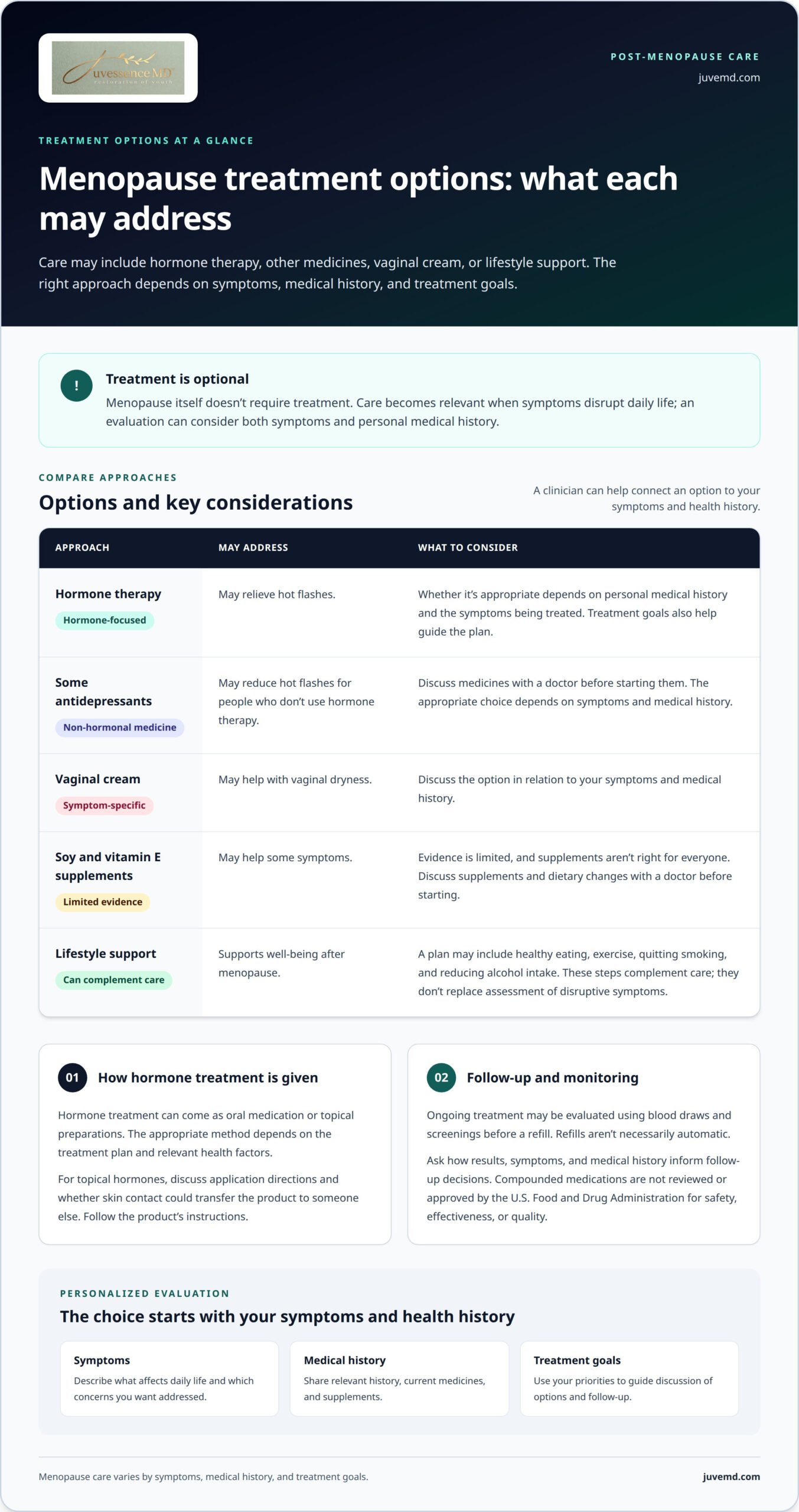
Menopause treatment may include hormone therapy, non-hormonal medicines, or lifestyle support. The right option depends on your symptoms, medical history, and treatment goals.
Las Vegas clinics can differ in the menopause services they provide, clinician experience, patient reviews, and appointment access. Compare whether care addresses both hormone symptoms and ongoing health needs, then consider the scheduling and patient feedback that matter to you.
Whether you need a referral to see a menopause specialist in Nevada depends on your insurance plan and the clinic’s appointment requirements. Review your plan’s referral terms and the clinic’s intake process before scheduling.
Hormone Therapy Options
Hormone replacement therapy, also called menopause hormone therapy, may relieve hot flashes. Whether it’s appropriate depends on personal medical history and the symptoms being treated. During perimenopause, when periods become irregular, support can focus on changing symptoms and treatment goals. Menopause typically begins between ages 45 and 55, according to the U.S. Office on Women’s Health.
In the United States, the average age of menopause is 52 years, according to the U.S. Office on Women’s Health. Menopause can occur as early as age 40, according to the U.S. Office on Women’s Health. These ages offer context, not a treatment rule. Menopause itself doesn’t require treatment; care becomes relevant when symptoms disrupt daily life.
Non-Hormonal Care and Lifestyle Plans
For people who don’t use hormone therapy, some antidepressants may reduce hot flashes. Vaginal cream may help with dryness, while the appropriate choice depends on symptoms and medical history. Soy and vitamin E supplements may help some symptoms, but evidence is limited. Discuss medicines, supplements, and dietary changes with a doctor before starting them.
A lifestyle plan can support well-being after menopause through healthy eating, exercise, quitting smoking, and reducing alcohol intake. These steps don’t replace an assessment of disruptive symptoms. Instead, they can complement a treatment plan that considers both daily concerns and broader health priorities.
Hormone Monitoring and Delivery
Hormone treatment comes in different forms, including oral medication and topical preparations. The appropriate method depends on the treatment plan and relevant health factors. For topical hormones, discuss application directions and whether skin contact could transfer the product to someone else. Follow the product’s instructions for use.
Monitoring is part of evaluating ongoing treatment. Before providing a refill, a clinic may use blood draws and screenings rather than treating refills as automatic. Ask how results, symptoms, and medical history inform follow-up decisions. Compounded medications are not reviewed or approved by the U.S. Food and Drug Administration for safety, effectiveness, or quality.
Menopause symptoms
Menopause symptoms can affect sleep, comfort, mood, and daily routines in different ways. Declining estrogen and progesterone are associated with changes such as hot flashes and night sweats. One person may mainly notice sudden warmth, while another may be more affected by disrupted sleep or vaginal dryness. The symptom pattern and its effect on everyday life help shape a clinical evaluation.
Common symptoms include hot flashes, night sweats, trouble sleeping, mood changes, depression, weight gain, and a slowed metabolism. Symptoms can also include vaginal dryness, painful intercourse, and urinary incontinence. These examples show why a menopause appointment should address more than hot flashes alone. Describe which symptoms affect work, rest, relationships, or exercise to make the discussion specific.
Menstrual-cycle changes can provide useful context during perimenopause. Periods may become irregular before they stop, and symptoms can change during the same period. At an appointment, a clinician can consider the timing of period changes alongside hot flashes, sleep problems, or mood shifts. This helps clarify the overall pattern rather than focusing on one isolated symptom.
Sexual and urinary concerns deserve direct attention, too. Vaginal dryness can contribute to pain during sex, and urinary incontinence may affect comfort or confidence. These symptoms can be difficult to raise, so naming a specific example can help, such as discomfort during intercourse or urine leakage during an activity. A tailored evaluation can focus on the concern instead of assuming every symptom has the same cause.
For a useful evaluation, describe when each symptom began, how often it occurs, and what makes it disruptive. For example, note whether night sweats interrupt sleep or hot flashes affect concentration. Include changes in periods and any sexual or urinary symptoms. This organized account gives the clinician a clearer picture and helps connect menopause treatment discussions to your priorities.
Some symptoms can overlap with other health concerns, so an assessment considers the whole picture. Share relevant medical history, current medicines, and supplements at the appointment. Explain which changes are new and which have persisted. These details help the clinician weigh possible explanations and discuss treatment options in the context of your health, rather than focusing on a single symptom.
Any vaginal bleeding after menopause, including light spotting, should be medically evaluated. Don’t treat bleeding as an expected menopause symptom or assume you know its cause. Raising it promptly allows a clinician to assess it appropriately. For other symptoms, a tailored discussion can clarify which concerns may benefit from menopause treatment and which need a different evaluation.
Heart disease and osteoporosis after menopause
The menopause transition can bring longer-term health considerations beyond immediate symptoms. Lower estrogen production during menopause increases osteoporosis risk, and post-menopausal women are more vulnerable to osteoporosis and heart disease. These risks make bone and cardiovascular health useful topics for ongoing medical discussions.
How menopause relates to bone and heart health
Estrogen helps explain an important change in bone health: lower production during menopause is associated with increased osteoporosis risk. Osteoporosis weakens bones, making bone health an important part of post-menopause care. Heart disease is another concern associated with menopause, although the information here does not establish a single cause or predict an individual’s risk.
Progesterone and estrogen levels may come up in a hormone-health discussion, but one hormone result doesn’t describe every aspect of long-term health. A treatment plan should distinguish symptom management from discussions about osteoporosis and heart disease. For example, mention relevant medical conditions in close relatives and share your own health history with the clinician.
Discussing long-term screening
Screening conversations can clarify which bone and heart health checks fit your personal history. Ask the clinician to explain the purpose of each recommended check, what its result could show, and how it may affect follow-up. This connects screening with identified risks and the next step in care.
Prepare for the conversation by noting known medical conditions, current medicines, and any previous evaluations related to bone or heart health. If you’ve had an earlier assessment, bring its result or date if available. These details give the clinician context to consider whether another check or continued monitoring makes sense.
For bone health, ask how the menopause transition and lower estrogen production factor into screening discussions. For heart health, raise any existing medical conditions and ask what assessment is appropriate for you. These concerns deserve separate consideration, even when discussed during the same appointment.
Follow-up should connect new information to a practical treatment plan. If a screening result identifies a concern, ask what it means, which next step addresses it, and how progress will be reviewed. If no immediate action is needed, clarify what changes in symptoms or health history should prompt another discussion. This keeps heart and bone health in view as care continues.
Menopause care can address symptoms while making room for longer-term risks. A focused conversation about osteoporosis, heart disease, estrogen, progesterone, and relevant medical conditions can help organize priorities. Rather than assuming hormone therapy addresses every concern, discuss symptom treatment and health screening as related but distinct parts of care.
Midlife weight and metabolic health
Weight changes can accompany menopause, and symptoms may include weight gain and a slowed metabolism. Discuss these changes without assuming a single cause or solution. A professional evaluation can consider menstrual history, daily routines, current symptoms, and relevant medical conditions. For example, describe whether weight changes occurred alongside sleep disruption or changing periods.
A personalized weight-management discussion starts with your goals and health context. Explain what has changed, what you’ve tried, and how it affects your quality of life. A clinician can then consider a weight-loss plan suited to those priorities, rather than applying the same approach to everyone. The conversation can include healthy eating and exercise as parts of ongoing care.
Metabolic health is broader than a number on the scale. At an appointment, discuss any known medical conditions, changes in energy, and weight concerns during menopause. These details help identify which questions need attention. If a concern relates to a specific routine, such as difficulty maintaining regular exercise, describe it so the care discussion stays practical.
Hormones may come up, but testosterone shouldn’t be treated as an automatic explanation for weight changes. Tell the clinician about hormone-related treatment or questions, and ask how these details relate to your individual assessment. A treatment plan should clarify which concerns it addresses, what lifestyle support it includes, and how progress will be discussed over time.
Healthy eating and exercise remain relevant after menopause, alongside quitting smoking and reducing alcohol intake. A professional can help relate these lifestyle areas to your circumstances. For example, discuss which changes feel realistic given your schedule and health needs. The goal is a plan that supports metabolic health and quality of life, not a list of generic instructions.
Weight-loss support may be relevant when weight changes are a central concern, but it should fit within a broader evaluation. Bring a concise account of your goals, menstrual changes, symptoms, and relevant medical history. Ask how the proposed approach will be personalized and what follow-up will address. This gives you a clearer basis for deciding whether the plan suits your needs.
Which Las Vegas postmenopause specialists accept my insurance?
Insurance coverage depends on your specific plan, the specialist’s network participation, and the service you need. A clinic may participate in some plans but not others, and coverage can differ between an office visit, lab work, and treatment. Check each service separately rather than assuming coverage for one appointment applies to every part of care.
Start with your insurance card and plan documents. Identify the plan name, network type, and member-services contact listed there. Then review the plan’s provider directory for menopause care, women’s health, or hormone-related services in Las Vegas. A directory can help identify in-network clinicians, but participation and benefits may vary by plan and service.
Before scheduling, make a short list of questions that affect your expected coverage:
- Is the specialist in-network for my exact plan?
- Does my plan require a referral for this type of appointment?
- Are evaluation, laboratory testing, and follow-up billed separately?
- Does coverage differ for a consultation and a specific treatment?
These distinctions matter. For example, a plan may treat an evaluation differently from a lab test or prescribed therapy. Your benefits summary can explain terms such as copayment, deductible, and coinsurance. These terms describe how your plan shares costs, but what you pay depends on your individual benefits and the service received.
Ask about the billing procedure before your visit, and keep the answer with your plan notes. Give the office the exact plan name on your card, not just the insurance company’s name. Large insurers administer multiple plans, so the company name alone may not identify network status. Also note whether your appointment is for an initial evaluation, follow-up, testing, or treatment.
If a provider appears in your plan directory, compare that listing with the clinic’s current participation information. If the sources differ, use your insurer’s member-services team to clarify how the plan classifies the clinician and service. Record the date and details of the answer. This can help you understand coverage before care begins, rather than relying on a broad statement that a specialist “takes” your insurance.
If you’re considering an out-of-network option, review your plan’s benefits before deciding. Some plans may handle out-of-network care differently, and some may not include those benefits. Your plan documents determine the applicable terms. Consider both the service you need and the coverage conditions, then decide which appointment best fits your needs and budget.
Once you understand your benefits, you can make a more informed decision about next steps. Explore your care options and prepare your insurance questions before arranging an appointment.
JuveMD
JuveMD offers a focused next step for people exploring hormone health and post-menopause wellness in Las Vegas. Its Bioidentical Pellet Hormone Therapy and Weight Loss services may be relevant if your concerns include hormone-related care or midlife weight changes. You can discuss your goals and which concerns matter most to understand whether these options fit the care you’re seeking. JuveMD also offers Injectables and Skin Treatments for other wellness and aesthetic goals, rather than heart or bone screening. For concerns such as cardiovascular symptoms or suspected osteoporosis, seek appropriate medical evaluation as part of your care.
To discuss your wellness goals and care options, contact JuveMD.
Choose a Next Step That Fits Your Priorities
Start with the change you most want help addressing. It might be a symptom disrupting your routine, a concern about long-term wellness, or a question about which care options align with your goals. Bringing that priority to a post-menopause health specialist in Las Vegas can focus the conversation on what matters to you, rather than trying to solve everything at once.
It can also help to consider what you want from care: clearer information, support with a specific concern, or a plan for exploring treatment. JuveMD offers Bioidentical Pellet Hormone Therapy, Injectables, and Skin Treatments. A discussion can help you understand how these services relate to your wellness goals and what you’d like to address next.
When you’re ready to talk through your care options, contact JuveMD to discuss your care. Taking one considered step can make the path forward feel more manageable.
Frequently Asked Questions
What type of specialist treats post-menopause health concerns?
An OB/GYN or clinician experienced in menopause care can assess post-menopause concerns and discuss treatment options. A post-menopause health specialist in Las Vegas can help address questions about disruptive symptoms or hormone therapy. Choose a clinician whose focus matches your needs. Bring a list of current medicines and relevant health conditions so the conversation accounts for your medical history.
Which menopause specialists in Las Vegas treat postmenopausal women?
JuveMD is a Las Vegas medical clinic focused on hormonal health and wellness, led by Dr. Andrea Dempsey. It offers Bioidentical Pellet Hormone Therapy. A post-menopause health specialist in Las Vegas can discuss whether hormone-focused care fits your concerns. Before an appointment, organize your main concern, previous hormone treatment, and follow-up questions to keep the conversation focused.
How can I find a certified menopause practitioner near Las Vegas?
Look for a clinician who explicitly holds the Menopause Society Certified Practitioner credential, then confirm the designation through the organization’s practitioner directory. Check that the clinician’s stated focus matches your needs, such as symptoms after periods have stopped or hormone-treatment decisions. Before scheduling, review the clinician’s credentials and care setting. A general women’s health background and a specific menopause certification are not interchangeable.
What post-menopause symptoms and health risks should prompt a specialist visit?
Arrange an evaluation when symptoms such as hot flashes, night sweats, sleep trouble, vaginal dryness, or painful sex disrupt daily life. Urinary incontinence and persistent mood changes are also worth discussing. Any vaginal bleeding after menopause, even light spotting, should be medically evaluated. Include questions about bone and heart health, since post-menopausal women are more vulnerable to osteoporosis and heart disease.
What treatments do Las Vegas specialists offer for postmenopause symptoms?
Options can include hormone therapy for hot flashes, vaginal cream for dryness, or certain antidepressants to reduce hot flashes. A clinician may also discuss lifestyle support, including healthy eating and exercise. JuveMD offers Bioidentical Pellet Hormone Therapy as part of its hormonal health services. Treatment discussions should connect the specific symptom, your medical history, and the approach being considered.
What are the benefits and risks of hormone therapy after menopause?
Hormone therapy can relieve menopausal hot flashes, but whether it’s prescribed depends on personal medical history. Its suitability requires weighing potential symptom benefits against health considerations relevant to you. At an appointment, describe your symptoms, prior treatments, and medical conditions, then ask how these factors shape the recommendation. Menopause itself doesn’t require treatment, so the decision can focus on whether symptoms interfere with daily life.