
Low libido isn’t solved by chasing a quick fix; the useful first step is understanding what may be behind the change. For men searching how to fix low sex drive in men in Las Vegas, possible contributors include hormone changes, health conditions, medication effects, stress, poor sleep, alcohol use, and relationship strain. Lifestyle changes may help, but a sudden or persistent shift deserves medical evaluation before trying libido boosters.
It’s understandable to want your interest in sex to return quickly, especially when the change affects your confidence or relationship. A clinician can review possible causes and determine whether hormone testing or another next step makes sense for your situation.
This article explains how low libido differs from erection problems, which lifestyle and relationship changes may support sexual desire, and when to seek a hormone evaluation in Las Vegas. You’ll also learn why treatment depends on the underlying cause, rather than one solution being right for every man.
Key Takeaways
- Low sexual desire and difficulty getting or maintaining an erection are different concerns, though they can occur together.
- A medical evaluation can explore possible contributors, including hormone changes, health conditions, and medication effects.
- Better sleep, regular exercise, and reducing excess alcohol may support sexual health and overall well-being.
- Emotional connection and open communication can matter when relationship strain affects desire.
- Hormone treatment is a potential option when evaluation identifies a relevant deficiency; JuveMD offers Bioidentical Pellet Hormone Therapy.
1. Low Libido: When Does It Become A Problem?
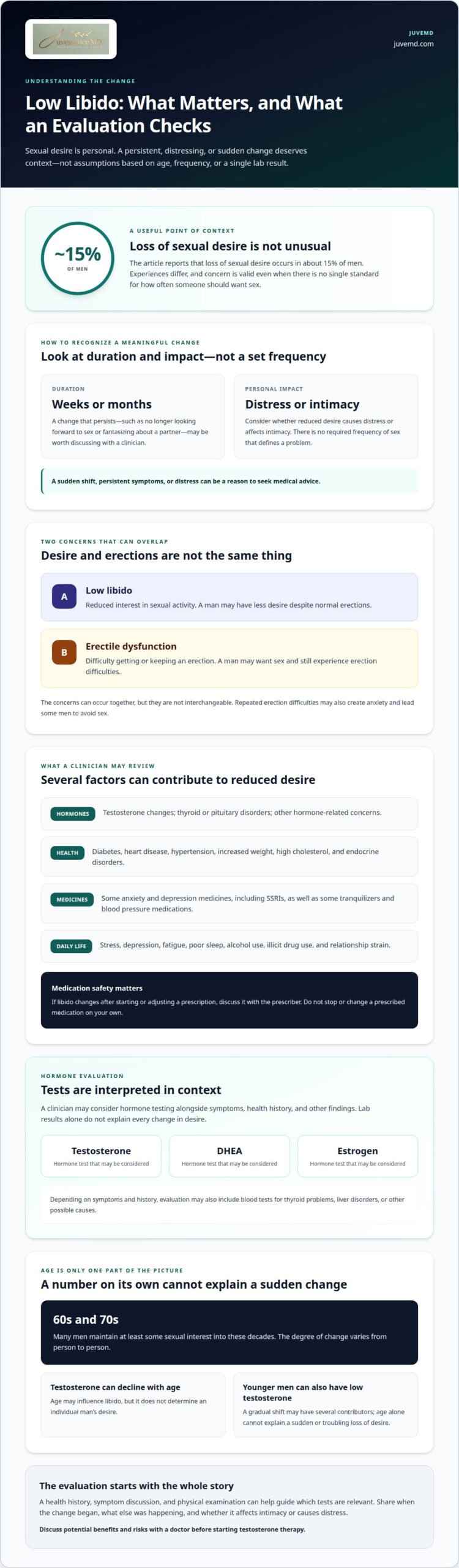
Low libido means reduced interest in sexual activity, while erectile dysfunction describes difficulty getting or keeping an erection. The concerns can overlap, but they are not interchangeable: a man may want sex yet experience erectile dysfunction, or have less desire despite normal erections. Repeated erection difficulties can also create anxiety, leading some men to avoid sex and feel less desire. Clarifying whether the change involves interest, erections, or both helps guide a medical evaluation.
There isn’t one required frequency of sex that defines a problem. A more useful sign is a change that persists for weeks or months, such as no longer looking forward to sex or fantasizing about a partner. The effect matters too: consider whether reduced desire causes distress or affects intimacy. Loss of sexual desire occurs in about 15% of men, and concern is valid even when experiences differ.
Age can influence libido, but it doesn’t determine an individual man’s desire. Testosterone levels decline with age, while some younger men also have low testosterone. Many men maintain at least some sexual interest into their 60s and 70s, and the degree of change varies. A gradual shift may have several contributors, so age alone cannot explain a sudden or troubling loss of desire.
Hormonal imbalance is one possible contributor. A decrease in male sex hormones related to an endocrine disorder can affect sexual desire. Thyroid and pituitary disorders may also influence libido by disrupting hormone production. These conditions require evaluation rather than assumptions based on symptoms alone. A clinician may consider hormone testing alongside your health history and other relevant findings.
Physical health can affect both arousal and sexual interest. Diabetes, heart disease, and hypertension may reduce blood flow, making arousal more difficult. Increased weight, high blood pressure, high cholesterol, diabetes, and endocrine disorders can also affect erections or libido. For example, a man with reduced desire and repeated erection difficulties may have overlapping health and sexual-function concerns. Understanding the pattern helps identify possible contributors.
Stress, depression, fatigue, alcohol use, and illicit drug use can also reduce desire. Medication effects may matter, too, particularly when libido changes after starting treatment. Don’t stop a prescribed medication without discussing the change with your healthcare team. Seek medical advice if low libido persists, causes distress, or appears suddenly. A sudden shift can signal an underlying health condition; evaluation may include blood tests for hormones, thyroid problems, liver disorders, or other causes.
2. What constitutes low sex drive?
For men searching how to fix low sex drive in men in Las Vegas, the first step is understanding how clinicians assess desire. Low sex drive is evaluated through a man’s interest in sex and how a change affects him, not by a set frequency. A doctor may ask whether the shift causes distress and whether it occurs across situations or only in specific circumstances. For example, desire that fades during persistent stress may call for a different assessment than a change after medication adjustments.
A medical evaluation begins with a health history, a discussion of symptoms, and a physical examination. The clinician may review chronic conditions such as diabetes, changes in mood or sleep, alcohol use, and current prescriptions. Explaining when the change began and what else was happening can help identify possible contributors and guide which tests are relevant.
Hormone testing can assess whether testosterone or other hormones may be involved. An evaluation may include tests for testosterone, DHEA, and estrogen, interpreted alongside symptoms and medical history. A lab result alone doesn’t explain every change in desire. The clinician considers findings in context, including stress, sleep, diabetes, and medications, before discussing treatment options.
Medication effects deserve a careful review. Some medicines used for anxiety and depression, including SSRIs, can lower libido or delay orgasm. Some tranquilizers and blood pressure medications may also affect sexual desire. If a change began after starting or adjusting a prescription, tell your doctor and discuss options. Don’t stop or change medication on your own; the prescriber can weigh its benefits and possible alternatives.
An integrative or functional medicine approach considers how different aspects of health may interact instead of focusing on one lab result. A clinician may consider stress, sleep, chronic conditions, medication use, and hormone levels together. For instance, an evaluation may explore whether poor sleep and a medication change coincided with reduced interest. This broader assessment helps shape care around relevant findings.
Seek medical advice when reduced desire persists, causes distress, or begins suddenly. A sudden shift can accompany an underlying health condition. Ask about reviewing your symptoms and medications, and whether hormone or other blood tests are appropriate. Men researching how to fix low sex drive in men in Las Vegas can use an evaluation to understand possible causes before choosing treatment. Testosterone therapy can carry risks and side effects; discuss potential benefits and risks with a doctor before starting it.
3. Exercise and healthy lifestyle changes
Regular movement supports several aspects of sexual health. Aerobic exercise and strength training can improve stamina, body image, and mood, which may support libido. A clinician can help tailor activity to your health and fitness, especially when diabetes or heart disease affects exercise capacity. Aim for a sustainable routine, not exhausting workouts that add fatigue or make existing symptoms harder to manage.
Body weight can be one part of the picture. Increased weight may affect erections or sexual desire, while weight management can support broader health goals. A useful clinical discussion considers weight changes alongside sleep, mood, activity, and other symptoms rather than treating the scale as the sole explanation. If weight is a concern, structured weight-loss support may help address it as one factor in an overall plan.
Food choices can support general well-being. One practical dietary aim is six to eight portions of fruit and vegetables per day. Meals built around varied produce can complement activity and other health changes, but no single food is a dependable treatment for low libido. A clinician or qualified nutrition professional can help adapt eating patterns to your health needs, preferences, and any conditions that affect diet.
Sleep deserves attention because testosterone levels peak during sleep. Poor sleep quality or insufficient rest can lower libido, so reviewing sleep habits and persistent fatigue may reveal a relevant factor. Obstructive sleep apnea is one condition worth discussing when sleep is disrupted; treating it can reverse unusually low testosterone and improve sex drive. Rest is part of sexual health, not simply a recovery tool after exercise.
Alcohol, smoking, and illicit drugs can undermine progress. Alcohol use can reduce testosterone levels and increase the risk of erectile dysfunction and low libido. Reducing excess alcohol and avoiding smoking and illegal drugs may support sexual function and overall health. Illicit drugs may briefly increase desire, yet their longer-term effects can harm sexual function. Discuss substance use honestly during an evaluation, since it helps explain symptoms and shape appropriate care.
Make changes manageable and track how your energy, mood, sleep, and desire respond over time. For example, if you feel depleted after late nights, addressing sleep may be more useful than adding demanding workouts. A partner can support shared lifestyle changes, while counseling may help when stress or depression contributes to low desire. Lifestyle measures complement medical care; they don’t replace evaluation or prescribed therapy when a health condition or hormone deficiency needs attention.
Relationship intimacy and sexual desire
A relationship can shape sexual desire because emotional connection and intimacy influence how partners experience closeness. Tension, unresolved conflict, or feeling disconnected may contribute to decreased libido in either partner. For example, a man may still care deeply for his partner but feel less interested in sex during a period of frequent arguments. That change may reflect a relationship factor; it doesn’t prove that attraction has disappeared.
Start a conversation outside the bedroom, when neither partner feels pressured to have sex. Describe the change using specific observations, such as, “I’ve felt less interested in sex lately, and I want us to talk about it.” Then ask how your partner has experienced intimacy. This approach makes room for both perspectives and can uncover concerns about affection, stress, or expectations without assigning blame.
Sexual intimacy can include more than intercourse. Partners can discuss which forms of closeness feel comfortable, such as cuddling, kissing, or spending quiet time together. Agreeing on boundaries matters: affection should not create an expectation that sex must follow. If one partner has erectile difficulties, separating closeness from performance pressure may help the couple talk more openly about desire and connection.
Look for patterns rather than treating one difficult evening as a relationship verdict. For instance, note whether desire changes during conflict, after demanding workdays, or when partners have less time together. A calm check-in can identify what each person misses, such as conversation, touch, or shared time. These details help the couple choose a realistic next step instead of assuming that decreased desire has one simple cause.
Depression and stress can affect sexual desire and the way partners connect. Alcohol use may also contribute to low libido, so consider whether changes in drinking coincide with changes in intimacy. If you or your partner is struggling with depression or persistent stress, counseling may help address those concerns. Counseling can also give couples a supportive setting to discuss communication patterns and how each person experiences closeness.
Relationship changes and medical factors can overlap. A man may feel emotionally connected yet notice lower desire, or relationship strain may intensify anxiety around sex. If open conversations don’t clarify a persistent change, medical evaluation can explore health and hormone contributors alongside relationship context. Sharing when the change began, which situations affect desire, and how each partner feels gives a clinician clearer information when considering next steps.
5. Hormone evaluation and customized treatment plans
A tailored plan begins by connecting symptoms with clinical findings, not by treating one lab result. A hormone evaluation may include testosterone, DHEA, and estrogen testing, alongside a medical history and physical examination. The clinician can also review sleep, medications, diabetes, blood pressure, and other possible causes. This broader view helps distinguish a hormone-related concern from factors that need a different response.
Testosterone levels naturally decline with age, but age alone doesn’t establish a deficiency. Treatment is appropriate when evaluation identifies testosterone deficiency that aligns with symptoms and other relevant causes have been considered. For men with diagnosed deficiency, testosterone replacement therapy may improve libido and general well-being, particularly alongside positive lifestyle habits. Discuss testosterone treatment with your medical doctor before starting it.
Results guide the next step. If testing identifies a reversible contributor, addressing that cause may be more appropriate than starting hormone therapy. If no reversible cause is found and deficiency is diagnosed, a clinician can discuss whether replacement therapy fits your health profile. A customized plan also considers expectations, follow-up, and whether symptoms change over time. Treatment should respond to the findings, not promise a particular result.
Monitoring matters because a treatment decision involves more than libido. The clinician can review changes in desire and overall well-being, consider your health history, and reassess the plan as needed. For example, a man with low testosterone and increased blood pressure may need both factors considered during clinical decision-making. Don’t begin, adjust, or stop hormone treatment without discussing the decision with your treating clinician.
Insurance coverage for low-libido evaluation and treatment in Nevada varies by policy and service. A plan may handle office visits, laboratory testing, and hormone treatment differently, so review benefits for each separately. Ask your insurer about coverage criteria and potential out-of-pocket costs before proceeding. This is especially relevant when a recommended treatment differs from a covered evaluation or lab test.
Bring a clear timeline to the appointment: when desire changed, which symptoms appeared, and what medications or health changes occurred around that time. Include questions about test interpretation, possible causes, treatment options, and follow-up. That conversation helps turn hormone results into a plan grounded in the patient’s specific needs. To discuss a hormone-focused approach, schedule a hormone evaluation.
JuveMD
JuveMD can be a next step when persistent low libido raises questions about hormonal health. The Las Vegas clinic provides hormone education and Bioidentical Pellet Hormone Therapy, helping patients understand whether hormone-focused care may fit their concerns. A consultation can build on the factors discussed here, including symptoms, health history, and hormone evaluation, rather than assuming one treatment suits everyone.
Hormone therapy isn’t the answer to every change in sexual desire. Lifestyle factors, medications, relationship concerns, and other health conditions may also matter, so a broader perspective is useful. If you’re considering a hormone-focused approach in Las Vegas, contact JuveMD to discuss your concerns and possible next steps.
Take the Next Step Toward Clarity
Low desire can feel personal, but an evaluation is a practical way to understand what may be influencing it. If you’re considering how to fix low sex drive in men in Las Vegas, focus your next conversation on what has changed and what you hope will improve. That gives a clinician a clearer starting point for discussing care that fits your concerns.
Your priorities might include renewed interest in intimacy, greater confidence, or understanding whether hormone-focused care is appropriate. A useful next step is to share those priorities openly and ask how evaluation findings shape possible treatment options. You don’t need to arrive with a diagnosis or a preferred treatment. A thoughtful discussion can help clarify what to consider next.
Contact JuveMD to discuss your options and take a considered step toward understanding your sexual health.
Frequently Asked Questions
How can a medical provider help increase libido quickly?
A clinician can start by identifying a treatable contributor instead of relying on an unverified libido booster. They may review symptoms, current medications, hormone results, sleep, and health conditions, then discuss appropriate next steps. If diagnosed testosterone deficiency is involved, testosterone treatment may improve libido, but it isn’t an instant solution or suitable for every man. Arranging an evaluation is the most useful first step, especially after a sudden change.
Low Libido: When Does It Become A Problem?
Reduced desire deserves attention when it feels like a meaningful change and causes personal or relationship distress. There’s no single required amount of sexual activity that defines a problem. For example, a man may feel concerned even if his partner’s interest differs, while another may not feel distressed by less frequent desire. The key is the change’s effect on well-being, not comparison with a friend or an assumed standard.
What are signs of low libido?
Signs can include less interest in initiating sex, fewer sexual thoughts, or reduced anticipation of intimacy. You might notice that you no longer respond to situations that previously prompted desire, or that interest has faded across different settings. These signs describe desire, not erection function. Tracking when they occur, such as only during periods of conflict or fatigue, can give a clinician useful context.
What causes low libido?
Low libido can have physical, psychological, medication-related, or relationship contributors, sometimes occurring together. Examples include hormone changes, depression, ongoing stress, fatigue, chronic illness, alcohol use, and certain prescriptions. If you notice reduced desire after a medication change, report the timing to the prescriber rather than stopping treatment yourself. Identifying likely contributors helps determine whether care should focus on health, medication review, emotional well-being, or several areas.
What constitutes low sex drive?
Low sex drive means a personally concerning reduction in sexual interest, rather than simply having sex less often than someone else. A change may appear as fewer fantasies, less desire for intimacy, or reduced interest in initiating sexual activity. Context matters: a temporary shift during grief, illness, or intense work stress may differ from a persistent change that affects confidence or closeness. Your experience helps frame the assessment.
What are common causes of low sex drive in men?
Common contributors include testosterone deficiency, thyroid or pituitary disorders, diabetes, heart disease, depression, stress, fatigue, alcohol, and medication effects. Relationship disconnection can also affect desire. These causes can overlap; for example, a chronic condition and its treatment may both influence sexual interest. Avoid assuming testosterone is responsible based on one symptom. A medical review helps sort through possible contributors and prioritize appropriate evaluation.
How is low libido in men medically evaluated and diagnosed?
Evaluation typically combines a detailed health history, symptom discussion, and physical examination. The clinician may consider blood tests to assess hormone levels and investigate thyroid, liver, or other health concerns. Share when the change began, relevant medication changes, and whether desire varies with mood, sleep, or circumstances. This information is educational, not medical advice; consult a healthcare provider who can interpret symptoms and test findings in the context of your health.
What lifestyle changes can improve low sex drive in men?
Regular aerobic activity and strength training, better-quality sleep, and reducing excess alcohol may support sexual health. A practical starting point is choosing an activity that fits your existing health and fitness, then making it sustainable rather than intense. Eating a varied diet and addressing persistent fatigue can also contribute to overall well-being. Lifestyle changes may support care, but they don’t replace evaluation when low desire is sudden, persistent, or distressing.