
Thyroid symptoms can have different causes, so how you feel is only part of the picture. Thyroid hormone optimization in Las Vegas should consider symptoms alongside blood or imaging test results to help determine whether the thyroid is producing too much or too little hormone.
Fatigue, changes in weight, sleep problems, and shifts in mood can affect daily life, but they don’t identify the cause on their own. This article explains how symptoms and lab findings guide thyroid care, what bioidentical hormone therapy involves, and when changes may begin; some people notice effects within several weeks, while others may see them develop over a few months. You’ll also learn why bioidentical therapy and thyroid treatment aren’t interchangeable, and what a thoughtful evaluation can help determine.
Key Takeaways
- Thyroid evaluation considers symptoms alongside blood or imaging test results; symptoms alone don’t identify the cause.
- Learn how follow-up testing and dose adjustments can help guide care as your response develops.
- Recognize how an overactive thyroid can differ from an underactive thyroid, including the symptoms commonly associated with each.
- Understand what hormone optimization means and why thyroid evaluation is distinct from bioidentical hormone therapy.
- Explore what bioidentical pellet hormone therapy involves and when it may be relevant to your wellness goals.
Individualized treatment based on symptoms and lab findings
Thyroid treatment planning brings reported symptoms together with blood or imaging test results. A personalized evaluation connects those findings to treatment decisions and follow-up.
Personalized Hormone Evaluation
A provider considers the pattern of symptoms alongside test findings, rather than treating one complaint as proof of thyroid dysfunction. For example, fatigue or a decline in libido can have causes beyond thyroid function, so the evaluation should distinguish the symptom from its possible explanation. The findings guide whether thyroid treatment is appropriate and what other information the plan needs.
Does insurance cover thyroid hormone testing and treatment in Nevada? Coverage depends on your plan and the specific test or treatment. Review your benefits for the services involved, since testing and treatment may be covered differently.
Follow-Up Monitoring and Treatment Timelines
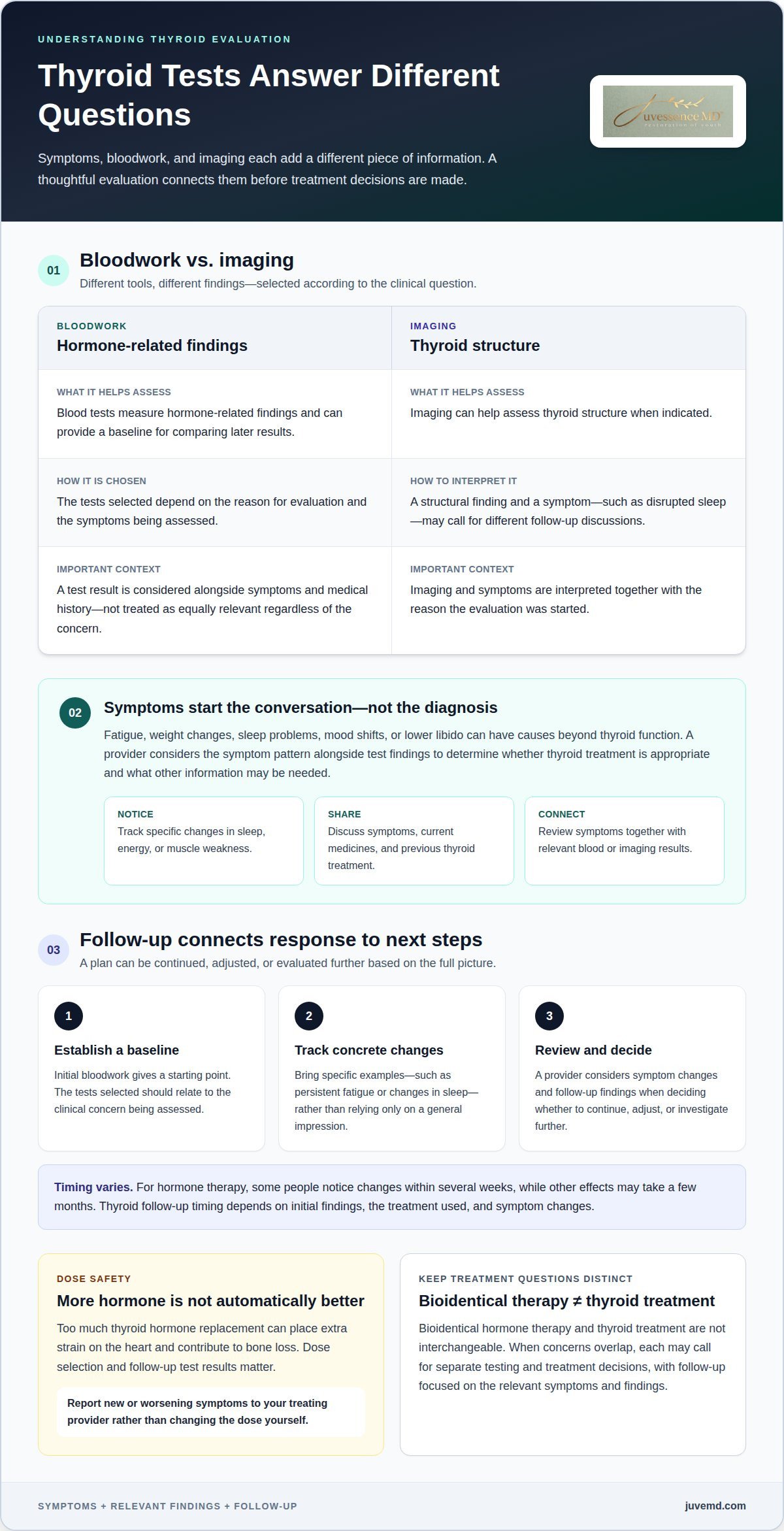
Follow-up monitoring helps connect treatment decisions with symptom changes and later test findings. A provider can use that information to decide whether to adjust or continue the plan, or pursue further evaluation. Track changes in sleep, energy, or muscle weakness between appointments. Specific examples make the discussion more useful than a general statement that you feel better or worse.
There isn’t one timeline for every treatment plan. The next review depends on the initial findings, the treatment used, and changes in symptoms. A clear plan identifies what to monitor and what findings could prompt a dose adjustment, rather than making changes in response to one difficult day.
Treatment Candidacy and Contraindications
Treatment candidacy depends on whether symptoms and test findings support a thyroid disorder and whether the proposed approach suits the individual. Before making a plan, a provider considers health history, current medicines, and previous thyroid treatment. This can distinguish a persistent pattern from an isolated symptom and bring potential treatment conflicts into the discussion before a dose is chosen.
Share details about your symptoms, medicines, and past treatment during the evaluation. A history of thyroid surgery or a recent medication change, for example, may affect how test results are interpreted. The aim is a plan based on your complete clinical picture, not a standard dose applied to everyone.
Risks of Thyroid Hormone Over-Replacement
Too much thyroid hormone replacement can place extra strain on the heart and contribute to bone loss. That makes dose selection and follow-up test results important parts of care, especially if symptoms change after treatment begins. Report new or worsening symptoms to your treating provider rather than changing the dose yourself.
Over-replacement is different from a treatment plan that is still being evaluated. A provider weighs test findings, the current dose, and your response before making an adjustment. Regular monitoring helps identify when the balance needs review and supports decisions that consider both symptom relief and heart and bone health.
How soon will I start feeling results?
Timing depends on the treatment and how your body responds. Some people receiving hormone therapy notice changes within several weeks, while other effects may take a few months. For thyroid care, follow-up bloodwork and symptoms help show whether the plan is moving in the right direction. A change in one symptom, such as energy, doesn’t by itself confirm that hormone levels are balanced.
Baseline bloodwork gives a provider a starting point for interpreting later results. The tests selected depend on the reason for evaluation and the symptoms being assessed. Thyroid concerns may prompt blood tests or imaging, while a broader hormone assessment may address different questions. Each test should relate to a clinical concern, rather than treating every available result as equally relevant.
A hormone panel needs context. Weight loss, for example, may be a goal in one care plan, while unexplained weight changes may prompt a different assessment. Menopause can affect how someone describes energy, sleep, or other changes, but those experiences don’t establish a thyroid diagnosis. A provider considers symptoms, medical history, and relevant test findings together before recommending treatment.
Follow-up bloodwork helps compare current findings with the baseline. A provider can consider whether symptoms have changed, whether results support the current plan, and whether a dose adjustment is appropriate. Bring concrete examples to follow-up, such as changes in sleep or persistent fatigue. This makes it easier to discuss your response without relying on a general impression alone.
There isn’t a single timeline for every treatment or symptom. The next step depends on the initial findings, the treatment being considered, and follow-up results. Some changes may appear within several weeks; others may take a few months. A dose adjustment is a clinical decision based on the full picture, not a reason to change medication yourself.
Blood and imaging tests answer different questions. Bloodwork measures hormone-related findings, while imaging can help assess thyroid structure when indicated. Both types of results need to be interpreted alongside the symptoms that prompted evaluation. A structural finding and a symptom such as disrupted sleep, for example, may call for different follow-up discussions.
Bioidentical hormone therapy is not interchangeable with thyroid treatment. A baseline assessment should clarify which hormone-related concern is being evaluated before treatment begins. If menopause symptoms and thyroid concerns overlap, they may call for separate testing and treatment decisions. Follow-up should track the relevant symptoms and findings for each plan, rather than assuming one therapy addresses every change.
How much do thyroid consultations, lab tests, and follow-up visits cost in Las Vegas? Costs depend on the consultation, tests ordered, and follow-up needs; a quote request provides the applicable charges. Insurance coverage may also vary by plan and service, so review your benefits for the care involved.
Thyroid disorders and hormone-related symptoms
Thyroid hormone imbalance can affect how the body uses energy, but symptoms alone don’t confirm a thyroid disorder. Hyperthyroidism means the thyroid produces too much hormone; hypothyroidism means it produces too little. Similar concerns can also involve stress, sleep, or other health factors. A provider considers symptoms alongside blood or imaging test results to assess possible causes.
With hyperthyroidism, the thyroid is overactive. Graves’ disease, thyroid nodules, and thyroiditis are possible causes. Common symptoms include anxiety, weight loss, muscle weakness, and insomnia. Anxiety paired with unexplained weight loss, for example, may prompt a thyroid evaluation, but neither symptom proves hyperthyroidism. The pattern, medical history, and test findings help distinguish a thyroid-related change from other explanations.
Hypothyroidism involves too little thyroid hormone production. Thyroiditis, Hashimoto’s disease, and iodine deficiency are possible causes. Common symptoms include fatigue, weight gain, forgetfulness, and sensitivity to cold. Someone who feels unusually cold and struggles with fatigue can raise these changes during an evaluation. Symptoms help frame the assessment, while blood or imaging results help determine whether the thyroid is involved.
Some treatments address symptoms without changing underlying hormone production. Beta-blockers can relieve certain hyperthyroidism symptoms, but they don’t reduce thyroid hormone production. That distinction matters: symptom relief and treatment of the thyroid disorder are separate considerations. A provider weighs which symptoms need attention and what findings point toward the cause before deciding how those needs fit into care.
Thyroid hormone replacement is different from hormone replacement aimed at other concerns. Bioidentical hormone pellets, for example, aren’t a substitute for evaluating thyroid dysfunction. A certification label alone also doesn’t establish that symptoms come from the thyroid or show which treatment is appropriate. Describe specific changes, consider possible causes, and interpret test results in context.
Keep a brief record of concrete changes, such as insomnia alongside anxiety or fatigue with cold sensitivity. Note when each symptom affects your daily routine and share the timeline during evaluation. This gives the provider examples to compare with test findings. It can also help distinguish a general sense of imbalance from a specific symptom pattern that may warrant further assessment.
What Is Hormone Optimization?
Hormone optimization means evaluating a specific concern through relevant symptoms and test findings. For thyroid care, blood or imaging results inform the assessment alongside the reason testing began.
Thyroid Hormone Testing
Thyroid testing can help assess whether a thyroid-related finding may explain a concern such as weight gain. A provider connects results to the reason for testing, reported symptoms, and relevant health history. A result is one part of the assessment, not a complete treatment plan by itself. The next step depends on what the evaluation shows.
TSH, Free T3, and Free T4 Testing
TSH, free T3, and free T4 are test names you may see in a thyroid evaluation. Ask which tests are being considered and how each result relates to the concern being assessed. For example, a patient discussing fatigue can clarify whether the evaluation is focused on thyroid findings or another potential hormone concern. Interpretation should consider the results together.
Thyroid Function Testing
Thyroid function testing uses laboratory findings to assess thyroid concerns. Imaging can provide different information, so the reason for testing helps determine which results matter. A useful discussion covers the original concern, the tests performed, and how the findings shape the next step. This keeps the plan tied to the evaluation.
Metabolic and general wellness testing may address questions beyond thyroid function. Weight changes, for instance, can be part of the concern, but weight alone doesn’t establish why they occurred. A provider can clarify whether a test relates to thyroid evaluation or a broader wellness question. Separating those purposes makes results easier to discuss and avoids treating unrelated findings as interchangeable.
Testosterone and estrogen relate to different hormone questions than thyroid testing. If you’re considering hormone replacement therapy, understand which concern each test is meant to assess. A hormone panel isn’t automatically a thyroid panel, and a thyroid assessment doesn’t answer every question about hormone levels. Naming the goal first helps connect each test to a specific clinical discussion.
Bring the exact laboratory results and the reason each test was ordered to your follow-up. Ask how a result relates to the symptoms under review and what findings might change the plan. If weight gain is the concern, discuss when it began and what other changes you’ve noticed, rather than assuming one hormone explains it. This makes optimization a structured review of findings, symptoms, and next steps.
Which Las Vegas clinics and endocrinologists provide thyroid evaluation and treatment?
In Las Vegas, thyroid evaluation may be available through clinics focused on endocrine health and endocrinologists who assess hormone-related conditions. An endocrinologist specializes in the body’s hormone systems, including thyroid function. For thyroid hormone optimization in Las Vegas, look for an evaluation that connects symptoms with relevant test findings. The care pathway depends on your concern: persistent fatigue may call for an evaluation, while existing test results may need interpretation.
A suitable assessment addresses the specific thyroid concern rather than treating one symptom as a diagnosis. A discussion of unexplained weight change, for example, should cover when it began, other symptoms, and previous thyroid results. Blood tests can assess hormone-related findings, while imaging may be considered when structural information is relevant. Ask how the evaluation will address your concern and how findings will inform the next clinical step.
An endocrinologist may be involved when thyroid findings require focused assessment or ongoing management. A clinic visit can include reviewing symptoms, health history, current medicines, and previous testing. Bring dates and results from earlier bloodwork if available, along with a concise description of changes such as insomnia or cold sensitivity. These details make the appointment more specific and provide context for discussing next steps.
Evaluation and treatment are related but distinct parts of care. Testing helps assess whether thyroid function or structure could be involved; treatment planning then considers the findings and your clinical situation. A test result needs interpretation alongside symptoms and relevant history before it can guide a treatment decision. Follow-up may revisit symptoms and testing to assess how the plan is working. The appropriate sequence depends on the reason for assessment.
Before an appointment, organize three things: a symptom timeline, relevant medication information, and previous thyroid test results. Note concrete examples, such as when fatigue affects your routine or whether sleep changes occurred alongside other symptoms. If you’ve had imaging, bring the report details. This preparation helps the clinician understand what prompted evaluation and which questions remain unresolved.
Choosing thyroid hormone optimization in Las Vegas starts with identifying the care you need: an initial thyroid assessment, interpretation of existing findings, or continued management. Clinics and endocrinologists can serve different roles, so ask how the evaluation will address your concern and how results will inform the plan. If symptoms and findings point beyond thyroid health, that distinction matters too. A focused appointment should leave you with a clearer understanding of the assessment and its next clinical step.
Compare whether a clinic offers access to an endocrinologist and whether its evaluation includes a review of symptoms and history, relevant blood testing, imaging when appropriate, and follow-up. Consider whether clinicians interpret results in context and plan next steps around your individual concern.
Thyroid evaluation may be available at clinics focused on endocrine health and through endocrinologists who assess hormone-related conditions. Endocrinologists may provide focused assessment or ongoing management when thyroid findings call for it.
JuveMD: Bioidentical Pellet Hormone Therapy
JuveMD offers Bioidentical Pellet Hormone Therapy for people exploring hormone-related wellness care. It may be relevant when your concerns involve hormone therapy, but it isn’t a substitute for thyroid evaluation or thyroid treatment. Thyroid symptoms and test findings need their own clinical assessment.
If you’re considering pellet therapy, discuss your goals and hormone-related concerns during an evaluation. That conversation can help clarify whether this offering fits your needs or whether your next step should focus on thyroid findings. Keeping the questions distinct supports clearer decisions about care.
For concerns about thyroid function, continue with an evaluation focused on your symptoms and test results. For questions about Bioidentical Pellet Hormone Therapy, contact JuveMD to discuss your concerns.
Choose a Clear Next Step for Your Thyroid Health
A thoughtful approach to thyroid hormone optimization in Las Vegas starts with a clear question: what do your symptoms and findings call for next? Use your symptom timeline and available test results to guide a focused conversation about evaluation, follow-up, or another appropriate direction. If your concern relates to thyroid function, keep it distinct from other hormone or wellness goals.
JuveMD offers Bioidentical Pellet Hormone Therapy, Injectables, and Skin Treatments for separate wellness and aesthetic needs. These services aren’t substitutes for thyroid evaluation or thyroid-specific treatment. Identifying the concern you want to address can make your next conversation more productive.
You don’t need to have every answer before taking a next step. Bring forward the concern that matters most, whether it’s understanding a test result or discussing a separate wellness goal. Contact JuveMD to discuss your care and clarify which conversation fits your needs. A considered next step can help you move forward with greater confidence.
Frequently Asked Questions
How soon will I notice changes?
Some people notice changes within several weeks, while other effects may take a few months to develop. Timing can differ between symptoms, so one improvement may appear before another. Track energy and sleep separately, for example, rather than relying on one overall impression. Share these changes during follow-up, alongside relevant test results, so the response can be considered in context.
What happens at the first visit?
The first visit focuses on why you’re seeking care and what information can guide an evaluation. Be ready to describe when symptoms began, how they affect your daily routine, and whether they’ve changed. Bring current medication details and previous thyroid test or imaging reports if available. Noting when fatigue began, for example, can help distinguish a recent change from a longer-standing concern.
What does thyroid hormone optimization mean, and when is it medically appropriate?
Thyroid hormone optimization means using symptoms and relevant test findings to guide an appropriate thyroid treatment plan. It becomes medically relevant when an evaluation supports a thyroid disorder, not simply because someone feels tired or has gained weight. Symptoms paired with blood or imaging findings, for example, provide more context than either alone. The aim is to address a thyroid-related concern, not pursue a hormone change without a clinical reason.
Which thyroid blood tests are used to diagnose hypothyroidism and guide treatment?
Thyroid blood tests assess hormone-related findings and help evaluate possible hypothyroidism and inform treatment decisions. Which tests are useful depends on the clinical question and the information already available. When interpreting existing results, for example, a provider may consider them alongside symptoms and relevant history. Bloodwork provides one part of the assessment; imaging may also contribute when structural information is relevant.
How often should thyroid hormone levels be retested after starting or changing medication?
Retesting helps assess how thyroid findings respond after treatment begins or a dose changes. Timing depends on the initial results, the treatment adjustment, and the clinical response being monitored. A follow-up plan should clarify which results will be reviewed and how symptoms factor into the next decision. Don’t change a medication dose on your own based on symptoms; discuss concerns with your treating provider.