
Hormonal treatment can help chronic fatigue when an evaluation identifies a clinically significant hormone imbalance, but it isn’t a universal fix. An adrenal fatigue specialist in Las Vegas should also consider other possible causes, including thyroid disease, anemia, sleep apnea, infections, and nutrient deficiencies. Ongoing exhaustion calls for a careful assessment rather than an assumption about its cause.
It’s frustrating when tiredness persists despite rest and starts affecting your focus, mood, or daily routine. Symptoms may seem hormone-related, but fatigue has several possible causes. If you’re looking for an adrenal fatigue specialist in Las Vegas, the right next step is an evaluation that considers the full picture.
This guide explains how hormonal treatment relates to chronic fatigue, which symptoms and possible causes deserve attention, and what an evaluation may involve. It also covers practical lifestyle steps that may support well-being and when hormone-focused care may be relevant alongside broader medical assessment.
Key Takeaways
- Hormone-focused treatment may be relevant when evaluation identifies a significant imbalance; fatigue can also have other causes that deserve assessment.
- Notice how tiredness relates to sleep, stress, nutrition, and activity, and share these patterns during a medical evaluation.
- Persistent fatigue may occur with cognitive difficulties, pain, unrefreshing sleep, or symptoms that worsen after exertion.
- If activity triggers a symptom flare, avoid pushing through it and consider pacing daily tasks around your energy.
- Consistent sleep routines, balanced nourishment, and stress-management practices may support well-being while you address possible causes.
Will hormonal treatment help my chronic fatigue?
Hormonal treatment may be relevant when an evaluation identifies a clinically significant imbalance. Fatigue alone does not establish that hormones are the cause.
A focused appointment starts with your symptom history, sleep patterns, medications, nutrition, and a physical examination. A clinician may use blood work and urinalysis to assess other possible conditions. Chronic fatigue syndrome has no single diagnostic test, so assessment considers the full clinical picture.
Testing should answer a clinical question, not simply produce a long list of results. A fatigue evaluation may include a complete blood count (CBC), metabolic panel, thyroid panel, vitamin B12, iron studies, vitamin D, and inflammatory markers. These tests can help identify issues such as anemia, thyroid disease, or nutrient deficiencies. The symptoms and medical history guide which tests are appropriate.
Nutrient testing is most useful when it relates to symptoms, dietary patterns, or other findings. For example, iron studies and vitamin B12 testing can help evaluate possible deficiencies. Results need interpretation alongside the person’s history; a single result does not explain every case of tiredness.
Cortisol and Hormone Testing
Saliva testing measures cortisol in saliva, but results need context. A cortisol result alone does not explain why someone feels tired or diagnose every adrenal condition. Ask what question a test is meant to answer and how the result will guide care. Other hormone testing should also reflect symptoms and examination findings, rather than rely on a blanket panel.
Evidence-Based Treatment Options
For diagnosed adrenal insufficiency, treatment should address the identified hormone deficiency under medical supervision. Avoid treating “adrenal fatigue” as a confirmed diagnosis or relying on supplements and unproven protocols instead of evaluating persistent symptoms. A specialist should explain the diagnosis, treatment rationale, monitoring plan, and alternatives clearly.
Costs for adrenal testing and specialist appointments in Las Vegas depend on the tests ordered, the visit, and applicable insurance benefits. There is no single cost for every evaluation. Insurance coverage for endocrinology visits and testing in Nevada depends on the specific plan, network, and benefits, so review those details with your insurer.
To find a reputable hormone or functional medicine specialist in Las Vegas, look for a clinician who evaluates symptoms, explains testing, and discusses results before recommending treatment. An adrenal fatigue specialist in Las Vegas should be willing to explain the evidence behind proposed care. Before booking, ask which tests the evaluation may involve, how results shape treatment, what follow-up includes, and whether the office can provide information for checking insurance coverage.
Possible causes and risk factors
Chronic tiredness can reflect several overlapping factors, not just one hormone level. Stress, disrupted sleep, nutrition, illness, and activity patterns may all matter. The phrase “adrenal fatigue” is sometimes used for these concerns, but it does not identify a cause by itself. A useful first step is to note when fatigue began and what changed around that time.
Look for patterns across a typical week. Note whether energy dips follow short sleep, demanding workdays, skipped meals, or intense exercise. For example, fatigue that worsens after several nights of poor sleep suggests a different pattern from symptoms that began during an illness. These observations help providers explore possible contributors without treating one symptom as proof of a hormone problem.
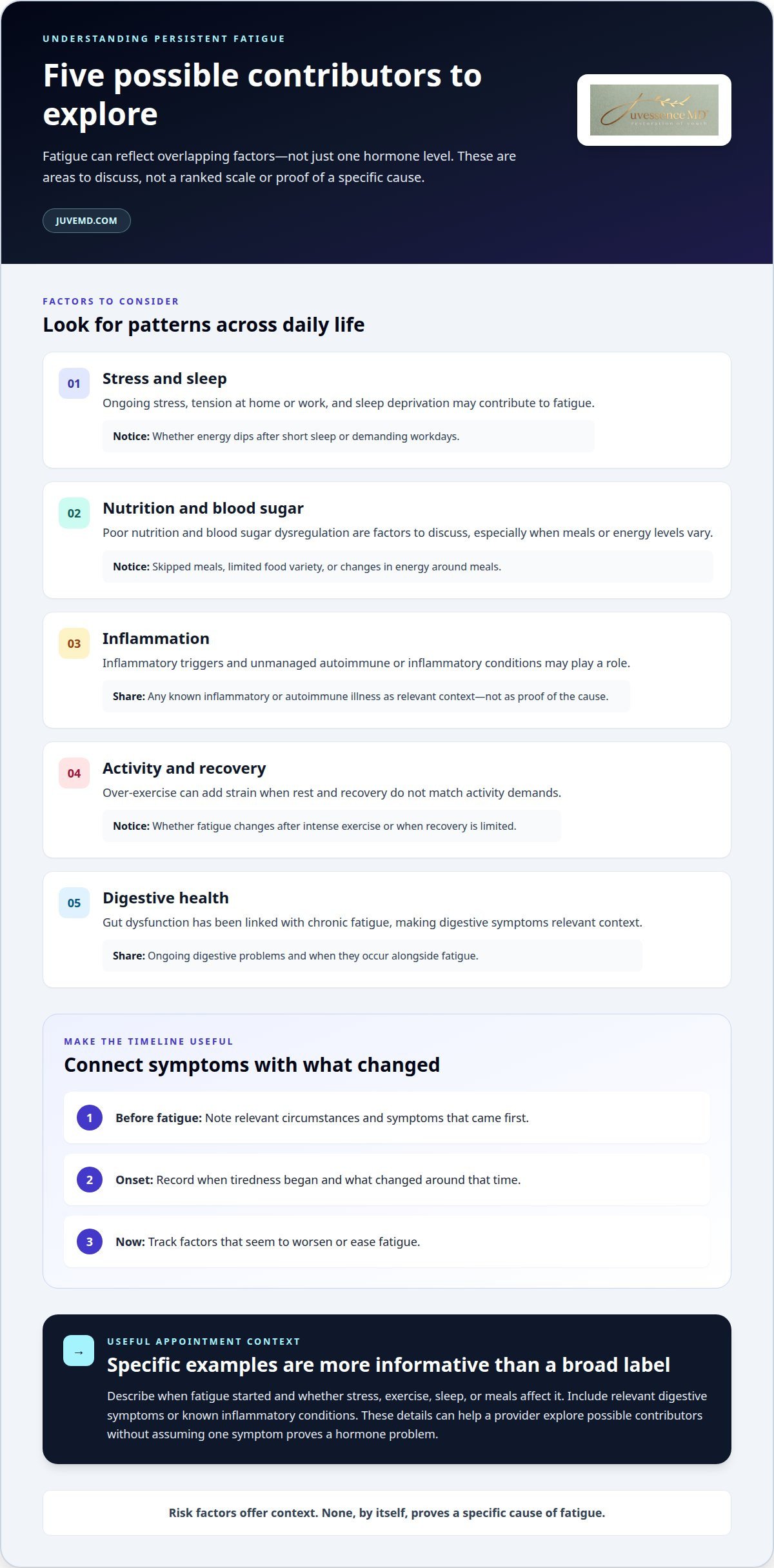
- Stress and sleep: Ongoing stress, tension at home or work, and sleep deprivation may contribute to fatigue.
- Nutrition and blood sugar: Poor nutrition and blood sugar dysregulation are factors to discuss, especially when meals or energy levels vary.
- Inflammation: Inflammatory triggers and unmanaged autoimmune or inflammatory conditions may play a role.
- Activity and recovery: Over-exercise can add strain when rest and recovery don’t match activity demands.
- Digestive health: Gut dysfunction has been linked with chronic fatigue, making digestive symptoms relevant context.
These factors can interact. Work stress may disrupt sleep, for instance, while poor sleep can make daily demands feel harder. A practical assessment separates the timeline into symptoms before fatigue, the onset period, and factors that now worsen or ease it. Record examples such as a stressful deadline, a change in sleep routine, or increased training. Patterns are more informative than a broad label alone.
Risk factors deserve attention, but they should not become assumptions. A history of autoimmune or inflammatory illness, ongoing digestive problems, limited food variety, or repeated sleep disruption gives a provider useful context. None proves a specific cause of fatigue. The value lies in connecting symptoms with circumstances and deciding what merits closer assessment.
At an appointment, describe specific changes rather than saying only, “I feel tired.” Explain when fatigue started, whether stress or exercise affects it, and how sleep and meals fit the pattern. Include examples of digestive symptoms or known inflammatory conditions. This helps providers distinguish possible contributors and consider whether further evaluation is appropriate.
Some possible contributors can be considered together rather than in isolation. Elite Health identifies stress as a potential factor in chronic fatigue and recommends reducing tension and anxiety at work and home. Stress in either setting is useful context to share with a provider, without assuming it explains every symptom.
RedRiver Health & Wellness says chronic stress, poor nutrition, blood sugar dysregulation, sleep deprivation, environmental toxins, inflammatory triggers, unmanaged autoimmune or inflammatory conditions, and over-exercise may contribute to what is commonly called adrenal fatigue. These are possible contributors, not proof of a single cause. Noting which may apply can help frame a discussion.
Elite Health describes gut dysfunction as linked with chronic fatigue and suggests that improving digestive health may help reduce fatigue. Digestive concerns can be mentioned alongside changes in sleep, meals, stress, or activity.
Chronic fatigue symptoms and post-exertional malaise
Chronic fatigue can involve more than feeling tired after a demanding day. Persistent, disabling exhaustion may not improve with rest and can worsen after physical or mental effort. Symptoms can include unrefreshing sleep, memory difficulties, muscle pain, headaches, and exercise intolerance. Describe these patterns during an evaluation.
Post-exertional malaise (PEM) means symptoms worsen after exertion. Triggers might include a workout, a long work meeting, or errands requiring sustained concentration. A flare can affect energy, thinking, sleep, or pain. If activity repeatedly brings on this pattern, don’t push through it. Note what came before the flare and how daily functioning changed afterward.
- Energy: Record whether ordinary tasks cause exhaustion or require extra recovery.
- Thinking: Notice memory problems or difficulty concentrating during work, reading, or conversation.
- Sleep: Note whether sleep feels refreshing or leaves you tired the next morning.
- Movement: Describe muscle pain, headaches, or reduced tolerance after exercise.
- Standing: Report dizziness or other orthostatic symptoms that appear when upright.
A symptom record helps distinguish a brief energy dip from a recurring pattern. Compare how you feel after a quiet day with how you feel after grocery shopping or focused computer work. Note the activity, symptoms that followed, and effects on your routine. A clear example is more informative than a general description such as “exercise makes me tired.”
Chronic stress is one factor associated with commonly described adrenal fatigue. The hypothalamic-pituitary-adrenal axis, often shortened to HPA axis, refers to the body’s stress-response system. “HPA-axis dysregulation” is sometimes used to describe an altered stress response, but the phrase alone does not establish the cause of fatigue. Note specific stressors, such as disrupted sleep during a demanding work period, rather than treating the label as a diagnosis.
Chronic fatigue syndrome has no single diagnostic test. Clinicians assess symptoms and medical history, perform a physical examination, and may use blood work or urinalysis to rule out other conditions. There is currently no cure; care focuses on managing symptoms and supporting daily functioning and quality of life. A symptom timeline can make an appointment more productive.
Bring concrete examples: when fatigue began, what activity worsens it, and whether memory, pain, sleep, or standing symptoms occur. If exertion triggers PEM, explain which tasks cause flares and how they affect work or home responsibilities. These details help clinicians understand the pattern without assuming tiredness has one explanation.
Commonly described adrenal fatigue symptoms
People using the term “adrenal fatigue” often describe persistent exhaustion despite adequate sleep, brain fog, mood changes, and difficulty recovering from illness or stress. Other reported concerns include salt or sugar cravings, dizziness when standing, frequent infections, low motivation, and sleeplessness. These symptoms can affect mental focus and everyday activities.
“Adrenal fatigue” is a commonly used label, not a diagnosis established by symptoms alone. Adrenal insufficiency is a distinct medical condition that requires clinical evaluation. A symptom list cannot determine which condition, if any, explains someone’s experience.
Adrenal fatigue clinics and endocrinology practices may differ in focus. A clinic using the “adrenal fatigue” label may emphasize wellness approaches, while endocrinology practices assess hormone disorders such as adrenal insufficiency. The key distinction is whether testing and treatment address a specific clinical finding.
Possible contributors can overlap. Poor sleep may coincide with stress, for example, while an illness may leave someone struggling to regain their usual energy. Track when symptoms began, whether they vary during the day, and what changes after sleep, meals, or daily activity. These details help put cravings, mood changes, and fatigue into context.
- Energy and sleep: Record whether exhaustion continues after a full night’s sleep, or whether sleeplessness interrupts rest.
- Thinking and mood: Note episodes of brain fog, reduced motivation, or noticeable mood changes.
- Standing and appetite: Describe dizziness when standing and recurring salt or sugar cravings.
- Recovery: Track how long it takes to feel closer to baseline after stress or illness.
Symptom management starts with a practical record, not self-diagnosis. For one week, note sleep quality, energy, mood, cravings, and dizziness each day. Add an example of how symptoms affected work, household tasks, or concentration. This gives you a clearer account for an appointment and helps distinguish isolated symptoms from recurring patterns.
In Las Vegas, 44 doctors treat adrenal insufficiency within a 12-mile radius. That figure doesn’t identify which are endocrinologists; look for an endocrinologist whose practice addresses adrenal insufficiency or related hormone concerns. Describe the symptoms and ask how the evaluation connects findings with a diagnosis.
Symptoms that feel sudden, severe, or rapidly worsening warrant urgent medical assessment. Fainting, confusion, or inability to keep fluids down should not be managed with a symptom log alone. Urgent assessment can address immediate concerns; a scheduled appointment can explore persistent symptoms and possible causes.
Commonly described symptoms include persistent exhaustion despite adequate sleep, brain fog, mood changes, difficulty recovering from illness or stress, salt or sugar cravings, low blood pressure or dizziness on standing, frequent infections, loss of motivation, and sleeplessness. Some descriptions mention several symptoms, while others focus on one concern. Keep the account tied to what you actually experience: exhaustion, changes in thinking or mood, cravings, dizziness, infections, and difficulty recovering are symptoms, not proof of their cause. Using consistent terms can help you clearly describe what you have noticed.
Lifestyle changes for managing fatigue
Lifestyle adjustments can support fatigue care, but they do not identify its cause. Start by noticing how sleep, nutrition, stress, and activity relate to your energy. For example, record whether a demanding workday, a missed meal, or poor sleep coincides with a harder day. Use these observations to discuss patterns during medical care.
Build a consistent sleep routine around a schedule you can maintain. Keep bedtime and wake time steady where possible, and note disruptions such as late work, noise, or repeated waking. If sleep feels unrefreshing despite enough time in bed, include that in your symptom record. Sleep deprivation can contribute to fatigue, so describing the pattern helps distinguish occasional short nights from persistent difficulty.
Observe nutrition without assuming a particular food will resolve tiredness. Note whether long gaps between meals, limited food variety, or digestive symptoms coincide with energy changes. A balanced meal pattern can make these relationships easier to recognize. If changing your nutrition feels difficult, discuss practical barriers such as a changing work schedule or reduced appetite.
Stress management should focus on specific sources of tension. Identify whether work demands, caregiving, or conflict at home are disrupting sleep or recovery. Choose a realistic response, such as taking a quiet break after a demanding task or setting a boundary around work messages. These steps do not replace evaluation, but can make stress patterns easier to recognize and address.
Match activity to how your body responds. Over-exercise may contribute to fatigue, and people with post-exertional symptom flares should not push through worsening symptoms. Break demanding tasks into smaller parts and allow time to recover between them. If standing causes dizziness or other orthostatic symptoms, mention the pattern during care. Fluid and salt strategies, along with compression, may be part of care for autonomic dysfunction such as POTS.
- Track: Record sleep quality, meals, stressors, activity, and changes in energy.
- Adjust: Change one manageable routine at a time, such as reducing late work before bed.
- Review: Bring examples of symptom changes and activity-related flares to an appointment.
These steps are supportive, not a substitute for assessing possible medical causes of fatigue. Avoid responding to persistent exhaustion with intense exercise or restrictive eating without considering how symptoms change. A lifestyle record can help clarify which routines seem manageable and which coincide with worse fatigue.
For support connecting wellness goals with a broader care plan, explore wellness support.
JuveMD
JuveMD offers hormone-focused care for people exploring whether hormonal treatment relates to ongoing fatigue. Bioidentical Pellet Hormone Therapy may be relevant when a clinically significant hormone imbalance has been identified; persistent tiredness alone does not establish that treatment is appropriate. A conversation about your symptoms and health goals can help clarify whether this care fits your needs.
For fatigue that may have medical causes requiring diagnosis or urgent attention, seek appropriate medical evaluation. JuveMD’s hormone and wellness services are not a substitute for assessing every possible cause of chronic fatigue.
Contact JuveMD to discuss your hormone and wellness goals.
Take the next step toward clearer care
Persistent fatigue can make it hard to know where to begin. A focused conversation about what you’re experiencing and what support fits your goals can help. If you’re considering an adrenal fatigue specialist in Las Vegas, keep the discussion grounded in your symptoms and the clinical basis for any proposed hormone treatment.
JuveMD provides hormone and wellness care, including Bioidentical Pellet Hormone Therapy, injectables, and skin treatments. These services may support wellness goals, but they are not a substitute for evaluating possible medical causes of ongoing fatigue. Clear expectations help you decide whether hormone-focused care is a suitable next step.
Contact JuveMD about fatigue care to discuss your questions and explore an appropriate path forward. A thoughtful conversation can help you move ahead with greater clarity and confidence.
Frequently Asked Questions
How quickly will I notice improvement?
There’s no single timeline for improvement because it depends on the cause of fatigue and the care used. Durable gains in daily functioning often unfold over weeks to months. Track practical changes, such as whether you can complete usual work or household tasks, rather than judging progress by one unusually good or difficult day. Share these changes at follow-up so the care plan can be reviewed in context.
What tests do Las Vegas specialists use to evaluate suspected adrenal problems?
Evaluation may include a medical history, physical examination, blood work, and urinalysis to assess symptoms and rule out other conditions. Specific tests depend on the concerns being evaluated, so tell the clinician about changes such as dizziness, unrefreshing sleep, or fatigue after ordinary activity. Bring a current medication and supplement list, along with a brief symptom timeline. These details help connect test choices with your situation.
Which endocrinologists in Las Vegas treat adrenal insufficiency or related symptoms?
There are 44 doctors who treat adrenal insufficiency within a 12-mile radius of Las Vegas. Look for a clinician who evaluates symptoms, explains testing, and discusses results before recommending treatment.