
The monthly figure alone rarely shows the full financial picture of hormone therapy. Financing options for hormone therapy in Las Vegas can differ in approval requirements, interest, and payment schedules, so review the terms before committing. Treatment costs also depend on the therapy and what care includes.
It’s reasonable to want clear answers before starting treatment, especially when comparing compounded options with bioidentical hormone therapy. This guide explains factors that affect hormone therapy costs and what to understand about financing approval and interest.
You’ll also learn how pellet therapy fits into the discussion and how to weigh payment terms alongside your care plan. Understanding both can help you make a more informed decision about next steps.
Key Takeaways
- See how formulation, lab work, and treatment schedule can shape the overall cost of hormone therapy.
- Learn which approval and interest details to understand before choosing a financing plan.
- Explore how third-party medical financing works and what terms can affect the amount you repay.
- Compare common HRT payment structures, including recurring medication costs and pellet insertion schedules.
- Understand how often Las Vegas clinics report offering payment plans or financing, and how JuveMD’s bioidentical pellet therapy fits into the care conversation.
Compounded hormone therapy costs
Costs for compounded therapy depend on the prescribed formulation and the services included in care. The U.S. Food and Drug Administration says compounded medications aren’t reviewed or approved for safety, effectiveness, or quality.
A compounded prescription may be a cream or another dosage form prepared for an individual patient. The full expense can include the medication, initial laboratory work, follow-up visits, and treatment-plan adjustments. A quote listing only the prescription may not reflect the total cost of care.
Before comparing estimates, separate medication charges from clinical services. One estimate, for example, might include laboratory work while another bills it separately. Request an itemized breakdown of the formulation, dispensing charges, lab work, and follow-up. This helps you compare like with like and identify recurring costs.
Compounded preparations differ from FDA-approved medications. Compounded drugs don’t receive the same approval for safety, effectiveness, or quality. If considering this option, understand why a compounded preparation is being considered and how the clinician will monitor treatment.
Insurance Coverage Requirements
Insurance coverage in Nevada depends on the health plan and specific treatment. Review whether your policy covers the prescribed medication, reason for treatment, laboratory work, and clinic visits. These charges may be handled differently, so coverage for a prescription doesn’t necessarily mean related services are covered.
Review plan rules for documentation, eligible prescriptions, and required authorization. A plan, for example, may distinguish a pharmacy prescription from a clinic-administered service. Keep medication and service charges separate when reviewing an estimate or insurance statement.
HSA and FSA Payment Options
HSA or FSA funds can be used only when an expense meets the account’s eligibility rules. Eligibility may differ by charge: a prescribed medication, laboratory test, and clinic service can each be treated differently under account terms.
Review the account’s eligible-expense guidance before using funds for compounded therapy. Keep receipts that identify each charge, such as the prescription and lab work, rather than relying on a combined total. This gives you a clear record if an administrator requests documentation.
Low-Cost and Sliding-Scale Care
Sliding-scale programs in Las Vegas are clinic-specific, not a standard feature of every hormone therapy practice. Affordability can depend on how medication, laboratory work, and follow-up care are billed. A lower initial charge may not reflect ongoing costs if other services are billed separately.
Compare an itemized estimate and ask whether income-based fees or other payment arrangements apply. For example, compare a medication-only quote with one that includes testing and follow-up. This distinction helps reveal likely total costs without assuming every clinic offers the same assistance.
Financing approval and interest questions
Financing plans differ in interest, fees, repayment schedules, and approval criteria. Compare the written terms, not just the monthly payment. Before signing a clinic plan or medical credit agreement, review the total repayment amount, payment dates, promotional terms, and consequences of missed payments.
Interest, Fees, and Repayment Terms
A low monthly payment can still cost more if repayment lasts longer or interest adds up. Compare offers by asking the same questions: What amount will be financed? What interest rate applies? Are there account, late-payment, or other fees? What is the total repayment amount if payments arrive on schedule?
Pay close attention to promotional interest terms. A plan may advertise an introductory period, but the contract explains when it ends and what happens afterward. Check whether interest accrues during the promotion, whether a missed payment changes the terms, and when the first payment is due. These details matter more than a headline rate alone.
Repayment schedules also affect budgeting. A shorter term may require larger payments, while a longer term extends repayment. Compare written offers by recording the payment amount, number of payments, fees, and total due. Don’t compare monthly figures without checking that both offers cover the same treatment charges.
Clinic Payment Plans and Financing
Las Vegas clinics may offer an in-house payment arrangement or work with a third-party financing provider. The terms differ: a clinic plan may divide charges into agreed payments, while a medical credit agreement follows the lender’s contract. Ask which arrangement applies and whether treatment charges are due before financing approval.
Approval isn’t automatic. The application process and decision depend on the financing arrangement, and a clinic payment plan may have different conditions from a lender’s offer. Before applying, identify the amount being financed and the charges it covers. Financing options for hormone therapy in Las Vegas are easier to assess when matched to a clear treatment estimate.
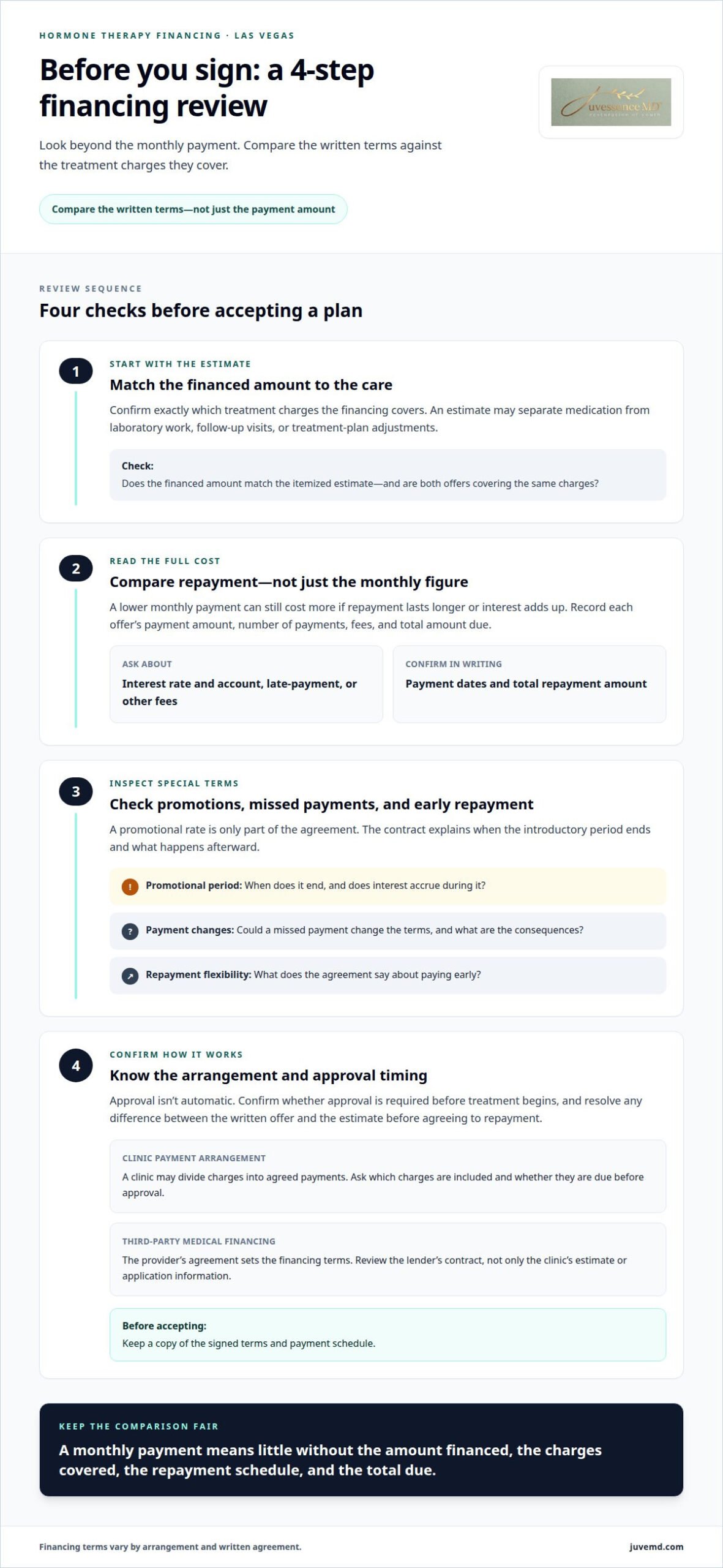
Use this review sequence before signing:
- Match the financed amount to the itemized treatment estimate.
- Find the interest rate, fees, payment schedule, and total repayment amount in writing.
- Read the terms for promotional periods, late payments, and early repayment.
- Confirm whether approval is required before treatment begins.
Raise questions about approval and interest with the clinic before booking, then review the agreement before accepting it. Keep a copy of the signed terms and payment schedule. If the written offer differs from the estimate, resolve the discrepancy before agreeing to repayment.
Third-party medical financing providers
A third-party medical financing provider offers a separate payment agreement for eligible healthcare charges. A clinic may present an application option, but the provider’s agreement sets the financing terms. Distinguish this arrangement from a clinic payment plan before choosing how to pay.
Start by identifying who receives the application and manages repayment. A third-party provider may assess an application and set the agreement’s terms. The clinic’s role may be limited to explaining how financing applies to its services. For example, a treatment estimate and financing offer remain separate documents, even when presented together.
Review the application and agreement as separate steps. An application requests information to consider financing; an agreement describes the terms if financing is approved. Before accepting, match the financed amount to the estimate. If it lists separate medication, laboratory, or follow-up charges, confirm which items the offer covers.
Use this comparison list for each provider:
- Coverage: Identify which treatment charges the financing can pay.
- Approval: Review the application process and the decision communicated to you.
- Repayment: Record the interest, fees, payment dates, and total amount due.
- Terms: Read how promotional offers, missed payments, and early repayment are handled.
Personalized financing language doesn’t replace the contract. A tailored payment offer still needs clear written terms, including the financed amount and repayment schedule. If an offer lists a recurring payment but not the total repayment amount, locate the complete cost in the agreement before accepting.
Keep the clinic estimate, application decision, and provider agreement together. These documents help trace charges from proposed care to the financing arrangement. If the financed amount differs from the estimate, ask the clinic and financing provider to explain before signing. Don’t rely on a verbal summary when written terms govern repayment.
Las Vegas clinic websites report different payment arrangements. Nine of the 11 clinics listed for hormone replacement therapy say they offer financing or payment plans. That figure includes payment plans as well as financing, so it doesn’t mean every clinic uses a third-party lender. The provider and arrangement can vary by clinic.
For a practical comparison, weigh a third-party offer against any clinic payment plan using the same treatment estimate. Compare approval, amount covered, interest, fees, schedule, and total repayment side by side. This clarifies the financing choice without confusing the care decision with the borrowing decision.
Typical monthly HRT prices
A monthly figure might describe medication, a clinic program, or an average across different treatment formats. These amounts aren’t interchangeable. FDA-approved pharmacy prescriptions, wellness-clinic programs, compounded medications, and pellet therapy can involve different charges and schedules. Compare the same treatment type and included services before using a monthly estimate to plan payments.
For pharmacy-based treatment, the prescription is one cost category. Estradiol patches or gel with micronized progesterone follow a different purchasing path from a clinic program. A clinic program may combine prescribed products with appointments or other services. Check which items an estimate includes to distinguish medication costs from care-related charges.
Compounded treatment also needs a separate breakdown. A cream prescription, laboratory work, and follow-up appointments may appear as distinct charges. A medication-only estimate, for example, can’t be compared directly with a program estimate that includes testing. Review the listed formulation and services, then note which charges recur and which apply to the initial evaluation.
Pellet therapy follows a different schedule from monthly prescriptions. Hormone pellets are implanted under the skin of the hip every three to four months. A monthly budget can help spread expected expenses, but each insertion isn’t a monthly charge. Keep the treatment schedule separate from the payment schedule when planning.
Use these categories to read an estimate:
- Medication: Identify the formulation and whether it is dispensed through a pharmacy or clinic.
- Testing: Note whether initial or follow-up laboratory work is included.
- Care: Separate appointments and other services from the prescription.
- Schedule: Record recurring charges and treatment events, such as pellet insertion.
The price depends on the individual case and is provided after a quote request. Formulation, testing, appointment structure, and treatment schedule affect the total. A monthly estimate is most useful when options cover the same period and services. If one excludes laboratory work and another includes it, compare that amount separately rather than treating the totals as equivalent.
For a practical comparison, map each estimate across the treatment timeline. Mark initial testing, medication refills, appointments, and pellet insertions every three to four months where applicable. Then use the written estimate to calculate what is due at each point. This creates a clearer wellness budget and shows whether financing covers the full plan or selected charges.
Do Las Vegas clinics offer payment plans or financing for hormone therapy?
Yes. Some Las Vegas clinics offer payment plans or financing for hormone therapy. Arrangements differ, so identify whether an offer comes from the clinic or a third-party financing provider. This matters because the payment schedule, approval process, and contract terms may come from different parties.
Start with the treatment estimate. A useful comparison separates medication, laboratory work, appointments, and other listed care charges. Then establish which expenses the payment plan covers. For example, an arrangement may apply to clinic charges but not a separately dispensed prescription. Don’t assume one monthly payment covers every part of care.
Request the payment schedule in writing before agreeing. It should show when payments begin, how often they’re due, and which balance they reduce. If financing is involved, review the interest, fees, promotional terms, and total repayment amount. These details help distinguish a clinic payment plan from a credit agreement.
Use this checklist to compare available arrangements:
- Plan source: Identify whether the clinic or a financing provider manages payments.
- Covered charges: Match the financed amount to the itemized treatment estimate.
- Approval: Understand whether approval is needed before care begins.
- Repayment: Record payment dates, interest, fees, and the total due.
- Changes: Read how missed payments or promotional terms affect the agreement.
A payment plan can help organize expenses, but it doesn’t change the treatment estimate. Dividing a balance into installments changes when you pay, not which services the estimate includes. Compare the full charge and repayment terms together. A smaller scheduled payment doesn’t necessarily mean a lower total repayment.
Las Vegas clinics may present payment plans alongside medical financing, but these options aren’t interchangeable. With a clinic arrangement, the clinic sets the payment terms. With third-party financing, the provider’s agreement governs repayment. The written documents show who receives payments and what happens if a payment is late.
Before choosing, compare the estimate with the agreement. Confirm that the financed amount matches the charges you intend to cover. If the documents differ, resolve the discrepancy before accepting the terms. This keeps your care budget and repayment obligation clear.
To explore hormone therapy care and discuss how treatment planning fits your goals, learn more about hormone therapy care.
Across the listed options, 9 of the 11 Las Vegas clinics listed for hormone replacement therapy say on their own websites that they offer financing or payment plans. That count indicates these options are common among the clinics reviewed, but it does not establish that every patient will qualify or that the terms are the same. Treat each offer as a starting point for a direct comparison, not as a guarantee of affordability.
When contacting a clinic, request the written estimate and payment or financing agreement before deciding. Ask whether the quoted amount could change if care recommendations change, and confirm how that would affect the balance and scheduled payments. Keep the estimate and agreement together to check that the financed amount, covered charges, and repayment terms remain consistent.
JuveMD: Bioidentical Pellet Hormone Therapy
JuveMD offers Bioidentical Pellet Hormone Therapy for people considering hormone care. After reviewing payment arrangements, consider whether pellet therapy aligns with your treatment needs and preferences. A discussion about the therapy can clarify what care involves and what questions to consider alongside the written estimate and financing terms. JuveMD also offers injectables, skin treatments, and weight-loss services. These are distinct offerings, so focus the conversation on care relevant to your goals. If you’re considering bioidentical pellet therapy, contact JuveMD to discuss your questions and next steps.
Make Your Next Step With Clarity
Choosing care and choosing how to pay are connected, but they’re different decisions. Let your health priorities guide the treatment conversation, then consider how the expected commitment fits your financial plans. Understand financing options for hormone therapy in Las Vegas in the context of the care you’re considering, not as a reason to choose a treatment that doesn’t suit your needs.
Before moving forward, identify what you still need to understand. This might include how a proposed approach fits your goals, which charges belong in the estimate, or how to interpret a financing agreement. A focused conversation can bring those questions together without rushing your decision.
For a personalized discussion about hormone therapy and your next steps, contact JuveMD about your care options. Take the time you need to make a choice that feels informed and aligned with your priorities.
Frequently Asked Questions
Have Questions About Financing?
Yes, clarify the financing terms before deciding how to pay. Ask whether the arrangement is managed by the clinic or a separate financing provider, and review the written agreement before accepting it. Focus on the amount covered, approval conditions, repayment schedule, interest, fees, and total repayment. For questions about hormone care, speak with your healthcare provider; educational information is not medical advice.
How much does Hormone Replacement Therapy cost in Las Vegas?
There isn’t one price for every Las Vegas HRT plan. The total depends on the prescribed approach and services included in care, such as medication, testing, and appointments. For JuveMD services, pricing depends on the individual case and is provided after a quote request. A personalized estimate helps distinguish treatment charges from a separate payment arrangement.
What does HRT cost at a med spa?
Med spa HRT costs vary by treatment format and what the program includes. A medication-focused plan differs from one that includes testing, appointments, or ongoing monitoring. Compounded preparations are also distinct from FDA-approved products. The U.S. Food and Drug Administration says compounded medications aren’t reviewed or approved for safety, effectiveness, or quality, so discuss treatment options with your healthcare provider.
What does hormone therapy cost in Las Vegas without insurance?
Without insurance, patients are responsible for charges their plan would otherwise cover, but the total depends on treatment and services received. Request an estimate that separates medication, laboratory work, and visits. For JuveMD services, pricing depends on the individual case and is provided after a quote request. This information is educational only, not medical advice; consult your healthcare provider about treatment decisions.
Which financing companies do hormone therapy clinics in Las Vegas accept?
There isn’t one financing company accepted by every hormone therapy clinic in Las Vegas. Some clinics use third-party financing, while others may offer a payment plan directly. The application or agreement identifies the provider and applicable terms. Review it to understand who manages repayment and which charges the arrangement covers. Don’t assume an option at one clinic applies at another.