
Hormone therapy isn’t a decision you have to make once and leave unquestioned. The most useful questions to ask your hormone specialist cover their experience, how testing informs recommendations, which treatment options may suit your needs, potential side effects, and how your plan will be reviewed over time. It’s also reasonable to ask whether treatment may be temporary or continue for several years.
If you’re weighing hormone therapy, it’s natural to want clear answers before deciding. This guide will help you prepare for a thoughtful conversation about what a specialist considers, how treatment options differ, and what follow-up may involve, so you can better understand the options and discuss them in the context of your health.
You’ll also find questions about natural, synthetic, and bioidentical hormones, including what a treatment’s formulation means and whether it’s compounded. According to the U.S. Food and Drug Administration, compounded drugs aren’t FDA-approved, and the agency doesn’t review their safety, effectiveness, or quality before they’re sold. Use these prompts to focus your appointment on the details that matter to you, including how long HRT may last and how its benefits and risks will be revisited.
Key Takeaways
- Ask about a specialist’s hormone therapy experience, relevant training, and how they tailor recommendations to your medical history.
- Learn how symptoms and hormone tests are considered together, and what a test can and can’t tell you.
- Discuss potential side effects and how risks may differ by treatment route, including oral hormone therapy.
- Compare natural, synthetic, and bioidentical hormones, and understand what FDA review does and doesn’t cover for compounded drugs.
- Ask how treatment will be monitored and revisited over time, including what could influence whether you continue or stop HRT.
1. A specialist’s hormone therapy experience and continuing education
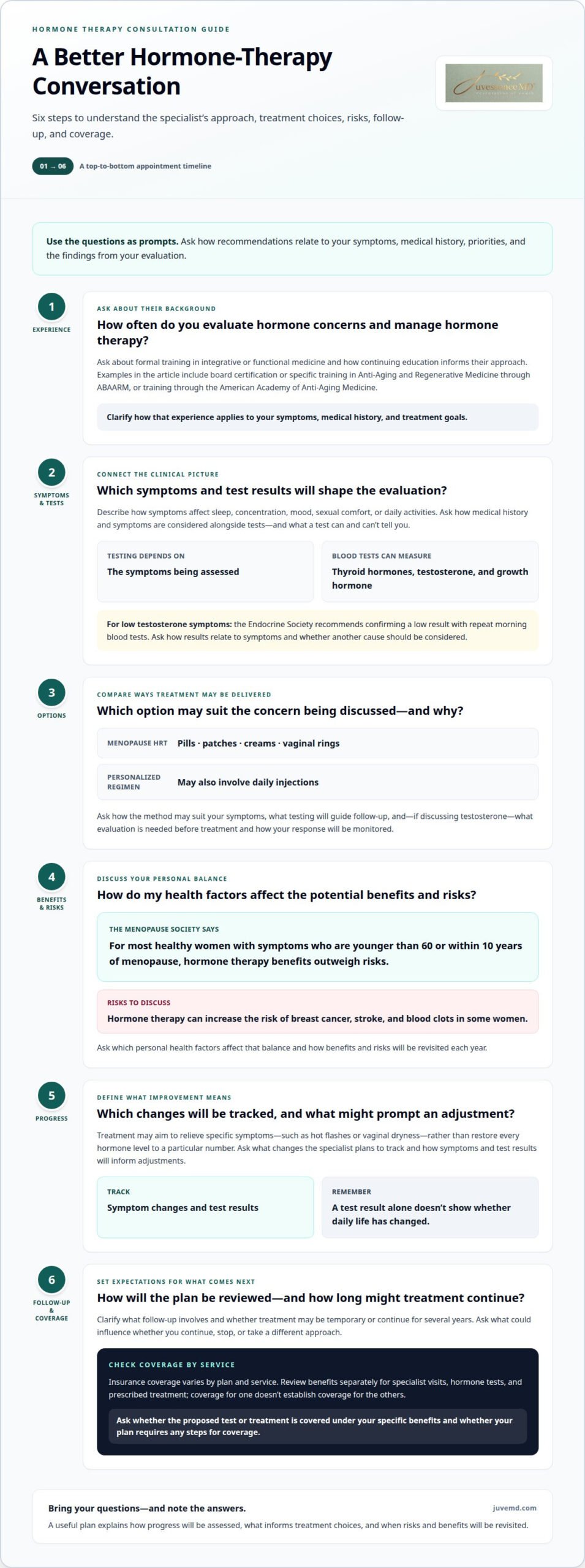
Start by asking how often the specialist evaluates hormone concerns and manages hormone therapy. Ask about formal training in integrative or functional medicine, and how continuing education informs their approach. Relevant examples include board certification or specific training in Anti-Aging and Regenerative Medicine through ABAARM, or training through the American Academy of Anti-Aging Medicine. Credentials are useful context, but ask how the specialist applies that knowledge to your symptoms, medical history, and treatment goals.
Ask which treatments may suit the hormone concern being discussed. Menopause hormone therapy may be delivered as pills, patches, creams, or vaginal rings; a personalized regimen may also involve daily injections. These options differ in how they’re taken, so ask why a particular method may suit your symptoms and what testing will guide follow-up. For testosterone concerns, ask what evaluation is needed before treatment and how your response will be monitored.
Discuss benefits and risks in relation to your health, not as a general promise. The Menopause Society says hormone therapy benefits outweigh risks for most healthy women with symptoms who are younger than 60 or within 10 years of menopause. Hormone therapy can increase the risk of breast cancer, stroke, and blood clots in some women. Ask which personal health factors affect that balance, and how risks and benefits will be revisited each year.
Set clear expectations for outcomes. Treatment may aim to relieve specific symptoms, such as hot flashes or vaginal dryness, rather than restore every hormone level to a particular number. Ask which changes the specialist plans to track, how symptoms and test results will inform adjustments, and what might prompt a different approach. A good plan explains how progress will be assessed, not just which therapy starts first.
Insurance coverage for specialist visits, hormone tests, and hormone therapy varies by plan and service. Review your plan’s benefits for consultations, diagnostic testing, and prescribed treatment, since coverage for one doesn’t establish coverage for the others. Before proceeding, ask whether the proposed test or treatment is covered under your specific benefits and whether your plan requires any steps for coverage.
Bring your questions to the consultation and note the answers. Ask about the specialist’s experience with your symptoms, the reasoning behind recommended tests, and how treatment choices compare. Clarify what follow-up will involve and how long therapy might continue. These questions help you understand the specialist’s process and whether the proposed plan addresses your priorities as well as the clinical findings.
2. What Does a Hormone Specialist Actually Do?
A hormone specialist considers symptoms, medical history, and test results before discussing treatment. Explain how menopause affects your sleep, concentration, mood, sexual comfort, or daily activities. Bladder problems, including incontinence, and sexual dysfunction can also occur with menopause. These concerns deserve attention, rather than dismissal as an unavoidable part of aging. When symptoms began and how they affect your quality of life help shape the evaluation.
Expect an assessment to look beyond a single hormone result. The appropriate laboratory tests depend on the symptoms being assessed. Blood tests can measure thyroid hormones, testosterone, and growth hormone. For symptoms of low testosterone, the Endocrine Society recommends confirming a low result with repeat morning blood tests. Ask how each result relates to your symptoms and whether another cause should be considered before treatment.
Menopause symptoms can affect comfort and daily routines in specific ways. Estrogen therapy may relieve hot flashes and vaginal dryness, and estrogen also plays a role in maintaining bone strength. Discuss which symptom matters most to you, what improvement would look like, and how progress will be reviewed. A test result alone doesn’t show whether your sleep, sexual comfort, or everyday function has changed.
Bring practical observations to your appointment. A short symptom log can record when hot flashes occur, whether sleep is interrupted, and how symptoms affect work or relationships. Note relevant changes in weight, medication, and daily habits alongside symptom timing. Regular movement, a consistent sleep routine, and noticing personal triggers can give you useful topics to discuss. These steps don’t replace an assessment, but they help connect daily experience with the clinical picture.
Ask how the specialist distinguishes menopause-related changes from other causes of low energy, mood shifts, or changes in sexual function. If a recommendation includes hormones described as “identical,” ask what that means for the specific treatment and how its suitability is assessed. The label alone doesn’t explain how a treatment is selected or monitored. Questions to ask your hormone specialist can clarify how symptoms, testing, and your priorities fit together.
Consider a second opinion if the explanation doesn’t address your symptoms, history, or concerns, or if you want another perspective before deciding. For sudden or severe symptoms, seek urgent medical care rather than waiting for a routine hormone appointment. Bring a medication list and symptom notes so the clinician can understand what changed and when.
3. Dried urine hormone testing
Dried urine testing is one way to examine how the body metabolizes hormones. A specialist may use it, for example, to discuss how estrogen is processed. The result provides information about hormone metabolism, not a complete picture of symptoms or health. Ask which specific findings relate to your concerns and how they might inform a treatment discussion, rather than assuming one result determines the next step.
This test may also assess nutritional status, neurotransmitters, and heavy metals. Because these categories extend beyond hormone levels, clarify which parts of the panel address your reason for testing. If you’re concerned about a menopause symptom, such as hot flashes, ask how the hormone findings relate to it. If the concern involves nutrition, ask which result is relevant to the question being evaluated.
Ask how dried urine results differ from saliva and blood tests. Saliva testing measures the bioavailable, non-protein-bound fraction of circulating hormones that can diffuse into tissues. Blood testing is mostly used to measure hormone levels in people taking oral hormone replacement or injectable hormones. These tests use different samples and answer different questions. Ask why a particular method fits your situation and what its results can contribute to care.
Before testing, clarify its purpose and how the report will be interpreted. Ask which hormones or other markers will be assessed, how the findings relate to your symptoms, and whether the results could change the recommended next step. If estrogen is being discussed, for example, ask whether the test is intended to examine metabolism or another aspect of hormone assessment. Clear answers help you understand what the test can explain.
Ask how the report will be discussed with you, rather than treated as a standalone verdict. A useful conversation connects findings with your symptoms, medical history, and current medications. If a result seems unexpected, ask what it means in context and whether another type of assessment is relevant. Understand the reasoning before making decisions that may affect treatment or quality of life.
Testing also has practical limits: a result is useful only when its purpose is clear. Ask who reviews the report, how the findings will be explained, and what follow-up discussion is planned. If treatment is considered afterward, ask how the specialist will decide whether it addresses your original concern. These questions keep dried urine testing in its proper role: one source of information in a broader conversation about symptoms and care.
4. Common side effects
Before starting hormone therapy, ask which side effects are associated with the specific medicine, dose, and delivery method being considered. The answer can depend on the treatment plan, so discuss your health history and current medications. Ask what changes to watch for, which effects may ease with time, and what should prompt a follow-up. A clear plan makes it easier to distinguish an expected adjustment from a concern that needs attention.
For oral hormone replacement therapy, blood clots are a key risk to discuss. Blood clot risk is one potential concern to discuss when considering oral hormone replacement therapy. Ask how that risk relates to your personal history and whether the proposed route affects the discussion. If you have concerns about clot risk, ask the specialist to explain relevant warning signs and what to do if they occur.
Hormone therapy can increase the risk of breast cancer, stroke, and blood clots in some women. Ask how your medical and family history affect the balance of potential benefits and risks. A history of cancer, heart disease concerns, or other significant health conditions deserves direct discussion before treatment. Ask how the specialist weighs these factors alongside your symptoms, rather than relying on a general description of risk.
Ask what role progesterone has in the recommended plan, including what guidance applies if you pause or stop treatment. If your regimen includes more than one hormone, ask how each medicine contributes and which effects may be associated with it. Don’t change or stop a prescribed plan without discussing the next steps. A clear explanation should cover both the intended treatment and how changes will be managed.
Side effects often go away after a few months. Ask how long the specialist expects you to allow for adjustment and how symptoms will be reviewed during that period. Keep a simple record of new or changing symptoms, when they occur, and whether they affect sleep or daily activities. That timeline can help the specialist assess whether the treatment plan needs attention.
Before your appointment, write down questions about the effects that matter most to you. Ask which side effects are linked to your specific treatment, how they’ll be monitored, and what symptoms warrant prompt medical attention. If an effect begins after a change in dose or delivery method, note when the change occurred. This information gives the specialist useful context for discussing your next steps.
Review risks and benefits together, not as separate topics. Ask how often the plan will be reassessed and what could lead to adjusting or ending therapy. Your symptoms, medical history, treatment route, and response all inform that conversation. Clear answers can help you understand what to expect and how the plan might adapt if your experience changes.
5. Natural, synthetic, and bioidentical hormones
These labels describe different things and shouldn’t be treated as interchangeable. “Natural” may refer to a hormone’s source or how a product is marketed. “Synthetic” describes hormones made through chemical processes; their structures may differ from hormones produced by the body. “Bioidentical” means the hormone has the same molecular structure as its human counterpart. Ask which specific hormone and product the specialist means, rather than relying on the label alone.
A name doesn’t establish how a treatment is made, reviewed, or suited to you. A bioidentical hormone, for example, may be part of an approved product or a compounded preparation. The U.S. Food and Drug Administration does not approve compounded drugs or review their safety, effectiveness, or quality before they’re sold. Ask whether a proposed medicine is compounded, what that means, and how its risks and benefits will be discussed.
During a consultation, connect the formulation to the symptoms you want to address. If hot flashes disrupt sleep, ask what the treatment is intended to help with and how progress will be assessed. Ask whether the recommendation depends on your symptoms, medical history, and other medicines. The term “natural” doesn’t by itself show that a treatment is safer, more effective, or appropriate for your health.
Ask the specialist to explain the exact ingredient and formulation in plain language. Find out whether the product contains estrogen, progesterone, or another hormone, and why each is included. If the plan combines hormones, ask what role each serves and how the dose will be reviewed. A clear explanation distinguishes the treatment’s composition from claims about its source or marketing category.
Compounded preparations deserve specific discussion because they aren’t FDA-approved. Ask why compounding is being considered, what the preparation contains, and how the specialist will monitor your response. Don’t assume that “customized” means better suited to your needs. Ask whether the formulation addresses a clinical reason, what alternatives were considered, and how symptoms or unwanted effects will inform follow-up.
Use these distinctions to guide a practical decision, not to choose a product by label. Ask what evidence supports the proposed treatment for your symptoms, what risks matter in your case, and how ongoing care will be managed. If you’re considering bioidentical hormone therapy options, discuss the specific formulation and your treatment goals with a specialist before deciding.
JuveMD: Bioidentical Pellet Hormone Therapy
JuveMD offers Bioidentical Pellet Hormone Therapy for people exploring hormone treatment options. If you’re considering pellets, a discussion of your symptoms, health history, and treatment goals can help you understand whether this approach suits your needs. Bring questions from this guide, including how treatment would be monitored, which potential risks to discuss, and how long therapy may continue.
Use that discussion to understand the specific treatment plan, its intended role, and the follow-up involved. Hormone therapy is a personal health decision, and clear answers can help you weigh options with a qualified professional. To discuss Bioidentical Pellet Hormone Therapy, contact JuveMD in Las Vegas.
Take the Next Step With Clarity
Your next appointment can be a conversation, not a commitment. Choose the questions to ask your hormone specialist that matter most to your comfort, health priorities, and expectations. Be direct about what you hope to improve and what concerns you. Clear communication keeps the discussion focused on your needs and the decisions ahead.
JuveMD offers Bioidentical Pellet Hormone Therapy and injectables, along with skin treatments in Las Vegas. If you’re considering hormone care, discuss your goals and the treatment approach with the team. The next step should give you a clearer understanding of your options without rushing your decision.
Contact JuveMD about hormone care to start a conversation and explore your next step with confidence.
Frequently Asked Questions
Bonus Question: Do I Have to Do This (HRT) Forever?
No, hormone therapy doesn’t automatically mean lifelong treatment. Some people continue for several years, while others revisit the decision as symptoms and health priorities change. Ask what would support continuing, adjusting, or stopping your plan, and how follow-up will work. If you stop, discuss guidance about progesterone or other supplements. This information is educational only, not medical advice; consult your healthcare provider before changing treatment.
Can this doctor provide a customized treatment plan?
A treatment plan can be tailored to your symptoms, medical history, test findings, and goals. At JuveMD, Dr. Andrea Dempsey leads personalized hormone optimization for both men and women. During a consultation, explain which concerns matter most and what you hope to address. Ask how those priorities relate to the options being discussed and what factors could lead to a change in the plan.
Do this doctor begin with a comprehensive evaluation?
A hormone discussion should begin with an evaluation of your symptoms and health history, not a treatment choice in isolation. Prepare a current medication and supplement list, note relevant family history, and describe how symptoms affect daily life. These details help determine which tests or other assessments may be relevant. Ask how the findings will shape the next step and how unanswered concerns will be followed up.
Does this program use precision dosing?
Ask what “precision dosing” means for the proposed treatment. The phrase alone doesn’t explain how a dose is selected or adjusted. Clarify which clinical findings guide the amount, what changes would prompt a review, and how your response will be assessed. Ask whether symptom changes, test results, or both inform adjustments. A clear explanation connects the dose to your individual plan rather than treating a label as proof of personalization.
How much experience does this doctor have providing hormone replacement therapy?
JuveMD identifies Dr. Andrea Dempsey as its lead clinician, with a background in internal medicine and two decades of hands-on experience. That background provides context, but you can still ask about her experience with the hormone concern you’re discussing. Explain whether your focus is menopause symptoms or testosterone, for example, then ask how her approach addresses that concern and what follow-up involves.
What Does a Hormone Specialist Actually Do?
A hormone specialist evaluates concerns that may involve hormone levels, connects symptoms with relevant testing, and discusses potential treatment approaches. An evaluation might consider thyroid hormone or testosterone concerns alongside the symptoms prompting the visit. The specialist’s role is to explain how the findings relate to your situation and outline relevant next steps. Ask what each test can clarify and how the results inform care.
What Should Happen at Your First Hormone Therapy Appointment?
Your first appointment should give you time to explain your symptoms, relevant health history, current medicines, and treatment goals. Bring notes about when symptoms occur and how they affect sleep, work, or relationships. The discussion can identify which concerns need further assessment and which options merit consideration. Before leaving, make sure you understand the proposed next step, what it is intended to address, and how follow-up questions will be handled.
What does a hormone specialist (endocrinologist) diagnose and treat?
An endocrinologist focuses on health concerns involving hormones and the glands that produce them. Depending on the clinical concern, evaluation may involve thyroid hormones, testosterone, or growth hormone. Menopause-related symptoms can also be part of a hormone care discussion. The scope depends on the reason for the appointment, so describe your main symptoms and ask which concerns the assessment addresses. JuveMD provides hormone-focused care in Las Vegas.