
For healthy people with bothersome symptoms, when to consider hormone therapy for menopause often comes down to timing: benefits may outweigh risks when treatment starts before age 60 or within 10 years of menopause. That timing is only part of the decision; symptoms, health history, treatment type, dose, and duration also matter.
Hot flashes and night sweats are common during menopause, but symptoms that disrupt sleep or daily routines deserve attention. Deciding whether to consider hormone therapy for menopause isn’t simply a choice between tolerating symptoms and starting hormones. The right discussion considers which symptoms treatment may help, how age and medical history affect the balance of benefits and risks, and why the lowest effective dose and treatment duration matter. The approach may differ for symptoms affecting the whole body and symptoms limited to vaginal dryness or discomfort.
Key Takeaways
- Hormone therapy may be worth discussing when menopause symptoms interfere with daily life; treatment can be considered during perimenopause as well as after periods stop.
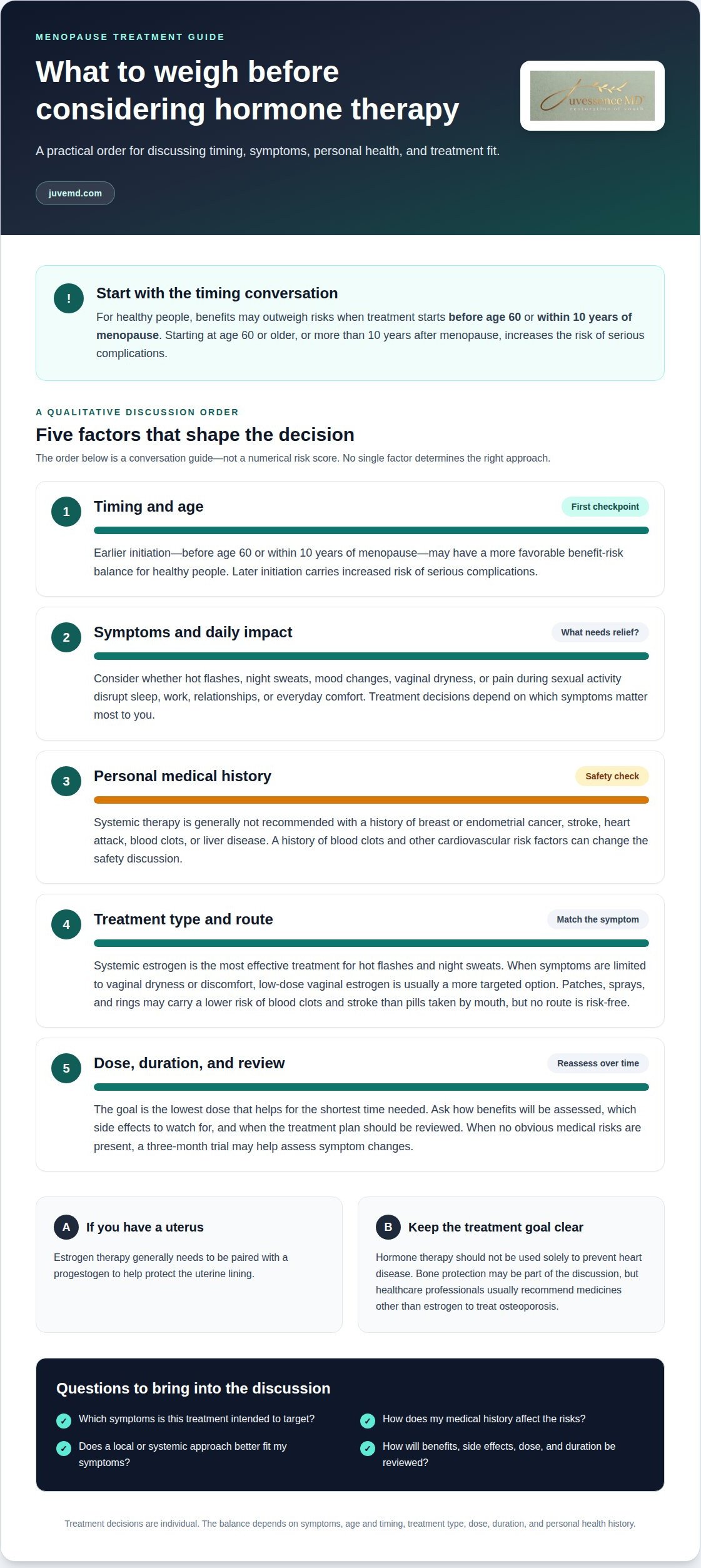
- Timing matters: for healthy people, benefits may outweigh risks when treatment starts before age 60 or within 10 years of menopause.
- Your symptoms and medical history help shape the approach. A history of certain cancers, blood clots, stroke, heart attack, or liver disease can make systemic therapy unsuitable.
- If you have a uterus, estrogen therapy generally needs to be paired with a progestogen to help protect the uterine lining.
- Plan to revisit the dose and duration over time, with the goal of using the lowest dose that helps for the shortest time needed.
Cardiovascular disease, blood clot, and stroke risks
Menopause is confirmed after 1 year without menstrual periods, according to the National Institute on Aging. For hormone therapy decisions, age, timing, treatment type, and personal health history all shape the risk picture.
Cardiovascular and Stroke Risks
Cardiovascular risks include possible heart disease and stroke, particularly when systemic hormone therapy begins later in life. For healthy people, benefits may outweigh risks when treatment starts before age 60 or within 10 years of menopause. Starting at age 60 or older, or more than 10 years after menopause, increases the risk of serious complications.
Some research suggests combined therapy may protect against heart attacks when started within 10 years of menopause and before age 60. That finding does not make hormone therapy a heart-disease prevention treatment. It should not be used solely to protect the heart. Menopause-related osteoporosis prevention is a separate consideration from cardiovascular risk.
Blood Clot and Gallbladder Risks
Blood clots are a potential risk of hormone therapy, and the delivery method may affect that risk. Patches, sprays, and rings may carry a lower risk of blood clots and stroke than pills taken by mouth. This distinction may matter for someone with clotting concerns or other cardiovascular risk factors, but no route is risk-free.
Gallbladder disease is another potential concern to discuss when weighing treatment risks. The overall balance depends on the type and duration of therapy, medical history, and lifestyle. For example, a history of blood clots changes the safety discussion. A hysterectomy is also relevant to treatment planning, but does not by itself establish cardiovascular safety.
Age, Warnings, and Risk Factors
After age 60, the risks of heart disease, blood clots, and stroke begin to increase; after age 70, these risks are higher for people using hormone therapy. The FDA did not request removal of cardiovascular disease and breast cancer risks from the Warnings and Precautions section of menopausal hormone therapy labeling. These warnings describe potential harms, not a prediction of what will happen to each person.
Systemic therapy is generally not recommended for people with a history of breast or endometrial cancer, stroke, heart attack, blood clots, or liver disease. People who have had a stroke or heart attack should not use hormone therapy for menopause. These factors can affect whether expected symptom relief justifies the risks or whether another approach is more appropriate.
Choosing treatment based on symptoms and medical history
Treatment decisions depend on which symptoms affect daily life, medical history, and personal priorities. The goal is to match the type of treatment to the symptoms being addressed.
Symptoms and Quality of Life
Menopause symptoms can disrupt sleep, concentration, comfort, and daily routines. Hot flashes and night sweats can make restful sleep difficult, while vaginal dryness may cause discomfort or pain during sex. Hormone therapy may help relieve hot flashes, night sweats, mood changes, vaginal dryness, and pain during sexual activity. Symptoms that interfere with work, sleep, or relationships deserve a focused discussion about their effect on quality of life.
Systemic estrogen is the most effective treatment for hot flashes and night sweats. When symptoms are limited to vaginal dryness or discomfort, low-dose vaginal estrogen is usually a more targeted option than systemic treatment.
Symptom and Bone Health Benefits
Menopause hormone therapy uses estrogen, with or without progesterone or a similar hormone called progestin, to ease symptoms associated with lower estrogen levels. Systemic estrogen can also help protect against bone loss that occurs early in menopause and may help prevent osteoporosis. This may be relevant when both symptoms and bone health are part of the treatment discussion.
Bone protection alone doesn’t determine the best treatment. Healthcare professionals usually recommend medicines other than estrogen to treat osteoporosis, so it’s important to clarify treatment goals. For example, someone seeking relief from severe night sweats may weigh symptom relief differently from someone focused mainly on bone health.
Symptoms and Cardiovascular Health
Menopause symptoms can also be part of a broader health conversation, but they don’t establish a heart diagnosis. Women with more than six days of hot flashes in the previous two weeks have a higher rate of heart disease 20 years later. This association is a reason to discuss overall cardiovascular health, not proof that hot flashes cause heart disease.
Hormone therapy shouldn’t be used solely to prevent heart disease. Treatment decisions should focus on symptom relief and individual health factors, not on treating hot flashes as a cardiovascular test.
Questions for a Doctor
There’s no single standard cost for menopause hormone therapy in the United States. Costs vary by treatment and formulation. Insurance coverage and out-of-pocket costs depend on the plan and prescribed option, so review your plan’s coverage details.
Before deciding, ask which symptoms the proposed treatment targets, how your medical history affects the risks, and whether local or systemic therapy suits your symptoms. Also ask how benefits will be assessed, which side effects to watch for, and when the dose or plan should be reviewed. When no obvious medical risks are present, a three-month trial may help assess symptom changes.
Estrogen-alone therapy and endometrial cancer warnings
Whether estrogen is used alone or with a progestogen depends partly on whether you have a uterus. This distinction matters because estrogen can affect the uterine lining, also called the endometrium.
Estrogen-only therapy is generally used after a hysterectomy, when the uterus has been removed. If you still have a uterus, estrogen alone can thicken its lining and increase the risk of endometrial cancer. A progestogen, such as progesterone or a similar hormone called progestin, helps protect the lining. This safety consideration applies even when treatment is intended to relieve hot flashes or vaginal dryness.
Combined hormone therapy pairs estrogen with progesterone or progestin. The right formulation and schedule depend on the treatment plan. One option is cyclic therapy, which adds progestin for 10 to 14 days each month for people with a uterus. Another approach may provide the hormones together. The essential distinction is that a person with a uterus generally needs progestogen alongside systemic estrogen, while someone who has had a hysterectomy may be prescribed estrogen alone.
The FDA did not request removal of the boxed warning for endometrial cancer from systemic estrogen-alone products. The warning reinforces why uterus status matters when considering systemic estrogen. It doesn’t mean everyone who uses estrogen will develop cancer; it highlights a risk that treatment planning must address. Tell the prescribing clinician if you’ve had a hysterectomy, and clarify whether your proposed therapy includes the progestogen needed for your situation.
Pills, patches, and gels deliver hormones systemically, meaning throughout the body. Vaginal estrogen is used locally for vaginal and urinary symptoms. It comes as a cream, tablet, insert, or ring, while systemic combination therapy commonly comes as pills or skin patches. Because the route affects which symptoms treatment targets, vaginal products aren’t interchangeable with systemic options for symptoms such as hot flashes.
Before starting, clarify whether the prescription contains estrogen alone or combined hormones, and whether it is systemic or vaginal. For example, someone seeking relief from vaginal dryness alone may discuss a local option, while someone with hot flashes may need a systemic approach. If you still have a uterus, ask how the plan protects the uterine lining. If you’ve had a hysterectomy, confirm whether estrogen-only treatment fits your history and goals.
Lowest effective dose and shortest duration
Menopause hormone therapy is generally tailored to use the lowest dose that relieves symptoms for the shortest time needed. The goal is to reduce symptoms such as hot flashes while regularly reviewing whether the benefits continue to outweigh the risks.
A treatment plan doesn’t have to remain at its starting dose. During early follow-up, discuss whether symptoms have improved, remain disruptive, or have changed. Many providers recommend checking in every three to six months at first, then once a year after treatment is working well. These reviews provide an opportunity to consider dose adjustments and whether continued treatment still fits your needs.
There isn’t one duration that suits everyone. Hormone therapy often continues for 2-5 years, as long as its benefits outweigh its risks. That range isn’t an automatic stopping date or a reason to continue without review. For example, persistent flashes may prompt a discussion about ongoing symptom relief, while a change in health history may shift the balance sooner.
Side effects also belong in follow-up conversations. Vaginal spotting or bleeding related to hormone therapy usually stops within 6 months. Record when it occurs and whether it continues, then raise it during a treatment review. If you have a uterus, bleeding deserves particular attention because the treatment plan must also account for the uterine lining.
Adjustments should address the problem being treated, rather than target a particular hormone level without context. A clinician may reassess the dose, delivery method, or treatment goal if symptoms persist or unwanted effects arise. Patches are one delivery option, but the choice of route depends on the therapy and a person’s risk factors. No route guarantees freedom from side effects.
Bone health can be part of the dose discussion, but it doesn’t automatically justify systemic therapy. Estrogen reduces osteoporosis even at doses as low as one-quarter of the dose typically prescribed for menopausal symptoms. Healthcare professionals usually recommend medicines other than estrogen to treat osteoporosis. Hormone therapy also shouldn’t be used solely to protect against heart disease.
At each yearly review, bring a concise update on symptom relief, side effects, and treatment priorities. Ask whether your current dose remains the lowest effective option and whether its duration still makes sense. Ongoing review helps keep the plan responsive instead of allowing the initial prescription to continue by default.
When to consider hormone therapy
Good candidates are healthy people with bothersome menopause symptoms who are before age 60 or within 10 years of menopause. For this group, benefits may outweigh risks. The question of when to consider hormone therapy for menopause often starts with how symptoms affect sleep, comfort, and daily routines, not only whether periods have stopped.
Timing matters, but it isn’t the only consideration. Treatment can be discussed during perimenopause or after periods stop. Menopause is confirmed after 1 year without menstrual periods, but symptoms can begin earlier. You don’t have to wait for symptoms to become severe or for your final period before discussing possible treatment.
People who go through menopause, or have their ovaries removed, before age 45 may benefit from therapy. When the ovaries stop working before age 40, hormone loss occurs earlier than expected. Treatment may help address symptoms and low-estrogen-related concerns, including bone loss. People with early or premature menopause are usually advised to take HRT until at least age 51.
The phrase hormone replacement therapy, often called HRT, may refer to treatment at a younger age, especially before age 40. “Hormone therapy” is commonly used for treatment after age 50. These labels don’t determine whether treatment fits; symptoms, age, health history, and goals matter more. A hormone level result alone doesn’t describe how disruptive hot flashes are or which symptom needs attention.
Consider what you want treatment to improve. For example, someone experiencing repeated night sweats and poor sleep may prioritize systemic symptom relief. Someone whose main concern is vaginal dryness may discuss local treatment instead. If osteoporosis prevention is a goal, clarify that separately: hormone therapy can help protect bone, but other medicines are usually recommended to treat osteoporosis.
Starting later calls for particular care. Beginning therapy at age 60 or older, or more than 10 years after menopause, increases the risk of serious complications. A tablet is one possible delivery form, but the route and hormone combination should match the symptom target and health profile. Treatment isn’t intended to prevent heart disease, and timing should be weighed alongside personal risks.
Knowing when to consider hormone therapy for menopause also means identifying the details that shape a useful discussion. Note which symptoms affect sleep, work, or comfort, and when they occur. Include whether periods continue, whether you had ovary-removal surgery, and relevant medical history. These details help frame a focused conversation about treatment goals, options, and follow-up. Discuss menopause treatment options as a next step in understanding your choices.
JuveMD: Bioidentical Pellet Hormone Therapy
JuveMD offers Bioidentical Pellet Hormone Therapy as an option to discuss when menopause symptoms prompt questions about hormone treatment. A conversation can help connect your symptom goals and health history with the considerations covered above, including treatment risks, dose, and duration.
Pellet therapy is one form of hormone therapy, so consider how the proposed approach fits your needs and medical history. It may not suit every person or symptom pattern. For example, someone whose symptoms are limited to vaginal dryness may need to consider a different approach from someone seeking relief from hot flashes.
To discuss whether Bioidentical Pellet Hormone Therapy fits your menopause care goals, contact JuveMD in Las Vegas.
Take the Next Step Toward a Personalized Plan
Deciding when to consider hormone therapy for menopause is part of a broader conversation about comfort, health, and personal priorities. Before taking the next step, identify what you most want to improve. You may want more consistent sleep, greater comfort during daily activities, or fewer interruptions from symptoms. Clear goals make it easier to discuss what matters and assess whether a treatment plan aligns with those priorities.
Your preferences and health history deserve space in that discussion. Share what you hope to change, what concerns you about treatment, and what questions remain. The aim is to make a considered choice, not to feel rushed toward a particular option. A thoughtful conversation can help turn general information into a plan that reflects your needs.
For a conversation about menopause care and available options, discuss menopause care with JuveMD. Taking time to clarify your goals is a constructive step toward feeling informed and supported.
Frequently Asked Questions
Are hot flashes and night sweats normal menopause symptoms or a sign of something else?
Hot flashes and night sweats are common menopause symptoms, but they can also have other causes. Their timing, pattern, and effect on sleep may help distinguish a familiar menopause pattern from a change that needs assessment. Keep a brief record of when episodes happen and what accompanies them. If symptoms feel unusual for you, are severe, or change suddenly, discuss them with a healthcare provider.
Does HRT increase my risk for breast cancer?
Combined estrogen-progestogen therapy is associated with a small increased risk of breast cancer, and the balance depends partly on treatment type and duration. Cleveland Clinic says breast cancer risk typically doesn’t increase until after five years of combined hormone therapy use. That timing isn’t a personal prediction. Before deciding whether potential symptom relief is worth the possible risk, discuss your breast cancer history, screening, and treatment goals with a healthcare provider.
Does HRT increase my risk of heart disease?
HRT may affect cardiovascular risk, especially when started later after menopause. Starting at age 60 or older, or more than 10 years after menopause, increases the risk of serious complications. Hormone therapy shouldn’t be used solely to prevent heart disease. Your discussion should include your cardiovascular history and the reason for treatment, such as disruptive symptoms, rather than treating HRT as heart protection.
What are menopause and perimenopause?
Perimenopause is the transition when hormone patterns change and symptoms may begin. Menopause is reached after menstrual periods have stopped for a full year. During perimenopause, periods may become less predictable and symptoms can emerge before they end. For example, someone may experience hot flashes while still having periods. This distinction helps describe where you are in the transition, but symptoms and timing vary.
What is menopause, and when does the transition to menopause usually happen?
Menopause is confirmed after 1 year without menstrual periods, according to the National Institute on Aging. In the United States, menopause usually occurs between ages 45 and 55, and the average age is 51. The transition can begin before the final period, so symptoms may appear while periods continue. Those ages describe common timing, not a deadline for symptoms or treatment discussions.
What should I know about bioidentical hormones?
“Bioidentical” describes hormones made to match hormones produced by the body, but the label alone doesn’t establish safety or approval. The FDA approves some commercially available bioidentical hormone products, while compounded drugs aren’t regulated by the FDA. Ask which type is being proposed, whether it is FDA-approved, and how its risks and benefits compare with your treatment goals.
What menopause symptoms can hormone therapy help treat?
Menopause hormone therapy may help with hot flashes, night sweats, mood changes, vaginal dryness, and pain during sexual activity. The route matters: systemic treatment acts throughout the body, while low-dose vaginal estrogen is generally used for vaginal and urinary symptoms. For example, someone whose concern is limited to vaginal dryness may discuss local treatment rather than a systemic option. Focus the treatment discussion on the symptoms that matter most.
When is the best time to start menopausal hormone therapy?
For healthy people with menopause symptoms, benefits may outweigh risks when treatment starts before age 60 or within 10 years of menopause. You don’t need to wait until periods stop or symptoms become severe before discussing it. Earlier menopause also deserves a timely conversation about possible benefits. This educational information isn’t medical advice; discuss your health history and treatment choices with your own healthcare provider.