
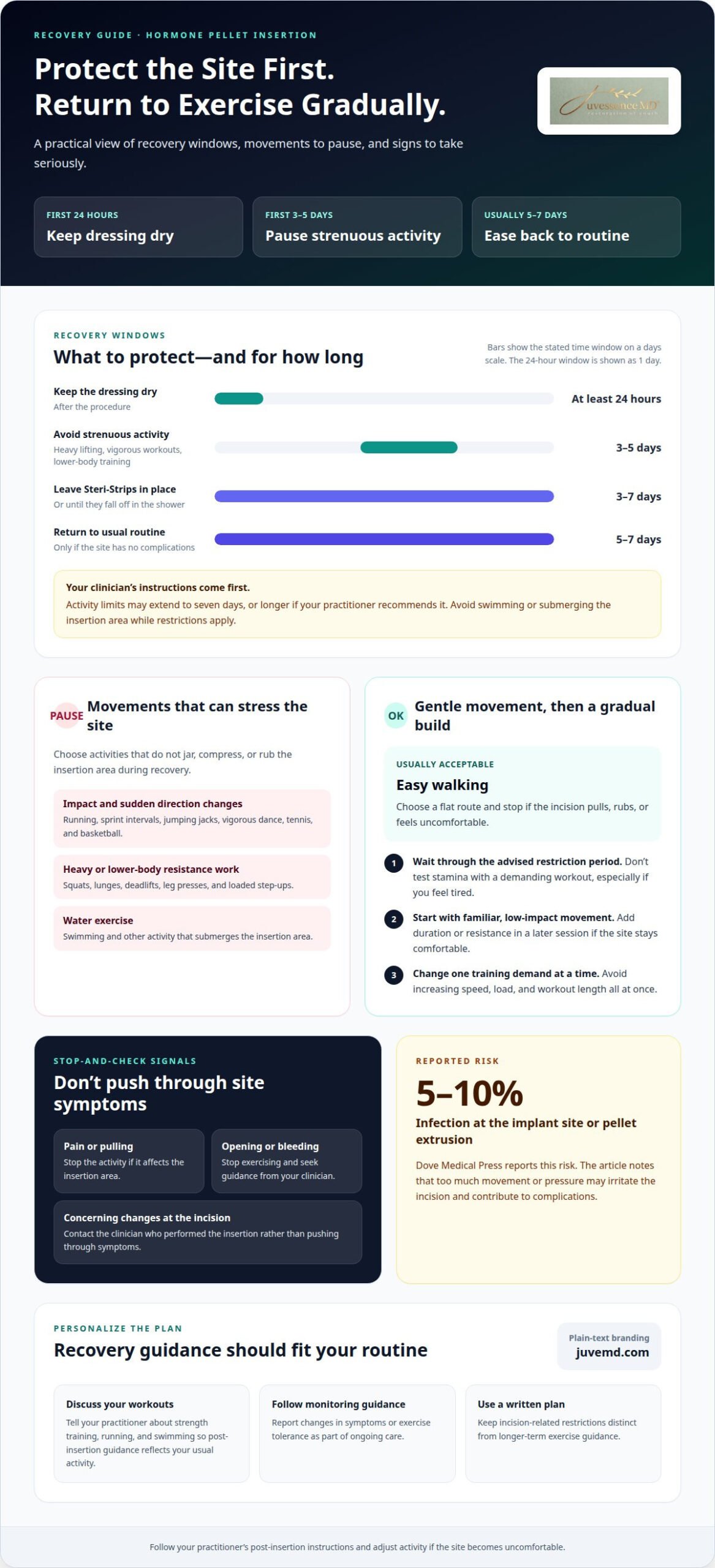
After pellet insertion, avoid vigorous exercise, heavy lifting, and lower-body workouts for three to five days; light walking is usually acceptable. A cautious approach to exercise for women on testosterone pellets is to resume a normal routine five to seven days after insertion if the site has no complications, while following any longer restriction your clinician recommends. Avoid swimming or submerging the insertion area during the initial recovery period.
It’s reasonable to wonder whether testosterone is appropriate for women and whether it could affect stamina or muscle growth. Testosterone may have a role in menopausal care, particularly for low libido that hasn’t responded to other treatment, but it isn’t a one-size-fits-all solution. This guide explains which activities to pause, how to return to training, and what to understand about testosterone, energy, and weight-bearing exercise. You’ll get a clearer picture of short-term recovery and how exercise fits into a broader conversation about hormone health.
Key Takeaways
- Learn how to protect the insertion site while it heals and which movements may put it under strain.
- Use a gradual return to exercise rather than treating recovery as an all-or-nothing pause.
- Understand how testosterone may relate to stamina, while recognizing that changes in energy can vary.
- See why weight-bearing exercise matters for building muscle and supporting balance, gait, and stance.
- Explore the safety considerations that shape whether pellet therapy fits a woman’s health needs and exercise goals.
Exercise restrictions after hormone pellet insertion
After insertion, avoid strenuous activity, vigorous workouts, heavy lifting, and lower-body training for three to five days. These movements can put pressure or friction near the incision, especially during squats, cycling, or running. Light walking is usually acceptable if it doesn’t pull or rub the treated area. Follow any longer restriction your practitioner gives you, as activity limits may extend to seven days.
Swimming and submerging the insertion area also need a temporary pause. Keep the bandage dry for at least 24 hours after the procedure. Leave the Steri-Strips in place for 3-7 days or until they fall off in the shower. Most women can return to their usual routine five to seven days after insertion if the site has no complications. Resume gradually, rather than starting with a demanding session.
What are the risks of strenuous exercise after pellet insertion? Too much movement or pressure may irritate the incision and contribute to bleeding, infection, or pellet extrusion. Dove Medical Press reports a 5% to 10% risk of infection at the implant site or pellet extrusion.
How can women prevent infection or pellet extrusion during exercise after insertion? Avoid heavy lifting and vigorous movement for the recommended recovery period, keep the dressing dry for the first 24 hours, and don’t submerge the site while restrictions apply. Choose loose clothing that won’t rub the incision, and follow the instructions for keeping the Steri-Strips in place.
When should a woman stop exercising and contact her clinician after pellet insertion? Stop if exercise causes pain or pulling at the insertion site, or if the incision opens, bleeds, or develops concerning changes. Contact the clinician who performed the insertion for guidance rather than pushing through symptoms.
Choosing a qualified hormone practitioner matters before starting hormone replacement. Look for a clinician who reviews your health history, explains potential benefits and risks, and gives specific post-insertion instructions. A clear plan should explain which activities to pause, how to protect the incision, and when to resume training. During your consultation, discuss your usual workouts, including strength training, running, and swimming, so recovery guidance reflects your routine.
A hormone assessment should consider symptoms, medical history, and individual goals. BMI can provide context, but it shouldn’t replace a broader assessment or determine treatment on its own. Ask how the practitioner uses assessment findings when discussing hormone replacement therapy and whether treatment aligns with your health needs.
Hormone monitoring is part of ongoing care, not just the insertion visit. Follow your practitioner’s monitoring schedule and report changes in symptoms or exercise tolerance. This can inform discussions about treatment and activity as recovery progresses. A written plan can help distinguish incision-related restrictions from longer-term exercise guidance.
Exercises to avoid temporarily
During recovery, choose activities that don’t jar, compress, or rub the insertion area. Running, sprint intervals, jumping jacks, and court sports such as tennis involve repeated impact or sudden changes of direction. These movements can make it harder to avoid pressure on a healing site. The practical rule is simple: pause any workout that causes pulling, rubbing, or discomfort near the incision.
Heavy lifting and lower-body training need particular care. Squats, lunges, deadlifts, leg presses, and loaded step-ups recruit large muscle groups and may strain or press against the area, depending on pellet placement. Set aside heavy resistance work during the advised restriction period. Don’t switch to a lighter weight if the movement still creates friction or pressure at the incision.
- High-impact cardio: Replace running, jumping, and vigorous dance workouts with an easy walk.
- Lower-body strength: Pause squats, lunges, and leg presses until restrictions end.
- Water exercise: Avoid swimming and water workouts while submerging the insertion area is restricted.
- Contact or court sports: Skip basketball, tennis, and similar activities involving collisions or abrupt pivots.
These examples can help you distinguish gentle movement from exercise that stresses the treated area. Light walking is usually acceptable. Keep the pace easy, choose a flat route, and stop if the incision begins to pull or rub. A walk should feel like routine movement, not a substitute for a strenuous cardio session.
When modifying exercise, account for fatigue too. If you feel tired after your appointment, don’t use a demanding class to test your stamina. Choose ordinary tasks or gentle walking instead, and return to structured training gradually. Protecting recovery is more useful than forcing a workout before the site is ready.
Once your restriction period ends, increase intensity in stages. Start with a familiar, low-impact activity, then add duration or resistance in a later session if the insertion area remains comfortable. Avoid increasing speed, load, and workout length all at once. This makes it easier to notice which movements cause irritation and adjust promptly.
If a class includes burpees, heavy kettlebell swings, or repeated floor transitions, skip those portions or sit out until restrictions end. Tell the instructor you’re modifying your activity; you don’t need to share private medical details. If a movement causes pain or pulling, stop the session and contact your clinician for guidance. Follow your post-insertion instructions rather than feeling pressured to keep pace with the group.
Patients are advised to avoid strenuous activities, swimming, and submerging the insertion area in water for at least 3-5 days after hormone pellet insertion.
Because the guidance sets a minimum, reaching its end doesn’t automatically mean every workout is appropriate. Continue avoiding movements that strain, rub, or put pressure on the insertion area if they remain uncomfortable, and don’t resume water activities before the stated period has passed. Return to exercise gradually and follow any additional recovery instructions you’ve received. If an activity causes pulling or discomfort, stop rather than pushing through.
Testosterone pellets and exercise stamina
Stamina affects how manageable familiar activities feel, from climbing stairs to finishing a run. An approach to exercise for women on testosterone pellets should distinguish possible hormone-related changes from training effects. Some women notice changes within 1-2 weeks of starting pellets, while fuller benefits may take 4-6 weeks. Track a familiar activity, such as walking pace or recovery between strength sets, instead of judging change from one workout.
How do testosterone pellets compare with other testosterone treatments for active women? Pellets deliver testosterone differently from creams, gels, and injections. Unlike those options, an implanted pellet isn’t easily adjusted or stopped. Discuss dose flexibility before choosing a treatment method, especially if you follow a regular training schedule.
Do testosterone pellets improve muscle strength or exercise performance in women? Exercise stamina can change for many reasons, so a change in performance does not by itself show that pellet therapy is responsible. However, not every woman will notice a performance boost. Conditioning, exercise type, recovery, and overall health also influence how a workout feels.
What side effects of testosterone pellets can affect exercise? Acne or unwanted body hair may affect comfort during workouts. Voice deepening and facial or body hair growth can persist after treatment stops. Report changes that affect training, clothing choices, or confidence in group exercise. These details can make follow-up discussions more specific.
A simple training log can help distinguish changes in stamina from changes in your workouts. Record the activity, perceived effort, fatigue, and recovery afterward. For example, note whether a familiar route feels easier or a strength session requires more rest. Keep pace, duration, and weight consistent when comparing sessions. Changing several variables at once makes patterns harder to interpret. This is a practical way to assess exercise for women on testosterone pellets without treating one workout as proof of a treatment effect.
- Choose one repeatable measure: Track a regular route, class, or exercise session.
- Record fatigue: Note when energy drops and how recovery feels afterward.
- Separate outcomes: A longer walk and a heavier lift reflect different abilities.
- Note side effects: Record symptoms that affect comfort or exercise consistency.
Pellet therapy isn’t an athletic supplement, and increasing intensity isn’t a reliable way to test hormone response. Keep your exercise approach steady while observing changes over time. If fatigue or side effects alter your routine, bring examples to an appointment. A clear record can support a focused discussion about treatment, wellness goals, and activity.
Some descriptions say testosterone pellets can give patients the energy they had at age 30, and that therapy can restore the ability to run and play sports at a prior level. These are broad outcomes, not a promise that every person will experience the same return. Keep the focus on the specific activity and stamina changes you are tracking, and discuss the expected goal with a clinician before treating a change in energy or sports participation as evidence of a treatment effect. A measured expectation can keep training decisions grounded in the individual response.
Testosterone, muscle growth, and weight-bearing exercise
For women using testosterone pellets, combine weight-bearing exercise with manageable aerobic activity, such as walking. Testosterone stimulates muscle growth when paired with weight-bearing exercise; training provides the repeated demand muscles respond to. Choose movements that suit your experience and current recovery, rather than treating hormone therapy as a reason to begin intense training.
Weight-bearing activity asks muscles to work against gravity or resistance. Examples include standing exercises, stair climbing, and resistance movements using body weight or equipment. A practical starting point is to choose familiar exercises that use different muscle groups, such as a chair squat, wall push-up, or step-up. These are examples, not a prescribed routine; technique, comfort, and an appropriate challenge matter.
Progress should be consistent, not rushed. Keep a simple record of the exercise, resistance, and how the movement felt. If a set becomes easier while your form remains controlled, adjust one aspect of the challenge at a time, such as resistance or movement range. Avoid changing load, speed, and the number of exercises together. This makes it easier to see what your body tolerates and sustain a routine.
Muscle supports more than lifting. Good musculature helps maintain balance, gait, and stance with age. Standing exercises and controlled movements can connect strength work to everyday tasks, such as rising from a chair or carrying groceries. Pairing resistance exercises with walking also trains different aspects of fitness. A consistent plan can support function without making every session an all-out effort.
Symptoms and treatment goals deserve separate attention. Libido may be one reason a woman discusses testosterone therapy, but changes in libido don’t measure muscle growth or exercise performance. Track these concerns separately. For example, note whether stairs feel easier, whether you can complete a familiar strength exercise with control, and whether fatigue changes your routine. Bring persistent symptoms or meaningful changes to your clinician.
- Choose familiar movements: Use exercises such as chair squats or wall push-ups to focus on control.
- Build gradually: Change resistance or range of motion one step at a time.
- Include function: Notice how strength relates to standing, walking, and carrying everyday items.
- Track distinct outcomes: Record exercise changes separately from symptoms such as libido or fatigue.
Pellet therapy doesn’t replace the effort and consistency required for strength training. Treat exercise as its own part of a wellness plan: choose realistic movements, repeat them with good form, and progress in measured steps. If a movement causes discomfort or interferes with recovery, pause it and discuss the problem during follow-up. The right routine is one that fits your health, goals, and current ability.
Are testosterone pellets safe for women who exercise?
Exercise itself doesn’t determine whether testosterone pellets are appropriate. Safety depends on the treatment decision, dose, health history, and follow-up. A useful assessment connects hormone symptoms and goals with medical history rather than assuming an active lifestyle makes pellet therapy suitable or unsuitable. Pregnancy is an important consideration: testosterone therapy isn’t recommended for women who are pregnant or intend to become pregnant.
Pellets also differ from treatments that can be adjusted or stopped more readily. Once implanted, a pellet can’t be easily adjusted or removed if its dose is too high. That makes it important to discuss the intended dose and monitoring plan before insertion. Exercise goals belong in that conversation, especially if you train regularly and want to understand possible effects on stamina, muscle, or recovery.
Monitoring helps assess how treatment is affecting the body. For women who have already received pellets, current total and free testosterone levels and a full blood count are relevant checks. These results provide clinical information alongside reported symptoms and changes in exercise tolerance. They don’t replace describing what happens during training, such as new fatigue or an unexpected change in recovery.
Some effects can be noticeable during workouts or daily activities. Minor acne and unwanted body hair growth are common side effects of testosterone replacement therapy. Voice deepening and facial or body hair growth may persist after treatment stops. Report new or worsening symptoms, including changes that affect comfort, exercise clothing, or confidence in group activities. A specific example, such as acne appearing after training, gives a clinician useful context.
- Before treatment: Discuss pregnancy intentions, health history, exercise habits, and the treatment’s goals.
- During follow-up: Review symptoms, exercise tolerance, total and free testosterone, and a full blood count.
- With new effects: Record what changed and when, then share those details during care.
These steps support a more informed decision, but they don’t make testosterone an exercise enhancer. Your training plan should still reflect your conditioning, recovery, and any post-insertion restrictions. Consistent strength work and aerobic activity have distinct roles; neither should be used to compensate for side effects or test whether a dose is appropriate.
For a personalized discussion of pellet treatment and exercise goals, schedule a hormone therapy consultation. Bring a clear summary of your current training, symptoms, pregnancy plans, and questions about monitoring. Those details can help shape a conversation about whether Bioidentical Pellet Hormone Therapy fits your health needs.
JuveMD: Bioidentical Pellet Hormone Therapy
JuveMD offers Bioidentical Pellet Hormone Therapy for women exploring pellet treatment as part of their hormone care. If you’re considering therapy and exercise regularly, discuss your training habits, treatment goals, and questions about recovery and follow-up. Sharing examples, such as strength workouts or changes in stamina, can help make the conversation specific to your routine.
Pellet therapy isn’t a substitute for a considered treatment decision or an exercise plan. Understanding the insertion recovery period, possible effects, and monitoring needs can help you decide how it fits your health priorities. Contact JuveMD to discuss Bioidentical Pellet Hormone Therapy and your questions about exercise.
Make your next step a thoughtful one
Use your next conversation to connect hormone care with the way you want to move and feel. Guidance on exercise for women on testosterone pellets should consider more than a workout schedule: your health priorities, training preferences, and questions about treatment all matter. Think about what you want to discuss, such as returning to a favorite activity, building a sustainable strength routine, or understanding how follow-up fits your goals. Your clinician can help weigh those priorities alongside your individual health needs.
JuveMD offers Bioidentical Pellet Hormone Therapy, Injectables, and Skin Treatments. If you’re considering hormone therapy or want to discuss how it fits your wellness goals, contact JuveMD to discuss your options. A clear, personal conversation can help you choose a considered next step and approach your goals with confidence.
Frequently Asked Questions
Is testosterone ever appropriate for women?
Yes. Testosterone may have a role in menopausal care, particularly for low libido that hasn’t responded to other treatment. It isn’t a general remedy for every symptom or a way to improve athletic performance. The reason for considering therapy matters: a discussion focused on persistent low libido differs from one focused only on workout results. Testosterone therapy isn’t recommended for women who are pregnant or intend to become pregnant.
Can women lift weights or do cardio after testosterone pellet insertion?
Yes, but the workout should suit your recovery stage. Light walking is usually acceptable, while vigorous cardio and heavy lifting should wait through the advised restriction period, generally three to five days. When you return, choose familiar movements and keep the first session easy rather than testing a personal record. Avoid swimming while submerging the insertion area is restricted, and stop if an exercise pulls or irritates the site.