
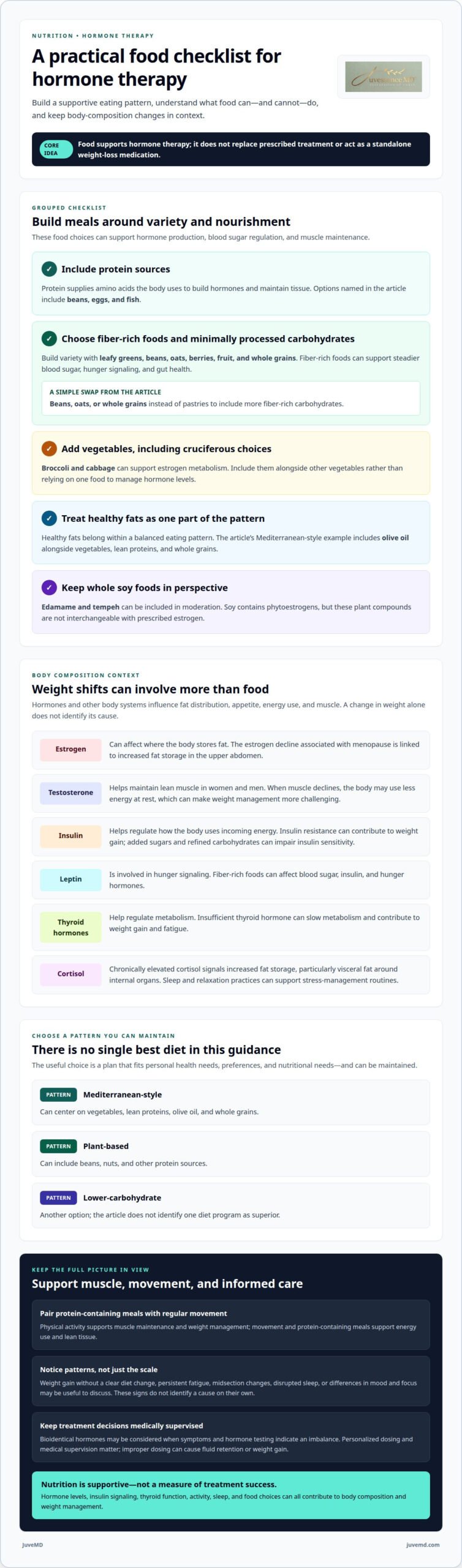
Some people report noticing changes in energy during the first week after changing how they eat. Still, a diet to support hormone therapy is best understood as ongoing support for hormone production, blood sugar regulation, and muscle maintenance. Protein supplies amino acids the body uses to build hormones and maintain tissue, while fiber-rich foods and minimally processed carbohydrates can support steadier blood sugar.
It’s understandable to hope that dietary changes will quickly affect weight or body composition. But those outcomes involve more than food: hormone levels can influence appetite, metabolism, fat distribution, and lean muscle. Nutrition plays a supporting role and does not replace prescribed treatment. The same principles apply when considering bioidentical hormone therapy.
This article explains how food choices relate to hormone production, metabolism, and weight management during hormone therapy. You’ll learn how eating patterns can support muscle health, why healthy fats and fiber matter, and how to interpret energy changes without treating them as a measure of treatment success.
Key Takeaways
- Protein, fiber-rich foods, and minimally processed carbohydrates can support hormone production, blood sugar regulation, and muscle maintenance.
- Changes in estrogen and testosterone can affect fat distribution and lean muscle, so weight shifts may not reflect diet alone.
- Healthy fats are one part of a balanced eating pattern that supports overall metabolic and hormonal health.
- Hormone therapy works alongside nutrition and lifestyle habits; it isn’t a standalone weight-loss approach.
- Bioidentical hormone therapy is a treatment option to discuss when symptoms or changes in weight and body composition raise questions about hormone balance.
Estrogen and testosterone in fat distribution and muscle maintenance
Estrogen and testosterone influence body composition through different processes. Estrogen levels can affect where the body stores fat, while testosterone helps maintain lean muscle in women and men. When these hormone levels decline, energy storage and muscle maintenance may change. This can mean increased fat storage or reduced muscle, even without an obvious change in eating habits.
During feminizing hormone therapy, build meals around vegetables, fruit, fiber-rich carbohydrates, and protein sources such as beans, eggs, or fish. These foods supply nutrients, and protein provides amino acids the body uses to make hormones and maintain tissue. A balanced eating pattern supports overall health, but food alone does not determine how hormone levels or body composition respond.
Whole soy foods, such as edamame and tempeh, can be included in meals in moderation during hormone therapy. Soy contains phytoestrogens, plant compounds that are not interchangeable with prescribed estrogen. Treat soy as one food choice within an overall eating pattern, not as hormone treatment.
Fat distribution can shift as estrogen levels change. The estrogen decline associated with menopause is linked to increased fat storage in the upper abdomen. Testosterone plays a different role in body composition: it helps maintain lean muscle in women and men. When muscle declines, the body may use less energy at rest, which can make weight management more challenging.
Insulin, leptin, thyroid hormones, and cortisol also influence metabolism and body weight. Insulin helps regulate how the body uses incoming energy; disrupted insulin signaling can make energy more likely to be stored. Leptin is involved in hunger signaling, and fiber-rich foods can affect blood sugar, insulin, and hunger hormones. Thyroid hormones help regulate metabolism, while insufficient thyroid hormone can slow it and contribute to weight gain and fatigue. Chronically elevated cortisol, the body’s primary stress hormone, signals increased fat storage, particularly visceral fat around internal organs.
Cruciferous vegetables such as broccoli and cabbage can support estrogen metabolism. Include them alongside other vegetables rather than relying on one food to manage hormone levels. A fiber-rich eating pattern can also include leafy greens, beans, oats, and berries. These foods add variety, contribute fiber, and support gut health.
Estrogen may affect metabolic rate and the calories burned during exercise. Women receiving hormone therapy have been reported to burn more calories during exercise than women not receiving it. This does not make exercise unnecessary: physical activity still supports muscle maintenance and weight management. Pairing regular movement with protein-containing meals supports both energy use and lean tissue.
For example, salmon with whole grains and broccoli combines protein, fiber, and a cruciferous vegetable. The overall eating pattern matters more than any single ingredient. Hormones, insulin signaling, thyroid function, activity, and food choices work together to influence fat distribution and muscle health.
Hormone therapy and weight management
Hormone therapy can influence appetite, energy use, and body composition, but it is not a standalone weight-loss medication. A diet to support hormone therapy works alongside physical activity, sleep, and treatment monitoring.
Signs of hormone-related weight changes
Hormone-related weight changes are shifts in weight or body composition that occur alongside possible signs of hormonal imbalance. Notice patterns such as weight gain without a clear change in diet, persistent fatigue, changes around the midsection, disrupted sleep, or differences in mood and focus. These signs do not identify a cause on their own, but they can help frame a discussion. If changes persist or make eating and weight management difficult, consult a healthcare provider or registered dietitian.
Bioidentical hormones and weight management
Bioidentical hormones are chemically identical to hormones produced by the body. Treatment may be considered when symptoms and hormone testing indicate an imbalance, but it does not replace nutrition or act as a weight-loss medication. Personalized dosing and medical supervision matter because improper hormone therapy dosing can cause fluid retention or weight gain. Treatment decisions consider test results alongside symptoms, while nutrition and physical activity remain part of weight management.
Cortisol, insulin, and weight
Cortisol and insulin affect how the body responds to stress and incoming energy. Chronically elevated cortisol signals the body to store fat, particularly visceral fat around internal organs. Insulin resistance can contribute to weight gain, while added sugars and refined carbohydrates can impair insulin sensitivity. For example, choose beans, oats, or whole grains instead of pastries to include more fiber-rich carbohydrates. Quality sleep and relaxation practices can also support stress-management routines.
Diet patterns during hormone therapy
No single diet program has been shown to be superior for this dietary guidance. A Mediterranean-style pattern can center on vegetables, lean proteins, olive oil, and whole grains; a plant-based approach can include beans, nuts, and other protein sources. Lower-carbohydrate eating is another option. The useful choice is a plan that fits health needs and can be maintained. A diet to support hormone therapy should reflect personal preferences and nutritional needs.
Discuss substantial diet changes with a registered dietitian, especially when symptoms or health conditions affect food choices. Reported outcomes also need context. In a comparison among postmenopausal women, those using menopause hormone therapy with tirzepatide lost up to 17% of their body weight, and about 45% of women using the combination reached more than 20% weight loss. These findings describe combined treatment, not hormone therapy alone, and shouldn’t be read as a typical result for every person.
The Office on Women’s Health supports hormonal care alongside nutrition and physical activity as a foundation for weight management. High-protein, low-fat, hypocaloric diets are described as bringing about a 5 to ten percent weight loss.
Healthy fats and hormone synthesis
Whole, minimally processed foods with healthy fats, lean protein, and fiber can support hormonal balance. Omega-3 fats are one useful part of this pattern.
Food choices during masculinizing therapy
During masculinizing hormone therapy, meals with vegetables, whole grains, protein, and healthy fats support overall nutrition. Examples include salmon with vegetables, or beans and greens dressed with olive oil. These foods contribute to a varied eating pattern without treating any single ingredient as hormone therapy. That distinction matters: nutrition supports health, while prescribed treatment addresses its own clinical goals.
Nutrient needs during hormone therapy
Protein supplies amino acids used to build hormones; aim for 25-30 grams per meal. According to the National Institutes of Health Office of Dietary Supplements, adults need 1,000 to 1,200 mg of calcium daily for bone health. Iron needs have no single amount in this guidance; include sources such as lentils, beans, or meat.
Fats from foods such as salmon, olive oil, and avocado can fit into a balanced eating pattern. Omega-3 fatty acids may help prevent insulin resistance and may increase T4 thyroid hormone levels. They also influence leptin, a hormone involved in appetite signals. These relationships matter for metabolism and weight management, but they don’t make supplements or one food a substitute for overall nutrition.
Alcohol can affect hormone health, especially in large amounts, and may contribute to stress, thyroid, and reproductive problems. The dietary recommendation is to limit alcohol to no more than one drink per day. Choosing water with dinner instead of another alcoholic drink, for example, can help keep intake within that limit.
Hormone therapy’s relationship to broader health depends on the treatment and the individual. Bioidentical hormone replacement therapy may reduce the risk of osteoporosis, heart disease, and type II diabetes. Hormone balance can also support cardiovascular health, bones, and cognitive function. These are potential effects, not a guarantee that therapy prevents disease. Menopause care should consider nutrition and physical activity alongside treatment.
Hormone levels and insulin sensitivity influence metabolic health, but diet alone cannot establish how hormone therapy affects cholesterol or blood pressure. A Mediterranean-style pattern of vegetables, lean proteins, olive oil, and whole grains offers a practical foundation for cardiovascular and blood-sugar support. Regular clinical follow-up helps keep treatment and health markers in view.
Healthy fats may help with period cramps by balancing inflammatory and anti-inflammatory hormones. This is a possible supportive role, not a promise that food will resolve cramps or replace appropriate care. Keep that possibility in perspective and distinguish dietary support from treatment claims.
Dietary guidance for hormonal balance and metabolic health is one part of a broader wellness strategy. In practice, consider food choices as one component of overall well-being rather than expecting a single nutrient to determine hormonal or metabolic outcomes. A balanced approach can include healthy fats while keeping nutrition and treatment considerations relevant to each person in view.
Hormonal regulation of metabolism and weight
Hormones help regulate how the body converts food into energy, stores fat, and signals hunger or fullness. The National Library of Medicine notes that hormonal regulation affects metabolic rate, fat distribution, and insulin sensitivity, influencing body weight over time. These systems interact, so weight changes can reflect several processes rather than one hormone or meal.
The body has more than 50 kinds of hormones, each with distinct roles. Insulin helps coordinate how the body handles energy from food, while leptin contributes to hunger and fullness signaling. Estrogen can affect a brain area involved in appetite. These signals influence eating patterns and energy use, but they don’t operate in isolation from sleep, physical activity, or food choices.
Thyroid hormones are central to metabolism. The body needs iodine to make them, and insufficient thyroid hormone can slow metabolism and contribute to weight gain and fatigue. Persistent tiredness alongside unexplained weight changes is worth discussing as a possible health pattern. It does not establish thyroid disease by itself; symptoms and testing help clarify what is happening.
Hormone therapy is intended to restore hormone levels to a range that allows normal metabolic function to resume. The relevance depends on which hormones are involved and how their levels relate to symptoms. For example, treatment targeting a hormone imbalance may address symptoms linked to that imbalance, while nutrition and movement continue to shape energy balance. Replacement therapy is not a substitute for eating patterns that support health.
Insulin sensitivity offers another way to understand weight regulation. When insulin signaling is disrupted, the body may be more likely to store incoming energy instead of using it. A practical meal example is pairing a fiber-rich carbohydrate, such as oats or beans, with protein. This supports a balanced eating pattern without suggesting that one food reverses insulin resistance or guarantees weight loss.
Muscle also affects daily energy needs because it uses energy as part of normal body function. Maintaining muscle through strength-focused activity and adequate food intake can complement hormone care. If energy, appetite, or weight changes after treatment begins, track the pattern alongside meals, sleep, and activity. That record can help a clinician assess whether hormone levels, thyroid function, or another factor may be contributing.
Weight management involves more than adjusting calories. Hormones, thyroid function, insulin sensitivity, appetite signals, and muscle all affect how the body uses and stores energy. Consider these factors together rather than assuming hormone replacement alone will change weight. Sustained weight changes or fatigue deserve clinical attention, especially when they occur alongside other new symptoms.
Bioidentical hormone replacement therapy
Hormone therapy uses prescribed hormones to address symptoms or hormone levels outside a desired range. Nutrition needs do not automatically change based on whether therapy involves estrogen, progesterone, or testosterone. Food choices should reflect overall health, treatment goals, and individual needs.
Bioidentical hormones are chemically identical to hormones naturally produced by the body and are derived from plant sources. Estrogen, progesterone, and testosterone are common examples used in therapy. “Bioidentical” describes the hormones’ structure, not a promise of a particular result. The treatment plan depends on the hormones involved, symptoms, and clinical evaluation.
Assessment matters because symptoms can overlap with other health concerns. A clinician evaluates hormone testing alongside symptoms to identify which levels fall outside their optimal range. This information helps shape a targeted plan rather than relying on symptoms or weight changes alone. Fatigue and changes in body composition, for example, can have several possible causes, so neither symptom proves a hormonal imbalance by itself.
Dosing is individualized. Physicians determine bioidentical hormone therapy dosages based on a comprehensive hormone-testing evaluation, then monitor levels and adjust treatment as needed. This matters for weight management because improper dosing can cause fluid retention or weight gain. Consider changes on the scale alongside treatment timing, symptoms, nutrition, and activity, rather than automatically attributing them to a food or hormone.
Nutrition supports normal body function during treatment but does not replace hormone therapy. A practical eating pattern includes vegetables, whole grains, lean protein, and sources of healthy fats. For example, beans with leafy greens and whole grains make a meal with fiber and plant protein. This broad foundation can work across different hormone regimens, though specific needs may vary with health conditions, food preferences, and care goals.
Sleep and stress also matter. Poor sleep can elevate cortisol and disrupt metabolism, while stress-management practices can support consistent routines around meals and physical activity. These habits do not determine hormone levels, but they influence the broader context of weight management. If treatment changes coincide with new symptoms or persistent weight shifts, those details can help guide a clinical review.
Bioidentical hormone replacement therapy may relieve menopause symptoms, including hot flashes, night sweats, and vaginal dryness. Hormone balance can also support cardiovascular health, bone strength, and cognitive function. These potential effects do not mean therapy prevents every disease or guarantees weight loss. Hormones, nutrition, and body composition are related but distinct parts of care.
For a personalized discussion of bioidentical hormone therapy options, connect your symptoms and treatment goals with a clinician’s assessment.
JuveMD: Bioidentical Pellet Hormone Therapy
JuveMD offers Bioidentical Pellet Hormone Therapy for people exploring hormone care alongside nutrition and weight-management goals. Consider discussing treatment if symptoms or body-composition changes raise questions about whether hormone levels may be involved. A clinician can assess symptoms and hormone testing to determine whether therapy may suit your needs.
Bioidentical hormones are chemically identical to hormones produced by the body. Treatment plans and dosing are based on evaluation, with hormone levels monitored over time. Nutrition remains part of the picture: balanced meals and regular physical activity support overall health, but do not replace individualized hormone care.
If you’d like to explore whether Bioidentical Pellet Hormone Therapy aligns with your health goals, contact JuveMD to discuss your concerns and next steps.
Make your next step personal
Your nutrition plan should work in real life, not just on paper. Choose routines that fit your schedule, preferences, and treatment goals, then adjust them as your needs change. A diet to support hormone therapy can be a flexible framework, not a rigid set of rules or a promise about the number on the scale.
If you’re considering hormone care, JuveMD offers Bioidentical Pellet Hormone Therapy and injectables. Skin treatments are also available for people with related wellness goals. A conversation can help you identify the concerns you want to address and the questions to bring to your care planning.
Explore your options with JuveMD and take a thoughtful next step toward care that reflects your goals.
Frequently Asked Questions
How quickly will I feel the effects of these diet changes?
Some people report noticing changes in energy during the first week of dietary changes. Weight and body-composition shifts are different measures and should not be the only signs used to judge whether a new eating pattern is helping. For a clearer picture, note changes in energy, appetite, and meal consistency over time. If symptoms change after starting hormone therapy, discuss them during treatment follow-up.
How can diet help manage hormone therapy side effects such as weight changes, hot flashes, or nausea?
Nutrition can support weight management, but diet has not been shown to reliably resolve every hormone therapy side effect. Evidence remains uncertain about whether dietary changes ease menopausal symptoms. Soy isoflavone supplements may have a small effect on hot flashes, but they are not a guaranteed solution. For nausea, note whether symptoms follow a particular meal or treatment schedule, then share that pattern with your healthcare provider before making major changes.
Are there foods or supplements that interact with estrogen, testosterone, or hormone therapy medications?
Some supplements and natural products can interact with medicines, and safety information is limited. Soy foods such as edamame and tempeh differ from concentrated soy isoflavone supplements; the supplements’ effects on menopausal symptoms may be small or uncertain. Keep an up-to-date list of supplements, herbal products, and hormone medications, including their labels, and review it with your healthcare provider or pharmacist before adding a product or changing how you take treatment.