
A peel’s depth and treatment plan affect its cost more than the label alone. For a chemical peel for sun damage in Las Vegas, the price varies by peel type and the number of treatments needed. It depends on the individual case and is provided after a quote request. Because sun spots may respond to different peel strengths, the right option depends on the depth of discoloration and your skin.
It’s understandable to want a clear idea of what a peel involves before deciding. Superficial, medium-depth, and deep peels differ in how they work and the visible recovery they may require. Skin tone also matters: treatment should be tailored to your skin, not chosen by strength alone.
This guide explains how chemical peels address sun spots and discoloration, what distinguishes peel depths, and how skin tone can affect suitability. It also covers factors that influence cost in Las Vegas and what recovery may involve, helping you weigh the options.
Key Takeaways
- Peel cost depends on the treatment type, the area being addressed, and whether one treatment or a series is appropriate.
- Sun-related discoloration can be treated on areas such as the face, neck, chest, and hands.
- Peel depth affects both the degree of skin renewal and the visible recovery period.
- Skin tone and the depth of discoloration help determine which peel may be suitable; VI Peel is described as safe for all skin types.
- Understanding the differences between peel options can help you prepare for a personalized skin-treatment plan.
How Much Do Chemical Peels Cost in Las Vegas, NV?
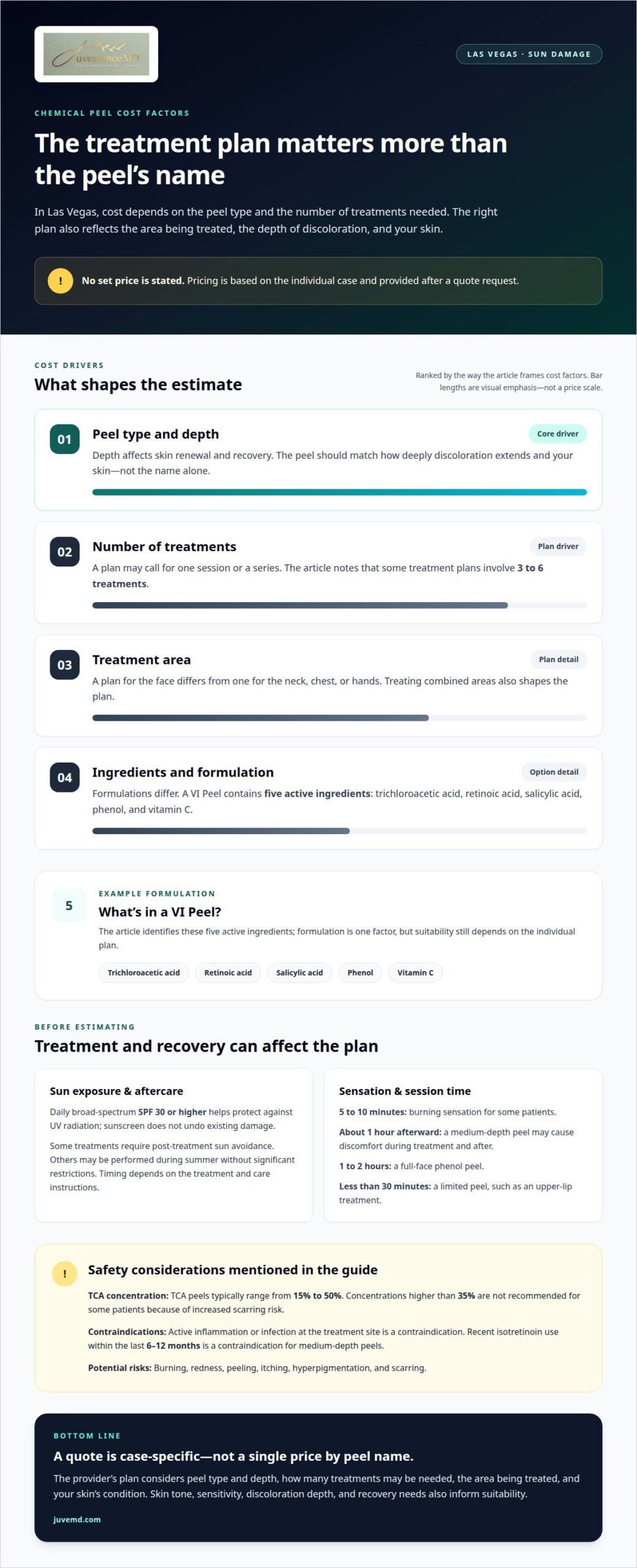
In Las Vegas, chemical peel cost depends on the peel type and the number of treatments needed. A chemical peel for sun damage in Las Vegas is priced according to the treatment plan. The price depends on the individual case and is provided after a quote request. The treatment area also shapes the plan: addressing sun spots on the face differs from treating the neck, chest, or hands, or combining areas.
Peel ingredients and depth can also affect cost. A VI Peel contains five active ingredients: trichloroacetic acid, retinoic acid, salicylic acid, phenol, and vitamin C. Its formulation differs from options chosen for deeper penetration. A chemical peel for sun damage in Las Vegas should be matched to the discoloration’s depth and your skin type, not chosen by name alone.
Preparation includes considering sun exposure and aftercare. Daily broad-spectrum SPF 30 or higher helps protect skin from UV radiation, but sunscreen doesn’t undo damage that has already occurred. Some sun-damage treatments require post-treatment sun avoidance, while others can be performed during summer without significant restrictions. Timing depends on the treatment and its care instructions, so plan around exposure and recovery needs.
Sensation and session length vary with peel depth. Some patients feel burning for 5 to 10 minutes. A medium-depth peel may cause discomfort during treatment and for about one hour afterward. A full-face phenol peel takes 1 to 2 hours; a limited peel, such as treatment for a wrinkled upper lip, generally takes less than 30 minutes.
Chemical peels, IPL, laser resurfacing, and microneedling work differently. IPL can address sun-related pigment irregularities, brown spots, and redness without the downtime associated with more aggressive resurfacing. Laser resurfacing removes the outermost skin layer to stimulate new cell growth for texture changes and fine lines. Microneedling takes a different approach.
In Las Vegas, medical aesthetic practices provide chemical peels for sun-related concerns. Risks can include burning, redness, peeling, itching, hyperpigmentation, and scarring. TCA peels typically range from 15% to 50% concentration; concentrations higher than 35% aren’t recommended for some patients because of increased scarring risk. Active inflammation or infection at the treatment site is a contraindication. Recent isotretinoin use within the last 6-12 months is a contraindication for medium-depth peels.
Suitability for different skin types and tones
Peel suitability depends on skin tone, sensitivity, the concern’s depth, and the treatment area. Sun exposure can contribute to uneven pigmentation, rough texture, and fine lines as skin changes over time. A suntan signals that skin has already experienced damage. Sun damage accounts for about 90% of visible signs of skin aging, so treatment planning should consider both current discoloration and ongoing UV exposure.
Skin tone influences how skin may respond to controlled exfoliation. The VI Peel is described as safe for all skin types, but that does not make every peel or strength appropriate for everyone. A darker complexion, a history of lingering dark marks, or reactive skin can affect the choice of peel and depth. The goal is to address visible concerns while limiting unnecessary irritation or pigment changes.
During a consultation, the provider evaluates skin condition and the layers affected. Scattered brown spots and dullness, for example, call for a different assessment than widespread discoloration with texture changes. The discussion should also cover sensitivity, prior procedures, current inflammation, and each option’s recovery period. These details help shape a plan for the individual, rather than relying on a standard peel chosen by skin tone alone.
UV radiation can trigger pigment production and contribute to cumulative skin changes. A chemical peel may improve the appearance of sun-damaged areas, but it cannot prevent future exposure from affecting skin. A practical plan pairs treatment with consistent sun protection and aftercare. If you spend time outdoors, consider how direct exposure may affect treatment timing and recovery.
To choose a qualified chemical peel provider in Las Vegas, look for a practice where board-certified dermatologists supervise or perform peels. A thorough consultation should assess your skin tone, concerns, treatment history, and likely recovery needs before recommending depth. For individualized skin-treatment planning, consider how your goals and daily sun exposure fit the options discussed.
Although the VI Peel is described as safe for all skin types, that broad suitability statement does not replace matching a peel to an individual’s skin condition and goals. Skin tone alone cannot reveal sensitivity, the depth of a concern, or what recovery will involve. A consultation can bring these factors together before a recommendation is made.
When comparing options, discuss how the proposed approach relates to your discoloration, texture, history of irritation, and expected recovery. You can also discuss ways to limit avoidable sun exposure while skin recovers. The aim is to address your concern without treating skin type as the only guide.
Chemical peels for sun spots and discoloration
Chemical peels address sun damage by exfoliating affected skin. The right approach depends on the concern’s depth and skin type. Options range from alpha-hydroxy acid peels to deeper phenol peels, with different recovery needs.
Sun Spots and Related Discoloration
Sun spots, uneven pigmentation, and dullness are concerns chemical peels may improve by encouraging damaged surface layers to shed. The suitable peel depends on skin type and how deeply discoloration extends. Patients can notice improvement in tone and texture after their first treatment, although a treatment plan may involve one session or a series of 3 to 6 treatments. Skin tone and concern depth guide the choice.
How Chemical Peels Are Performed
A chemical peel is applied to the skin so its exfoliating ingredients can act on targeted layers. The peel’s formulation and depth determine how the skin responds and what aftercare is needed. For a phenol peel, petroleum jelly is applied within an hour of treatment. The damaged layer may slough off around day 2 or 3, with shedding continuing over the next 7 days.
Alpha-Hydroxy Acid Peels
Alpha-hydroxy acid peels offer a lighter approach for concerns such as dullness and surface discoloration. They require no downtime, covering, or after-peel ointment. Depending on the skin and desired results, they may be applied weekly or at longer intervals. Their lighter nature may suit people seeking gradual improvement without the visible recovery associated with deeper procedures.
For deeper wrinkles and pronounced sun damage, a phenol peel reaches beyond superficial exfoliation. Its effects may remain readily apparent for up to 20 years, making its depth and recovery important considerations. After treatment, petroleum jelly protects the area; a crust flakes off after a few days, and puffiness subsides in a few days. Pinkness fades within a few weeks. These recovery features distinguish phenol from lighter options.
Choosing the strongest peel is not the goal. A treatment plan should match the skin concern, tone, and acceptable recovery. Surface dullness, for example, may call for a different depth than deep wrinkles. A clinician can assess these factors and discuss whether one treatment or a series best fits the desired improvement.
Chemical peel types and penetration depth
Peel depth describes how far the solution acts within the skin’s layers. It influences the complexion changes targeted, visible healing, and spacing between procedures.
Light and Medium-Depth Options
Superficial peels target more surface-level concerns and may involve no downtime or minimal downtime. Light peels may be repeated about once a month, while a treatment plan can involve one session or a series of 3 to 6 treatments. Medium-depth peels reach further into the skin. Their suitability depends on pigmentation, skin condition, and the recovery time a patient can accommodate.
Depth and Downtime
Deeper penetration generally means more visible healing. After a medium or deep peel, recovery may include facial peeling and itching for several days to two or more weeks. TCA peel healing can take several days, depending on penetration depth. People commonly schedule medium-depth procedures during an extended weekend to allow for social downtime.
Trichloroacetic acid, or TCA, peels typically range from 15% to 50% concentration. Concentration is one factor in depth, but it does not determine the right option by itself. A 50% TCA peel penetrates deeply into the skin. Concentrations higher than 35% aren’t recommended for some patients because of increased scarring risk. The treatment choice should account for the complexion and the concern being addressed.
Downtime also affects how a personalized plan fits into everyday life. A superficial peel may suit someone seeking gradual improvement with little visible interruption. A medium-depth peel can involve several days or more of healing, while itching and peeling may continue beyond that initial period. Consider these differences when planning work, social commitments, and sun exposure after treatment.
Spacing depends on peel intensity. Light chemical peels may be scheduled about once a month, while deeper or more intense peel appointments are spaced 4 to 6 months apart. These intervals reflect different recovery demands, not a one-size-fits-all schedule. The number of treatments also depends on the skin concern and intended improvement.
Think of depth as a balance between the concern and recovery. Surface pigmentation may call for a lighter approach, while more pronounced concerns can involve deeper procedures. A personalized plan weighs skin condition, peel formulation, and downtime against your schedule. Comparing these factors helps clarify which option may support a smoother-looking complexion.
Chemical peel cost in Las Vegas
In Las Vegas, chemical peel cost depends on the peel type and how many treatments the plan requires. The price depends on the individual case and is provided after a quote request. Key factors include treatment depth, the size and number of areas, the skin concern, and whether one appointment or a series is appropriate.
A useful estimate starts with your goal, not just the procedure name. Treating uneven pigmentation in one area differs from addressing several concerns, such as sun spots and fine lines. The formulation and depth chosen also affect the plan. A deeper peel has different recovery needs than a superficial option, which can influence how appointments are arranged.
Ask for a quote that clearly describes the recommended treatment plan. It should identify the peel type, areas being treated, and whether the plan includes one appointment or multiple sessions. This helps distinguish the cost of one procedure from the full plan. The quote should also clarify which aftercare products or steps are included.
Compare options by matching them to your concern and recovery capacity. A superficial peel may be considered for mild discoloration, while deeper texture changes may call for a different approach. Acne scars, sun spots, and wrinkles are distinct concerns, and one treatment depth may not address them equally. Chemical peels are nonsurgical cosmetic procedures, but depth still affects visible healing and aftercare.
Preparation and aftercare matter to treatment value. Daily sunscreen helps protect skin from UV radiation, but it doesn’t undo existing damage. After a peel, sunblock is strongly recommended, and direct sun exposure should be avoided according to the treatment instructions. A plan that fits your routine can make aftercare easier to follow and may help reduce avoidable irritation.
Before proceeding, use these steps to understand the estimate:
- Identify the areas to be treated, such as the face, neck, chest, or hands.
- Clarify the peel type and depth, then ask whether the plan involves one session or a series.
- Review recovery expectations and sunscreen instructions alongside the quoted treatment.
These details make it easier to compare the plan with your priorities without focusing on a single headline figure. For a quote request tied to your treatment goals, request a chemical peel quote.
JuveMD
JuveMD offers Skin Treatments for people exploring ways to address visible sun damage, uneven tone, and related skin concerns. If you’re weighing peel depth, recovery, or how a plan fits your skin, discuss your goals and options. This guide can help you describe the areas and changes you’d like to address, while an individualized discussion considers your skin and priorities. Chemical peels aren’t right for every concern, so the next step is to understand which skin-treatment approach aligns with yours. Contact JuveMD to discuss your skin-treatment goals.
Choose a Skin Plan That Fits Your Priorities
Connect your skin goals with an approach that feels manageable in daily life. Consider which changes matter most, how much recovery time you can accommodate, and what questions you want answered before deciding. These priorities can make a conversation about a chemical peel for sun damage in Las Vegas more focused and useful.
JuveMD offers Skin Treatments, Bioidentical Pellet Hormone Therapy, and Injectables. For this concern, a discussion focused on skin treatment can help you explore options relevant to your goals and skin. You don’t need to arrive with a procedure already chosen; starting with the concern leaves room to consider a suitable next step.
Contact JuveMD to discuss your options and take a thoughtful next step toward care that fits your priorities.
Frequently Asked Questions
What is a Chemical Peel?
A chemical peel uses an exfoliating solution to loosen and remove damaged surface cells. As those cells shed, skin can look clearer and feel smoother. The solution’s ingredients and depth determine how intensely it acts. An alpha-hydroxy acid peel is a lighter option, while phenol reaches deeper layers. Treatment selection depends on the skin concern and the individual’s skin.
Are Chemical Peels Painful?
Some people feel burning during a peel, and the sensation may last 5 to 10 minutes. A medium-depth peel can cause discomfort during treatment and for about one hour afterward. Sensation depends partly on the peel’s depth. Afterward, peeling or itching may be part of healing. Following the specific aftercare instructions helps protect treated skin while it recovers.
Can I combine Facial Peels with other procedures?
A facial peel and another procedure shouldn’t automatically be scheduled together. IPL targets sun-related pigmentation irregularities, brown spots, and redness; laser resurfacing addresses surface texture changes and fine lines; microneedling is a distinct procedure. Their goals and recovery needs differ. A skin assessment can determine whether multiple approaches belong in one plan and how their timing should fit your skin’s response.
Can You Get Sun Damage Treatments During Summer?
Some sun-damage treatments can be performed during summer without significant restrictions, while others require avoiding sun after treatment. The procedure and its aftercare determine the timing, so season alone doesn’t answer whether a treatment fits. Plan around direct sun exposure and follow the instructions for your specific treatment. Daily broad-spectrum sunscreen helps protect skin, but it doesn’t reverse existing damage.
How long until I see results?
Some people notice improvements in skin tone and texture after their first peel. The timing and degree of visible change depend on the concern and peel selected. A plan for surface dullness, for example, may differ from one addressing deeper discoloration. Skin may shed as it heals, so assess changes after recovery rather than judging results immediately after treatment.
How many appointments will I need?
A peel plan may involve one appointment or a series of 3 to 6 treatments. The number depends on the peel type, the skin concern, and the response to treatment. A lighter peel may be repeated at intervals, while deeper options require more recovery time between appointments. Ask how the proposed plan addresses your goals over the full course, not just the first session.
What’s the First Step?
Start with a skin evaluation and discuss your main concern, such as age spots, uneven tone, or texture changes. Share relevant treatment history and explain how much visible recovery time fits your schedule. This information helps shape the next steps. This material is educational, not medical advice. Consult your own healthcare provider before making health-related changes or choosing a treatment.
What types of chemical peels treat sun damage and age spots?
Options include alpha-hydroxy acid peels for lighter exfoliation, TCA peels with varying penetration, and deeper phenol peels for more pronounced concerns. VI Peel contains trichloroacetic acid, retinoic acid, salicylic acid, phenol, and vitamin C. The appropriate type depends on skin tone, concern depth, and recovery needs. Age spots and broader discoloration may call for different treatment depths, so the peel should match the specific concern.