
Cheek filler for a younger look in Las Vegas uses injectable products, often hyaluronic acid, to restore cheek volume, refine facial contours, or soften hollow areas. It can enhance cheekbones, but the right approach depends on your facial structure and goals. A younger-looking result isn’t simply about adding more volume.
It’s understandable to want a refreshed appearance without losing the features that make your face your own. This guide explains what cheek filler is, who may be a candidate, and how personalized treatment planning can shape a natural-looking approach in Las Vegas. You’ll also learn what a consultation considers, how goals and facial proportions influence a plan, and what to expect when exploring this injectable treatment.
Key Takeaways
- Cheek filler can restore volume, define cheek contours, and soften a hollow appearance; treatment goals help shape the approach.
- A personalized plan considers facial proportions, areas of volume loss, and the look you want to achieve.
- Candidacy depends on more than age. Skin condition, facial structure, and treatment goals also matter.
- Learn how hyaluronic acid fillers work and what to consider when exploring cheek filler availability in Las Vegas.
- JuveMD’s injectables and skin treatments may be relevant when you’re considering aesthetic care as part of a broader wellness plan.
Consultation and personalized treatment planning
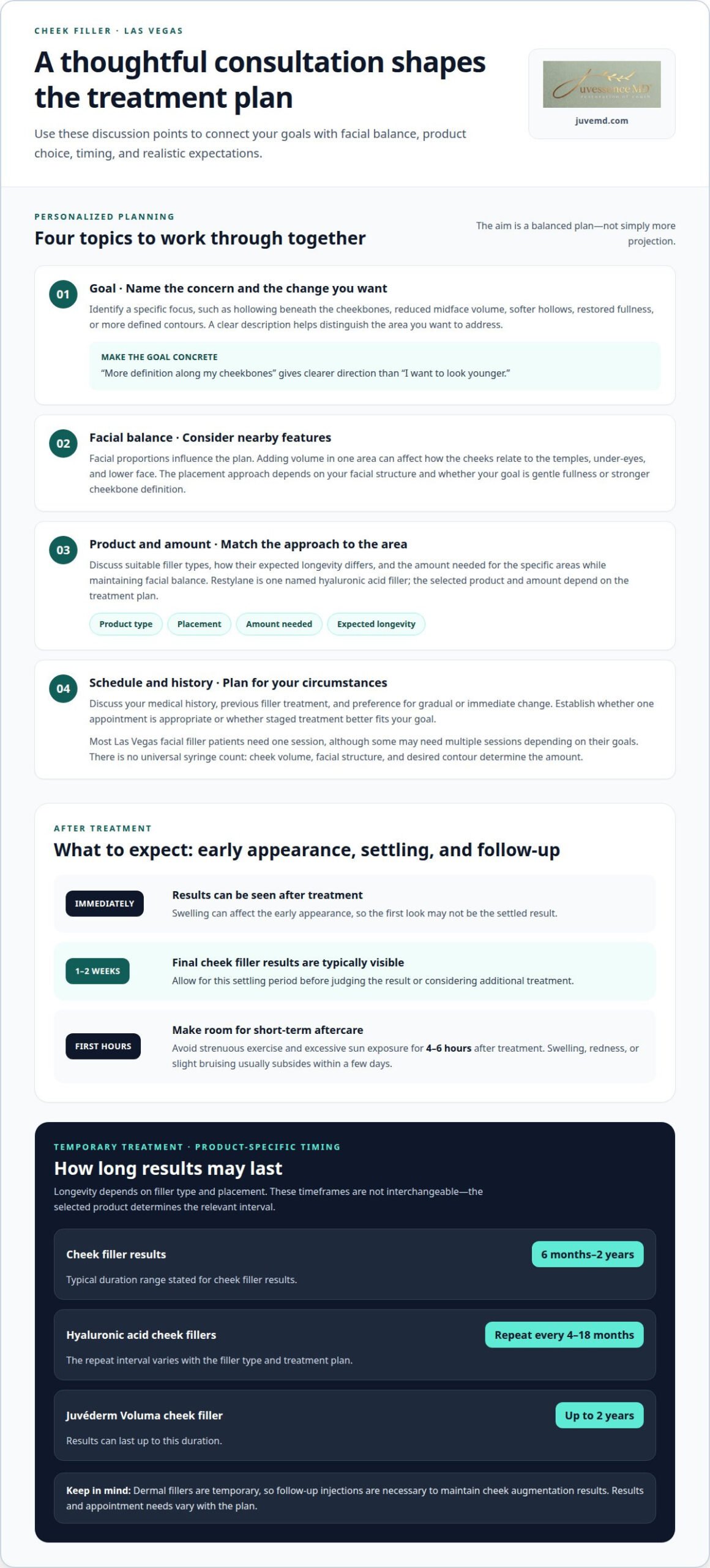
A thoughtful consultation turns a general aesthetic goal into a specific cheek treatment plan. The discussion should identify what you want to change, such as hollowing beneath the cheekbones, reduced midface volume, or more defined contours. Facial proportions matter: adding volume to one area can affect how the cheeks relate to the temples, under-eyes, and lower face. The aim is a balanced plan, not simply more projection.
Planning also involves discussing your medical history, previous filler treatment, and preferences about gradual or immediate change. Bring a clear description of the result you want, such as softer hollows rather than sharper cheekbones. The practitioner can then assess facial structure and explain which filler approach fits that goal. Restylane is one named hyaluronic acid filler; the product selected and the amount used depend on the treatment plan.
Useful consultation topics include:
- Goal: Identify the concern, such as restoring cheek fullness or improving contour.
- Product: Compare suitable filler types and how their expected longevity differs.
- Amount: Discuss the volume needed to address the specific areas while maintaining facial balance.
- Schedule: Establish whether one appointment is appropriate or whether staged treatment better fits the goal.
Results and appointment needs vary with the plan. Most Las Vegas facial filler patients need one session, although some may need multiple sessions depending on their goals. Filler results can be seen immediately following treatment, but swelling can affect the early appearance. Final cheek filler results are typically visible in 1-2 weeks, so the initial look isn’t always the settled result. A staged plan can allow changes to be assessed before additional treatment is considered.
Longevity depends on filler type and placement. Cheek filler results typically last from six months up to two years. Hyaluronic acid cheek fillers are typically repeated every 4-18 months, while Juvéderm Voluma cheek filler results can last up to two years. These ranges help set expectations, but they aren’t interchangeable: the selected product determines the relevant interval. Dermal fillers are temporary, so follow-up injections are necessary to maintain cheek augmentation results.
Plan your first hours after treatment with swelling and daily activities in mind. Las Vegas facial filler patients are advised to avoid strenuous exercise and excessive sun exposure for 4-6 hours after treatment. Swelling, redness, or slight bruising usually subsides within a few days. The consultation should cover these short-term effects and timing, especially if an event is approaching. Scheduling with the 1-2-week settling period in mind gives you time to see the result before making further decisions.
Am I a Good Candidate for Dermal Fillers in Summerlin, Las Vegas?
In Nevada, look for a medical professional whose license permits filler injections and whose training covers facial anatomy. There’s no universal syringe count: cheek volume, facial structure, and your desired contour determine the amount.
Hyaluronic Acid for Cheek Volume
Hyaluronic acid fillers can add volume to hollow cheeks and refine cheek contours. Products such as Restylane and Juvéderm are used for cheek enhancement. Their purpose is to support a specific facial area, not change every feature. Consider your main concern, such as flatter cheekbones or midface hollowness. That helps clarify whether cheek augmentation aligns with your goal.
Realistic Rejuvenation Expectations
Facial rejuvenation with filler focuses on the areas treated. Adding cheek volume, for example, can create a fuller contour, but it won’t address every concern across the face. A realistic goal describes a visible change, such as softening hollows or restoring cheek definition, rather than aiming to look like someone else. Consider your goal in relation to your natural facial structure and the specific area receiving filler.
Cheek Contouring and Facial Volume
Cheek contouring can enhance less prominent cheekbones, fill hollow cheeks, and create a more defined facial shape. These goals call for different placement decisions. Someone seeking gentle fullness may have a different plan from someone seeking stronger cheekbone definition. Consider how your cheeks relate to nearby features, including the temples and lower face. Balanced volume considers the overall contour rather than treating each cheek as an isolated feature.
Filler Goals and Candidacy
Good candidates have a clear, achievable goal that matches what an injectable can address. Consider whether your main concern is reduced cheek volume, less definition, or a hollow appearance. Share any previous filler treatment and explain the change you want. A focused goal gives the plan a clear purpose and helps distinguish cheek-volume concerns from facial changes that may need a different approach.
To prepare, name the area that bothers you and describe the change you’d notice in the mirror. “More definition along my cheekbones” gives clearer direction than “I want to look younger.” A specific example can guide the conversation about contour, volume, and whether filler suits your desired result.
Fat grafting and cheek implants are different approaches to augmentation. Fat grafting uses a person’s own fat to add volume, while implants add structure surgically and can last many years. These options differ from injectable filler in method and treatment commitment. Comparing them can help you identify whether you prefer adjustable volume, your own fat, or a surgical change.
Ultimately, candidacy is about matching the method to the concern. Someone seeking subtle fullness may need a different plan from someone seeking pronounced cheek projection. For a younger-looking effect, define the target area first, then weigh the desired contour against your natural facial structure and preferred approach.
What is Cheek Filler?
Cheek filler adds volume to selected areas, helping restore midface fullness and contour. It may create a younger-looking appearance by softening hollows and supporting cheek definition.
Mid-Face Volume Augmentation
Aging can reduce cheek fullness, while rapid weight loss may also make facial hollows more noticeable. Dermal fillers add volume where the midface appears flatter, such as beneath the cheekbones. The plan focuses on the area of change, not simply adding fullness across the entire face. This helps keep cheek augmentation aligned with your natural features.
Sculptra offers gradual volume restoration rather than an immediate final change. Treatment sessions are spaced 4 to 6 weeks apart, and final results may appear 3 to 4 months after the series is completed. This timing matters if you’re comparing a gradual approach with fillers that show visible change following treatment.
Wrinkle Reduction and Volume Restoration
Restoring cheek volume may soften the appearance of some facial folds by supporting nearby tissue. It doesn’t erase every wrinkle, since lines can have different causes and may need another approach. Identify whether your main concern is hollowing, a fold, or both. Discussing the specific area helps clarify what cheek filler can address.
Bellafill is the only FDA-approved permanent dermal filler. Its permanent nature makes it different from temporary cheek fillers, which require follow-up injections to maintain augmentation. Consider Bellafill as a distinct option, not simply a longer-lasting version of every injectable. Ask about permanence and the treatment goal when comparing approaches.
Creating a Younger-Looking Face
Cheek filler can create a youthful effect by restoring volume and improving cheek contour. Some cheek filler injections also prompt the skin to produce more collagen. The visible change depends on where volume is placed and how it relates to surrounding features. A balanced result supports the midface without making cheek projection the only focus.
Filler isn’t the same as surgical cheek augmentation. Cheek implants can last many years, while dermal fillers offer temporary volume restoration. Bellafill is a permanent filler option, and Sculptra works gradually. These differences affect the treatment commitment and expected timeline. For anyone considering surgery, distinguishing injectable treatment from a surgical procedure is central to choosing an approach.
Before treatment, define what “younger-looking” means to you: softer hollows, restored fullness, or more visible cheekbones. That gives the discussion a concrete starting point. A practitioner can relate your goal to the product’s properties, the area being treated, and whether gradual or immediate volume restoration better fits your preference.
Dermal filler candidacy and age considerations
Age helps frame a cheek augmentation discussion, but it doesn’t define candidacy on its own. Facial structure, skin laxity, and your desired change also matter.
Age Considerations for Filler Candidacy
According to the U.S. Food and Drug Administration, most dermal fillers are approved for patients age 21 and older. That age threshold doesn’t mean every adult has the same treatment goals or facial needs. Age ranges can provide context, but cheek volume, skin condition, and desired appearance still shape the assessment.
Some descriptions place the prime treatment window at 30-50, with strategic volume restoration discussed for ages 50-65. Ages 30-65 are also described as an ideal candidate range. These are broad age categories, not a rule that excludes people outside them.
Ideal Cheek Augmentation Candidates
A suitable candidate has a defined concern that cheek augmentation can address, such as hollowing or reduced cheek definition. First, name the change you want, then consider it in relation to your facial structure. Someone seeking subtle fullness, for example, has a different goal from someone seeking more visible cheek projection.
People over 65 require careful consideration, but no upper age limit excludes candidacy. Age alone doesn’t establish suitability; the planned change and the person’s facial features remain relevant. A focused discussion can distinguish a cheek-volume goal from concerns involving other facial areas.
Eligibility and suitability are related but distinct. The age threshold describes who most dermal fillers are approved for, while suitability concerns whether cheek augmentation fits a person’s goals. Someone within the approved age group may prefer no added volume, while another person may want a specific contour change. Recognizing the difference keeps the decision focused on the desired outcome.
Skin laxity also affects how cheek volume relates to the face. For example, a person with moderate to severe skin laxity may need to consider whether filler alone addresses their concern. Age over 50 is one context in which this issue can arise, but the key assessment is the degree of laxity and the change sought, not age in isolation.
Ask about the expected appearance, product approach, and possible bruising before treatment. Dermal fillers can prompt collagen production, but that mechanism doesn’t replace a clear treatment goal. Discuss how the plan addresses your specific cheek area and what changes are realistic. A minimal, targeted approach can suit someone seeking subtle definition, while a larger change calls for a different conversation.
Prepare by describing your concern without relying only on age-related labels. “My cheeks look hollow in profile” gives a more concrete starting point than “I look older.” Add your preferred degree of change, then consider whether the plan fits your facial structure and expectations.
Cheek filler availability in Las Vegas
Cheek filler is a cosmetic injectable option in Las Vegas for people seeking restored midface volume or more defined contours. For cheek filler for a younger look in Las Vegas, start with a consultation that connects your concern to a specific treatment plan. A provider should explain the proposed product, placement, expected changes, and possible short-term effects before injections.
Choose a provider based on the quality of the treatment discussion, not a product name alone. Juvéderm and other fillers can differ in formulation and expected longevity. A thoughtful assessment considers your facial structure and the area you want to restore. It should also explain who performs the injections and how the plan relates to your desired appearance.
A useful consultation covers several practical points:
- Your goal: Describe whether you want softer hollows, fuller cheeks, or sharper definition.
- Product choice: Understand why a particular filler, such as Juvéderm, suits the treatment area.
- Placement plan: Discuss how injections will address your concern without treating unrelated areas.
- Aftercare: Review how to manage swelling, bruising, and temporary discomfort.
Results can be visible immediately after filler treatment, but early swelling can affect their appearance. Some Las Vegas facial filler patients need one session, while others may need multiple sessions depending on their goals. Ask whether the intended change suits one appointment or is better approached in stages. The plan depends on the goal and areas being treated.
It’s also important to understand the treatment’s limits. Cheek injections can restore volume and improve contour, but they don’t address every facial concern. If you’re focused on deeper lines, discuss whether cheek filler addresses the area you notice. A clear plan ties treatment to your concern rather than adding unrelated procedures.
Before booking a cosmetic injectable appointment in Las Vegas, make sure the consultation gives you time to understand the plan. You should leave knowing which product is proposed, which areas are being treated, what changes to expect, and how swelling or discomfort may affect the first days. For cheek filler for a younger look in Las Vegas, these details help you make an informed decision about the treatment approach.
If you’re exploring cheek injections, discuss your aesthetic goals as part of a personalized treatment conversation. Bring a specific example, such as wanting to restore cheek fullness without changing your overall facial shape. That gives the consultation a clear starting point and connects your goal with an appropriate filler plan.
JuveMD: Bioidentical Pellet Hormone Therapy
JuveMD offers injectables and skin treatments for people exploring aesthetic care alongside wellness goals. If you’re considering cheek filler, a personalized conversation can connect your desired facial changes with an appropriate injectable treatment plan.
Bioidentical Pellet Hormone Therapy addresses a different concern: hormonal health and wellness. It isn’t a cheek-volume treatment, so the right next step depends on whether your priority is facial aesthetics or hormone-related care. JuveMD also offers weight-loss services, a distinct wellness option.
For questions about aesthetic injectables or another wellness concern, contact JuveMD to discuss your goals.
Take the Next Step Toward a Refreshed Look
Focus on the change you want in your own features rather than aiming for someone else’s appearance. Start by describing what feels different, such as wanting your cheeks to look less hollow or your profile more defined. That clarity makes a treatment conversation more focused and helps connect your goals with an aesthetic plan that respects your natural facial balance.
If you’re considering cheek filler for a younger look in Las Vegas, JuveMD can discuss your goals and relevant injectable options. Individual suitability and the treatment approach depend on your facial features and priorities.
Contact JuveMD to discuss cheek filler and take a considered first step toward the look you have in mind. A clear conversation can help you move forward with greater confidence.
Frequently Asked Questions
What is cheek augmentation?
Cheek augmentation enhances cheek shape or volume using injectable filler or another method. Treatment might target hollowness beneath the cheekbones or add definition along the midface. The method matters: injectable filler differs from cheek implants or fat grafting. When comparing options, focus on the area you want changed and whether you prefer temporary filler or a more lasting approach.
How long until I see the results?
Filler-related volume can be visible immediately following treatment, although the first appearance may change as swelling settles. Final cheek filler results are typically visible in 1-2 weeks. If you’re planning around an event, that settling period is useful to consider. Take note of the treated area’s appearance after swelling subsides, rather than judging the outcome only in the first hours.
How many appointments will I need?
Some Las Vegas facial filler patients need one session, while others may need multiple sessions depending on their goals. The appointment plan is shaped by the intended change and areas treated. A focused contour adjustment, for example, may differ from a plan addressing several areas. Clarify whether the approach is staged and what each visit is intended to address before treatment begins.
What are facial fillers?
Facial fillers are injectable products used to add volume or improve contour in selected facial areas. Formulations differ in their uses and expected duration. Cheek filler, for example, can address midface volume, while other filler treatments may target different areas. A product’s name alone doesn’t show whether it suits a particular goal, so consider the treatment area and desired change together.
What is Juvéderm and its family of products?
Juvéderm is a brand family of injectable fillers that includes hyaluronic acid products. Formulations differ, so the brand name alone doesn’t identify the best option for every area. Juvéderm Voluma is used for cheek volume, and its results can last up to two years. Product choice depends on the treatment area and the specific aesthetic goal.
What’s the first step?
Start by describing the facial change you want, such as restoring cheek fullness or defining the cheek contour. Mention previous filler treatment and any questions about product type, timing, or recovery. A focused consultation can turn that goal into a treatment discussion. This information is educational, not medical advice; consult your own healthcare provider before making health-related decisions.
What types of cheek fillers are used for facial rejuvenation?
Hyaluronic acid fillers, including Restylane and Juvéderm products, are used for cheek volume. Sculptra and Radiesse are other named injectable options, with timelines that differ from hyaluronic acid fillers. Bellafill is described as a permanent dermal filler, unlike temporary options. Ask how a proposed product relates to your goal, because these options differ in duration and treatment approach.
How long do cheek filler results last?
Cheek filler results typically last from six months up to two years, depending on the filler. Hyaluronic acid cheek fillers are typically repeated every 4-18 months, while Sculptra results can last up to 2 years. These ranges describe different products, not one universal maintenance schedule. The filler type is the key factor to discuss when planning future treatment.