
More skin tightening isn’t always the right answer for significant laxity. For mild to moderate facial looseness, Ultherapy is one non-surgical facelift option in Las Vegas; it uses ultrasound to tighten and lift skin on the face, neck, and chest. People in their 30s-60s with mild to moderate skin laxity are considered strong candidates, while more advanced looseness may call for a different approach.
Want visible improvement without surgery or a lengthy recovery? The key is choosing a treatment that matches your degree of skin laxity and the change you hope to see. A non-surgical facelift in Las Vegas can mean different approaches, and no option works equally well for every concern.
This guide explains who may be a candidate, how Ultherapy compares with radiofrequency and infrared treatments, and what recovery can involve. You’ll also learn how options differ for significant skin laxity, so you can better understand which approaches may align with your goals.
Key Takeaways
- Ultherapy may suit people with mild to moderate skin laxity; treatment choice depends on the area and degree of looseness.
- Ultrasound, radiofrequency, and infrared approaches use different methods to support skin tightening, so compare how each works before choosing.
- Know which temporary effects and recovery timelines may follow treatment so you can plan around your routine.
- Significant skin laxity may need a different approach than non-surgical treatments can provide.
- Results develop over time, and understanding the timeline can help set realistic expectations for maintenance.
How Ultherapy compares with radiofrequency and infrared treatments
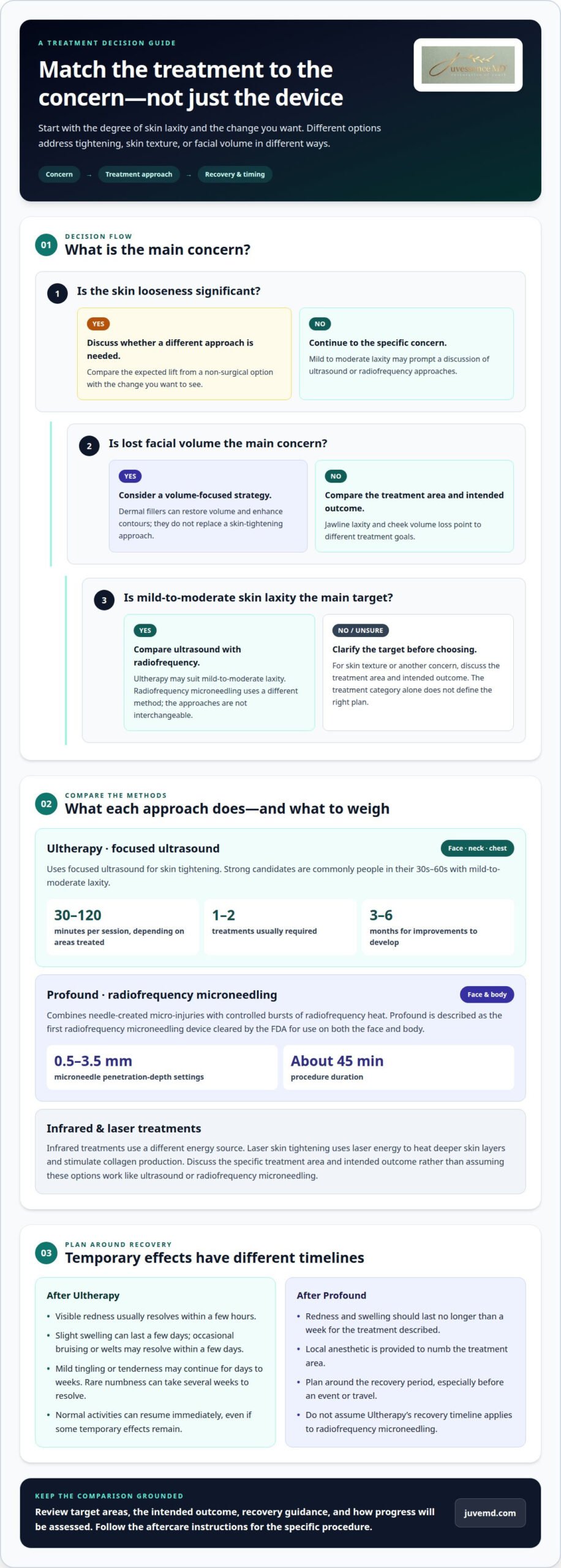
Non-surgical options in Las Vegas include Ultherapy, radiofrequency microneedling, infrared treatments, laser skin tightening, thread lifts, and injectable fillers. These approaches differ in how they address sagging, skin texture, or facial volume, so the right comparison starts with your main concern.
Ultherapy uses focused ultrasound for skin tightening on the face, neck, and chest. Radiofrequency microneedling combines heat energy with controlled micro-injuries, while infrared treatments use a different energy source. These approaches are not interchangeable: compare the treatment area and intended outcome with the concern you want to address.
For Ultherapy, a session takes 30-120 minutes depending on the number of areas treated. The procedure usually requires one or two treatments, and ideal candidates are commonly people in their 30s-60s with mild to moderate laxity. Improvements develop over 3-6 months, which matters if you’re comparing gradual tightening with options aimed at other skin concerns.
Profound is a radiofrequency microneedling device. Its microneedles can be set to penetration depths from 0.5 to 3.5 millimeters, while heat is delivered in controlled bursts. The procedure takes about 45 minutes. Profound is the first radiofrequency microneedling device cleared by the FDA for use on both the face and body. This method differs from ultrasound because it combines needle-created micro-injuries with radiofrequency heat.
Infrared and laser skin tightening are also distinct from Ultherapy and radiofrequency microneedling. Laser skin tightening uses laser energy to heat deeper skin layers and stimulate collagen production. For infrared treatment, compare the specific treatment area and intended outcome during consultation; the category alone doesn’t show how its plan relates to your type of laxity.
A useful consultation starts by identifying where sagging is most noticeable, then considering whether skin texture or lost volume is also a concern. Jawline laxity and cheek volume loss, for example, require different treatment goals. Dermal fillers can restore volume and enhance contours, while energy-based procedures focus on skin tightening.
Preparation depends on the procedure selected. At consultation, review the planned treatment areas and ask how the procedure addresses your specific concern. For Ultherapy, the treatment may cover the face, neck, or chest, so the chosen areas affect appointment length. For Profound, discuss its microneedle-based radiofrequency method and the anticipated recovery guidance before scheduling.
If you are considering combining treatments, clarify each one’s purpose and how the approaches would be sequenced. A clinician may consider whether your main goal is addressing laxity, skin elasticity, or facial volume. Fillers address volume and contours, rather than replacing a skin-tightening approach. Discuss the target areas, treatment order, and how progress will be assessed.
Choose based on the concern, not the technology’s name alone. Mild to moderate laxity may prompt a discussion of ultrasound or radiofrequency, while volume loss calls for a different strategy. If looseness is significant, discuss whether a non-surgical option’s expected lift is consistent with the change you want.
ARE THERE ANY SIDE EFFECTS?
Temporary effects depend on the treatment, its target area, and the method used. Ultherapy and Profound have different recovery patterns, so compare their timelines before planning work or social activities.
Temporary Effects During Recovery
After Ultherapy, visible redness usually resolves within a few hours, while slight swelling can last a few days. Mild tingling or tenderness to the touch may continue for days to weeks. Occasional bruising or welts may resolve within a few days. Rare numbness can take several weeks to resolve. Note any changes and follow the aftercare instructions provided.
Recovery varies by procedure. For the Profound treatment described in this article, redness and swelling should last no longer than a week. These effects may influence when you schedule treatment, especially before an event or travel. Temporary tenderness is also possible with minimally invasive alternatives. Do not assume Ultherapy’s recovery timeline applies to radiofrequency microneedling.
Pain Management and Downtime
Pain management is part of procedure planning. In the Profound treatment described here, Dr. K provides local anesthetic to numb the treatment area. Ultherapy may cause tenderness or tingling afterward, even though patients can return to normal activities immediately. Consider the treatment area, expected effects, and daily routine when planning either procedure.
Returning to normal activities immediately after Ultherapy does not mean every temporary effect has resolved. Mild swelling, tenderness, or bruising may still be noticeable. Consider your comfort and schedule, such as whether you want to avoid a close-up event while swelling or welts remain. After Profound, allow for the reported redness and swelling period, which can last up to a week.
Follow the aftercare instructions provided for your procedure, and maintain a skincare routine that includes sun protection and hydration. These steps may be relevant whether treatment targets facial laxity or another area. If an effect changes or concerns you, follow the guidance specific to your treatment rather than applying instructions intended for another procedure.
Recovery and visible results follow separate timelines. Ultherapy redness may fade within hours, but mild tenderness can persist for weeks. That doesn’t mean the treatment’s lifting effect is complete; improvement develops gradually over months. For patients choosing between Ultherapy and Profound, compare both the short-term recovery and the longer result timeline. A treatment plan should account for each, not downtime alone.
Before scheduling, write down your target area, upcoming commitments, and questions about expected temporary effects. Then review those details during consultation and confirm which aftercare instructions apply to your procedure. For a clearer discussion of treatment planning and recovery, connect your goals with the method being considered.
IS THERE ANY PREPARATION FOR A PROFOUND NON-SURGICAL FACELIFT?
Preparation starts by defining the change you want and the treatment area. Las Vegas clinics offer non-surgical options such as Ultherapy, radiofrequency microneedling, infrared or laser skin tightening, and dermal fillers.
Costs depend on the procedure, treatment areas, and whether the plan combines treatments. The estimate is specific to the proposed plan, so discuss the treatment and areas included during consultation.
Compare non-surgical options with surgery by considering both the degree of laxity and recovery time. A traditional facelift can involve weeks of downtime, while non-surgical treatments avoid surgery. They may target skin laxity or facial volume, but they are not interchangeable with a surgical procedure.
Begin treatment planning with a clear discussion of your goals, target areas, and expectations. Describe whether your main concern is loose skin, texture, or volume loss. This distinction helps clarify whether a skin-tightening approach or a volume-restoring option is more relevant.
Collagen production changes with age: the body starts producing less collagen, elastin, and hyaluronic acid after a person reaches their 20s. That context helps explain why treatments may aim to support collagen or improve skin elasticity. It doesn’t mean every person needs the same procedure; the concern being treated still guides the plan.
Dermal fillers have a different purpose from skin-tightening procedures. They can restore facial volume, smooth wrinkles, and enhance contours in areas such as the cheeks, temples, and jawline. Someone concerned about hollow cheeks may have a different priority from someone focused on loose jawline skin. Matching the treatment to the concern keeps expectations specific.
Non-surgical treatments may appeal to people who want to avoid surgery and its associated weeks of downtime. Their purpose is targeted improvement, not a promise of the same degree of change as surgery. Consider how much laxity is present, which facial areas matter most, and whether volume loss contributes to the appearance you want to address.
Use a simple preparation checklist during consultation: name your primary concern, identify the area you want treated, and clarify what improvement would look like to you. Then discuss whether Profound, fillers, or another approach fits that goal. A clear target makes it easier to compare a treatment plan with the recovery time and type of change you’re seeking.
Preparation also means planning around the treatment’s purpose. If facial volume is the main concern, ask how fillers could address contours; if skin laxity is the focus, discuss a tightening approach. These distinctions help you enter treatment planning with useful questions, rather than choosing a procedure by name alone.
Results timeline and longevity
Non-surgical facelift results depend on the treatment: effects can appear gradually or sooner, and duration varies by approach. For Ultherapy, improvements develop over 3-6 months and may last up to two years or more.
Expected Results and Timing
Ultherapy effects build gradually over two to four months as the skin responds to treatment. Improvements at the Las Vegas clinic develop over 3-6 months, so an immediate change isn’t the expected timeline. Track progress with consistent photographs taken in similar lighting, rather than judging each day’s appearance.
Profound results can continue to build between three and nine months after treatment. This slower progression reflects a collagen-stimulation approach, not an immediate lift. The body produces less collagen, elastin, and hyaluronic acid after a person reaches their 20s, which helps explain the focus on supporting skin structure. Each treatment’s timeline should be assessed separately.
How Long Results May Last
Reported timelines vary by treatment: Profound results may last one to three years, Ultherapy improvements may last up to two years or more, and a liquid facelift may last at least six months and may last two years or more. These timelines are not interchangeable. Each approach addresses different concerns, and results depend on the treatment selected.
Other injectable results have shorter or different timelines. BOTOX® Cosmetic results typically last three to four months, while some dermal filler results may last up to 18 months. Fillers restore volume and contours, so compare their duration separately from skin-tightening treatments. For example, cheek volume and jawline laxity call for different measures of improvement.
When reviewing clinical study results, compare the same treatment, target area, and outcome. Check whether the reported endpoint measures skin firmness, lifting, or facial volume, and when results were assessed. A finding about immediate appearance does not show how long collagen-related improvement lasts. Keep these distinctions in mind when reviewing claims or discussing goals.
To follow your progress, record the treatment date, areas addressed, and changes you notice at planned intervals. Compare photographs taken under similar conditions, and distinguish early changes from later improvement. This can be useful when results continue to develop over months, as with Ultherapy or Profound.
Longevity also matters when planning maintenance. Follow the maintenance recommendations for your treatment and reassess whether your original concern has changed. Skin laxity, volume loss, and expression lines may call for different approaches, so a treatment suited to one concern may not address another as well.
Non-surgical treatments do not produce the same type of change as surgery. Set practical goals based on the expected timeline and duration, such as gradual tightening, volume restoration, or temporary wrinkle reduction. Matching your desired outcome to the treatment’s timeline gives you a clearer basis for evaluating improvement.
Alternatives for significant skin laxity
Significant skin laxity changes the decision: ideal candidates for minimally invasive options typically have mild to moderate facial aging. Ultherapy, radiofrequency microneedling, laser tightening, and thread lifts use different methods. For significant laxity, non-surgical facelift options in Las Vegas may not provide the degree of lift you want. Compare the method with your concern and desired change.
Ultherapy uses ultrasound to tighten and lift skin on the face, neck, and chest. It may be relevant for someone considering a non-surgical facelift in Las Vegas for mild to moderate looseness. For pronounced laxity, discuss what level of improvement an energy-based treatment may address. Do not assume a non-surgical approach will produce the same change as surgery.
Thread lifts use absorbable surgical threads placed under the skin to lift and tighten facial tissue. They differ from energy-based treatments, rather than being another device setting. Because threads are placed beneath the skin, the approach is invasive compared with treatments that deliver energy externally. Consider the method, target area, and your comfort with that approach.
Laser skin tightening uses laser energy to heat deeper skin layers and stimulate collagen production. Radiofrequency microneedling also targets collagen, combining heat energy with controlled micro-injuries. These methods focus on skin tightening and elasticity, while fillers address facial volume. If loose skin and hollow cheeks are both concerns, assess each separately before comparing treatment plans.
Redness can occur after minimally invasive treatments, but it does not measure the amount of lift achieved. Evaluate options by their method and intended target, not temporary skin changes. Redness after an energy treatment, for example, does not show whether it can address pronounced sagging around the jaw or neck.
A traditional facelift is a surgical option with a different level of invasiveness and recovery. Weeks of downtime are associated with a traditional facelift, while minimally invasive alternatives have a different recovery experience. Recovery matters, but so does the degree of change you want. Consider both before deciding which approach fits your goal.
Structure a treatment discussion around three points: identify the areas with the most looseness, distinguish laxity from volume loss, and describe your desired improvement. Then compare ultrasound, radiofrequency, laser energy, threads, and surgery by method and intended target. This helps clarify whether an option addresses your concern or is better suited to mild laxity or skin texture.
For significant laxity, prioritize the amount of lift needed over the appeal of a non-surgical label. Someone with mild looseness and someone with pronounced sagging have different goals. Explore skin-treatment options as you consider which approach may address your skin concerns.
JuveMD: Bioidentical Pellet Hormone Therapy
JuveMD offers Bioidentical Pellet Hormone Therapy for patients seeking support with hormonal health, a separate concern from facial skin laxity. JuveMD also offers Skin Treatments for people with skin-focused goals. The appropriate discussion depends on whether your priority is texture, laxity, or another concern.
Use the distinctions in this guide to clarify what you want addressed. For hormonal health, JuveMD offers Bioidentical Pellet Hormone Therapy; for skin appearance, discuss Skin Treatments. These address different needs and are not interchangeable. JuveMD also offers Injectables and Weight Loss as separate care options.
Contact JuveMD to discuss your aesthetic goals and available Skin Treatments or Injectables.
Make your next step a focused conversation
Choose your next step by naming the change you want, the areas that concern you, and how much downtime fits your life. A non-surgical facelift in Las Vegas may suit goals involving skin appearance or facial volume, but significant laxity can call for a different approach. Clear priorities keep the discussion practical and centered on your expectations.
JuveMD offers Skin Treatments and Injectables for aesthetic goals, along with Bioidentical Pellet Hormone Therapy for hormonal health. These services address different needs, so a discussion can focus on the concern that matters to you rather than treating the options as interchangeable.
Contact JuveMD to discuss your options and identify a thoughtful next step. A clear, individualized plan can help you move forward with confidence.
Frequently Asked Questions
Who is a Good Candidate for Minimally Invasive Facelift Alternatives?
People with mild to moderate facial aging and realistic expectations may be candidates for minimally invasive alternatives. The key is whether the concern is loose skin, texture, or lost volume. Someone focused on cheek fullness, for example, has a different goal from someone concerned about jawline laxity. Significant skin looseness calls for careful comparison of non-surgical approaches and surgery.
DOES TREATMENT HURT?
Sensation varies by treatment and individual comfort. The Profound procedure described here uses local anesthetic to numb the treatment area, while Ultherapy can be followed by tenderness or tingling. Before treatment, discuss expected sensations during the procedure and planned comfort measures. This helps you prepare for the specific method rather than relying on another treatment’s experience.
How do Botox, fillers, Ultherapy, and radiofrequency compare for facial lifting?
These options address different concerns. Ultherapy uses ultrasound for skin tightening, while radiofrequency microneedling combines heat with controlled micro-injuries to support collagen production. Dermal fillers restore facial volume, smooth wrinkles, and enhance contours. BOTOX® Cosmetic results typically last three to four months, but duration alone does not show whether it fits your goal. Compare the treatment’s purpose with the area you want addressed.
What are the risks and side effects of non-surgical facelift procedures?
Possible temporary effects vary by procedure and may include redness, swelling, tenderness, tingling, bruising, or welts. Ultherapy-related tenderness can last days to weeks; redness after Profound should last no longer than a week. Follow the aftercare instructions for your specific treatment and note any change that concerns you. Do not substitute recovery guidance for one procedure for another’s.
Who is a good candidate for a non-surgical facelift?
A suitable candidate generally wants a measured improvement in skin laxity, facial volume, or wrinkles without surgery. The concern should match the treatment: fillers address volume and contours, while energy-based procedures focus on tightening or elasticity. Hollow cheeks and loose skin, for example, are different issues. Clear priorities help distinguish a suitable treatment goal from an expectation that may require another approach.
How should I choose a qualified injector or provider in Nevada?
Choose a provider who can explain the proposed treatment, its intended target, possible effects, and alternatives in plain language. For an injectable, the discussion should identify the concern it addresses, such as facial volume or wrinkles. For an energy-based procedure, clarify how its method relates to your laxity. Before proceeding, make sure you understand the plan and its limits.
What should I expect during and after a non-surgical facelift appointment?
Expect the appointment to focus on your treatment area, goals, and selected procedure. Ask which areas are included and what aftercare applies. Temporary redness, swelling, or tenderness may occur, depending on the method. Follow instructions specific to your procedure and plan around visible effects rather than assuming every treatment has the same recovery pattern. This information is educational only, not medical advice; consult your healthcare provider.
Are consultations or financing available at Las Vegas med spas and plastic surgery clinics?
Consultation and payment policies vary. At JuveMD, consultation bookings require a deposit applied to the total service cost, with the remaining balance due at the end of the first session. This information is educational only, not medical advice. Consult your healthcare provider before making health-related changes or choosing a treatment.