
To understand how to stop hair loss during menopause, start by identifying the cause. Hormonal shifts can shorten the hair-growth phase and leave hair finer or drier, but other health factors may contribute too. Topical minoxidil is FDA-approved for female pattern hair loss; hormone therapy isn’t recommended solely to treat hair loss.
Thinning can feel unsettling, especially when it appears alongside other changes in your body. Whether hair improves depends on what’s driving the loss and whether treatment addresses that cause. Some people may see improvement with appropriate treatment, but progress can take time.
This guide explains how menopause can affect hair growth and scalp oil, what hormone therapy may and may not do, and how to assess treatment options. You’ll also learn why shedding patterns matter and what may help protect fragile hair while you consider whether thinning is likely to improve.
Key Takeaways
- Menopause-related hormone shifts can change hair growth and scalp oil, but thinning can also have other causes.
- Notice whether shedding is diffuse or concentrated around the crown and part line, since the pattern can help distinguish different types of hair loss.
- Hormone therapy may affect hair for some women, but it isn’t recommended solely as a hair-loss treatment.
- Hair changes can improve, though the outlook depends on what’s causing them and which treatment is appropriate.
- Gentle hair care can help protect fragile strands; treatment options such as hair restoration may be worth exploring when thinning persists.
How does menopause affect your hair?
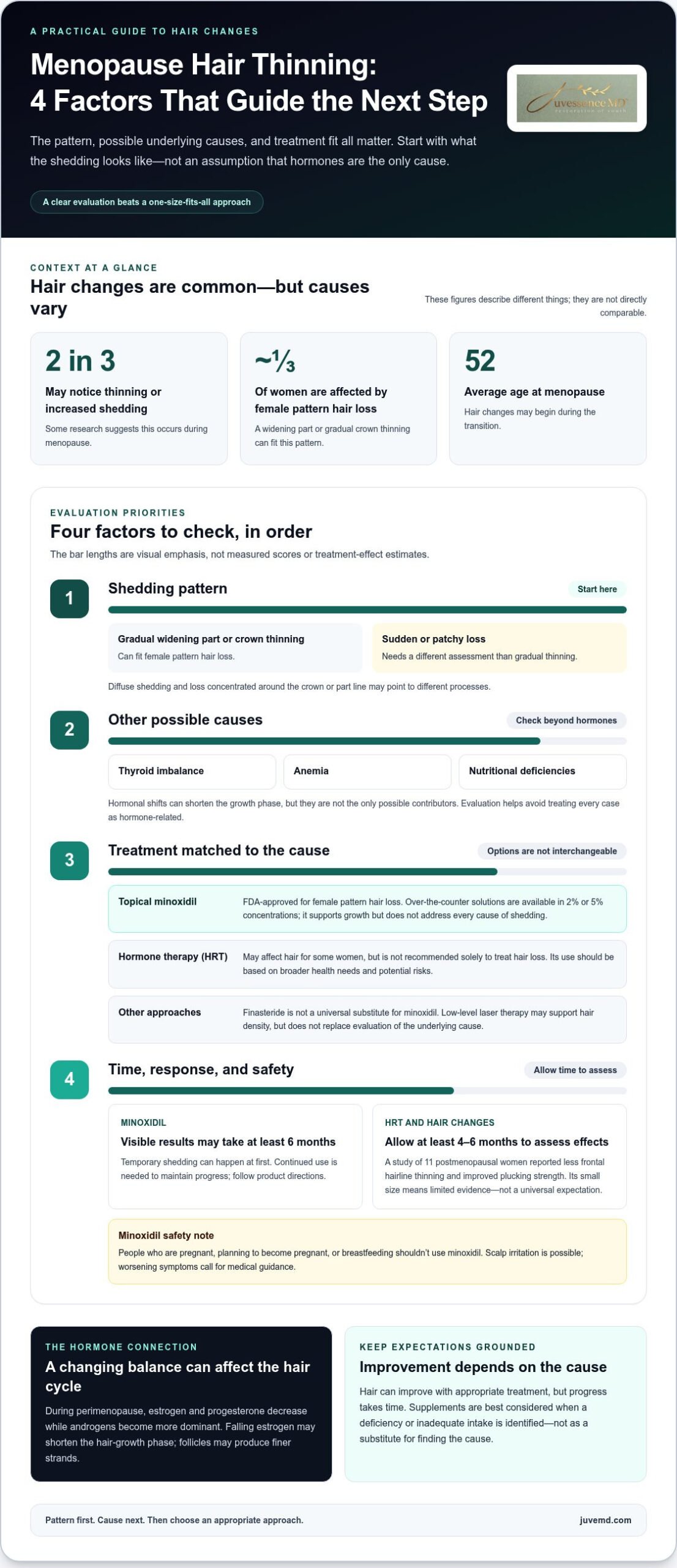
Menopause can bring thinner hair, increased shedding, and changes in scalp oil. Some research suggests 2 out of 3 people experience thinning and increased shedding during menopause. Falling estrogen levels may shorten the hair-growth phase, while androgens can become more influential. These shifts can affect hair follicles, but they aren’t the only possible cause.
The average age at which someone goes through menopause is 52 years old, according to the National Institute on Aging. Hair changes may appear during the transition, and a widening part or reduced fullness can be noticeable. Female pattern hair loss affects about one-third of women. Thyroid imbalance, anemia, or other factors may also contribute, so the pattern and timing of shedding matter.
For female pattern hair loss, topical minoxidil is an FDA-approved treatment. Over-the-counter solutions are available in 2% or 5% concentrations. Minoxidil supports hair growth, but it doesn’t address every cause of shedding. A gradual widening part or thinning across the crown can fit female pattern hair loss. Sudden or patchy loss needs a different assessment than gradual thinning.
Results take patience. Minoxidil may cause temporary shedding at first as hairs enter a growth phase. Continued use is needed to maintain progress, and visible results may take at least six months. Use the product according to its directions. People who are pregnant, planning to become pregnant, or breastfeeding shouldn’t use minoxidil. Scalp irritation is another possible concern; worsening symptoms call for medical guidance.
Finasteride is a different hair-loss medication, not another name for topical minoxidil. Its role depends on the type and pattern of hair loss, so it isn’t a universal substitute. Finasteride can take about six months to show an effect. A careful evaluation can distinguish genetic female pattern hair loss from other causes before medication is considered. Combining treatments without guidance can make it harder to tell what is helping.
Low-level laser therapy is another option sometimes used to support hair density. It uses low-level light to stimulate scalp circulation and cellular activity. It doesn’t replace evaluation of the underlying cause, and it differs from topical treatment applied directly to the scalp. For example, someone with gradual crown thinning may discuss both approaches as part of a broader plan.
In the United States, treatment costs vary depending on the product, prescription, or procedure. The price depends on the individual case and is provided after a quote request; the treatment type and personal plan affect the total.
Hormone replacement therapy
Menopause-related hormone shifts can affect hair follicles, but hormone replacement therapy (HRT) isn’t automatically a hair-loss treatment. Understanding the connection helps distinguish possible effects on hair from the reasons someone might use HRT.
Hormonal Changes and Hair Thinning
During perimenopause, estrogen and progesterone levels decrease, while androgens become more dominant. This changing balance can contribute to thinner hair and slower growth. A follicle may shrink and produce finer strands, or more hairs may enter the shedding phase after hormonal or emotional stress. The pattern depends on the cause, so diffuse shedding and gradual crown thinning don’t necessarily point to the same process.
Declining estrogen can also affect the dermis, the skin layer that supports hair follicles. When that support weakens, strands may become more vulnerable to shedding. Hormonal changes aren’t the only possible contributors: thyroid imbalance, anemia, and nutritional deficiencies can also affect hair. A careful evaluation can help distinguish these factors before treating thinning as a hormone-only issue.
Hormone Therapy and Hair Changes
HRT changes hormone levels to address menopause-related symptoms; its effects on hair are a separate consideration. It may help stabilize hormonal shifts for some women, but it isn’t recommended solely to treat hair loss. The decision involves weighing the reason for therapy against personal health factors and potential risks, rather than using thinning alone as a reason to start.
A small study of hormone replacement therapy and hair changes included 11 postmenopausal women, according to the National Library of Medicine. The study found decreased thinning at the frontal hairline and improved plucking strength. Its small size means the finding offers limited evidence, not a universal expectation. It also doesn’t show that HRT treats every cause of hair loss.
Hair changes can take time to assess. The article’s guidance recommends allowing at least 4-6 months to see HRT’s effects on hair. If thinning continues, clinicians may consider the distribution of loss, other menopause symptoms, medications, and conditions such as thyroid imbalance. Topical treatments like minoxidil work differently from hormone therapy and target hair growth directly; they don’t correct a hormone imbalance.
For diet, include protein-rich foods such as eggs, iron-rich foods such as spinach, and omega-3 sources such as salmon. Supplements are generally best considered when a deficiency or inadequate intake is identified; broad claims that a vitamin or supplement will reverse menopause-related thinning aren’t a substitute for finding the cause.
If menopause symptoms and hair changes are occurring together, hormone-health support can help frame a conversation about whether hormone therapy fits your broader health needs.
How menopause affects hair growth and scalp oil
Scalp hair cycles through growth, transition, rest, and shedding. The anagen, or growing, phase lasts two to seven years, while the resting phase lasts about three months. Estrogen helps keep follicles in the growth phase longer. As estrogen declines, that phase can shorten, changing how long strands grow before shedding. Hair grows about a centimetre each month, so changes in density take time to become visible.
Menopause can also reduce natural scalp oil, leaving strands drier and more brittle. Aging may reduce scalp blood flow and collagen production, which support the tissue around hair follicles. A dry scalp doesn’t necessarily explain thinning, though. Notice whether the change is mainly dryness and breakage or increased shedding from the roots. Female pattern hair loss, for example, often appears as gradual thinning across the crown or a widening part.
Shampoo can improve comfort and manageability, but it won’t resolve menopause-related hair loss on its own. For fragile hair, choose a gentle, hydrating formula without sulfates and avoid routines that irritate the scalp. Limit tight hairstyles, harsh chemical treatments, and frequent hot-tool use, which can stress brittle strands. If blow-drying makes your scalp uncomfortable, air-drying is a practical alternative.
Scalp oils are another option, but they shouldn’t be confused with proven treatment for a specific cause of shedding. Pumpkin seed, coconut, and rosemary oils are used to nourish the scalp. Ayurvedic traditions also use bhringraj, amla, and brahmi oils. Apply a small amount to the scalp and stop if irritation develops. These oils can condition the scalp, but they don’t replace an evaluation of ongoing hair loss.
Professional options address different needs. Topical minoxidil is used for female pattern hair loss, while low-level laser therapy may support hair density through scalp circulation and cellular activity. A dermatologist can assess whether the pattern fits female pattern hair loss and whether topical treatment or another approach is suitable. Serums vary in their ingredients and purpose, so distinguish cosmetic scalp conditioning from treatment intended to affect hair growth.
Supplements also require a reason, such as an identified deficiency or inadequate intake. Ask a healthcare professional whether checking vitamin D, zinc, or selenium levels makes sense before adding supplements. For example, taking several products with overlapping ingredients can lead to unnecessary intake. Pair any product routine with gentle handling and observation: note changes in your part, crown, scalp comfort, and shedding over time.
Female pattern hair loss
Menopause can coincide with gradual thinning, but the pattern offers useful clues about what may be happening. Noticing where density changes can help guide evaluation and treatment choices.
Signs and Patterns of Hair Loss
Female pattern hair loss often causes gradual thinning across the crown, with the front hairline usually preserved. A widening part or reduced overall density may point to this pattern rather than sudden, widespread shedding. About one-third of women experience female pattern hair loss, and it’s more common after age 40. These signs can help frame what to discuss with a dermatologist.
Notice whether changes affect your part, crown, or overall volume. For example, photographs taken over time may show a gradually widening part, while sudden shedding across the scalp may suggest another cause. Menopausal hair loss can include androgenetic alopecia, also called female pattern baldness. Identifying the distribution matters because the treatment approach depends on the type of hair loss.
Dihydrotestosterone, or DHT, can shrink hair follicles through miniaturization. Smaller follicles produce finer strands, particularly around the crown and temples. Estrogen changes may occur alongside this process during menopause, but thinning patterns alone don’t identify the cause. A useful first step in how to stop hair loss during menopause is to observe where density changes and how quickly they develop.
Female pattern hair loss affects about 30 million people in the United States. A dermatologist can assess increased shedding, a widening part, or reduced overall volume. Sudden or patchy loss differs from gradual crown thinning and deserves evaluation, especially if scalp symptoms appear. Describe when the change began and which areas are affected to make the assessment more informative.
Genetics and Hair Loss Patterns
Female pattern hair loss, also called androgenetic alopecia, involves genetic and hormonal influences on hair follicles. Menopause may coincide with visible changes in someone predisposed to this pattern, but it doesn’t establish genetics as the only cause. That distinction helps guide an accurate assessment instead of assuming every change in hair density has one explanation.
A family history can provide useful context, though it can’t predict exactly how much hair someone will lose. Compare part width, crown density, and strand thickness over time. If you’re considering how to stop hair loss during menopause, these observations can help distinguish progressive patterned thinning from temporary shedding or another scalp condition.
Diagnosis informs the next step. Topical minoxidil is FDA-approved for female pattern hair loss, while the appropriate approach depends on the type of loss and personal health factors. A dermatologist may assess your scalp and consider blood work for nutritional deficiencies, thyroid function, and hormone levels. Understanding the pattern first helps match treatment to the likely cause.
Whether menopausal hair loss improves
Menopausal hair loss can improve, but the outlook depends on its cause and the treatment used. Temporary shedding after physical or emotional stress, called telogen effluvium, can subside after the stressor is lifted, with shed hairs gradually growing back. Female pattern hair loss follows a different course: treatment may help maintain or increase density, but ongoing care may be needed to preserve progress.
Timing matters. Reviewed treatments for menopausal hair loss typically take 3-6 months to show visible results, and topical minoxidil may take at least six months to assess its effect. A change in shedding may appear before you notice greater volume, because new strands need time to grow and become visible. Taking progress photos in consistent lighting can help track changes in the part, crown, and overall density.
The pattern of loss helps explain what improvement may look like. With diffuse shedding, identifying and addressing a trigger can allow follicles to resume growth. With female pattern hair loss, follicles may produce finer strands over time, so the goal may be to slow progression and support density rather than fully restore previous volume. A dermatologist can assess your scalp and consider other factors, including thyroid function, iron, and nutrient levels.
Hormone therapy isn’t recommended solely to treat hair loss, although it may help some women stabilize menopause-related hormonal shifts. Estrogen and progesterone changes are only part of the picture; follicle sensitivity, health conditions, medications, and nutrition can also influence thinning. Treating a documented deficiency may support hair health, while supplements without an identified need may not address the underlying condition. An appropriate evaluation can distinguish a correctable trigger from a persistent pattern.
Consistency affects outcomes. Minoxidil’s benefits generally last only while treatment continues, so stopping can mean losing progress. Low-level laser therapy may support hair density, but response and treatment choices depend on the hair-loss pattern. A single product or supplement rarely addresses every cause. Keep a record of when shedding began, whether it is widespread or concentrated, and any scalp symptoms; these details can guide a more focused assessment.
Improvement is possible, but it depends on matching the approach to the cause. If shedding is sudden or patchy, or occurs with scalp symptoms, seek professional evaluation rather than waiting for a routine treatment to work. For gradual thinning, a dermatologist can assess the pattern, review relevant health factors, and help set realistic markers for progress. Follow-up should compare shedding, part width, and strand thickness over time, not just day-to-day appearance.
JuveMD: Bioidentical Pellet Hormone Therapy
JuveMD’s Bioidentical Pellet Hormone Therapy may be relevant if menopause-related symptoms extend beyond hair changes. Hormone therapy isn’t recommended solely to treat hair loss, so the discussion should focus on your broader hormonal health and treatment goals. A clinician can help consider whether this therapy fits those goals, taking your health factors and potential benefits and risks into account. If thinning is your main concern, identifying its cause remains essential; hair loss may have hormonal, nutritional, thyroid-related, or follicular causes that require different approaches. Understanding that distinction can help you make a more informed decision about care without expecting hormone therapy alone to restore hair. Contact JuveMD to discuss your hormonal health and possible next steps.
Choose a next step that fits your goals
Deciding how to stop hair loss during menopause starts with separating hair concerns from broader wellness goals. Consider what you most want to address, such as ongoing thinning, changes in hair density, or other menopause-related concerns. That clarity can make a conversation about possible care more focused and useful.
JuveMD offers Hair Restoration, alongside Bioidentical Pellet Hormone Therapy, Injectables, and Skin Treatments. These services address different needs, so the most relevant next step depends on the concern you want to discuss. Hair loss can have several causes, and the right approach depends on understanding what may be contributing in your case.
Contact JuveMD to discuss your options and consider a path forward that reflects your concerns. A thoughtful conversation can help you move from uncertainty toward a clearer plan, one step at a time.
Frequently Asked Questions
What is hair loss in women?
One marker used for hair loss in women is shedding more than 125 hairs daily. Normal cycling can release 50 to 100 hairs per day, so shedding alone doesn’t establish a cause. Look for persistent changes in part width, crown coverage, or overall volume. A clinician can assess the pattern and consider contributors such as thyroid function, anemia, or nutrient levels when deciding what evaluation is appropriate.
Are certain shampoos best to use while in menopause?
A gentle, hydrating shampoo can suit dry, fragile hair, but shampoo won’t correct follicle-related loss. Choose a formula that cleans without leaving your scalp uncomfortable, and use conditioner to reduce friction when handling fragile strands. For example, if your hair feels dry after washing, try a gentler routine before adding multiple scalp products. Persistent thinning calls for attention to its cause, not just a change in shampoo.
Are there side effects of minoxidil?
Minoxidil can cause temporary shedding at the start of treatment as hairs enter a growth phase. This early change doesn’t mean you should stop without considering the product’s directions and purpose. Continued use is needed to maintain progress, and benefits generally last while treatment continues. Follow the product instructions consistently, and note when shedding begins so you can discuss the changes during an evaluation.
How Long Does It Take to See Results from Treatment?
Visible results from reviewed menopausal hair-loss treatments typically take 3-6 months. Minoxidil may need at least six months before its effect can be assessed, while hormone therapy’s effects on hair may take 4-6 months to evaluate. Track the same areas, such as the part and crown, using consistent lighting. Comparing those observations over time is more useful than judging progress from daily shedding alone.
What are the cycles of hair growth?
Hair follicles move through growth, transition, rest, and shedding. The anagen growth phase lasts two to seven years; the catagen transition lasts about three weeks. Telogen, the resting phase, can last about three months, followed by shedding. These stages don’t occur in sync across the scalp. That staggered cycle explains why loose hairs appear regularly, even when overall hair growth continues.
How can you tell menopausal hair loss from other types of hair loss?
The pattern and onset offer useful clues, but they don’t confirm a cause by themselves. Gradual thinning across the crown or a widening part can fit female pattern hair loss. Widespread shedding after physical or emotional stress may fit telogen effluvium. Sudden or patchy loss, scalp symptoms, or other unusual changes deserve prompt professional assessment. A dermatologist may consider blood work for thyroid function, nutrient deficiencies, and hormone levels.
Which treatments for menopausal hair loss are proven to work, including minoxidil?
Topical minoxidil is FDA-approved for female pattern hair loss, while low-level laser therapy may be used to support hair density. Platelet-rich plasma is an emerging treatment that uses a person’s own blood plasma to encourage regrowth. These approaches differ, and the useful choice depends on the hair-loss pattern. Hormone therapy may help some women with menopause-related shifts, but it isn’t recommended solely to treat hair loss.
What are the risks and side effects of minoxidil for women?
Women who are pregnant, planning to become pregnant, or breastfeeding shouldn’t use minoxidil. Temporary shedding can also occur as treatment begins. Use the product according to its directions, and don’t assume a higher amount or different routine will improve results. Minoxidil requires ongoing use to maintain progress. If you’re unsure whether it fits your circumstances, discuss your health history and treatment choices with a healthcare professional.