
Perimenopause brain fog can affect focus, memory, and word-finding at work, but it usually isn’t a sign of permanent cognitive decline. The career impact of perimenopause brain fog can feel unsettling, yet these changes are generally temporary and don’t predispose women to dementia. Sleep disruption, hot flashes, stress, and anxiety can add to the difficulty.
If you’ve lost your train of thought in a meeting or struggled to recall a familiar word, it’s understandable to wonder what’s happening and whether hormone treatment could help. Hormone therapy isn’t an FDA-approved treatment for cognitive symptoms, and evidence hasn’t shown a clear direct benefit for cognition. However, treating disruptive symptoms such as hot flashes or sleep problems may help some people feel clearer.
This article explains how perimenopause can affect thinking and work, what is known about long-term cognitive health, and practical strategies that may support concentration. It also covers the role and limits of hormone therapy, so you can consider your options with a clearer understanding.
Key Takeaways
- Menopause-related brain fog is usually temporary and doesn’t, by itself, mean lasting cognitive decline or predict dementia.
- Fluctuating estrogen, disrupted sleep, hot flashes, stress, and anxiety can all influence focus and memory at work.
- Lists, calendar reminders, structured routines, and practical workplace adjustments can help make demanding tasks easier to manage.
- Protecting sleep, staying physically active, eating balanced meals, and practicing mindfulness may support concentration and well-being.
- Hormone therapy may ease symptoms such as hot flashes, but it isn’t an FDA-approved treatment for cognitive symptoms; learn how JuveMD’s Bioidentical Pellet Hormone Therapy may fit into a broader discussion of hormonal health.
Is menopause-related brain fog a sign of permanent cognitive decline?
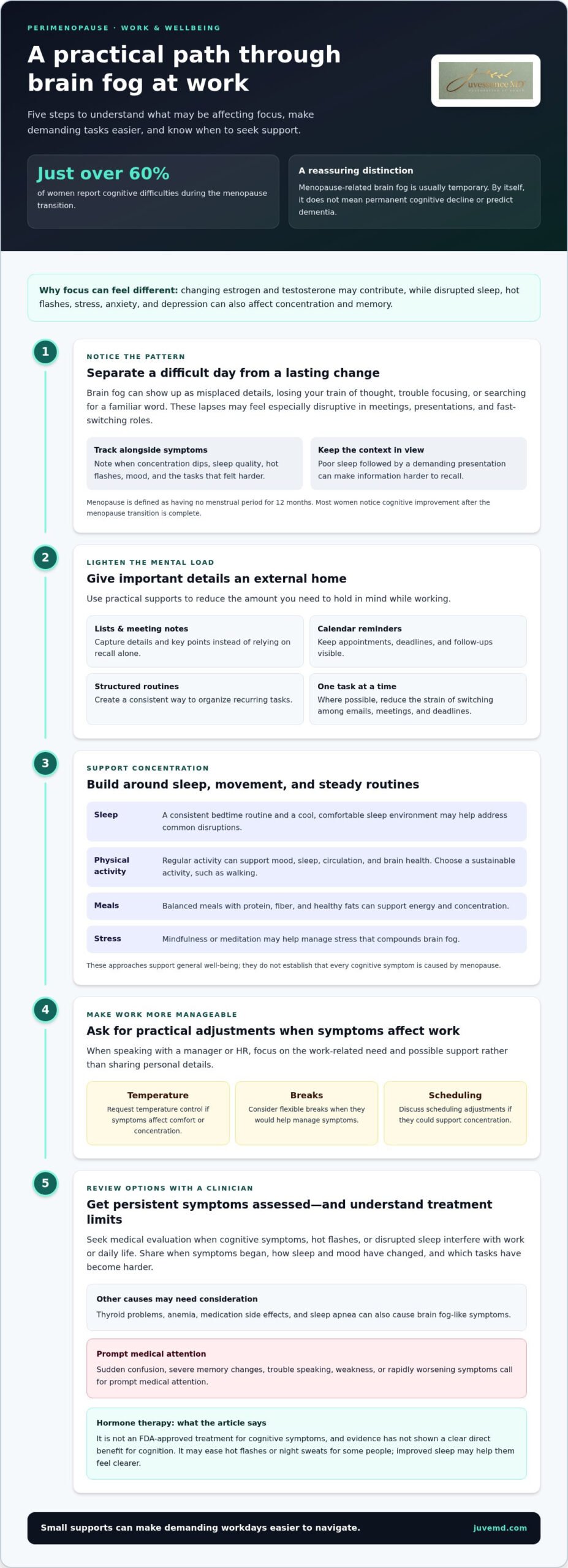
Just over 60% of women report cognitive difficulties during the menopause transition. Perimenopause brain fog can mean misplaced details, losing a train of thought, struggling to focus, or searching for a familiar word. These changes may affect work productivity, particularly in roles involving fast recall, meetings, or frequent task-switching.
Changing estrogen and testosterone levels can contribute to cognitive symptoms, including difficulties with attention and memory, but they aren’t the only factors. Hot flashes and night sweats can interrupt sleep, while anxiety, stress, and depression may further affect concentration. For example, poor sleep followed by a demanding presentation can make information harder to recall.
Brain fog during menopause doesn’t, by itself, indicate permanent cognitive decline or mean someone will develop dementia. Menopause is defined as having no menstrual period for 12 months, according to the National Institute on Aging. Cognitive symptoms are usually temporary, and most women notice improvement after the menopause transition is complete.
Early or surgical menopause is associated with greater risk of cognitive difficulties or depression than natural menopause. Early menopause, including surgical menopause before age 45, has also been associated with increased later-life dementia risk and faster cognitive decline. This is a distinct risk context, not evidence that everyday word-finding lapses signal dementia. Menopause-related cognitive changes are generally subtle, with performance typically remaining within normal limits.
Stress and anxiety can create a difficult feedback loop: worrying about forgetting a detail may make it harder to focus on the next task. The career impact of perimenopause brain fog may include taking longer to prepare reports, relying on meeting notes, or feeling less confident about routine decisions. These are possible effects at work, not evidence of lasting cognitive loss.
When discussing symptoms with a manager or HR, focus on the work-related need and possible support rather than sharing personal details. For example, request temperature control, flexible breaks, or scheduling adjustments if symptoms affect your concentration or comfort.
Persistent cognitive symptoms, hot flashes, or disrupted sleep that interfere with work or daily life warrant medical evaluation. Discuss when the symptoms began, how your sleep and mood have changed, and which tasks have become harder. Thyroid problems, anemia, medication side effects, and sleep apnea can also cause brain fog-like symptoms. Sudden confusion, severe memory changes, trouble speaking, weakness, or rapidly worsening symptoms call for prompt medical attention.
Estradiol and cognitive function during menopause
Estradiol is a form of estrogen. Its changing levels during perimenopause may influence attention, working memory, and verbal recall. Sleep and daily habits also affect how noticeable these cognitive symptoms feel.
Estrogen Fluctuations and Cognition
During the menopause transition, fluctuating estrogen levels may affect attention, working memory, and verbal recall. Working memory helps you briefly hold and use information, such as remembering several points during a meeting.
This connection matters because a temporary lapse can feel especially disruptive in a demanding role. Losing your train of thought during a presentation, for example, may reflect a change in recall, not a loss of professional knowledge. Most women retain normal cognitive functioning during perimenopause, even when they notice symptoms.
Estrogen isn’t the only factor behind these changes. Sleep disruption, hot flashes, stress, and mood symptoms can overlap, making it difficult to pinpoint one cause. Tracking when concentration dips alongside sleep quality and other symptoms can help you identify patterns to discuss at a healthcare appointment.
Sleep Disruption and Cognitive Function
Sleep disruption can make perimenopause brain fog feel more intense because tiredness can undermine attention and memory. Night sweats and other symptoms may interrupt rest, leaving less mental energy for detailed tasks the next day.
Consider how this might affect your workday: after a night of fragmented sleep, switching among emails, meetings, and deadlines may feel more demanding. Noticing this pattern can help you distinguish a difficult day from a persistent change in your abilities.
Protecting sleep is one practical way to support concentration. A consistent bedtime routine and a cool, comfortable sleep environment may help address common disruptions. If sleep problems continue alongside cognitive symptoms, record the pattern and discuss both with a healthcare professional.
Lifestyle Approaches and Hormone Therapy
Regular physical activity can support mood, sleep, circulation, and brain health during midlife. Exercise may also improve cognition. Choose a sustainable activity, such as walking, and notice whether movement supports your energy and focus on workdays.
Balanced meals with protein, fiber, and healthy fats can support energy and concentration. Mindfulness or meditation may also help manage stress that compounds brain fog. These strategies support general well-being, but they don’t establish that every cognitive symptom is caused by menopause.
Hormone therapy may reduce hot flashes and night sweats for some patients, and improved sleep may help them feel clearer. However, hormone therapy is not an FDA-approved treatment for menopause-related cognitive symptoms, and research shows no clear direct cognitive benefit. The evidence remains limited. Discuss treatment goals, symptoms, and personal health factors with a healthcare professional, rather than treating hormone therapy as a guaranteed way to sharpen memory.
Estradiol is one part of a broader picture that includes rest, mood, and daily demands. Connecting symptom patterns with specific work challenges can make conversations about support and treatment options more focused.
Memory, concentration, and word-finding difficulties
Menopausal cognitive symptoms can affect verbal memory, verbal fluency, and attention. At work, this may mean forgetting a meeting detail, rereading a report, or pausing to find a familiar word. These problems can feel out of character, especially in a role that requires quick responses or keeping several tasks in mind.
A useful distinction is between a temporary performance difficulty and a change in professional judgment or ability. Needing written prompts during a presentation, for example, doesn’t erase your expertise; it provides an external cue when recall feels less reliable. Lists, calendar reminders, project-management tools, and structured routines can reduce the mental load of remembering each next step.
Stress can make concentration harder, and worrying about seeming less competent may add pressure during meetings or reviews. If a task takes longer, note the specific challenge and what helps, such as written agendas or fewer interruptions. This turns a general concern into a practical conversation about workflow and performance.
Young-onset dementia begins before age 65 and is not common, except where there is a family history of early-onset dementia. Menopause-related cognitive symptoms alone don’t indicate dementia. A pattern that is sudden, severe, rapidly worsening, or accompanied by trouble speaking or weakness needs prompt medical attention, rather than being assumed to be a routine menopausal symptom.
U.S. employers’ responsibilities depend on the circumstances and applicable disability, leave, and accommodation laws; brain fog alone doesn’t establish eligibility for a particular protection. For a workplace issue, describe the job-related limitation and support you need. Seek advice from a qualified employment professional when legal interpretation is necessary.
Practical workplace adjustments may make symptoms easier to manage. Examples include access to water, flexible breaks, temperature control, and proper ventilation. Flexible scheduling or hybrid work may also help someone manage symptoms while staying productive. The most useful adjustment depends on the work: a quiet block for detailed writing may help in one role, while a short break between customer calls may suit another.
When raising the issue with a manager or HR, focus on the work-related need rather than personal medical details. For example, explain that interruptions make complex tasks harder and request a protected focus period. Track which menopausal symptoms affect particular tasks, then identify an adjustment that can be evaluated through day-to-day performance.
Sleep, exercise, and mental health strategies
Sleep, movement, nutrition, hydration, and stress management can support everyday functioning during midlife. They don’t replace medical evaluation when cognitive symptoms persist, but practical routines can help you identify what supports clearer thinking. Start by noticing how a night with hot flashes or night sweats affects your concentration the next day.
Sleep disruption can make attention and memory feel less reliable at work. If night sweats interrupt your rest, note when they happen and whether next-day tasks feel harder. A consistent wind-down routine and comfortable sleep environment are useful starting points. If disrupted sleep continues alongside brain fog, discuss both with a healthcare professional rather than treating them as unrelated concerns.
Regular physical activity can support mood, sleep, circulation, and brain health, and exercise can also improve cognition during midlife. Choose an activity that fits your routine, such as a walk before work or stretching after sitting at your desk. Consistency matters more than turning movement into another demanding task. Notice whether activity coincides with changes in sleep, energy, or focus.
Meals can affect how steady your energy feels throughout the workday. Build balanced meals around protein, fiber, and healthy fats, such as eggs with whole-grain toast or beans with vegetables and avocado. Keep water accessible during meetings or focused tasks. These simple cues can support regular eating and drinking, especially when a busy schedule makes meals easy to overlook.
Mental well-being deserves attention, too. Stress and anxiety can intensify brain fog, while mindfulness or meditation may help with menopausal cognitive symptoms. Try a brief breathing practice before a presentation or take a quiet pause between demanding tasks. If low mood or anxiety affects sleep, relationships, or work, note when it happens and bring those observations to a medical appointment.
Look for patterns rather than expecting one change to address every symptom. Note sleep quality, night sweats, exercise, meals, hydration, mood, and concentration in a daily log, then compare difficult workdays with days that felt clearer. This can help show whether poor rest, skipped meals, or stress tends to come before concentration problems.
Small adjustments can make these approaches easier to maintain. Prepare a balanced lunch before a busy day, keep water nearby, and fit movement into existing routines. If symptoms continue to interfere with work or personal life, share your notes with a healthcare professional. A focused discussion can consider sleep, mood, other possible causes, and appropriate treatment options.
Hormone replacement therapy and brain fog
Hormone therapy doesn’t have a clear, proven direct benefit for cognitive function during perimenopause. It isn’t an FDA-approved treatment for menopause-related cognitive symptoms, and evidence remains limited.
The potential role of hormone therapy is more nuanced. Menopausal hormone therapy is considered one of the most effective treatments for vasomotor symptoms, including hot flashes and night sweats. If these symptoms interrupt sleep, easing them may help some people feel clearer during the day. Some patients report fewer hot flashes, better sleep, and improved clarity while using hormone therapy, but that experience doesn’t establish a direct effect on memory.
The Menopause Charity says hormone replacement therapy, with testosterone when needed, can improve brain fog and help people think more clearly. This view exists alongside evidence that hasn’t established a clear cognitive benefit. The distinction matters: symptom relief and a direct improvement in cognition aren’t the same outcome. Track them separately, such as by noting hot flashes and sleep alongside focus during work tasks.
Start a treatment discussion with the symptoms that matter most to you. Note whether hot flashes, night sweats, sleep disruption, or concentration problems affect your work or daily routines. Then describe your treatment goals, relevant health history, and any medicines or supplements you take. These details help frame a balanced conversation about potential benefits, risks, and alternatives.
Hormone therapy isn’t the only part of a plan. Sleep routines, regular exercise, balanced meals, and stress-management practices can support overall well-being while you assess symptoms. If your sleep improves but word-finding problems persist, for example, that’s useful information to bring to a follow-up conversation. Continue practical work supports, such as reminders or written task lists, while evaluating treatment.
Keep expectations grounded in the treatment target. If therapy is used for hot flashes, monitor whether those symptoms change; don’t assume cognition will improve as well. If mental clarity is your primary concern, discuss other possible contributors, including sleep problems, mood changes, medication effects, thyroid conditions, or anemia. A symptom record can help you distinguish changes over time.
For an informed conversation about hormone-related symptoms and treatment goals, explore menopause treatment options and consider what you want to address first.
JuveMD: Bioidentical Pellet Hormone Therapy
JuveMD offers Bioidentical Pellet Hormone Therapy for people seeking care for hormonal health concerns during the menopause transition. If brain fog occurs alongside symptoms such as hot flashes or disrupted sleep, a conversation about hormonal health can help clarify your main concerns and treatment goals.
Hormone therapy isn’t an FDA-approved treatment for cognitive symptoms, and evidence hasn’t established a clear direct benefit for cognition. A discussion should consider your symptoms, health history, and priorities, including whether you’re seeking relief from other menopause-related concerns. Bring notes about symptom patterns and their effects on daily life to help focus the conversation.
For a thoughtful discussion about Bioidentical Pellet Hormone Therapy and hormonal health, contact JuveMD.
Make your next step personal
The career impact of perimenopause brain fog varies from person to person, so let your priorities guide the next conversation. Consider what would make the greatest difference now: fewer sleep interruptions, relief from disruptive symptoms, or a clearer understanding of hormone-related treatment options. Naming that goal can help keep the discussion focused on your day-to-day well-being.
JuveMD offers Bioidentical Pellet Hormone Therapy. A conversation about hormonal health can help you discuss your symptoms and treatment goals, while keeping in mind that hormone therapy isn’t an established direct treatment for cognitive symptoms. JuveMD also offers Injectables and Skin Treatments as separate services, distinct from care for menopause-related brain fog.
You deserve thoughtful support that takes your experience seriously and respects your individual goals. Contact JuveMD about your symptoms to start a conversation about your hormonal health and possible next steps.
Frequently Asked Questions
What actions can women take to relieve brain fog, whether behavioral, therapeutic, or medicinal?
Start by identifying when concentration problems occur and which demands make them more noticeable. A short symptom log can help you compare workdays, sleep, mood, and other menopausal symptoms. For busy tasks, use written agendas, reminders, and fewer simultaneous priorities. If symptoms persist or interfere with daily life, discuss possible causes and treatment goals with a healthcare professional. Medication choices depend on the underlying concern, not brain fog alone.
What can help?
A combination of practical supports and symptom-focused care can help. Prepare notes before a meeting, use a calendar alert for follow-up tasks, and reserve focused work for times when concentration feels better. Notice whether sleep problems or stress accompany difficult days. If symptoms continue to affect work or home life, bring specific examples to a medical appointment to discuss evaluation and treatment options.
What is perimenopause brain fog?
Perimenopause brain fog is an informal term for changes in memory, focus, or mental sharpness during the transition toward menopause. It isn’t a diagnosis by itself. You might lose a thought mid-sentence or need extra time to recall a name while still understanding the topic clearly. Describing when these changes happen and how they affect daily tasks can help clarify what support may be useful.
What cognitive symptoms are common during perimenopause, including brain fog?
Common experiences include trouble concentrating, forgetfulness, slower recall, losing your train of thought, and difficulty finding words. You might reread a paragraph several times or pause while trying to name a familiar object. Symptoms can vary from day to day. Note whether a change is occasional or increasingly disruptive, and whether it coincides with sleep disturbance, anxiety, or other menopausal symptoms.
How can perimenopause brain fog affect work performance, productivity, and career progression?
Brain fog can make tasks requiring quick recall, sustained attention, or frequent switching feel more demanding. Preparing a report may take longer if details are harder to hold in mind, or a meeting may require more written prompts. These difficulties can affect confidence and perceived productivity, but they don’t establish reduced ability or determine career progression. Track specific task impacts and helpful supports to guide workplace conversations.
How long does perimenopause-related brain fog typically last, and does it improve after menopause?
Perimenopause can last 4-10 years before the final menstrual period, and cognitive symptoms may vary during that transition. Menopause is reached after 12 months without a menstrual period. Menopause-related cognitive symptoms are usually temporary, and most women notice improvement after the transition is complete. If problems persist or worsen, discuss them with a healthcare professional instead of assuming they are caused by menopause.
What medical conditions can cause similar symptoms, and when should someone seek medical care?
Thyroid problems, anemia, sleep apnea, and medication side effects can cause symptoms that resemble brain fog. Arrange a medical evaluation if memory or concentration changes persist or interfere with daily activities. Sudden confusion, severe memory changes, trouble speaking, weakness, or rapidly worsening symptoms require prompt medical attention. This information is educational, not medical advice. Consult a healthcare provider about your symptoms and appropriate evaluation.
What treatments and lifestyle changes may help perimenopause brain fog?
Protecting sleep, regular physical activity, balanced meals, and stress-management practices can support overall well-being. Medical treatment should address the symptoms and health factors identified in an evaluation. Hormone therapy can be discussed for bothersome menopausal symptoms, but it isn’t an FDA-approved treatment for cognitive symptoms and doesn’t have a clear, established direct cognitive benefit. In Las Vegas, JuveMD offers Bioidentical Pellet Hormone Therapy; discuss treatment goals with a healthcare provider.