
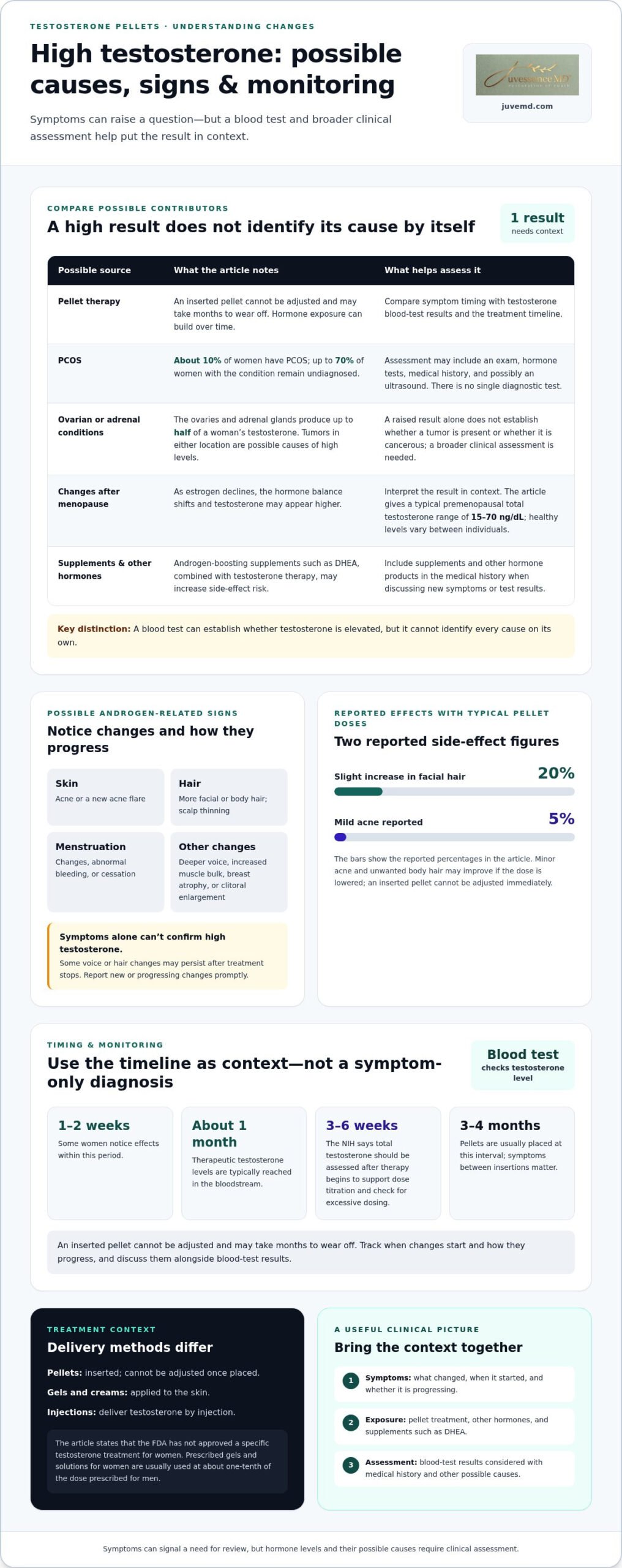
Pellet therapy can cause androgen-related changes when testosterone levels rise too high. Signs of too much testosterone in women on pellets may include acne, increased facial or body hair, scalp hair thinning, menstrual changes, a deeper voice, or clitoral enlargement. A blood test is needed to determine whether testosterone levels are high.
It’s understandable to feel concerned when a change appears after treatment. Symptoms alone can’t confirm that a pellet dose is responsible. Some effects, particularly changes to the voice or hair, may persist even after treatment stops. Because an inserted pellet can’t be adjusted and may take months to wear off, report new or progressing changes promptly.
This article explains which symptoms may signal excess testosterone, what other factors can raise levels, and how blood tests and treatment monitoring help guide care. It also covers why pellet therapy requires careful consideration and what to discuss with a healthcare provider if you notice changes.
Key Takeaways
- Acne, increased facial or body hair, scalp hair thinning, menstrual changes, and voice changes can be signs of excess testosterone, but symptoms alone can’t confirm high levels.
- PCOS is one possible cause of high testosterone; ovarian or adrenal conditions may also contribute, so identifying the cause matters.
- Voice deepening and unwanted hair growth may persist after treatment stops, making emerging changes important to discuss promptly.
- According to the National Institutes of Health, total testosterone levels should be assessed 3-6 weeks after initiating therapy to support dose titration and check for excessive dosing.
- JuveMD’s Bioidentical Pellet Hormone Therapy offers a setting to discuss hormone treatment, symptoms, and monitoring as part of a personalized care conversation.
Testosterone Pellets for Women: Are They Safe?
Testosterone pellets can cause androgen-related effects, especially when blood levels exceed the female physiologic range. Recognizing changes and monitoring treatment are important for safety, because an inserted pellet can’t be adjusted.
Signs of Elevated Testosterone
Elevated testosterone can cause physical changes associated with androgen exposure, including acne, unwanted hair growth, and scalp hair thinning. More pronounced changes may include a deeper voice, increased muscle bulk, breast atrophy, or clitoral enlargement.
These effects may signal that testosterone levels are above the intended range. Abnormal bleeding or a cessation of menstruation can also occur during therapy. Symptoms alone can’t establish whether levels are high, so a testosterone blood test is needed to assess them.
Some changes are easy to miss at first. A gradual increase in coarse facial hair or a widening area of scalp thinning, for example, may become noticeable over time. Track when changes start and how they progress. That timeline can help guide a discussion about hormone levels and treatment.
Facial Hair and Acne Effects
Facial hair and acne are recognized effects of testosterone therapy in women. With typical pellet doses, 20% of women may experience a slight increase in facial hair, while 5% may report mild acne.
Minor acne and unwanted body hair are described as common side effects and may improve if the dose is lowered. Pellet dosing differs from a treatment that can be changed immediately: an inserted pellet can’t be adjusted and may take months to wear off.
Yes. Pellets can also be associated with scalp hair thinning and voice changes. Hair growth may affect the face or body, while voice deepening and clitoral enlargement are associated with testosterone levels above the female physiologic range. Report new or progressing changes, particularly because some voice or hair effects may persist after treatment stops.
Guidance and Symptom Timing
In the United States, the FDA has not approved a specific testosterone treatment for women. Pellets are one delivery method; gels and creams are applied to the skin, while injections deliver testosterone by injection. Prescribed gels and solutions for women are usually used at about one-tenth of the dose prescribed for men. Unlike those treatments, an inserted pellet can’t be adjusted.
Symptoms don’t follow one fixed timetable after insertion. Therapeutic testosterone levels are typically reached in the bloodstream one month after pellet placement, and some women notice effects within a week or two. Acne, facial hair, scalp hair thinning, or voice changes may emerge as hormone exposure builds. Track changes and discuss them alongside blood-test results.
For example, a new acne flare differs from a deeper voice in its potential persistence, but both can be relevant to treatment review. Testosterone pellets are usually placed every 3-4 months, making attention to symptoms between insertions important. Do not assume a change is harmless simply because it appears gradually.
PCOS and other causes of high testosterone
A high testosterone result after pellet treatment doesn’t automatically mean the pellet is the only cause. Polycystic ovary syndrome (PCOS), ovarian or adrenal tumors, hormone-balance changes after menopause, and androgen-boosting supplements may also be relevant. Identifying the likely cause helps distinguish treatment effects from a separate condition that needs assessment.
PCOS is a possible cause of elevated androgen levels, including testosterone. About 10 percent of women have PCOS, and up to 70% of women with the condition remain undiagnosed. Those figures show why a previous lack of diagnosis doesn’t rule it out when new symptoms or abnormal hormone results arise.
PCOS isn’t diagnosed with a single test. Assessment may include a physical exam, hormone tests, a review of medical history, and possibly an ultrasound. These steps provide a broader picture than one testosterone result alone. A clinician may consider the result alongside examination findings and medical history when assessing whether PCOS is a likely explanation.
The ovaries and adrenal glands produce up to half of a woman’s testosterone. Tumors in either location are also possible causes of high levels. A raised result alone doesn’t establish whether a tumor is present or whether it is cancerous; identifying the cause requires a broader clinical assessment. Hormone therapy alone won’t resolve many disorders or diseases that can raise testosterone.
Age and hormone balance can affect how results are interpreted. After menopause, testosterone may appear higher as estrogen declines and the balance shifts. A typical total testosterone range for premenopausal women is 15 to 70 ng/dL, but healthy levels vary between individuals. A result should therefore be interpreted in context, rather than treated as a diagnosis by itself.
Supplements can also affect the picture. Combining testosterone therapy with androgen-boosting supplements such as DHEA may increase the risk of side effects. If symptoms emerge during pellet treatment, note any supplements and other hormone products you use and include them in your medical history. This helps distinguish possible pellet effects from other sources of androgen exposure.
When high testosterone is suspected, a blood test can establish whether levels are elevated, but it can’t identify every cause on its own. A careful assessment considers symptom timing, pellet treatment, PCOS, ovarian or adrenal conditions, menopause-related changes, and supplements. This broader approach helps distinguish treatment effects from other possible explanations.
Potentially persistent voice and hair changes
Voice deepening and increased hair growth deserve particular attention during testosterone therapy. A lower voice can be associated with high testosterone, and hair growth on the face or body may persist after pellet treatment stops. These changes differ from temporary concerns such as a brief acne flare. If your voice sounds lower or coarse hairs appear in new areas, note when each change began.
Hair growth can occur on the face or body, including the chin, chest, or back. The pattern and progression are useful details to share with a healthcare provider. Note whether chin hair is becoming coarser, whether new areas are affected, and whether the change began after pellet insertion. These observations help describe symptoms, but they can’t establish testosterone levels.
Scalp hair changes can look different from facial or body hair growth. Testosterone therapy may be associated with scalp thinning, such as a widening part or less coverage across the scalp. Record where thinning appears and whether it changes over time. A healthcare provider can consider this history alongside hormone testing and treatment timing, rather than interpreting one observation in isolation.
Voice changes also warrant careful attention. A deeper voice is associated with testosterone levels above the female physiologic range, and voice deepening may persist after exposure ends. If your voice becomes noticeably lower, rougher, or less familiar, describe the change and when you first noticed it. Raise a new voice symptom promptly rather than waiting for several changes to appear together.
A practical step is to keep a dated symptom record between pellet insertions. Include changes such as new chin hair, increased chest hair, scalp thinning, or a change in your speaking voice. Note when the pellet was placed and when each symptom appeared. This timeline helps a clinician compare changes with treatment and test results, without relying on appearance alone.
If changes begin or progress, discuss them with the clinician managing your testosterone treatment. Mention supplements such as DHEA, since combining androgen-boosting supplements with testosterone therapy may increase the risk of side effects. Ask how hormone levels will be assessed and how the findings may affect your treatment plan. Because an inserted pellet can’t be adjusted, reporting changes early gives the care team useful information for monitoring its effects.
Safety and long-term evidence
Testosterone treatment for women has important evidence limitations. The FDA has not approved a specific testosterone treatment for women in the United States, and long-term safety data remain limited. It’s important to distinguish short-term effects from risks associated with prolonged exposure. A treatment plan should account for symptoms, hormone results, health history, and how long testosterone has been used.
One safety concern is an increase in red blood cell counts. Testosterone pellets may raise these counts, making blood thicker and increasing clot risk. A full blood count can help identify this effect during treatment. An elevated red blood cell count matters even if a patient feels well. Monitoring can reveal a potential safety concern that symptoms alone might not bring to attention.
Some health situations call for avoiding testosterone therapy. These include pregnancy or breastfeeding, active liver disease, hormone-sensitive conditions, uncontrolled hyperlipidemia, and severe acne. Pregnancy is especially important because excess testosterone can cause miscarriage or other serious complications. Share these conditions and relevant health changes before treatment begins, so a risk assessment considers more than current hormone levels.
Treatment duration also deserves attention. Long-term safety data for testosterone therapy in women are lacking, and extending treatment beyond two years is advised against because of potential risks and limited research. This doesn’t mean a shorter course is risk-free. It underscores why continued treatment needs a clear clinical rationale and ongoing review, rather than automatic pellet replacement.
Menopause and changes in estrogen can complicate the interpretation of hormone results. After menopause, testosterone may appear higher as estrogen declines and the balance shifts. A single result needs context, including symptoms and treatment timing. Female hormone levels also vary, so a number alone can’t fully describe an individual’s safety profile or explain every change in body hair, skin, or energy.
Breast cancer risk and testosterone implants are also discussed in safety literature, but limited long-term evidence means that one finding can’t settle every question about prolonged use. Keep a record of pellet dates, blood tests, and new symptoms, such as unusual bleeding or worsening acne. Bring that timeline to treatment reviews. It may help relate possible side effects to hormone exposure and support an informed discussion about continuing therapy.
Testosterone monitoring and dose adjustment
Monitoring combines blood tests, symptoms, treatment timing, and health history. A testosterone result helps show hormone exposure, while symptoms such as acne or unwanted hair growth add context. Neither replaces the other. For example, a clinician needs to consider when a pellet was inserted and whether other hormone products or supplements are being used when interpreting new symptoms.
According to the National Institutes of Health, total testosterone levels should be assessed 3-6 weeks after initiating therapy to enable titration and ensure the patient is not applying an excessive dose. This timing helps evaluate early exposure and guide treatment decisions. With pellets, however, dose changes differ from adjustments to a product applied regularly: an inserted pellet cannot be changed, and its effects may take months to wear off.
Therapeutic testosterone levels are typically reached in the bloodstream one month after pellet placement. A blood test around the recommended assessment window can help identify levels above the intended range. After pellet treatment, clinicians may also check total and free testosterone and a full blood count. The blood count matters because testosterone can raise red blood cell levels.
Results need context. A typical total testosterone range for premenopausal women is 15 to 70 ng/dL, and healthy levels vary between individuals. A level above roughly 70 ng/dL is a reason to ask why the treatment plan targets it. In the United States, testosterone prescribed to women uses a small dose based on a treatment approved for men. No single lab value explains every symptom or determines the right dose by itself.
Follow-up continues after the first test. Testosterone levels are typically reassessed every six months during therapy. Before each review, record pellet dates, lab results, and changes in libido, mood, acne, or hair growth. This timeline helps connect symptoms with treatment exposure. If testosterone is being used for low libido, the response matters too; clinicians may suggest stopping therapy if there’s no improvement after about six months.
As a pellet wears off, testosterone levels can fall steeply. Some women report fatigue, low mood, and returning symptoms before their next insertion. These changes don’t automatically mean the dose should increase. Review them alongside current hormone levels, treatment goals, and side effects. A focused monitoring plan helps patients discuss whether to continue, adjust future dosing, or stop treatment.
JuveMD: Bioidentical Pellet Hormone Therapy
JuveMD’s Bioidentical Pellet Hormone Therapy gives women a place to discuss pellet treatment and hormone-related concerns. If you notice changes after insertion, bring a clear timeline of symptoms and treatment dates to your conversation. This can help organize questions about hormone levels, possible side effects, and what follow-up may be relevant. If high testosterone could have another cause, such as PCOS, that possibility also matters when considering the next step. Treatment decisions are best informed by your symptoms, history, and test results, rather than one change alone.
If you’re considering pellet therapy or have questions about changes after insertion, contact JuveMD to discuss your concerns and treatment goals. Visit juvemd.com to learn more.
Choose a Clear Next Step for Your Hormone Care
Changes after treatment can leave you unsure whether to wait, seek testing, or revisit your plan. Use that uncertainty to prepare for your next conversation: note what changed, when it began, and what questions you want answered. Signs of too much testosterone in women on pellets are a starting point for discussion, not a diagnosis. Your symptoms and goals deserve careful attention.
JuveMD offers Bioidentical Pellet Hormone Therapy, injectables, and skin treatments. If you’re considering hormone care or want to discuss concerns about your current treatment, a focused conversation can help clarify which questions and next steps matter to you. You can contact JuveMD to discuss your concerns and share what you’ve noticed.
Taking an informed next step can make hormone care feel more manageable. Bring your questions, speak openly about changes, and give yourself time to make a thoughtful decision.
Frequently Asked Questions
Is testosterone ever appropriate for women?
Yes, testosterone may be considered for some menopausal women with low libido that hasn’t improved with other treatment. Evidence supporting testosterone therapy in women is adequate only for hypoactive sexual desire disorder (HSDD), a diagnosis involving persistent low sexual desire. In the United States, the FDA hasn’t approved a specific testosterone treatment for women. Before therapy begins, a clinician considers the reason for treatment, relevant health history, and monitoring plan.
What are signs of too much testosterone in women using testosterone pellets?
Signs of too much testosterone in women on pellets may include new acne, increased facial or body hair, scalp hair thinning, menstrual changes, or abnormal bleeding. More pronounced effects may include a deeper voice, increased muscle bulk, or clitoral enlargement. Note when a symptom began and whether it’s changing, then share that timeline with your clinician. Symptoms may raise concern, but a testosterone blood test is needed to assess hormone levels.
What testosterone levels are considered too high for women on pellets?
There isn’t one result that determines excess for every woman, because healthy levels vary by person and test results need clinical context. A typical total testosterone range for premenopausal women is 15 to 70 ng/dL. If a treatment plan targets a level above roughly 70 ng/dL, ask about the reason for that target. Interpretation also considers symptoms, treatment timing, and whether other conditions could affect testosterone.
How are testosterone levels monitored after pellet therapy?
Monitoring uses blood tests alongside symptom changes and treatment timing. According to the National Institutes of Health, total testosterone should be assessed 3-6 weeks after initiating therapy to support dose titration and check for excessive dosing. After pellet placement, clinicians may also assess total and free testosterone and a full blood count. During ongoing therapy, testosterone levels are typically reassessed every six months. Keep your pellet date and test results together for review.
What are the risks and side effects of testosterone pellets in women?
Possible side effects include acne, unwanted hair growth, scalp hair thinning, menstrual changes, and abnormal bleeding. Testosterone can also raise red blood cell counts, which may thicken blood and increase clot risk. Pregnancy and breastfeeding, active liver disease, hormone-sensitive conditions, uncontrolled hyperlipidemia, and severe acne are reasons to avoid testosterone therapy. Long-term safety evidence for women remains limited, so treatment reviews should consider both symptoms and relevant health history.
Are testosterone-related changes from pellets reversible, and how long can they last?
Some effects may improve as testosterone levels return to the female physiologic range. Acne and raised red blood cell counts usually improve once levels normalize. Facial or body hair growth can persist after treatment stops, and voice changes need prompt discussion because they may be difficult to reverse. An inserted pellet can’t be adjusted and may take months to wear off. How changes progress depends on the effect and ongoing hormone exposure.
What should women do if they develop signs of excess testosterone from pellets?
Write down each new symptom, when it started, and the date of your most recent pellet insertion. Share that timeline, your supplements, and other hormone products with the clinician managing treatment. Blood testing can assess testosterone levels; a full blood count can help evaluate red blood cell changes. Don’t try to adjust an inserted pellet yourself. This FAQ is educational, not medical advice. Consult your own healthcare provider about symptoms or treatment changes.