
The convenience of hormone pellets comes with a trade-off: once inserted, the dose can’t be adjusted, and the pellets generally remain in place until the body absorbs them. The risks of long-term hormone pellet therapy can include insertion-site infection or pellet migration, hormone-related side effects, and broader risks such as blood clots, stroke, or gallbladder disease. Research is also insufficient to verify the long-term safety of pellets.
For menopause symptoms, it’s understandable to value a treatment that releases hormones continuously for months. That convenience may appeal, but it must be weighed against a fixed dose and the possibility that unwanted effects may continue while the pellets dissolve.
This article explains potential long-term health risks, insertion complications, and possible benefits and drawbacks of pellets for menopause. It also clarifies how compounded bioidentical hormones are regulated, helping you understand the trade-offs and the questions to consider when evaluating hormone therapy.
Key Takeaways
- Learn which insertion-site changes may be temporary and which symptoms can signal a complication that needs prompt medical attention.
- Understand the range of side effects reported with estradiol and testosterone pellets, including effects that may go beyond the insertion site.
- Weigh the convenience of continuous hormone release against a key limitation: an implanted dose can’t be readily adjusted if it causes unwanted effects.
- See how compounded pellets differ from FDA-approved hormone products and what that means for oversight and safety information.
- Explore how pellet therapy fits into the broader picture of bioidentical hormones and menopause treatment, including the trade-offs to consider.
Insertion complications, including infection and migration
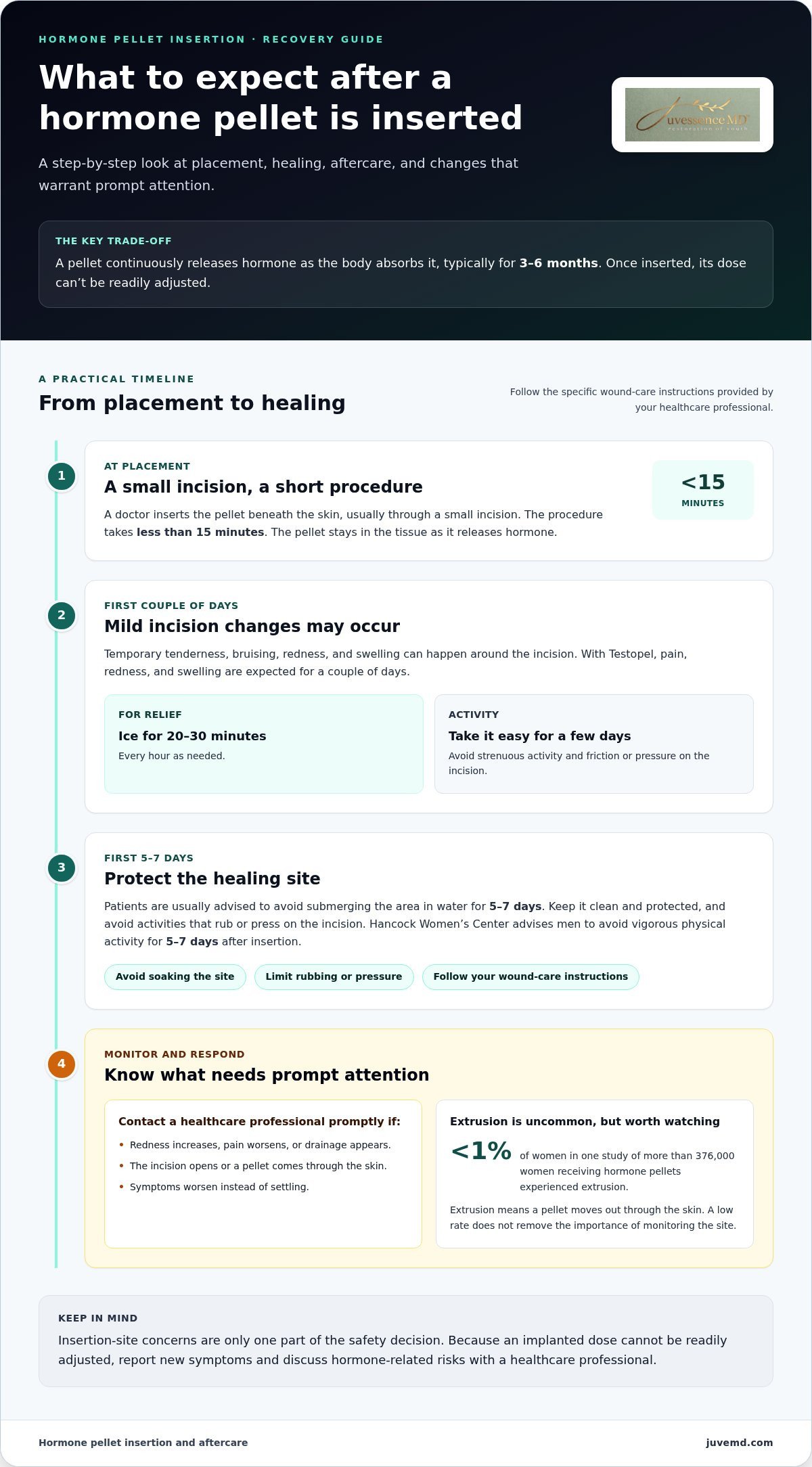
A hormone pellet is inserted beneath the skin by a doctor, usually through a small incision. The procedure takes less than 15 minutes. After placement, the pellet continuously releases hormone as the body absorbs it, typically for 3-6 months. Unlike creams applied to the skin, an implanted pellet stays in the tissue. Its position and the healing incision are central to understanding insertion-related complications.
Temporary tenderness, bruising, redness, and swelling can occur around the incision. With Testopel implantation, pain, redness, and swelling are expected for a couple of days. Ice may be applied for 20 to 30 minutes every hour as needed for relief. Patients may need to take it easy for a few days. Increasing redness, worsening pain, or drainage can be symptoms of infection, which is a possible complication of insertion.
Other complications include nerve injury, discomfort, pellet migration, and extrusion, when a pellet moves out through the skin. Hancock Women’s Center lists infection and nerve injury as possible insertion complications. In one study of more than 376,000 women receiving hormone pellets, extrusion occurred in less than 1% of women. A low rate does not remove the importance of monitoring the incision, especially if a pellet becomes visible or the site opens.
Aftercare helps protect the insertion site while it heals. Patients are usually advised to avoid submerging the area in water for 5-7 days. Avoid strenuous exercise and activities that rub or press on the incision for a few days. Hancock Women’s Center advises men to avoid vigorous physical activity for 5-7 days after insertion. Follow the specific wound-care instructions provided after the procedure, and keep the area clean and protected.
Contact a healthcare professional promptly if the incision opens, a pellet comes through the skin, or symptoms worsen instead of settling. Infection and pellet migration are local procedure concerns, distinct from hormone-related risks such as concerns about breast cancer with extended therapy. A pellet cannot be adjusted like a cream once inserted, so report new symptoms. Insertion risks are only one part of the safety decision, alongside hormone dose and treatment duration.
What Are the Most Common Side Effects When the Pellets Are First Inserted?
After insertion at JuveMD, hormone effects develop gradually rather than all at once. The full effect of hormone therapy typically takes about three months to be felt, while pellets may release hormones for 3-6 months. This timing matters: an early symptom may arise before the treatment’s full effects are apparent, and the dose remains in place as the hormone is released.
Reported side effects vary by hormone and person. Women using estradiol or testosterone pellets have reported acne and changes in hair patterns. Other reported effects include unwanted weight gain, mood swings, and anxiety. Estradiol and/or testosterone pellet therapy has also been associated with abnormal uterine bleeding and subsequent hysterectomy. Track symptoms, especially new changes in bleeding patterns or mood.
One report associated estradiol and/or testosterone pellet therapy with as much as six times the number of side effects. That figure describes an association, not a prediction for any individual. A doctor considers the hormone, dose, symptoms, and medical history when discussing treatment options. Record new or worsening symptoms and when they occur, then share that information during follow-up.
Who should avoid hormone pellet therapy or use it only with caution? Hormone therapy may not be safe for people with blood-clotting disorders, cardiovascular disease, breast cancer, or a history of stroke. These conditions call for a careful discussion of potential benefits and risks with a healthcare provider before treatment.
What monitoring and follow-up tests are recommended during long-term hormone pellet therapy? Healthcare providers may use blood, urine, or saliva tests to check hormone levels during treatment. For women, the FDA recommends against using hormone levels to guide dosing because normal levels fluctuate from day to day. Symptoms and clinical context also matter.
Potential effects can involve more than skin, hair, or mood. Hormone therapy can increase the risk of blood clots, stroke, and gallbladder disease. Risks of heart disease and breast cancer may increase for older people or those using hormone therapy for an extended period. Ongoing review of health history and symptoms matters throughout treatment, not just at insertion.
Testosterone pellets also require attention to uncommon but urgent symptoms. A painful erection, or one lasting longer than 4 hours, needs emergency medical attention because it may be priapism. A prolonged erection caused by Testopel can lead to permanent penile damage. Recognizing this symptom promptly is different from tracking gradual effects, such as acne or mood changes, and requires immediate action.
Pros & Cons of Hormone Pellets For Menopause: Are They Worth It?
For menopause, pellets may offer steady hormone delivery, but trade flexibility for convenience. The key drawback is that patients can’t readily adjust the dose after insertion.
Limits on Dose Adjustment
A pellet dose is fixed after insertion, so it can’t be adjusted as symptoms change. That matters if relief is inadequate or unwanted effects develop: unlike a treatment that can be changed or paused, the implanted dose continues releasing hormone. The FDA recommends against using hormone levels to guide women’s hormone therapy dosing because normal levels fluctuate from day to day.
Overdose Risk
A dose that is too high can cause prolonged unwanted effects because the pellet continues releasing hormone. The dose can’t be adjusted after insertion without surgical removal, and the pellet generally remains until the body absorbs it. If a dose is too high, its effects may take 3-5 months to taper off. This delay can make early symptom recognition important.
Difficulty Discontinuing Pellet Therapy
Stopping treatment isn’t as simple as choosing not to take another dose. Once inserted, pellets generally can’t be removed without reopening the incision and trying to locate them. Testosterone pellets remain until the body fully absorbs them. If symptoms change or bleeding develops, the implanted dose can continue to have effects while it dissolves.
That fixed-dose trade-off shapes the menopause decision. Patients may value hormone release over time, but the same feature limits how quickly treatment can change. Discussing symptom goals, past responses to hormones, and relevant health history can help determine whether that trade-off suits the situation.
Hormone therapy is generally managed with the lowest dose that relieves symptoms for the shortest amount of time possible. This principle is especially important with pellets because the dose cannot be reduced after insertion. A treatment plan should consider expected relief and the possibility of unwanted effects while the pellet remains active.
Hormone levels alone don’t provide a simple signal for adjusting women’s doses. FDA guidance reflects normal day-to-day fluctuations, so clinicians also consider symptoms and clinical context. For example, persistent symptoms and new side effects can point in different directions, making a broader review more useful than reacting to one lab result.
Ultimately, weighing pellets means considering both their potential convenience and the limits on control. If you’re deciding whether they’re worth it, consider one practical question: if the dose increases symptoms or fails to provide relief, how comfortable are you with waiting for its effects to taper?
FDA approval and regulation of compounded pellets
“Bioidentical” describes hormones designed to be chemically identical to hormones made by the body. The term alone doesn’t tell you whether a particular pellet is compounded or FDA-approved. For menopause care, that distinction matters: a product’s preparation and regulatory status affect the information provided with treatment and how adverse effects are reported.
Compounded hormone pellets are prepared by compounding pharmacies. Those pharmacies aren’t required to report hormone drug side effects to the FDA or provide medication paperwork. Without that paperwork, patients may have less written product information to review, including details about the specific preparation implanted and its reported risks.
That reporting gap is important because safety information depends partly on adverse events being documented. In 2018, the FDA investigated a major hormone pellet manufacturer and identified more than 4,000 previously unreported adverse events. The finding underscores why reports and accessible medication information matter when evaluating a clinical treatment, including a bioidentical pellet.
Compounded and FDA-approved hormones don’t have the same approval status simply because both contain hormones. The word “bioidentical” doesn’t settle the question. When comparing a compounded pellet with an FDA-approved hormone product, distinguish the product’s identity from its regulatory category rather than treating the descriptions as interchangeable.
The distinction also shapes safety discussions. An implanted pellet releases hormones over time, but its dose cannot be adjusted after insertion. If an unwanted effect occurs, knowing which preparation was used can make the clinical conversation more specific. Consider symptoms such as abnormal bleeding, acne, or changes in hair patterns alongside the product and dose.
For a useful review, keep treatment details together: the product or preparation name, hormone type, dose, insertion date, and any new symptoms. This record can clarify whether a concern began after implantation and support a discussion of next steps. Weight changes or mood shifts, for example, are more informative when you record their timing rather than recall them generally.
Regulatory status doesn’t answer every question about whether hormone therapy suits a particular person. Menopause symptoms, health history, treatment goals, and the limits of a fixed pellet dose still matter. Understanding the difference between compounded and FDA-approved products provides a clearer basis for weighing potential benefits and safety concerns, without assuming that “bioidentical” alone guarantees a particular level of oversight.
Bioidentical hormones and hormone replacement therapy
“Bioidentical” means a hormone has the same molecular structure as a hormone produced by the body. It describes the hormone, not the delivery method or whether the product is compounded. Pellets are one form of hormone replacement therapy, alongside other delivery options. The label alone doesn’t explain a treatment’s risks or suitability.
Hormone pellets are implanted under the skin and release hormones continuously for 3-6 months. Most people require two to four pellet insertions per year. That sustained delivery can be convenient, but the dose can’t be adjusted after insertion. The treatment’s appeal and its main limitation therefore come from the same feature: hormone release continues between appointments.
Compounded bioidentical hormones are used by an estimated 1 to 2.5 million women in the United States over age 40. That figure describes use, not proof that every formulation or delivery method is safe for long-term use. Research is insufficient to verify whether hormone pellets are safe for long-term use, so the evidence gap matters when considering ongoing replacement therapy.
Hormone replacement can involve different delivery routes. Pellets bypass the liver, while oral hormone pills undergo first-pass liver metabolism. That difference describes how each route is processed; it doesn’t mean one is safer for every patient. The hormone type, symptoms, medical history, and treatment duration all shape the clinical discussion.
For menopause, timing can affect the balance of potential benefits and harms. Women who begin hormone replacement therapy within 10 years of their last period may have lower risks of heart disease and bone loss. Hormone therapy can increase risks of blood clots, stroke, and gallbladder disease. Risks of heart disease and breast cancer may also increase for older people or those using therapy for an extended period.
Duration deserves particular attention with a pellet. Hormone continues to be released after implantation, and patients can’t simply pause delivery if their needs change. Hormone therapy is generally managed with the lowest dose that relieves symptoms for the shortest amount of time possible. For women, the FDA recommends against using hormone levels to guide dosing because levels fluctuate from day to day.
Hormone replacement therapy is not one uniform treatment. A route that suits one person’s goals may be less practical for someone who values quick dose changes. The clear takeaway: weigh the hoped-for relief against delivery method, duration, evidence, and health history, rather than treating “bioidentical” as a safety guarantee. Explore hormone replacement options as you consider which questions to discuss about treatment.
JuveMD: Bioidentical Pellet Hormone Therapy
JuveMD offers Bioidentical Pellet Hormone Therapy for people considering pellet-based treatment. If you’re weighing potential symptom relief against a fixed dose, insertion concerns, and uncertainty about long-term safety, a focused conversation about hormone therapy can help clarify the trade-offs and your treatment goals.
Bring questions about symptoms, previous hormone treatments, and concerns about side effects or compounded products. These details can guide an informed discussion about whether pellet therapy aligns with your needs. JuveMD also offers injectables, skin treatments, and weight-loss services.
Contact JuveMD to discuss your hormone therapy questions.
Make Your Next Hormone Therapy Decision With Clarity
Choosing a hormone treatment also means deciding how care fits your life. Before taking the next step, identify the changes you hope to address, the outcomes that matter most, and how comfortable you are with a treatment plan that may be difficult to revise once underway. These priorities can make a clinical discussion more focused and personal.
Understanding the risks of long-term hormone pellet therapy is one part of the decision. Your next conversation can connect those concerns with your health history, treatment preferences, and questions about alternatives. Raise anything you’re unsure about, including what would help you feel informed and comfortable moving forward.
JuveMD offers Bioidentical Pellet Hormone Therapy and can discuss how it relates to your hormone health goals. Contact JuveMD to discuss pellet therapy and take a thoughtful next step toward care that reflects your priorities.
Frequently Asked Questions
Are hormone pellets safe for long-term use?
Long-term safety of hormone pellets hasn’t been verified by sufficient research. That uncertainty makes it important to consider the purpose of treatment, symptoms, personal health history, and how long therapy is planned. Keep a record of changes after each insertion, including when symptoms begin and how they affect daily life. This information can help structure follow-up discussions with a healthcare provider.
Can hormone pellets cause weight gain or mood changes?
Yes. People using hormone pellets have reported unwanted weight gain, mood swings, and anxiety. To discuss a possible treatment effect, note when it began, whether it is changing, and whether other symptoms appeared at the same time. Share that pattern during follow-up rather than assuming every change has the same cause. This educational information can’t replace advice from your own healthcare provider.
What are the long-term risks of hormone pellet therapy?
Long-term hormone pellet therapy may carry potential health risks, so its safety should be discussed with a healthcare provider. Heart disease and breast cancer risks may increase for older people or those using hormone therapy for an extended period. The balance depends on health history, age, treatment duration, and the hormone used, so discuss these factors throughout care.
What side effects can occur with estrogen or testosterone hormone pellets?
Reported effects include acne, changes in hair patterns, weight gain, mood swings, and anxiety. Estradiol and/or testosterone pellet therapy has also been associated with abnormal uterine bleeding and subsequent hysterectomy. With testosterone, a painful erection or one lasting longer than four hours requires emergency medical attention because it may be priapism. Record new symptoms and their timing, and seek urgent care for that erection symptom.
Does hormone pellet therapy increase the risk of blood clots, heart disease, stroke, or cancer?
Hormone therapy can increase the risk of blood clots, stroke, and gallbladder disease. Risks of heart disease and breast cancer may increase for older people or those using hormone therapy for an extended period. These risks aren’t identical for everyone. Health history, age, hormone type, and treatment duration are relevant when discussing whether potential benefits outweigh risks.
What evidence supports the safety and effectiveness of hormone pellets for menopause symptoms?
Pellets have been used for hormone replacement in men and women since the late 1930s, but long history of use does not establish long-term safety. Research is insufficient to verify whether pellets are safe for long-term use. For menopause symptoms, treatment decisions should consider the symptom being addressed, personal health factors, and the limits of available evidence. Consult your healthcare provider before making health-related changes.
How do hormone pellets compare with FDA-approved hormone patches, gels, pills, and injections?
Delivery method affects how hormone therapy is given and managed. Pellets are implanted and release hormones over time; oral hormone pills undergo first-pass liver metabolism, while pellets bypass the liver. The research available here doesn’t establish that pellets are safer or more effective than patches, gels, or injections. With your healthcare provider, compare how each option fits your symptom goals, desired dose flexibility, and personal health considerations.
Are hormone pellets FDA-approved, and what US rules apply to compounded hormone pellets?
“Bioidentical” describes a hormone’s molecular structure; it doesn’t establish FDA approval or show whether a pellet is compounded. Compounding pharmacies aren’t required to report hormone drug side effects to the FDA or provide medication paperwork. Those limits affect adverse-event reporting and the product information patients receive. Ask your healthcare provider to explain the preparation used and its regulatory status. This FAQ is educational, not medical advice.