
What if maintaining weight loss after stopping semaglutide is less about willpower and more about planning for changing appetite signals? As the medication’s effects fade, hunger and feelings of fullness may shift, making familiar routines feel different. Some weight regain can happen, but it isn’t a personal failure or a guaranteed outcome.
If you’re worried about the scale rising or unsure what to expect after treatment, that concern is understandable. Advice about stopping or tapering can be conflicting, and there’s no single approach that fits everyone. Discuss medication changes with the clinician who prescribes your treatment.
This guide explains why appetite and weight may change, which sustainable habits can support maintenance, and how to build a realistic plan before and after a treatment change. You’ll also learn what to track and when to seek clinical support, so you can respond to changes with informed next steps rather than blame or guesswork.
Key Takeaways
- Weight changes after treatment aren’t a measure of willpower. Treat maintenance as an ongoing health process, not a promise to hold one exact number on the scale.
- Appetite, fullness, and eating patterns may shift after semaglutide, though each person’s experience is different.
- For maintaining weight loss after stopping semaglutide, build practical routines and consider what clinical support could fit your needs.
- Make medication decisions with your prescribing clinician, then observe weight trends and wellbeing without expecting daily perfection.
- Discuss ongoing regain, distress, medication concerns, or other health changes with a clinician to review your goals and next steps.
Why weight can return after stopping semaglutide, and what that does not mean
Weight changes after treatment don’t mean you failed. Body weight is influenced by biology, environment, health, and daily routines, so maintenance is a longer-term health process, not a promise to hold one exact number on the scale. A gradual change deserves attention and a thoughtful response, not self-blame.
What research says about weight regain after treatment
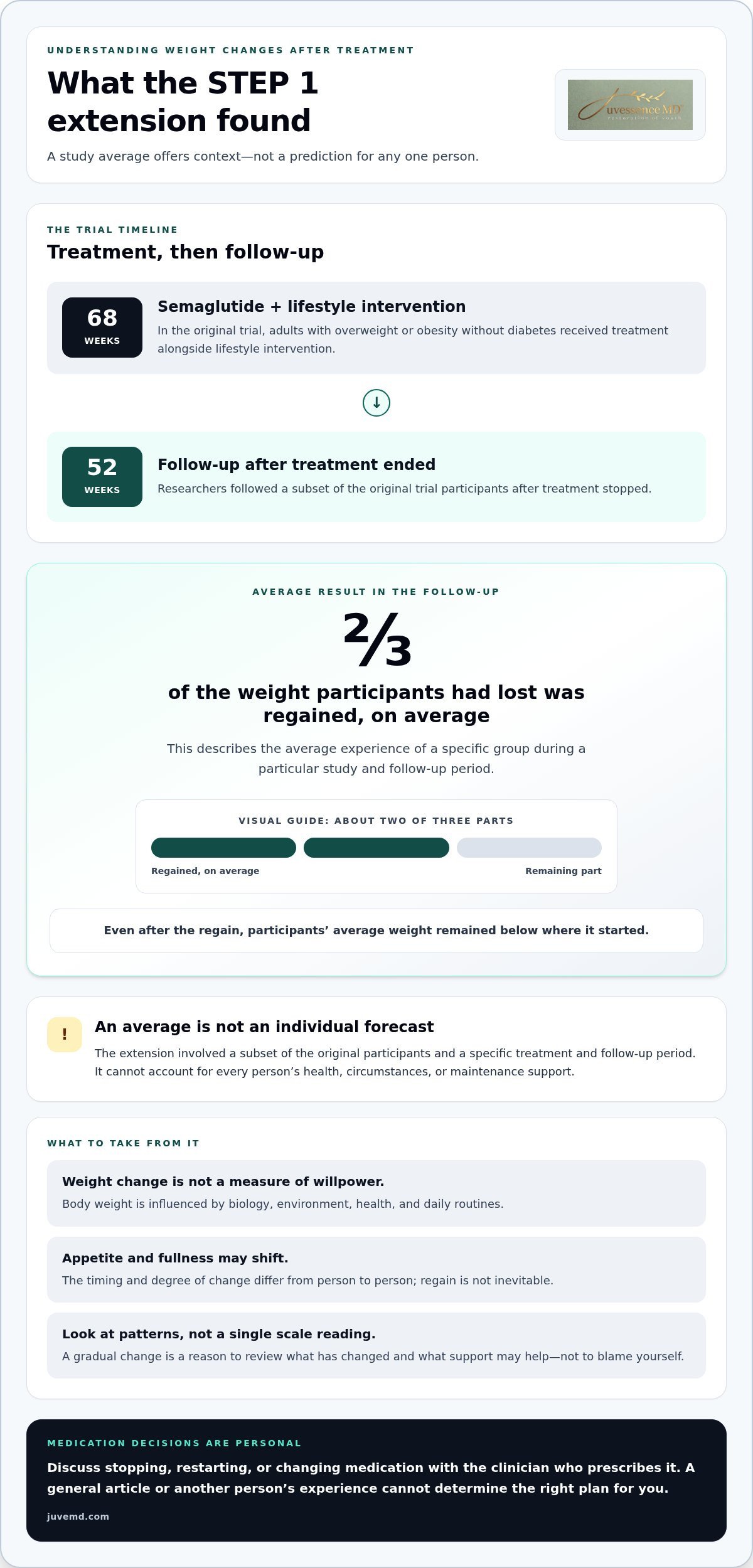
The STEP 1 trial extension offers one specific example. In the original trial, adults with overweight or obesity without diabetes received semaglutide alongside lifestyle intervention for 68 weeks. Researchers then followed a subset of participants for 52 weeks after treatment ended. On average, participants regained about two-thirds of the weight they had lost during treatment, while their average weight remained below where it started.
That result describes the average experience of a specific group in a clinical trial. It doesn’t predict what will happen to you. The extension involved a subset of the original participants and a particular treatment and follow-up period, so it can’t account for every person’s health, circumstances, or maintenance support.
Research can describe average weight changes among studied groups, but it can’t predict whether or how much an individual will regain after stopping semaglutide.
Why regain is not a personal failure
Obesity is a chronic, multifactorial condition shaped by more than individual choices. Semaglutide acts on GLP-1 receptors involved in appetite and blood-sugar regulation; an accessible overview of semaglutide’s effects and uses can help explain its role. While taking the medication, some people find appetite or eating patterns easier to manage. After stopping, that support changes, and hunger or fullness may feel different. The degree and timing vary.
A shift in appetite is not proof that someone lacks discipline, and weight regain isn’t inevitable. It may be a signal to review what has changed and what support could help. Weight can also fluctuate for reasons unrelated to treatment, so a single reading on the scale doesn’t define a trend.
Some appetite changes may occur as treatment ends, but symptoms that are severe, persistent, distressing, or accompanied by other health changes warrant individualized medical advice. If you’re concerned about symptoms, weight changes, or medication decisions, discuss them with the clinician who prescribed your treatment. Don’t change or restart medication based on a general article or someone else’s experience.
For maintaining weight loss after stopping semaglutide, start by treating maintenance as an evolving plan. Focus on your overall pattern and wellbeing, then adjust your support as your needs change rather than judging progress by one number.
How appetite and fullness may change when semaglutide is stopped
Appetite doesn’t follow the same pattern for everyone during or after semaglutide treatment. Some people notice hunger returning or fullness lasting for less time after stopping; others experience a gradual or less noticeable shift. Understanding the medication’s role can help you observe changes without assuming one response is inevitable.
While it’s being used, semaglutide activates GLP-1 receptors that help regulate appetite, fullness, digestion, and blood sugar. Those effects can influence eating patterns, but they don’t guarantee the same experience or result for every person.
What semaglutide changes during treatment
GLP-1 is a hormone involved in signals between the gut and brain. Semaglutide mimics some of its actions. It can slow how quickly food leaves the stomach and affect appetite-related signaling, which may help a person feel full sooner or for longer. The degree of these effects varies, and changes to fullness or digestion aren’t proof that the body’s metabolism has been permanently reset.
Semaglutide is also used in different treatment contexts, including blood-sugar management and weight management. The reason it was prescribed matters, so consider treatment decisions in light of your individual health and discuss them with the prescribing clinician.
What to monitor during a treatment change
Keep observations simple and useful. Note whether hunger is changing, whether meals feel satisfying, and whether your usual eating routine has become harder to follow. If you track weight, look at the pattern over time rather than treating each measurement as a verdict. Tracking is optional; choose an approach that supports your wellbeing rather than increasing stress.
A brief note on your phone or calendar can help you describe changes clearly at an appointment. Record when a change began, how often it occurs, and whether it affects meals, hydration, daily activities, or mood.
Appetite may vary as treatment changes, but it can be difficult to know what’s expected for you without considering your medical history and other medications. Contact your prescriber about medication questions and symptoms that are severe, persistent, or concerning. If you use semaglutide for diabetes, ask how a treatment change may affect your blood-sugar management. Don’t reduce, stop, restart, or alter medication timing based on general advice or another person’s experience.
Noticing appetite shifts early can help you and your clinician decide whether your routines or care plan need review. For additional weight-management support in Las Vegas, JuveMD offers weight-loss programs as part of a broader conversation about your goals and ongoing needs. This support complements, rather than replaces, guidance from the clinician managing your medication.
Comparing maintenance approaches after semaglutide: habits, clinical care, or both
There isn’t one maintenance strategy that suits everyone. Routines can offer structure but take consistent effort. Clinical follow-up can help put changing health needs in context. Combining both may provide complementary support, without guaranteeing a particular weight outcome. The right mix depends on your health, preferences, resources, and what feels manageable over time.
Behavior-focused routines
Potential value: Regular, satisfying meals, enjoyable movement, and steadier daily rhythms can support overall health and make eating patterns feel more manageable.
Practical demands: These habits take repetition and may need to adapt around work, caregiving, mobility, appetite, and access to food or exercise options.
When support may help: Consider extra guidance if routines feel difficult to sustain, conflict with medical needs, or become a source of stress.
Clinical support
Potential value: An individualized review can consider health history, changing goals, symptoms, and treatment questions in context.
Practical demands: Follow-up involves sharing relevant information and revisiting the plan as circumstances change.
When support may help: It can be useful if weight trends concern you, health needs shift, or you’re unsure how to approach a medication change. Medication decisions belong with you and the clinician who prescribes it.
A combined approach
Potential value: Pairing daily routines with clinical follow-up connects what you notice at home with broader health considerations.
Practical demands: It asks you to build habits while staying engaged with care, but the plan can be adjusted to fit your life.
When support may help: This may suit people who want help interpreting changes and shaping realistic routines, especially when needs evolve.
Everyday routines that can support maintenance
A supportive routine doesn’t need to be rigid. Aim for satisfying meals that fit your preferences, with a mix of foods that help you feel nourished. Choose movement you can return to consistently, whether that means walking, strength-building activity, or another option that fits your health. Sleep and regular daily rhythms matter, too. These behaviors can support wellbeing, but they can’t guarantee that weight won’t change.
Start with one manageable adjustment, such as planning a reliable lunch or taking a short walk when your schedule allows. Build from there. The most useful habits are those that fit your body, health, culture, and everyday responsibilities.
When clinical support may be part of the plan
Follow-up can help put weight patterns, appetite changes, and other health concerns into context. A clinician can discuss your goals and relevant health considerations with you. If you’re in Las Vegas, JuveMD offers weight-loss programs alongside care from the clinician managing your medication. Don’t adjust, stop, or restart medication without discussing it with your prescriber.
For maintaining weight loss after stopping semaglutide, think of habits and clinical care as options that can work separately or together, not competing choices. The goal is a realistic plan you can revisit as your needs change.
A practical step-by-step plan for maintaining weight loss after stopping semaglutide
A steady plan can make a treatment transition feel more manageable. Build it around your health and daily life, not a rigid target or a promise that weight will never change. Medication decisions should always be made with the clinician who prescribes it. Use the steps below as a flexible structure for planning, noticing changes, and deciding when to seek more support.
Prepare before a planned treatment change
Before changing medication, talk with your prescriber about your reasons, health considerations, and appropriate follow-up. Use that conversation to identify routines you can realistically continue, such as dependable meals, enjoyable movement, and a practical way to check in on progress. You might also choose non-scale indicators that matter to you, such as energy, mobility, or how consistently you can follow your daily routines.
- Plan with your prescriber. Discuss the treatment change and how you’ll raise questions or concerns. Don’t adjust medication on your own.
- Choose sustainable routines. Identify a few habits that fit your schedule and health, such as preparing a satisfying meal option or planning movement you enjoy.
- Decide what you’ll observe. Choose whether to track weight, appetite, routines, or wellbeing. Keep it simple and use a method that doesn’t add stress.
- Set a review point. Agree on when and how you’ll revisit your goals or discuss changes with a clinician.
Review progress and adjust without blame
Check in at a pace that feels useful, not burdensome. If you weigh yourself, consider the broader pattern instead of reacting to one reading. You can also note changes in appetite, eating routines, energy, or comfort with activity. These observations offer context for a follow-up conversation; they aren’t a scorecard.
If changes persist, feel concerning, or make your routines difficult to maintain, share what you’ve noticed with a qualified clinician. Bring a brief record of when the change began and how it affects daily life, if that feels helpful. Together, you can review your needs and consider appropriate next steps. A difficult stretch calls for support, not self-criticism.
Save this flexible checklist:
- I’ve discussed medication changes with my prescriber.
- I have a few realistic routines that fit my life.
- I know what changes I want to observe and what feels like too much tracking.
- I’ll seek clinical guidance if concerns persist or my health changes.
For additional guidance with your weight-management goals, explore JuveMD’s weight-loss programs in Las Vegas. A practical plan can evolve as your needs do.
When to seek personalized weight-management support in Las Vegas
Consider speaking with a clinician if weight continues to rise over time, changes feel distressing, medication questions are weighing on you, or another aspect of your health has shifted. You don’t need to wait for a particular number on the scale. Support can help you understand what may be contributing, review your goals, and decide what next steps are appropriate for your situation.
Guidance may also help when appetite changes or daily routines feel difficult to manage. A clinician can discuss these concerns in context rather than relying on a general rule or another person’s experience. If your questions relate to stopping, restarting, or changing medication, raise them with the clinician who prescribes it. Don’t make medication changes based on online advice.
What to bring to a weight-management conversation
A little preparation can make a visit more focused. Bring your medication history, including when treatment began or changed, if applicable. You can also share weight trends, appetite changes, eating or movement routines, and health concerns. You don’t need a perfect log; a few notes about what changed and when may be enough to guide the conversation.
- Medication context: List current and recent medications, and note any treatment changes.
- Patterns you’ve noticed: Describe appetite, weight trends, routines, and changes in wellbeing that matter to you.
- Your questions: Ask about follow-up, support options, and which changes deserve attention. Bring questions, not a self-prescribed medication plan.
How personalized support can fit into long-term care
Clinical decisions depend on individual medical history, health needs, and goals. A conversation can help clarify appropriate follow-up or weight-management support, while medication decisions remain between you and the prescribing clinician. JuveMD offers weight-loss programs in Las Vegas as one option for discussing your goals and next steps. These programs don’t guarantee a particular result or replace a prescriber’s guidance about medication.
For maintaining weight loss after stopping semaglutide, ongoing support may be useful when your needs change or your current routines no longer feel workable. The purpose of a visit is to discuss your experience and goals, not to judge your progress or assume there’s one solution for everyone.
If you’re in Las Vegas and would like to discuss your weight-management goals, explore JuveMD’s weight-loss programs. A conversation can help you consider an individualized path forward at a pace that feels right for you.
Take your next step with a plan that can adapt
Your next step doesn’t need to solve everything at once. Choose one question you want answered, such as what changes to watch for or how to make your routines more sustainable. A focused conversation can help turn uncertainty into a practical direction, while leaving room to revisit your goals as your health and circumstances evolve.
Maintaining weight loss after stopping semaglutide is a personal process, not a test you pass or fail. You deserve support that considers your experience and helps you make informed decisions, including taking medication questions to your prescribing clinician.
JuveMD is a medical clinic in Las Vegas that offers weight-loss programs. If you’re ready to explore support for your goals, discuss weight-loss programs with JuveMD. Start by sharing what matters most to you.
Frequently Asked Questions
Is weight regain inevitable after stopping semaglutide?
No. Some people regain weight, while others maintain some or all of their loss; individual outcomes vary. A change on the scale isn’t proof that treatment failed or that regain will continue indefinitely. Note whether the change is sustained and whether anything else has shifted, such as sleep, stress, health, or daily schedule. That context can help guide a useful conversation with a clinician.
Can tapering semaglutide prevent weight regain?
There’s no established tapering approach proven to prevent weight regain for everyone. Researchers and clinicians are considering different ways to manage treatment transitions, but that doesn’t make a particular schedule right for you. Don’t change doses or timing on your own. Ask the prescribing clinician whether a change is appropriate, what the plan would involve, and what follow-up is needed for your health and treatment goals.
How long after stopping semaglutide might appetite changes occur?
There isn’t a reliable timetable that applies to everyone. Appetite may shift gradually or become noticeable sooner, and some people may notice little change. If hunger feels different, record when you first noticed it and whether it affects meal timing, portion patterns, or daily comfort. Share persistent or distressing changes with your prescriber, especially if you’re also managing another condition or taking medications that affect appetite or blood sugar.
What should I do if I start regaining weight after stopping semaglutide?
Start by looking at the trend rather than responding to one weigh-in. If the change continues or causes concern, arrange a conversation with a clinician and bring relevant medication and health information. Avoid restarting medication or making other treatment changes without medical guidance. Las Vegas residents can also discuss broader goals through JuveMD’s weight-loss programs, while medication questions should go to the prescribing clinician.
Can lifestyle changes alone maintain weight loss after semaglutide?
They may support health and help some people maintain progress, but they can’t guarantee that weight will stay unchanged. Maintaining weight loss after stopping semaglutide may require considering appetite, health conditions, schedule, and available support. For example, a meal routine that works during a predictable workweek may need adjusting during travel or a change in caregiving responsibilities. Review what’s sustainable, not just what’s ideal.
Should I stop semaglutide if I have type 2 diabetes?
Don’t stop semaglutide without discussing it with the clinician managing your diabetes treatment. A medication change may affect your blood-sugar management, and your care team can consider your medical history, other medications, and monitoring plan. If you’re experiencing side effects or have concerns about continuing, explain what’s happening and ask about appropriate options. Follow your existing diabetes care instructions while waiting for individualized guidance.