
What if the exhaustion and brain fog you’ve been told to accept as part of aging are actually actionable clinical data points waiting for a solution? You likely know the feeling of waking up tired despite eight hours of sleep or watching the scale climb specifically in your midsection despite your best efforts. It’s deeply frustrating when your body feels like a stranger and your professional performance dips because of persistent mental cloudiness. You aren’t alone in feeling this way, and your symptoms are a valid signal that your internal chemistry is out of sync.
This guide helps you identify the subtle and overt hormone imbalance symptoms women experience in 2026, providing a comprehensive clinical checklist to validate your state and restore your vitality. We’ll explore the latest clinical standards for optimization rather than just normalization. You’ll learn the critical differences between synthetic and bioidentical solutions, while gaining a clear roadmap for your clinical evaluation and recovery. By shifting the focus from simply surviving to truly thriving, you can reclaim the energy and clarity you deserve.
Key Takeaways
- Learn to distinguish between normal aging and clinical hormone imbalance symptoms women face by using our structured, severity-based checklist.
- Understand the biological link between hormonal depletion and cognitive “brain fog,” explaining why diet and exercise often fail when your internal chemistry is out of sync.
- Identify the signs of the “Silent Decade” in your late 30s and why the timing of clinical intervention is critical for long-term metabolic health.
- Discover the essential lab markers required for a comprehensive evaluation, moving your health goals beyond “standard” ranges toward true physiological optimization.
- Explore the clinical advantages of Bioidentical Pellet Therapy as a sophisticated, steady-state solution for restoring balance and resolving persistent symptoms.
The Clinical Checklist: Identifying Hormone Imbalance Symptoms in Women
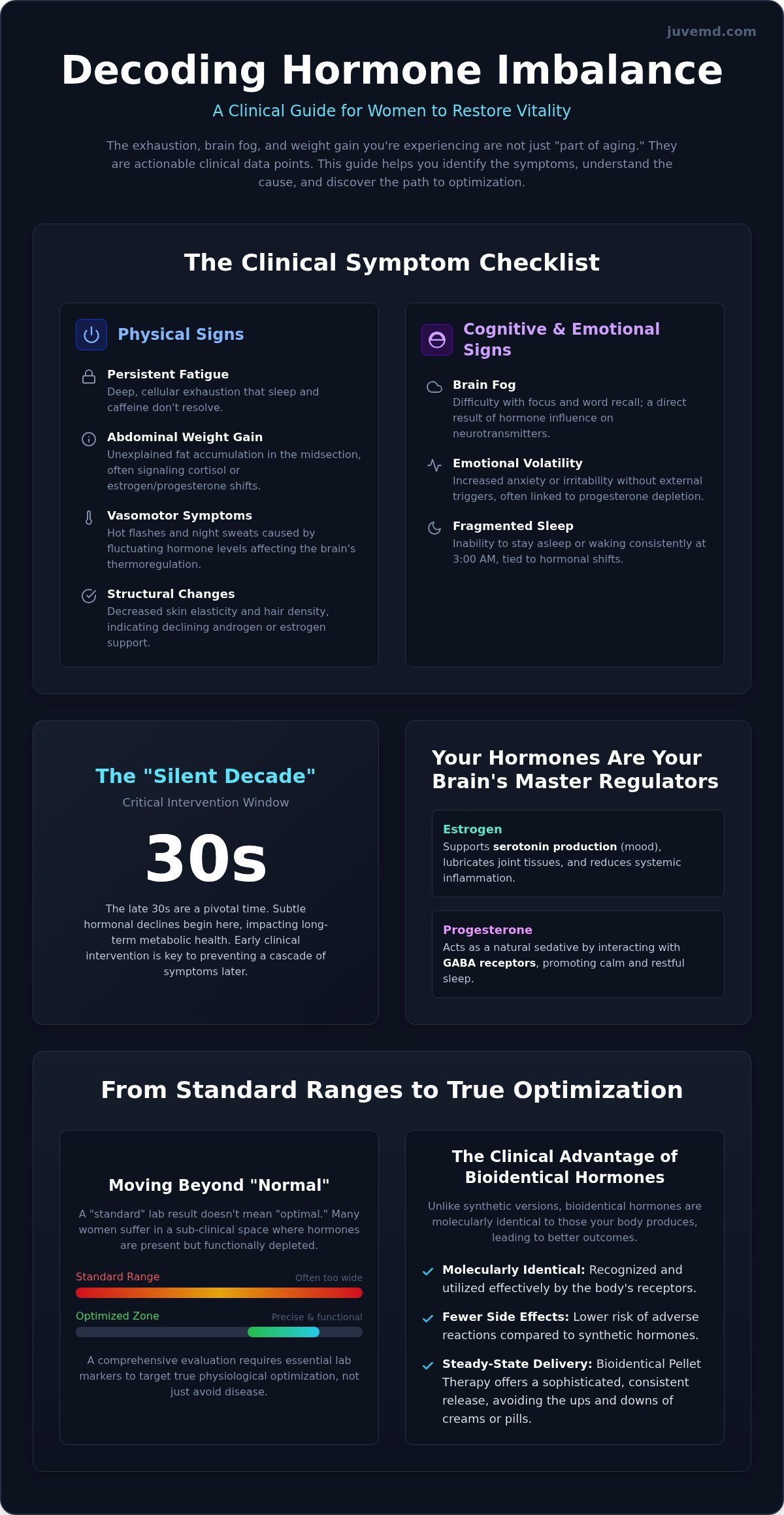
Identifying hormone imbalance symptoms women experience requires moving beyond a simple list toward a prioritized clinical framework. Many patients arrive at our boutique clinic after being told their blood work is “normal,” yet they continue to struggle with daily life. There is a vast difference between falling within a standard reference range and achieving physiological optimization. While a traditional diagnosis might focus on a specific endocrine disease, many women suffer in a sub-clinical space where their hormones are technically present but functionally depleted.
We categorize these signals by their impact on your quality of life. Some symptoms are overt, such as hot flashes that disrupt a meeting. Others are “invisible” internal shifts you might have been conditioned to ignore. By viewing these as actionable data points rather than inevitable signs of aging, we can create a targeted path toward restoration.
The Core Physical Symptom Checklist
Physical shifts are often the first indicators that your endocrine system is struggling to maintain homeostasis. These symptoms typically cluster together, creating a cumulative burden on your vitality. Focus on the frequency and intensity of the following:
- Persistent Fatigue: This isn’t standard tiredness; it’s a deep, cellular exhaustion that doesn’t resolve with a full night’s sleep or increased caffeine intake.
- Abdominal Weight Gain: You may notice unexplained changes in your midsection. This specific fat distribution often signals a shift in the estrogen-to-progesterone ratio or elevated cortisol levels.
- Vasomotor Symptoms: Night sweats and hot flashes are classic estrogen signals. They indicate that the thermoregulatory center in your brain is reacting to fluctuating hormone levels.
- Structural Changes: A noticeable decrease in skin elasticity or a loss of hair density can indicate declining androgen or estrogen support.
The Emotional and Cognitive Checklist
Hormones act as powerful chemical messengers in the brain. When they fluctuate, your cognitive performance and emotional stability often bear the brunt of the imbalance. These symptoms are frequently dismissed as stress, but their biological roots are undeniable.
- Brain Fog: This often manifests as a struggle to maintain professional focus or difficulty recalling specific words during conversation. It’s a direct result of how estrogen and progesterone influence neurotransmitter activity.
- Emotional Volatility: Increased anxiety or sudden irritability without a clear external trigger can be a hallmark of progesterone depletion.
- Fragmented Sleep: Disruptions in sleep architecture, particularly the inability to stay asleep or waking up at 3:00 AM, are often tied to hormonal shifts rather than just poor sleep hygiene.
Tracking these symptoms provides the clarity needed for a productive clinical consultation. Instead of guessing, you can present a clear history of how these changes have impacted your professional and personal life. This data is the foundation of a personalized optimization plan.
Physical vs. Cognitive Signs: Decoding Your Body’s Signal System
Decoding your body’s signal system means looking at how your chemistry dictates your physical and mental reality. For many, hormone imbalance symptoms women experience are often fragmented into separate issues like “aging joints” or “poor willpower,” but these are actually symptoms of a systemic depletion. Estrogen dominance occurs when the body has an excess of estrogen relative to progesterone, which typically presents physically as significant breast tenderness or persistent bloating. Understanding these ratios is the first step in moving beyond basic symptom management.
Beyond physical markers, your hormones act as master regulators for your brain. Estrogen supports serotonin production, while progesterone acts as a natural sedative by interacting with GABA receptors. When these levels fluctuate or crash, the result is a direct hit to your mood and cognitive resilience. Additionally, many women are surprised to find that chronic joint pain is often a hormonal issue; estrogen plays a vital role in keeping joint tissues lubricated and reducing systemic inflammation. You can find more detail on these systemic effects in this clinical guide to Hormonal Imbalance: Causes, Symptoms & Treatment.
The Metabolic Connection: Weight and Energy
When hormones are imbalanced, traditional diet and exercise often fail because the underlying metabolic machinery is broken. During perimenopause, insulin sensitivity frequently declines, making it harder for your body to process carbohydrates and leading to stubborn abdominal fat. Testosterone also plays a critical role in female health, as it’s essential for maintaining lean muscle mass and a robust basal metabolic rate. Many patients are told they have “adrenal fatigue,” but this is often a misdiagnosis for a more straightforward depletion of sex hormones. Addressing the metabolic hormone imbalance symptoms women face requires a sophisticated look at both insulin and testosterone levels.
The Cognitive Impact: Focus and Memory
Cognitive decline is perhaps the most distressing symptom for high-achieving women. Low estrogen levels are directly linked to memory lapses and a decreased ability to process complex information quickly. If you’re searching for menopause brain fog treatment las vegas professionals trust, the journey starts with baseline optimization. Restoring these levels doesn’t just mask the problem; it provides the biological support your brain needs to regain its sharp, decisive edge. If you’re ready to move toward a more optimized version of yourself, speaking with a specialist can help clarify your next steps.
Life Stages and Hormonal Shifts: Why Timing Matters
Timing is the most overlooked variable in hormonal health. Many women wait until menopause to seek help, but the clinical foundation for long-term wellness is laid much earlier. Understanding the progression of Women’s Health requires a clinical eye for detail that spans decades. The “Silent Decade” often starts in your late 30s, long before your cycles actually stop. During this phase, progesterone levels usually begin to taper, leading to the first wave of hormone imbalance symptoms women notice, such as disrupted sleep and subtle increases in irritability.
Stress plays a massive role in this timeline. High cortisol levels from professional or personal pressures can mimic or even exacerbate these shifts. Cortisol can effectively “steal” the raw materials needed for sex hormone production, making a baseline imbalance feel much more severe. This is why early intervention is vital. Addressing these fluctuations in your 30s or 40s doesn’t just improve your current quality of life; it proactively protects your long-term bone density and cardiovascular health.
Perimenopause: The Great Transition
Perimenopause is often a period of significant physiological turbulence. You might experience erratic cycles or mood swings that feel entirely out of character. Standard lab testing often misses these perimenopausal fluctuations because it only captures a single moment in time. If your labs are “normal” but you feel symptomatic, it’s a sign that your body is struggling to maintain its previous baseline. Preparing for this shift before symptoms become debilitating allows for a much smoother transition into later life stages. Women navigating this transition can benefit from reviewing a comprehensive clinical comparison of perimenopause hormone therapy las vegas specialists offer to identify the delivery method best suited to their biology.
Post-Menopause and Long-Term Vitality
Once you’ve reached post-menopause, the focus shifts from managing fluctuations to maintaining health optimization. This is where bioidentical hormone replacement therapy las vegas patients often find the most profound relief. Beyond resolving the immediate discomfort of hot flashes, BHRT provides the necessary biological support to address long-term concerns. This includes managing vaginal dryness, preserving cognitive function, and slowing the rapid loss of bone density that occurs when estrogen levels remain chronically low. Maintaining these levels ensures you don’t just age, but age with your vitality intact.
Beyond the Checklist: Preparing for Your Clinical Evaluation
Moving from identifying symptoms to a formal clinical evaluation is the most critical step in your restoration journey. Many women find that their primary care providers dismiss their concerns because their blood work falls within the standard “normal” range. Standard lab reports often categorize hormone imbalance symptoms women deal with as “normal” if they fall anywhere within a broad range, yet this doesn’t account for your individual baseline or quality of life. At JuveMD, we recognize that “normal” is a statistical average. Achieving true optimization means looking at where your levels should be for you to feel your best, rather than just avoiding a disease state.
A symptom journal is a critical clinical tool because it provides a chronological map of your physiological experience that blood work alone cannot capture.
Tracking Your Data Points
To get the most out of your consultation, we recommend using a 30-day symptom tracker. This allows you to identify patterns that might otherwise seem random. Note specific triggers such as diet, alcohol consumption, and high-stress events. By mapping the “Peak and Valley” of your energy cycles, you help us understand how the specific hormone imbalance symptoms women experience fluctuate throughout the month. This data allows for a much more nuanced approach to your care plan. Understanding these patterns helps us differentiate between a temporary dip and a chronic depletion.
The Optimization Lab Panel
A comprehensive evaluation goes beyond checking basic estrogen and progesterone levels. Our diagnostic approach includes a full optimization lab panel to see the complete picture of your metabolic and endocrine health. We test Free T3 and Free T4 to assess thyroid function, as well as Vitamin D levels, which act more like a pro-hormone in the body. We also look at Follicle-Stimulating Hormone (FSH) and Luteinizing Hormone (LH) to accurately confirm your current life stage. These markers help us build a roadmap that is specific to your biology.
This detailed testing ensures that we aren’t just guessing at your needs. We look for the root cause of your exhaustion and brain fog to ensure your treatment is as precise as possible. Women experiencing persistent cognitive symptoms can explore our dedicated menopause brain fog treatment Las Vegas clinical recovery guide for a deeper understanding of how hormone optimization restores mental clarity. Our goal is to move your markers into the upper tier of the clinical range, where vitality and mental clarity are most often restored. If you are ready to move beyond generic care and experience a boutique, person-centered clinical environment, schedule your comprehensive evaluation with JuveMD today.
Personalized Hormone Optimization: The JuveMD Clinical Approach
Once you’ve identified your specific hormone imbalance symptoms women often face, the next step is moving from a clinical checklist to a targeted solution. At JuveMD, we believe that resolution requires more than just a prescription; it requires a sophisticated understanding of your unique biology. While many large medical groups offer synthetic, one-size-fits-all treatments, our boutique Las Vegas practice focuses on Bioidentical Pellet Therapy. This method is considered the gold standard for symptom resolution because it provides the precision needed for true physiological optimization.
Unlike creams, pills, or patches that can cause a “rollercoaster” effect in your blood levels, pellets offer a steady, consistent release of hormones. This delivery system ensures you don’t experience the peaks and valleys of energy and mood that often accompany other forms of therapy. By utilizing bioidentical hormones, which are molecularly identical to the ones your body naturally produces, we can resolve persistent issues without the side effects often associated with synthetic alternatives. This approach moves beyond simply masking symptoms to restoring your body’s natural baseline.
The Advantage of Bioidentical Pellets
The primary benefit of pellet therapy is its ability to mimic natural ovarian function. Because the pellets are placed just beneath the skin, they release hormones based on your cardiac output. When you’re active or stressed, your body receives more support; when you’re resting, the delivery tapers. This responsive delivery is particularly effective for resolving the cognitive brain fog and cellular fatigue we discussed in earlier sections. Additionally, the convenience of a 3 to 5 month treatment cycle means you can focus on living your life rather than managing daily medication schedules.
Your Boutique Experience in Las Vegas
Led by Dr. Andrea Dempsey, JuveMD offers a person-centered environment that prioritizes your comfort and long-term well-being. Your journey begins with a comprehensive consultation where we review your symptom journal and the optimization lab panel. We don’t just look for “normal” results; we look for the specific data points that will allow you to reclaim your vitality. Addressing the complex hormone imbalance symptoms women experience requires a dedicated specialist who understands the nuance of metabolic health. Ongoing monitoring is a cornerstone of our approach, ensuring that your dosing remains perfectly aligned with your needs as your body changes. It’s time to stop managing symptoms and start optimizing your health. You can schedule your clinical evaluation at JuveMD to begin your personalized wellness plan today.
Reclaim Your Vitality with Precision Optimization
Identifying the persistent hormone imbalance symptoms women face is the first step toward reclaiming a life of clarity and energy. You’ve learned that settling for “normal” lab results often means leaving your true potential on the table. By focusing on clinical optimization rather than mere normalization, you can address the root causes of exhaustion and brain fog before they become debilitating. Proactive intervention during the early stages of hormonal shifts is a powerful investment in your future cardiovascular and bone health.
At JuveMD, our boutique Las Vegas clinic is dedicated to providing a person-centered experience that large medical groups often lack. Led by BHRT expert Dr. Andrea Dempsey, we specialize in Bioidentical Pellet Therapy and personalized optimization plans designed specifically for your biology. This steady-state delivery method eliminates the fluctuations of traditional treatments, allowing you to feel like yourself again. It’s time to move beyond the checklist and start your journey toward lasting wellness. Book Your Consultation with Dr. Andrea Dempsey at JuveMD to take the next step. You deserve to feel vibrant, focused, and fully empowered in your health journey.
Frequently Asked Questions
What are the most common early signs of hormone imbalance in women?
Early indicators often include disrupted sleep patterns, subtle mood shifts like increased irritability, and a noticeable dip in afternoon energy levels. You might also experience changes in skin texture or a slight thinning of your hair. These initial hormone imbalance symptoms women notice are frequently dismissed as signs of a busy lifestyle, but they represent the first stage of hormonal tapering that typically begins in the late 30s.
Can I have a hormone imbalance if my blood tests are “normal”?
Yes, it’s entirely possible to experience symptoms even if your lab results fall within the standard reference range. These ranges are based on broad population averages rather than individual optimization. At JuveMD, we focus on where your levels should be for you to feel your best, not just where they need to be to avoid a clinical diagnosis. We treat the patient’s physiological experience rather than just the numbers on a lab report.
How do I know if my symptoms are perimenopause or just stress?
While stress increases cortisol, which can mimic hormonal shifts, perimenopause is characterized by a specific clustering of symptoms like night sweats and erratic menstrual cycles. If your fatigue persists even after a period of rest or stress reduction, it’s likely a hormonal issue. A 30-day symptom tracker is an essential tool to help us differentiate between temporary lifestyle stress and the progressive biological transition into perimenopause.
Is it safe to start hormone replacement therapy in my 40s?
Current clinical consensus suggests that starting hormone optimization in your 40s is not only safe but often highly beneficial for long-term health. Initiating therapy within the timing window of perimenopause helps protect bone density and cardiovascular function. By addressing hormone imbalance symptoms women experience during this decade, we can prevent the more severe metabolic and cognitive declines that often occur once menopause is fully established.
How long does it take for symptoms to improve after starting BHRT?
Most patients begin to notice a significant improvement in their energy levels and sleep quality within two to four weeks of starting Bioidentical Pellet Therapy. Cognitive clarity and mood stabilization typically follow shortly after. Full physiological optimization usually occurs after the second pellet insertion, as your body adjusts to the steady-state delivery. We monitor your progress closely during this time to ensure your dosing is perfectly aligned with your recovery goals.
What is the difference between bioidentical and synthetic hormones?
Bioidentical hormones are molecularly identical to the ones your body naturally produces, whereas synthetic hormones are chemically altered. This structural difference is critical because bioidentical options allow for a more natural interaction with your cellular receptors. Synthetic versions often carry a higher risk of side effects and don’t provide the same level of metabolic support. At our Las Vegas clinic, we prioritize bioidentical pellets for their safety and superior symptom resolution.
Can hormone imbalance cause unexplained weight gain in the stomach?
Unexplained abdominal weight gain is a hallmark sign of hormonal shifts, particularly declining estrogen or progesterone levels. This shift often leads to decreased insulin sensitivity, making it much easier for the body to store fat in the midsection. Even with a strict diet and exercise routine, this hormonal belly can be difficult to lose without restoring your internal chemistry to an optimized state that supports a healthy metabolic rate.
Do I need a referral to see a hormone specialist in Las Vegas?
No, you don’t need a physician’s referral to schedule a consultation at our boutique Las Vegas practice. JuveMD is a private, person-centered clinic where you can book directly with Dr. Andrea Dempsey for a comprehensive hormonal evaluation. We provide a specialized alternative to large, impersonal medical groups, offering a direct path to expert care and personalized optimization plans without the administrative hurdles of the traditional primary care system.