
Why does your friend’s hormone pellet treatment seem to last half a year while you’re feeling the return of hot flashes or brain fog by week twelve? It’s a common frustration to feel like you’ve finally achieved balance, only to have the anxiety of the hormonal roller coaster return without warning. You deserve a treatment plan that feels like a steady foundation rather than a ticking clock.
Understanding how long do hormone pellets last requires looking beyond a simple calendar date because longevity is a metabolic variable rather than a fixed rule. In this article, you’ll discover the clinical timeline for hormone pellet absorption and how to identify the early signs that your levels are shifting. We will provide a clear framework for your optimization schedule and explain how factors like activity levels and stress can change your results. This guide offers the clinical clarity needed to move from confusion to a predictable path for maintaining your vitality and well-being.
Key Takeaways
- Understand the standard clinical window of three to five months and why individual re-insertion schedules vary between men and women.
- Identify the specific lifestyle factors, such as cardiac output and stress levels, that determine how long do hormone pellets last for your unique metabolism.
- Learn to recognize the subtle “early warning” phase of hormonal shifts, including sleep changes and energy dips, before primary symptoms resurface.
- Compare the steady release of bioidentical pellets against the daily maintenance and high variability found in other hormone replacement methods.
- Discover how precision diagnostics and personalized monitoring help maintain a consistent baseline of vitality and well-being.
The Clinical Timeline: How Long Do Hormone Pellets Last?
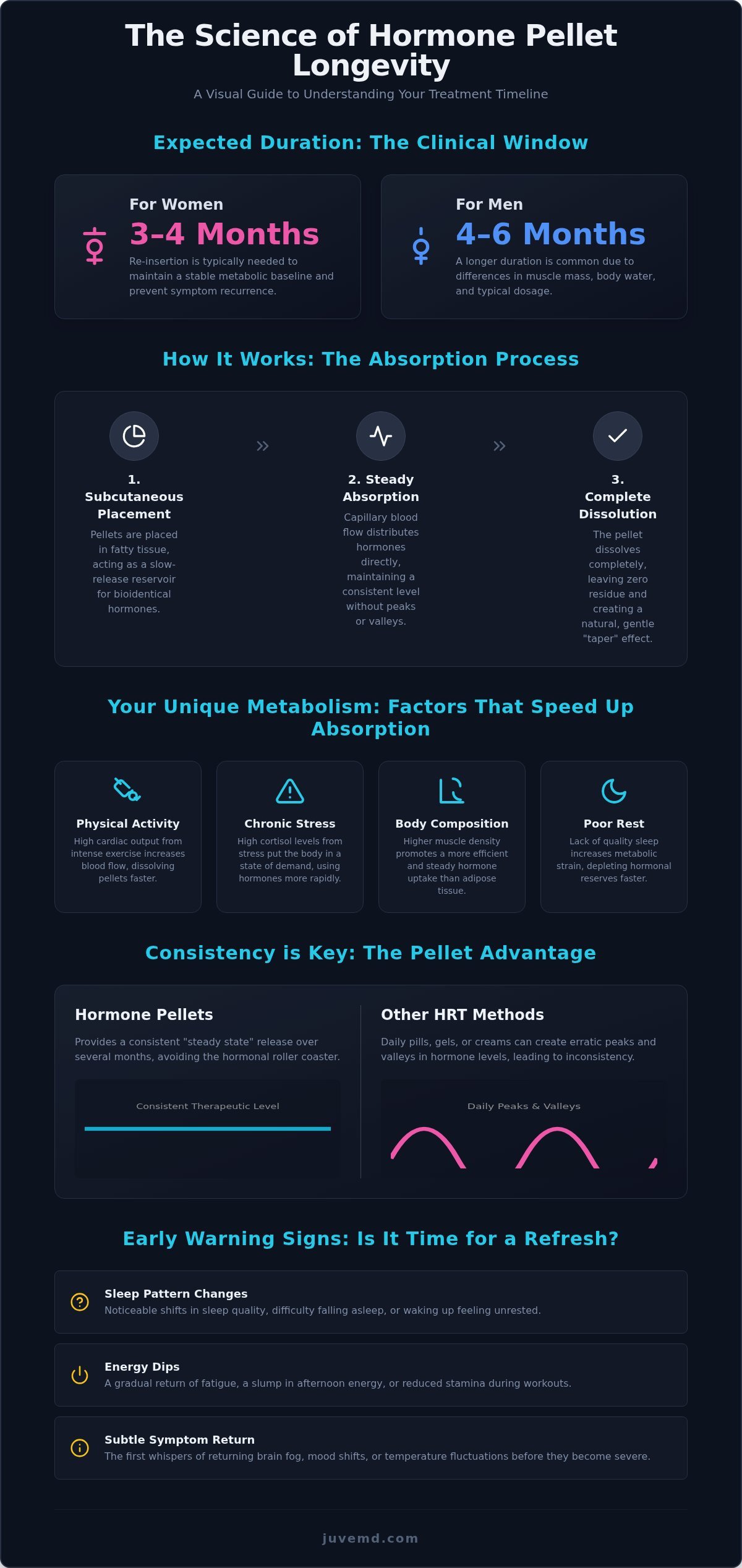
Pellet longevity is the time it takes for the body to fully absorb the bioidentical compound. Unlike other delivery systems that require daily attention, pellets function as a slow-release reservoir. When patients ask how long do hormone pellets last, the standard clinical window is typically three to five months. This duration represents the period where the body maintains a “steady state,” providing a consistent physiological release that avoids the erratic peaks and valleys associated with oral medications or topical gels.
Gender plays a significant role in this timeline. Women typically require re-insertion every three to four months to maintain their metabolic baseline. Men often experience a longer duration, with therapeutic levels lasting four to six months. This variance is often due to differences in muscle mass, total body water, and the specific dosages required for Androgen replacement therapy. At JuveMD, Dr. Andrea Dempsey monitors these intervals closely to ensure your optimization doesn’t dip below the therapeutic threshold.
Why the 3-6 Month Window Varies
Individual biochemistry is the primary driver of pellet longevity. Every patient processes bioidentical compounds at a unique metabolic rate. Dose density also matters. The initial concentration of the pellet determines how long you remain in the “plateau” phase of optimization. Additionally, metabolic demand can accelerate absorption. High-performance individuals or those with intense physical routines often cycle through their pellets faster because their bodies require more hormonal support to recover and perform.
The Dissolution Process
The science of pellet therapy relies on subcutaneous absorption. Once placed in the fatty tissue, the pellets interact with capillary blood flow to distribute hormones directly into the bloodstream. One of the greatest benefits of this method is that it leaves zero residue. The pellets dissolve completely over time, leaving nothing behind in the tissue. This process creates a natural “taper” effect. As the pellet reaches the end of its life cycle, your hormone levels decline gradually rather than dropping off a cliff. This allows for a smoother transition between treatments and prevents the sudden return of symptoms.
Absorption Science: Factors That Influence Your Metabolic Rate
While clinical averages provide a baseline, your unique metabolic rate dictates the actual duration of your results. A large-scale study on hormone pellet longevity involving over one million procedures confirmed that while most patients fall into a predictable window, individual physiology causes significant variance. For example, body composition plays a vital role. Adipose tissue has different vascularity than muscle mass, which influences how quickly the bioidentical compound enters the bloodstream. Patients with higher muscle density often experience a more efficient, steady uptake compared to those with higher body fat percentages.
Your lifestyle in Nevada also introduces unique environmental variables. Extreme heat and hydration levels in Las Vegas can impact metabolic efficiency and blood flow. When the body is perpetually working to regulate its internal temperature, the demand for hormonal support may shift. Understanding how long do hormone pellets last requires an analysis of your daily habits and biological markers. This is why a one-size-fits-all approach often fails to provide lasting relief. Many residents exploring bioidentical hormone replacement therapy in Las Vegas find that accounting for these regional lifestyle factors is essential to building a truly personalized protocol.
Physical Activity and Pellet Lifespan
Cardiac output is a primary driver of absorption. Frequent, high-intensity exercise increases blood flow to the subcutaneous tissue where pellets are placed. This creates the athlete’s dilemma; while hormone optimization improves performance, marathon runners or heavy lifters might find their pellets dissolve faster. Thermoregulation also affects the process. As body temperature rises during exertion, the dissolution of the BHRT compound can accelerate. It isn’t about avoiding the gym, but rather finding a balance where your activity level and insertion schedule are perfectly synced.
Stress and Environmental Triggers
Chronic stress acts as a catalyst for faster hormone depletion through the cortisol connection. When your body is in a state of high demand, it utilizes optimized hormones more rapidly to maintain equilibrium. This is why restorative rest is essential. Quality sleep helps preserve the longevity of your hormonal balance by allowing the body to repair without excessive metabolic strain. Supporting this process with key micronutrients further ensures your body utilizes the hormones effectively. If you’re noticing your symptoms returning sooner than expected, discussing your lifestyle rhythm with Dr. Dempsey can help refine your personalized protocol.
Early Warning Signs: Identifying When Your Pellets Are Wearing Off
Recognizing the transition between optimization and depletion is essential for maintaining a consistent quality of life. While the biological question of how long do hormone pellets last focuses on absorption rates, the practical answer lies in your daily experience. Most patients don’t experience a sudden crash. Instead, they encounter a gradual return of baseline symptoms. This early warning phase is often characterized by subtle shifts in sleep patterns or a noticeable dip in afternoon energy that wasn’t present during the peak of the treatment cycle.
Emotional volatility often follows these physical cues. You might notice a decrease in patience or a general flattening of your mood. Physical indicators can also include a reduction in libido or changes in skin elasticity. These signs suggest that while the pellet is still present, the dosage being released may no longer meet your body’s current metabolic demand. Identifying these markers early allows for better planning of your next appointment.
- Subtle disruptions in falling or staying asleep.
- Increased muscle soreness after routine physical activity.
- A return of mild irritability or anxiety.
- Decreased focus during complex tasks.
Tracking Your “Golden Window”
Maintaining a symptom journal during the first 30 to 60 days of your cycle helps establish your personal “Golden Window.” This is the period, typically between weeks 3 and 12, where you feel your absolute best. Recognizing this peak allows you to gauge exactly when your levels begin to shift. At JuveMD, we utilize a clinical Symptom Check tool to help patients objectively measure their status. By documenting your energy and mood, you provide Dr. Andrea Dempsey with the data needed to refine your insertion schedule and ensure you stay within a therapeutic range.
Late-Stage Wear-Off Symptoms
As the pellet reaches the final stages of dissolution, late-stage indicators become more prominent. The return of vasomotor symptoms, such as night sweats and hot flashes, typically signals that your levels have dropped below the necessary clinical threshold. Cognitive decline often resurfaces in earnest, bringing back the brain fog that can disrupt professional and personal life. You may also notice a significant recovery lag. Workouts that felt invigorating a month ago might now feel exhausting, indicating that your body no longer has the hormonal support required for efficient repair and vitality.
Comparing Longevity: Pellets vs. Other HRT Methods
Choosing a delivery method is just as important as the hormones themselves. While oral medications and topical creams are common, they often fail to provide the sustained physiological stability found in bioidentical pellets. When evaluating how long do hormone pellets last compared to other options, the primary difference is the consistency of the delivery. Creams and gels require daily application, which introduces high variability based on skin absorption and the risk of cross-contamination with family members or pets. Oral medications must navigate “first-pass” metabolism through the liver, which can fluctuate based on digestion and significantly reduce the longevity of each dose.
Injectables present a different challenge. While they bypass the digestive system, they typically create weekly or bi-weekly spikes. These surges often lead to significant mood swings and energy crashes as the hormone levels drop toward the end of the injection cycle. In contrast, pellet therapy utilizes a 24/7 cardiac-driven release. Because the pellets respond to your heart rate and blood flow, they offer the most physiologically natural delivery available today. This method ensures that your body receives exactly what it needs, exactly when it needs it. For a deeper look at how these delivery methods compare within a medically supervised framework, the complete clinical guide to bioidentical hormone replacement therapy in Las Vegas offers a thorough breakdown of each option.
The Problem with the “Roller Coaster” Effect
Non-pellet delivery systems often create a “roller coaster” of peaks and valleys. These fluctuations aren’t just inconvenient; they can impact your long-term health. Consistent hormone levels lead to better protective benefits for bone density and heart health, as the body isn’t constantly trying to adjust to varying concentrations. There is also a significant mental load to consider. Managing daily pills or messy creams requires constant memory and effort. Switching to a quarterly visit for pellet insertion allows you to reclaim that mental space while maintaining a steady foundation of wellness.
Flexibility vs. Stability
A common objection to pellet therapy is the inability to adjust the dose mid-cycle. While it’s true that the pellet remains in place for months, this stability is actually a clinical advantage. JuveMD prioritizes precision diagnostics and detailed initial blood work to ensure we determine the correct dose from day one. Dr. Andrea Dempsey focuses on personalizing your wellness plan so that adjustments are made based on data rather than daily guesswork. The clinical rationale favors stability over the erratic nature of daily micro-adjustments. If you’re tired of the daily maintenance of other methods, schedule a consultation with JuveMD to see if bioidentical pellet therapy is the right solution for your lifestyle.
The JuveMD Protocol: Optimizing Your Hormone Maintenance
Precision dosing isn’t just about the insertion; it’s about the data that precedes it. At JuveMD, we utilize comprehensive lab work to determine your specific metabolic baseline before any treatment begins. This data-driven approach removes the guesswork from the question of how long do hormone pellets last for your body. By understanding your unique biological markers, Dr. Andrea Dempsey can tailor the concentration of your bioidentical pellets to match your lifestyle and metabolic demands. This ensures that your therapy is built on a foundation of clinical accuracy rather than general averages.
The pre-insertion consultation serves as the foundation of our supportive partnership. Dr. Dempsey takes the time to review your history, symptoms, and goals to ensure your wellness plan is entirely personalized. We also prioritize scheduling for success. To prevent the return of symptoms and eliminate the “gap” in your care, we book your next appointment before you leave the office. This proactive approach ensures your hormone levels remain within the therapeutic window without interruption, providing a seamless transition between treatments. If you’re curious about what to expect when you arrive, our detailed overview of the hormone pellet insertion procedure walks you through every step of the appointment from numbing to bandaging. Ongoing monitoring allows us to adjust future doses based on your body’s unique absorption rate, ensuring long-term stability.
Your First Year of Optimization
The first year of therapy is a period of refinement. We often refer to the initial stage as the “loading” phase. Many patients find that their second insertion is even more effective than the first as the body begins to maintain a more stable baseline. We utilize blood work at the 4 to 6 week mark to verify your peak levels and ensure the dose is performing as expected. This ongoing monitoring allows us to establish your specific rhythm, finding the exact number of weeks your body needs between treatments for peak vitality and symptom relief.
Beyond the Pellet: A Holistic Approach
Hormone health does not exist in a vacuum. At JuveMD, we offer a boutique experience where weight loss protocols and aesthetic treatments complement your hormonal optimization. We also utilize clinical-grade supplements to help extend the life of your pellets by supporting the metabolic pathways responsible for hormone utilization. This comprehensive strategy ensures you aren’t just replacing hormones, but optimizing your entire physiological environment. To begin your journey toward a more predictable and balanced life, schedule your hormone optimization consultation with Dr. Dempsey at JuveMD Las Vegas today.
Your Path to Sustained Vitality
Achieving hormonal balance isn’t a one-time event but a continuous journey of optimization. We’ve explored how metabolic demand, activity levels, and even the Las Vegas environment influence your absorption rate. Understanding how long do hormone pellets last is the first step toward reclaiming a predictable lifestyle free from the anxiety of sudden symptom returns. By recognizing early indicators like sleep shifts or energy dips, you can maintain your peak vitality without the interruption of a hormonal crash.
At JuveMD, we prioritize precision over generic solutions. Led by Dr. Andrea Dempsey, a dedicated Las Vegas hormone specialist, our clinic provides customized BHRT protocols for both men and women in a boutique medical environment focused on your comfort. We move beyond standard timelines to create a monitoring schedule that respects your body’s unique rhythm. Book Your Personalized Hormone Evaluation at JuveMD to start your partnership with an expert guide who values your long-term well-being. You deserve to feel empowered and balanced in every stage of your health journey.
Frequently Asked Questions
How long does it take for hormone pellets to start working?
Most patients begin to notice a positive shift in their energy, mood, and sleep quality within 7 to 14 days after the initial insertion. However, it takes approximately four to six weeks for the body to reach full optimization and for primary symptoms like brain fog to resolve. This timeline allows the bioidentical compound to integrate with your system and establish a steady physiological release that aligns with your metabolism.
Can I make my hormone pellets last longer?
You can maximize the longevity of your treatment by managing chronic stress and prioritizing restorative sleep. High cortisol levels and excessive physical strain can accelerate the depletion of your hormonal reservoir. Additionally, staying hydrated and utilizing clinical-grade supplements as recommended by Dr. Dempsey can support the metabolic pathways that process bioidentical hormones. While you can’t stop the natural dissolution process, these habits ensure your body uses the hormones efficiently.
What happens if I wait too long between pellet insertions?
Delaying your next insertion typically results in a gradual return of your baseline symptoms, such as night sweats, irritability, or fatigue. Beyond the return of physical discomfort, waiting too long disrupts the steady state required for long-term health benefits, including bone density and cardiovascular support. This is why the JuveMD protocol emphasizes scheduling your follow-up appointment in advance to prevent a total lapse in your therapeutic coverage.
Will I feel a “crash” when the pellets wear off?
Unlike the sudden “crash” often associated with weekly injections, pellets provide a gentle taper. As the pellet dissolves completely, your hormone levels decline slowly over several weeks. Most patients identify the need for re-insertion through subtle early warning signs rather than a dramatic physiological drop. This predictable decline is a major reason why patients choose pellets when asking how long do hormone pellets last compared to other methods.
How often do I need blood work while on pellet therapy?
We require detailed blood work before your first insertion to establish a precise metabolic baseline. During your first year of optimization, we often perform follow-up labs at the four to six-week mark to verify peak levels and refine your dosage. Once we’ve established your personal rhythm and achieved stable results, monitoring usually shifts to an annual or bi-annual schedule, depending on your specific health goals and symptom profile.
Do hormone pellets ever fail to dissolve?
Bioidentical hormone pellets are designed to be fully absorbed by the body, leaving zero residue in the subcutaneous tissue. Because they are chemically identical to the hormones your body produces naturally, they interact seamlessly with your capillary blood flow until they are completely gone. There is no risk of a permanent implant or buildup; the material is entirely processed by your metabolism as it delivers the therapeutic dose.
Can exercise make my pellets wear off faster?
Frequent, high-intensity exercise can indeed accelerate the absorption rate of your pellets. When your cardiac output increases, blood flow to the fatty tissue where the pellet is located also rises, which can lead to a faster dissolution of the compound. Athletes or very active individuals may find that their treatment window is closer to three months rather than four or five. We adjust your insertion schedule to accommodate your active lifestyle.
Is there a way to remove pellets if the dose is too high?
Pellets are designed for time-release absorption and cannot be easily removed once they are inserted into the subcutaneous layer. This is why JuveMD prioritizes precision diagnostics and thorough pre-insertion consultations. By utilizing detailed lab work to calculate your exact dosage from the start, Dr. Dempsey minimizes the risk of over-optimization. If levels feel too high, we monitor your progress and adjust the dosage for your subsequent insertion. For patients who want to understand exactly what the appointment entails before committing, our step-by-step guide to the hormone pellet insertion procedure provides a transparent, detailed walkthrough of the entire clinical process.