
The date on your calendar has surprisingly little to do with when your next hormone treatment is actually due. If you’ve felt the familiar dread of the “hormone roller coaster” returning sooner than expected, you know that generic medical answers often fall short. You need to know exactly how long do hormone pellets last for your specific biology, not just the average patient. While many providers cite a standard window of three to six months, your personal “metabolic burn rate” is the true architect of your clinical results.
It’s natural to feel anxious about the cost and consistency of your treatment when the timeline feels like a moving target. We believe that transparency is the foundation of effective care. This 2026 guide reveals the precise physiological factors that dictate pellet longevity and how your activity levels and stress impact your levels. We’ll also examine how the 2026 removal of FDA black box warnings from many hormone therapies is changing the landscape of care. You’ll gain a clear framework for identifying your unique rhythm and a proactive plan for scheduling follow-up treatments to ensure your transition remains seamless and stable.
Key Takeaways
- Understand the typical timeline for symptomatic relief, where most patients notice improvements within 14 days and reach peak stability by week six.
- Discover the physiological factors, such as your unique metabolic rate and physical activity levels, that determine how long do hormone pellets last in your body.
- Learn to recognize the subtle clinical signs of the “wear-off” phase, including the return of brain fog or a noticeable midday slump, to better time your follow-up care.
- Explore why a personalized dosing strategy based on comprehensive lab work is essential for maintaining consistent results and avoiding the common hormone roller coaster.
The Science of Sustained Release: How Hormone Pellets Work
Bioidentical hormone pellets are precision-engineered cylinders, roughly the size of a grain of rice. These small devices are inserted into the subcutaneous fat, typically in the hip or buttock area, during a brief in-office procedure. Unlike oral pills or transdermal creams, pellets utilize the body’s own circulatory system for distribution. This delivery method is fundamentally different from a traditional timed-release medication.
The release mechanism depends entirely on cardiac output and blood flow. As blood circulates through the tissue surrounding the pellet, it absorbs the hormones and carries them to where they’re needed most. This creates a responsive system; when your heart rate increases during physical activity, the hormone release naturally scales up to meet the demand. This process mimics the body’s natural secretion of hormones more accurately than any other form of Hormone replacement therapy (HRT). When patients ask how long do hormone pellets last, they’re essentially asking about the lifespan of this biological interaction.
Bioidentical vs. Synthetic: Why Molecular Structure Matters
Bioidentical hormones share the exact molecular structure as the hormones your body produces naturally. This structural match is vital for how your body processes the treatment. Synthetic hormones often contain molecular “add-ons” that can interfere with how cleanly they bind to your receptors. Because bioidentical options are a perfect match, your body recognizes and utilizes them more efficiently. Understanding the full clinical picture of bioidentical hormone therapy side effects compared to synthetic options can help you make a more informed decision about which path is right for your health. This precision is a primary focus in The Ultimate Guide to Bioidentical Pellet Hormone Therapy in 2026, which highlights why molecular compatibility leads to better patient outcomes and fewer side effects.
The Set-and-Forget Advantage
Managing a hormonal imbalance often leads to “daily dose fatigue.” Remembering to take a pill at the same time every day or dealing with the sticky residue of topical creams can be frustrating. Pellets remove these daily hurdles from your routine. By offering a steady-state delivery, they eliminate the “peaks and valleys” that often cause mood swings or energy crashes in other delivery methods. There is a significant psychological benefit to this consistency. You can simply live your life without the constant reminder of your treatment. When evaluating how long do hormone pellets last, the value isn’t just in the months of coverage, but in the mental freedom from daily medication management.
The General Timeline: What to Expect in the First 6 Months
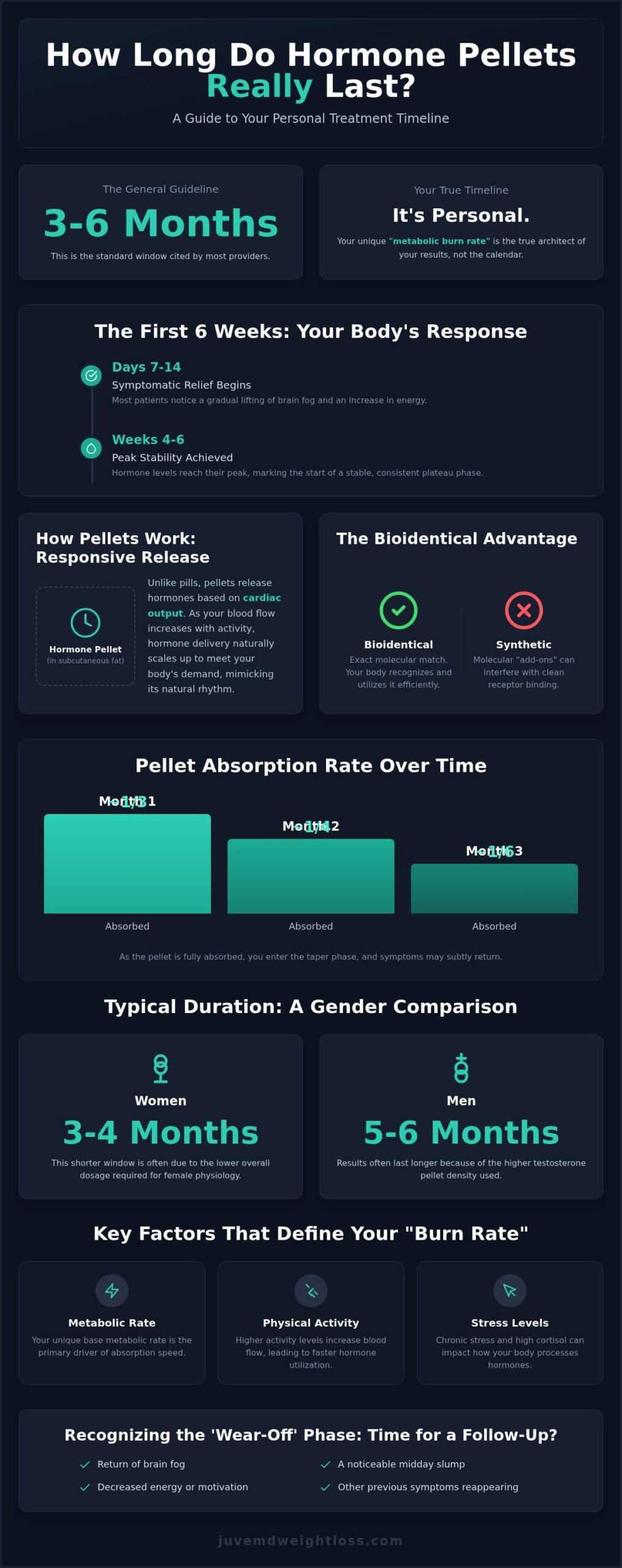
The journey toward hormonal balance follows a predictable biological sequence. While the initial Hormone Pellet Insertion Procedure is quick, the physiological response unfolds over several weeks. Most patients begin to feel symptomatic relief within 7 to 14 days post-insertion. This isn’t an immediate “on” switch, but rather a gradual lifting of the fog. Peak hormone levels are typically reached between weeks 4 and 6, marking the beginning of the plateau phase. This phase provides the stable, consistent relief that makes pellet therapy so effective.
Clinical data regarding Factors Affecting Absorption shows that approximately one-third of the pellet material is absorbed in the first month, one-fourth in the second, and one-sixth in the third. As the pellet is fully absorbed by the body, you enter the taper phase. This is usually when the question of how long do hormone pellets last becomes most relevant, as you may notice a subtle return of previous symptoms.
Duration Differences by Gender
Biological requirements significantly influence the lifespan of your treatment. Women typically require re-insertion every 3 to 4 months. This shorter window is often due to the lower overall dosage required for female physiological balance. In contrast, men often see results last 5 to 6 months because of the higher testosterone pellet density used in their protocols. These timeframes are clinical averages, however, and your personal results will vary based on your unique metabolic rate and activity levels.
The First-Year Transition
The first two treatment cycles are critical for “dialing in” your specific duration. Think of this period as a collaborative discovery phase between you and your provider. Dr. Dempsey uses detailed follow-up labs during these initial months to observe how your body processes the hormones. This data allows us to adjust the dosage for your second insertion, ensuring we maximize the time between treatments without compromising your symptom relief. If you’re ready to find your ideal rhythm, you can schedule a consultation with JuveMD to begin your personalized journey. Understanding how long do hormone pellets last for your specific body helps us create a schedule that prevents the return of the “hormone roller coaster.”
Why Do Some Pellets Last Longer? Factors Affecting Absorption
While the clinical average for pellet longevity is often cited as three to six months, this window is a broad generalization. Your specific metabolic rate acts as the primary engine for how your body processes these hormones. Individuals with a high basal metabolic rate often “burn” through their hormone supply faster than those with a more sedentary profile. This biological pace is unique to you, which is why two patients receiving the same dosage may have entirely different answers to the question of how long do hormone pellets last.
Physical activity is another significant variable. Since the release of hormones from the pellet is tied directly to blood flow and cardiac output, intense exercise can accelerate absorption. Athletes or individuals with physically demanding jobs often find they reach the “taper phase” sooner. Additionally, chronic stress plays a role. High levels of cortisol can interfere with how your body utilizes bioidentical hormones, sometimes leading to a perceived drop in effectiveness even if the pellet hasn’t been fully absorbed. Your body composition also matters; the ratio of muscle to fat influences how hormones are stored and distributed throughout your system.
It is also essential to consider the regulatory context of these treatments. The Endocrine Society notes that because compounded pellets lack the same standardized FDA oversight as mass-produced pharmaceuticals, the expertise of your provider in managing these variables is paramount for a safe and effective experience. Patients who are weighing their options may also find it helpful to review a detailed comparison of bioidentical hormone therapy side effects versus those associated with synthetic hormones to better understand the clinical distinctions before committing to a protocol.
The “Pellet Burner” Profile: Are You High-Activity?
If you exercise five or more times a week or maintain a high-stress lifestyle, you might fit the “pellet burner” profile. These patients typically require a tighter three-month re-insertion cycle to maintain stable levels. You can maximize the duration of each treatment by focusing on lifestyle foundations. Consistent hydration and targeted micronutrient support, such as magnesium and B vitamins, help your liver metabolize hormones efficiently. Supporting your body’s internal chemistry allows the pellet to work as intended for the longest possible duration.
The Role of Dosage Precision
Sometimes, a patient feels their treatment has “worn off” prematurely, but the reality is that they never reached a therapeutic plateau. This is often the result of under-dosing. Calculating the perfect dose requires a sophisticated analysis of your weight, age, and blood serum levels. At JuveMD, we prioritize this precision to ensure your initial dose is optimized. By fine-tuning the concentration from the start, we prevent the frustration of early symptom return and ensure that when you ask how long do hormone pellets last, your results align with the upper end of the clinical range.
Recognizing the ‘Wear-Off’: Signs Your Levels Are Dropping
The wear-off period isn’t a sudden drop but a gradual transition that reflects your body’s absorption process. As the pellet reaches the end of its lifespan, you’ll likely notice the return of your baseline symptoms. These are the specific physiological and emotional markers that led you to seek therapy initially. For many, the first sign is a subtle shift in cognitive clarity. You might notice a midday slump that was previously gone or a sense of “brain fog” that makes simple tasks feel more taxing. Fatigue often sets in earlier in the evening, signaling that your serum levels are dipping below your therapeutic threshold.
Sleep quality is another primary indicator that your levels are shifting. Night sweats may reappear, or you might find yourself waking up at 3:00 AM with difficulty falling back to sleep. Emotional shifts are equally common and often catch patients by surprise. You might experience increased irritability, a shorter fuse with loved ones, or a sense of anxiety that feels unearned by your current life events. These fluctuations occur because your body is no longer receiving the steady-state delivery discussed in previous sections. Identifying these signs helps you answer how long do hormone pellets last for your specific biology.
The Physical “Tell-Tales”
Physical changes often mirror internal hormonal shifts. A decrease in libido or changes in sexual function are common markers that your levels are dropping. Additionally, you may feel the return of joint pain or muscle stiffness that had resolved during the peak of your cycle. We recommend that you log these symptoms in the two weeks prior to your next scheduled lab draw. This data provides Dr. Dempsey with essential context to interpret your blood work accurately and adjust your next dose if necessary.
How to Avoid the “Hormone Crash”
Preventing a total imbalance requires proactive management rather than reactive treatment. Scheduling your next appointment before symptoms become debilitating is the most effective way to maintain stability. In some cases, specifically during the early stages of therapy, we may utilize booster doses to bridge the gap if a patient’s metabolic rate is higher than anticipated. Consistent timing ensures your body doesn’t revert to a state of depletion. If you are noticing these early warning signs, it’s time to contact JuveMD for a follow-up evaluation. Understanding how long do hormone pellets last allows us to refine your schedule and eliminate the peaks and valleys of recovery.
Optimizing Your Results: Personalized Hormone Management at JuveMD
A “one-size-fits-all” approach to hormone therapy often fails patients because it ignores the biological nuance of the individual. Standard medical protocols frequently rely on broad averages that don’t account for your specific lifestyle, body composition, or metabolic demands. At JuveMD, we recognize that your wellness journey is as unique as your genetic makeup. Our philosophy combines rigorous clinical data with your real-world, patient-reported outcomes to create a strategy that works for you. Dr. Andrea Dempsey specializes in fine-tuning every aspect of your care, moving beyond generic answers to ensure your results are both safe and sustainable.
When patients ask how long do hormone pellets last, they are often looking for a guarantee that isn’t possible with standardized dosing. By monitoring your journey closely, we can identify the specific variables that influence your absorption rates. This personalized oversight transforms the treatment from a simple procedure into a comprehensive, expert-led strategy for long-term health. Our goal is to move you from a state of hormonal deficiency to a state of optimized wellness where your energy and clarity remain stable throughout your entire treatment cycle.
The Importance of Follow-Up Labs
Standard medical practices often settle for “normal” ranges, but we aim for optimal. To achieve this, we conduct comprehensive lab work mid-cycle to evaluate your “peak” hormone levels and again as you approach the “trough.” These specific data points reveal exactly how your body consumes the hormones provided by the pellet. Understanding these fluctuations allows us to make precise micro-adjustments for your subsequent insertions. This level of detail ensures your safety and prevents the return of symptoms before your next scheduled visit, providing a level of consistency that generic programs cannot match.
Scheduling Your Consultation
Transitioning to pellet therapy is a seamless process, even if you’re currently using other forms of HRT like creams, patches, or weekly injections. For your first hormone evaluation, please bring a list of your current medications and any recent blood work you’ve completed within the last six months. We will discuss your health history and specific symptoms to determine the most effective path forward. If you’re ready to find your balance and discover how long do hormone pellets last for your unique physiology, Schedule your hormone consultation with JuveMD today. We are here to provide the clinical authority and supportive guidance you need to reclaim your vitality.
Achieving Long-Term Hormonal Vitality
Understanding how long do hormone pellets last is the first step in reclaiming control over your health. Your personal duration is a unique result of your metabolic rate, physical activity, and stress levels. While the standard three to six month window provides a general framework, the most successful outcomes come from recognizing your body’s specific “wear-off” signals. By identifying early indicators like returning fatigue or cognitive shifts, you can proactively schedule your next treatment to maintain a seamless plateau of relief.
At JuveMD, Dr. Andrea Dempsey provides the clinical expertise necessary to fine-tune your journey. We rely on personalized dosing and comprehensive blood analysis to ensure your high-quality bioidentical hormone pellets are perfectly matched to your needs. You don’t have to navigate the hormone roller coaster alone. When you’re ready to transition from generic answers to a precise, data-driven plan, we are here to guide you toward sustained wellness. Book Your Personalized Hormone Consultation at JuveMD today and take the next step toward a more balanced, vibrant future.
Frequently Asked Questions
Can I make my hormone pellets last longer by exercising less?
Reducing intense physical activity can technically slow the absorption rate since pellet release is tied to blood flow and cardiac output. However, we don’t recommend lifestyle restrictions as a way to extend treatment. Exercise is essential for cardiovascular health and insulin sensitivity. Instead of exercising less, we prefer to fine-tune your dosage to ensure it provides adequate support for your high-activity lifestyle without wearing off prematurely.
What happens if I wait too long between pellet insertions?
If you wait too long between treatments, your hormone levels will eventually drop below the therapeutic threshold. This often results in a “crash” where baseline symptoms like night sweats, brain fog, and irritability return with significant intensity. To avoid this, we track your unique timeline and schedule re-insertions before your levels bottom out. Consistency is the key to preventing the physiological stress associated with total hormonal imbalance.
Do hormone pellets dissolve completely in the body?
Yes, bioidentical hormone pellets are designed to be fully absorbed by your subcutaneous tissue. They are composed of pure hormones and a small amount of binder that the body metabolizes naturally over several months. There is no residue, shell, or foreign material left behind in the hip or buttock area. This complete absorption is one reason why the delivery method is considered so clean and efficient for long-term therapy.
Why does it feel like my pellets wore off after only two months?
This experience usually indicates that your body has a high metabolic “burn” rate or that the initial dose didn’t reach a high enough therapeutic plateau. When patients ask how long do hormone pellets last and find the answer is shorter than expected, we look at factors like high stress or intense exercise. Mid-cycle blood work allows us to see if we need to increase your concentration for the next insertion.
Is it possible to have too much hormone in a pellet?
While we use precise calculations based on your weight and labs to avoid over-dosing, receiving too much hormone can lead to temporary side effects like fluid retention or breast tenderness. We prioritize safety by targeting “optimal” rather than “excessive” ranges. If your levels are too high, we simply adjust the dosage for your next cycle. Our pedagogical approach ensures you understand every adjustment made to your personalized treatment plan.
Can stress actually “use up” my hormones faster?
Stress doesn’t physically accelerate the dissolving of the pellet, but it does change how your body perceives the treatment. High cortisol levels can interfere with hormone receptor sensitivity, making it feel as though your levels have dropped. Additionally, chronic stress increases your body’s overall metabolic demand. Managing your stress levels is just as important as the insertion itself when it comes to feeling the full benefits of your therapy.
How soon can I get my next pellet if I feel my symptoms returning early?
We typically recommend waiting at least eight to ten weeks before considering a re-insertion to prevent “stacking” hormones too high. If you feel symptoms returning early, the first step is a blood draw. This clinical data tells us if your levels are truly low or if another factor is causing your symptoms. Verified low levels may lead to an earlier appointment or a dosage increase for your next cycle.
Will I gain weight when the pellets start to wear off?
Weight gain isn’t a direct side effect of the pellet wearing off, but the loss of hormonal support can make maintaining your weight more difficult. When testosterone or estrogen levels dip, you might experience increased fatigue and a slower metabolic rate. These changes often lead to decreased physical activity and disrupted sleep, which can contribute to weight fluctuations. Understanding how long do hormone pellets last helps us time your treatments to prevent these metabolic slumps.